- Company Articles
- Industry articles
- Industry standards
- 3030a EU Standard Aluminum Profile: Thermal Conductivity & Performance

3030a EU Standard Aluminum Profile: Thermal Conductivity & Performance
Related Product
3030A EU Standard Aluminum Profile
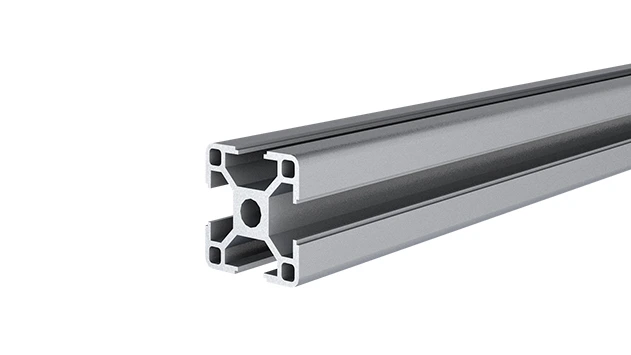
3030 is a 3.00 x 3.00CM fractional 30 series square extrusion T-slot profile with four open T-slots, each side with 3.00cm face. The profile has align-a-grooves to assist in aligning connecting profiles.
Introduction: The Backbone of Modern Manufacturing
Walk into any modern factory, warehouse, or workshop, and you'll notice a silent workhorse holding everything together: aluminum profiles. These unassuming structural components are the unsung heroes of lean manufacturing, assembly lines, and material handling systems. Among the myriad options available, one stands out for its balance of strength, versatility, and thermal efficiency: the
3030a EU Standard Aluminum Profile
. Whether you're building a workbench for precision electronics assembly, a conveyor system for hot-components, or a material rack for heat-sensitive goods, this profile has quietly become a go-to choice for engineers and facility managers alike. But what makes it so special? Today, we're diving deep into its thermal conductivity—why it matters, how it performs, and why it's more than just a "metal stick" in your production setup. Let's start by understanding why aluminum, in general, has become the material of choice for these critical applications.
Thermal Conductivity: More Than Just "Heat Transfer"
Before we zoom in on the 3030a, let's talk about thermal conductivity—a term that sounds technical but impacts everything from product quality to workplace safety. Simply put, thermal conductivity is a material's ability to transfer heat. Think of it as how "willing" a material is to let heat pass through it. For example, a metal spoon gets hot quickly in boiling water because metal has high thermal conductivity; a plastic spoon stays cool because plastic has low conductivity. In industrial settings, this property isn't just about comfort—it's about functionality. Imagine a workbench where delicate circuit boards are assembled: if the bench frame traps heat from nearby machinery, it could warp components or even cause malfunctions. On the flip side, a conveyor system moving hot castings needs a frame that dissipates heat quickly to prevent damage to the track or casters. That's where the 3030a's thermal conductivity comes into play—it strikes a rare balance: not so high that it becomes a heat hazard, but not so low that it traps warmth where it shouldn't be.

3030a EU Standard Aluminum Profile: The Specs Behind the Performance
Let's get specific. The 3030a is part of the EU standard aluminum profile family, which means it adheres to strict European norms for dimensions, material quality, and safety. Its name gives a clue: "3030" refers to its cross-section—30mm by 30mm—making it a mid-sized profile, neither too bulky for tight spaces nor too slim for heavy loads. The "a" denotes a specific design variant, often with T-slots (those handy grooves along the sides) that allow easy attachment of accessories like brackets, panels, or connectors. But what really sets it apart is its composition. Most 3030a profiles are made from 6063-T5 aluminum alloy, a material prized for its excellent thermal conductivity, corrosion resistance, and formability. 6063 aluminum typically has a thermal conductivity of around 201 W/m·K (watts per meter-kelvin)—a number that might not mean much on its own, but when compared to other materials, it's a standout. For context, steel has a thermal conductivity of about 45 W/m·K, while stainless steel is even lower at 16 W/m·K. Plastics? They're often in the 0.2-0.5 W/m·K range. So, aluminum's ability to transfer heat efficiently is a game-changer for applications where temperature regulation matters. But why 6063-T5 specifically? The "T5" refers to the tempering process—artificially aging the aluminum to strengthen it without sacrificing thermal properties. This means the 3030a isn't just thermally efficient; it's also tough enough to handle the rigors of daily industrial use.
Thermal Conductivity in Action: Real-World Scenarios
Let's move beyond numbers and talk about how this thermal property impacts day-to-day operations. Take a
workbench
in an electronics manufacturing plant, for example. Suppose this workbench is used to assemble LED components, which are sensitive to heat. The workbench frame, made from 3030a profiles, sits near a soldering station. Without good thermal conductivity, heat from the soldering iron could build up in the frame, slowly warming the work surface and potentially damaging the LEDs. But with the 3030a, the heat is quickly transferred away from the work area, keeping the surface temperature stable. Another example: conveyor systems. Imagine a conveyor moving freshly molded plastic parts, which are still warm from the manufacturing process. If the conveyor frame is made from steel, heat might linger in the structure, causing the plastic parts to cool unevenly or even warp. With 3030a aluminum profiles, the heat is dissipated into the surrounding air (or via cooling fans, if needed), ensuring the parts cool consistently. Even in material storage, the 3030a shines. A material rack holding heat-sensitive adhesives or chemicals needs to avoid heat buildup. The profile's ability to conduct heat away from the stored items helps maintain a stable environment, reducing waste and ensuring product integrity. These scenarios might seem small, but in high-volume manufacturing, small inefficiencies add up. The 3030a's thermal conductivity isn't just a "nice-to-have"—it's a reliability feature that keeps operations running smoothly.
Performance Beyond Thermal Conductivity: Durability, Load-Bearing, and Versatility
Thermal conductivity is a star feature, but the 3030a isn't a one-trick pony. Let's talk about its other performance metrics. First, load-bearing capacity. A 30mm x 30mm profile might not sound like much, but thanks to its alloy and extrusion design, it can handle impressive weights. Depending on the wall thickness (usually 1.5mm to 2mm for 3030a), it can support static loads of 50-100 kg per linear meter—more than enough for most workbenches, shelves, or light-duty conveyors. This makes it versatile: use it for a small assembly station or scale it up for a multi-tiered material rack. Then there's corrosion resistance. Aluminum naturally forms a thin oxide layer when exposed to air, protecting it from rust and degradation. This is a huge advantage over steel, which needs painting or coating to avoid corrosion—especially in humid or dusty factory environments. The 3030a's corrosion resistance means less maintenance, longer lifespan, and lower total cost of ownership. But perhaps its most underrated feature is its compatibility with
aluminum profile accessories
. Those T-slots we mentioned earlier? They're like the profile's "universal ports," allowing you to attach everything from end caps (to smooth out sharp edges) to hinges, locks, or even custom panels. Need to add a tool holder to your workbench? Screw a bracket into the T-slot. Want to mount a monitor arm? Use a T-nut and bolt. This modularity means the 3030a can evolve with your needs—no need to replace the entire frame when you reconfigure your workspace. It's this adaptability that makes it a favorite for lean manufacturing systems, where flexibility is key.
Aluminum Profile Accessories: The Perfect Partners
You can't talk about the 3030a without mentioning its accessories—they're what turn a simple profile into a complete system. Let's break down some must-have add-ons:
End Caps: These plastic or aluminum caps snap onto the ends of the profile, covering sharp edges and preventing dust or debris from collecting inside. For the 3030a, look for 3030-specific end caps to ensure a snug fit.
Connectors: From 90° angle brackets to T-joints, these let you join profiles together to form frames, shelves, or workbench legs. Many connectors are designed to slide into the T-slots, making assembly tool-free or requiring just a hex key.
T-Slot Nuts and Bolts: These specialized fasteners slide into the T-slots, allowing you to attach almost anything to the profile without drilling holes. They're reusable, so you can reposition components as needed.
Panels and Plates: Aluminum or wood panels can be mounted onto the profile to create work surfaces, shelves, or machine guards. The T-slots make it easy to adjust panel height or position.
Rubber Strips: These fit into the T-slots to dampen vibrations, reduce noise, or protect delicate items from scratches. They're especially useful on workbenches where precision is key.
Together, these accessories transform the 3030a from a structural element into a customizable solution. Whether you're building a simple shelving unit or a complex automated workstation, the right accessories make the process faster, cheaper, and more flexible.
End Caps: These plastic or aluminum caps snap onto the ends of the profile, covering sharp edges and preventing dust or debris from collecting inside. For the 3030a, look for 3030-specific end caps to ensure a snug fit.
Connectors: From 90° angle brackets to T-joints, these let you join profiles together to form frames, shelves, or workbench legs. Many connectors are designed to slide into the T-slots, making assembly tool-free or requiring just a hex key.
T-Slot Nuts and Bolts: These specialized fasteners slide into the T-slots, allowing you to attach almost anything to the profile without drilling holes. They're reusable, so you can reposition components as needed.
Panels and Plates: Aluminum or wood panels can be mounted onto the profile to create work surfaces, shelves, or machine guards. The T-slots make it easy to adjust panel height or position.
Rubber Strips: These fit into the T-slots to dampen vibrations, reduce noise, or protect delicate items from scratches. They're especially useful on workbenches where precision is key.
Together, these accessories transform the 3030a from a structural element into a customizable solution. Whether you're building a simple shelving unit or a complex automated workstation, the right accessories make the process faster, cheaper, and more flexible.
How Does 3030a Compare? A Thermal Conductivity Showdown
To truly appreciate the 3030a's thermal performance, let's compare it to other common profiles and materials. The table below breaks down key metrics:
| Material/Profile | Thermal Conductivity (W/m·K) | Cross-Section (mm) | Weight (kg/m) | Best For |
|---|---|---|---|---|
| 3030a EU Standard Aluminum Profile (6063-T5) | ~201 | 30x30 | 1.4-1.8 | Workbenches, mid-load racks, conveyors |
| 2020 EU Standard Aluminum Profile | ~201 (same alloy) | 20x20 | 0.8-1.1 | Light-duty frames, small shelving |
| 4040a EU Standard Aluminum Profile | ~201 (same alloy) | 40x40 | 2.2-2.8 | Heavy-load racks, industrial workbenches |
| Mild Steel Profile (30x30) | ~45 | 30x30 | 7.1 | Structural supports (low heat transfer needs) |
| Plastic Profile (30x30) | ~0.3 | 30x30 | 0.5-0.7 | Low-weight, non-conductive applications |
As you can see, all aluminum profiles share similar thermal conductivity (since they use the same alloy), but the 3030a hits the sweet spot in terms of size and weight. It's lighter than steel but more thermally efficient, making it ideal for applications where both heat management and weight matter—like mobile workbenches or overhead conveyors. Plastic profiles, while lightweight, can't compete when heat dissipation is needed. So, if your operation involves temperature-sensitive tasks, aluminum (and specifically the 3030a) is the clear winner.
Applications: Where 3030a Shines Brightest
Now that we've covered the "why," let's explore the "where." The 3030a is incredibly versatile, but here are some of its most common (and impactful) applications:
Workbenches: As mentioned earlier, workbenches for electronics, medical device assembly, or lab work benefit from the 3030a's thermal conductivity. It keeps surfaces cool even near heat sources like soldering irons or 3D printers.
Lean Manufacturing Systems: From kanban racks to pick-to-light stations, lean systems rely on flexibility and efficiency. The 3030a's modular design and thermal properties make it perfect for these setups, where adaptability and consistent performance are key.
Conveyor Frames: Conveyors moving hot parts (like freshly painted components or molded plastics) need frames that dissipate heat to prevent warping or damage. The 3030a's conductivity ensures the frame itself doesn't become a heat source.
Material Racks: Racks storing temperature-sensitive goods (like adhesives, batteries, or pharmaceuticals) need to avoid heat buildup. The 3030a's ability to transfer heat away from stored items helps maintain product integrity.
Machine Guards: These safety barriers often need to be lightweight yet sturdy. The 3030a's strength-to-weight ratio and corrosion resistance make it a top choice, and its thermal conductivity is a bonus in environments with machinery that generates heat.
Workbenches: As mentioned earlier, workbenches for electronics, medical device assembly, or lab work benefit from the 3030a's thermal conductivity. It keeps surfaces cool even near heat sources like soldering irons or 3D printers.
Lean Manufacturing Systems: From kanban racks to pick-to-light stations, lean systems rely on flexibility and efficiency. The 3030a's modular design and thermal properties make it perfect for these setups, where adaptability and consistent performance are key.
Conveyor Frames: Conveyors moving hot parts (like freshly painted components or molded plastics) need frames that dissipate heat to prevent warping or damage. The 3030a's conductivity ensures the frame itself doesn't become a heat source.
Material Racks: Racks storing temperature-sensitive goods (like adhesives, batteries, or pharmaceuticals) need to avoid heat buildup. The 3030a's ability to transfer heat away from stored items helps maintain product integrity.
Machine Guards: These safety barriers often need to be lightweight yet sturdy. The 3030a's strength-to-weight ratio and corrosion resistance make it a top choice, and its thermal conductivity is a bonus in environments with machinery that generates heat.
Choosing the Right Supplier: Why Quality Matters
Not all 3030a profiles are created equal. To get the thermal conductivity, durability, and precision you need, you'll want to partner with a reputable
lean system supplier
or aluminum profile specialist. Here's why:
Material Quality: A trusted supplier will use genuine 6063-T5 aluminum alloy, not cheaper substitutes that skimp on thermal or mechanical properties. Ask for material certificates to verify composition.
EU Standard Compliance: EU standards ensure consistent dimensions, T-slot spacing, and load ratings. A supplier that cuts corners on compliance might deliver profiles that don't fit accessories or fail under load.
Accessory Compatibility: The best suppliers offer a full range of compatible accessories, so you don't have to mix and match from different brands (which can lead to fit issues).
Technical Support: Whether you're designing a custom workbench or troubleshooting a thermal issue, a good supplier will have engineers on hand to help optimize your setup.
Lead Times: Industrial projects wait for no one. A reliable supplier will have stock on hand or offer fast production times to keep your project on schedule.
In short, the right supplier isn't just a vendor—they're a partner in your operation's success.
Material Quality: A trusted supplier will use genuine 6063-T5 aluminum alloy, not cheaper substitutes that skimp on thermal or mechanical properties. Ask for material certificates to verify composition.
EU Standard Compliance: EU standards ensure consistent dimensions, T-slot spacing, and load ratings. A supplier that cuts corners on compliance might deliver profiles that don't fit accessories or fail under load.
Accessory Compatibility: The best suppliers offer a full range of compatible accessories, so you don't have to mix and match from different brands (which can lead to fit issues).
Technical Support: Whether you're designing a custom workbench or troubleshooting a thermal issue, a good supplier will have engineers on hand to help optimize your setup.
Lead Times: Industrial projects wait for no one. A reliable supplier will have stock on hand or offer fast production times to keep your project on schedule.
In short, the right supplier isn't just a vendor—they're a partner in your operation's success.
Conclusion: More Than a Profile—A Foundation for Efficiency
The 3030a EU Standard Aluminum Profile might not grab headlines, but it's a cornerstone of modern manufacturing. Its thermal conductivity, combined with strength, versatility, and compatibility with
aluminum profile accessories
, makes it an indispensable tool for anyone looking to build efficient, adaptable, and reliable industrial systems. Whether you're setting up a small workshop or scaling a large production line, the 3030a delivers where it counts: in performance, durability, and value. So, the next time you walk through your facility, take a closer look at those aluminum frames—chances are, they're 3030a profiles, quietly keeping your operations running smoothly, one thermal transfer at a time.