- Company Articles
- Industry articles
- Industry standards
- 3030a EU Standard Aluminum Profile vs Carbon Steel: Weight & Strength Comparison

3030a EU Standard Aluminum Profile vs Carbon Steel: Weight & Strength Comparison
Related Product
3030A EU Standard Aluminum Profile
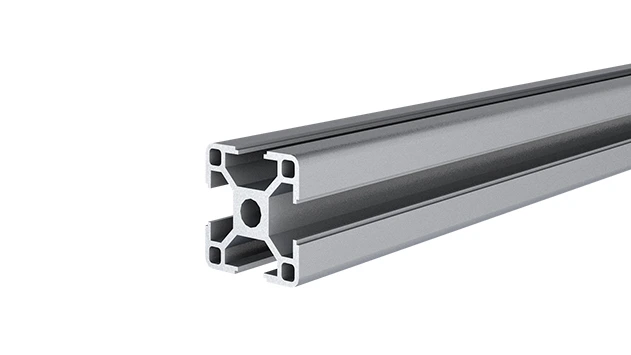
3030 is a 3.00 x 3.00CM fractional 30 series square extrusion T-slot profile with four open T-slots, each side with 3.00cm face. The profile has align-a-grooves to assist in aligning connecting profiles.
In the world of manufacturing, warehousing, and lean production, the materials we choose shape everything from workflow efficiency to worker safety. Whether you're setting up a new assembly line, building workbenches for a workshop, or designing material racks for a warehouse, the debate between aluminum and steel is one that comes up time and again. Today, we're zeroing in on two heavyweights in this space: the 3030a EU standard aluminum profile and traditional carbon steel. Specifically, we'll break down how they stack up in two critical areas—weight and strength—and why that matters for your operations.
If you've ever struggled with installing a bulky steel workbench or winced at the shipping costs of heavy metal racks, you know weight isn't just a number—it's a daily reality. And when it comes to strength, the last thing you want is a flimsy structure that bends under tool weight or collapses under material loads. So let's dive in: what makes 3030a aluminum profile a rising star, and where does carbon steel still hold its ground?
First Things First: What is 3030a EU Standard Aluminum Profile?
Let's start with the underdog (or maybe the new favorite) in this matchup: the 3030a EU standard aluminum profile. If you've walked through a modern factory or a well-organized workshop, you've probably seen it without realizing it. This profile is a product of aluminum extrusion—a process where heated aluminum alloy is pushed through a die to create consistent, precise shapes. The "3030a" refers to its dimensions: 30mm by 30mm, with the "a" denoting a specific EU standard design (think standardized grooves, wall thickness, and mounting points that make it compatible with a universe of aluminum profile accessories ).
What makes it so popular? Versatility, for starters. Thanks to its T-slot design and (matching) accessories—like internal rotatary aluminum joints, end caps, and brackets—you can build almost anything: workbenches, material racks, flow racks, even turnover trolleys. It's like industrial Lego for adults, but sturdier and tailored for real-world use. Common alloys for these profiles, like 6063, balance ductility (easy to extrude) with strength, making them ideal for both light and medium-duty applications. And because it's aluminum, it's naturally resistant to rust, which is a huge plus in humid warehouses or cleanrooms.
And Carbon Steel? The Old Reliable
Now, carbon steel—the tried-and-true material that's been the backbone of construction and manufacturing for decades. Carbon steel is iron mixed with carbon (usually 0.05% to 2.0%), which gives it incredible hardness and strength. Unlike aluminum, which is a pure metal (though often alloyed), steel is an alloy by definition, and its properties change based on how much carbon is added. Low-carbon steel is malleable and easy to weld, while high-carbon steel is harder but more brittle. For most structural uses—like heavy-duty racks, machine frames, or traditional workbenches—mild carbon steel (low-carbon) is the go-to.
Steel's reputation is built on raw power. It's the material you trust when you need something to stand up to tons of pressure, whether that's supporting a ceiling beam or holding up a stack of steel sheets. But that strength comes with a tradeoff we'll unpack later: weight. Steel is dense, and even a small steel profile can feel surprisingly heavy compared to its aluminum counterpart.

Weight Showdown: Aluminum's Lightweight Advantage
Let's cut to the chase: aluminum is way lighter than carbon steel. How much lighter? Let's talk numbers. The density of aluminum is about 2.7 grams per cubic centimeter (g/cm³), while carbon steel clocks in at a whopping 7.85 g/cm³. That means, for the same volume, steel is nearly three times heavier than aluminum.
Let's make it concrete. Take our 3030a aluminum profile: a typical 30x30mm aluminum profile with a 1.5mm wall thickness weighs roughly 0.8-1.0 kg per meter. Now, a carbon steel profile of the same dimensions (30x30mm, 1.5mm wall) would weigh around 2.5-3.0 kg per meter. Do the math: a 2-meter workbench frame made with 3030a aluminum would weigh ~4 kg, while the steel version would hit ~12 kg. That's a 3x difference!
Why does this matter? Let's count the ways:
1. Easier Installation & Mobility: Try lifting a 12kg steel frame by yourself versus a 4kg aluminum one. Aluminum profiles turn setup from a two-person job into a solo task. This is a game-changer for lean systems, where reconfiguring workstations or moving turnover trolleys is part of daily life. No more waiting for a forklift to shift a steel rack—just a few workers and a dolly, and you're good to go.
2. Lower Shipping & Handling Costs: Shipping carriers charge by weight, and 30kg of aluminum profiles takes up the same truck space as 100kg of steel but costs a fraction to ship. Multiply that by a full order of material racks or workbenches, and the savings add up fast.
3. Ergonomics for Workers: Heavy steel workbenches or trolleys aren't just hard to move—they're hard on bodies. A lighter aluminum workbench reduces strain on workers who adjust heights, reposition tools, or roll trolleys across the shop floor. Over time, that means fewer injuries and happier teams.
Strength: It's Not Just About How Heavy It Is
Okay, so aluminum is lighter—but is it strong enough? Here's where the "strength-to-weight ratio" becomes your new favorite term. Carbon steel has higher absolute strength (it can hold more weight before breaking), but aluminum often has a better strength-to-weight ratio (it holds more weight relative to how much it weighs). Let's break this down with real-world values.
A typical carbon steel (mild steel) has a tensile strength of around 400-500 MPa (megapascals, a unit of pressure). 6063-T5 aluminum alloy—the most common for profiles like 3030a—has a tensile strength of about 180-220 MPa. On paper, steel wins. But remember: steel is three times heavier. So if you take a steel profile and an aluminum profile that weigh the same, the aluminum one can often hold more weight.
For example, a 1kg aluminum beam might support 500kg, while a 1kg steel beam (which would be much thinner or smaller) might only support 300kg. That's the magic of strength-to-weight ratio. And 3030a aluminum profiles aren't just relying on alloy strength—their design helps too. The T-slot grooves and precision-engineered aluminum profile accessories (like internal rotatary joints and heavy-duty brackets) distribute weight evenly, preventing weak points. A well-built aluminum workbench with reinforced joints can easily hold power tools, assembly parts, and even small machinery without flexing.
When would steel still be better? If you need to support extreme loads—think a rack holding tons of steel plates or a machine base that takes constant vibration. In those cases, steel's raw strength shines. But for most workshop or light industrial uses (workbenches, material racks with 3-row and 3-floor designs, or flow racks for boxes), 3030a aluminum profile has more than enough strength—without the bulk.
Real-World Applications: Where Each Material Shines
Let's move from specs to scenarios. When should you reach for 3030a aluminum profile, and when is carbon steel the safer bet?
Choose 3030a Aluminum Profile If…
- You need flexibility : Lean systems thrive on quick changes. Aluminum's light weight and modular accessories (like easy-to-disconnect joints) let you reconfigure workbenches or material racks in hours, not days. - You care about ergonomics : A lighter workbench or trolley means less lifting, pushing, and straining for your team. - Corrosion resistance matters: If your space is humid (like a food processing plant) or you wash down equipment, aluminum won't rust like steel (which needs painting or coating to survive). - You're watching costs long-term : Aluminum costs more upfront, but savings on shipping, installation labor, and maintenance (no repainting!) often make up for it.
Stick with Carbon Steel If…
- You need to support extreme, constant loads : Think a rack for 500kg steel coils or a press machine base. - Upfront cost is your only concern: Steel is cheaper to buy initially, though you'll pay more in shipping and handling. - You're working in a low-mobility environment : If the structure never moves (like a fixed warehouse rack), steel's weight is less of a hassle.
The Verdict: A Side-by-Side Comparison
| Factor | 3030a EU Standard Aluminum Profile | Carbon Steel (Mild Steel) |
|---|---|---|
| Weight (30x30mm profile, per meter) | 0.8-1.0 kg | 2.5-3.0 kg |
| Tensile Strength | 180-220 MPa | 400-500 MPa |
| Strength-to-Weight Ratio | High (excellent for light/medium loads) | Lower (strong but heavy) |
| Corrosion Resistance | Excellent (no coating needed) | Poor (needs painting/coating) |
| Installation & Mobility | Easy (lightweight, modular accessories) | Hard (heavy, often requires tools/welds) |
| Best For | Workbenches, lean systems, turnover trolleys, material racks (3-row/3-floor) | Heavy machinery bases, extreme-load racks, fixed structural parts |
Wrapping Up: The Right Tool for the Job
At the end of the day, there's no "better" material—only the right material for your needs. 3030a EU standard aluminum profile has revolutionized lean manufacturing and workshop design with its lightweight, modular, and corrosion-resistant properties. It's the material for teams that value flexibility, ergonomics, and long-term savings. Carbon steel, meanwhile, remains the king of brute strength, ideal for heavy, fixed structures where raw power can't be compromised.
So next time you're planning a workbench, a material rack, or a full lean system upgrade, ask yourself: How much weight do I really need to support? How often will I move or reconfigure this? And what's more valuable—saving a few dollars today, or saving time, labor, and headaches tomorrow? For most of us, the answer is clear: aluminum is no longer the "lightweight" option in strength, and it's quickly becoming the smart choice in manufacturing.