- Company Articles
- Industry articles
- Industry standards
- 3030a EU Standard Aluminum Profile vs Plastic Extrusions: Performance Analysis

3030a EU Standard Aluminum Profile vs Plastic Extrusions: Performance Analysis
Related Product
3030A EU Standard Aluminum Profile
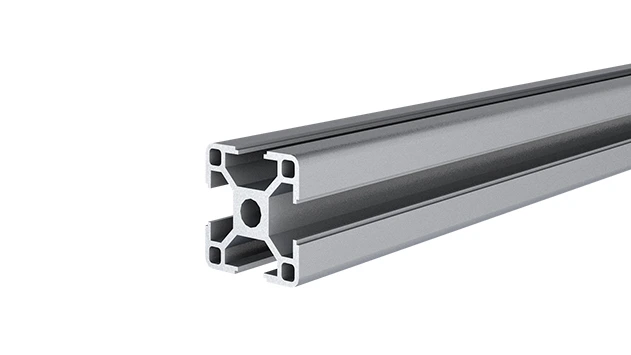
3030 is a 3.00 x 3.00CM fractional 30 series square extrusion T-slot profile with four open T-slots, each side with 3.00cm face. The profile has align-a-grooves to assist in aligning connecting profiles.
Walk into any modern workshop, manufacturing plant, or even a DIY enthusiast's garage, and you'll likely spot a common challenge: choosing the right materials to build structures that are sturdy, adaptable, and cost-effective. Whether it's a workbench for assembling electronics, a flow rack for material handling, or a modular frame for lean manufacturing systems, the materials we pick shape everything from daily productivity to long-term operational costs. Today, we're diving deep into two heavyweights in this space: the 3030a EU Standard Aluminum Profile and traditional plastic extrusions. By the end, you'll understand why one often outshines the other in real-world applications—especially when durability, flexibility, and value matter most.
1. Material Composition: The Building Blocks of Performance
Let's start with the basics: what are these materials made of, and how do their origins affect their behavior?
First, the 3030a EU Standard Aluminum Profile . This isn't just any aluminum—it's a precision-engineered aluminum extrusion profile , part of a family of materials designed for structural integrity and modularity. The "3030a" refers to its dimensions (30mm x 30mm cross-section) and adherence to EU manufacturing standards, which ensure consistent quality and performance. It's typically crafted from 6063-T5 aluminum alloy, a blend known for its excellent balance of strength, corrosion resistance, and workability. The extrusion process involves heating the aluminum billet and forcing it through a die to create the profile's signature T-slot design—a feature that makes it incredibly versatile for attaching accessories like brackets, panels, and connectors.
Plastic extrusions, on the other hand, are made from polymers like PVC, ABS, or polypropylene, often mixed with additives to enhance properties like rigidity or UV resistance. The extrusion process here is similar in concept—melting plastic resin and pushing it through a die—but the end result is a material that's lighter and cheaper upfront. However, plastic's molecular structure is fundamentally different: it's amorphous, meaning it lacks the crystalline structure that gives metals like aluminum their inherent strength. This difference isn't just academic; it directly impacts how these materials hold up under stress, heat, and time.
To put it simply: aluminum profiles are built for resilience, while plastic extrusions are often optimized for cost and lightweight convenience. But as we'll see, "convenience" can come with hidden trade-offs.
2. Strength & Durability: When "Good Enough" Isn't Enough
Imagine a workbench in a busy automotive parts shop. Every day, technicians place heavy tools, torque wrenches, and metal components on its surface. Over time, that bench needs to maintain its shape, resist sagging, and support sudden impacts—like a dropped tool. This is where material strength becomes critical.
The 3030a aluminum profile shines here. Thanks to its 6063-T5 alloy, it boasts a tensile strength of around 215 MPa (megapascals)—that's roughly 31,000 pounds per square inch. For context, that means a single 30mm x 30mm aluminum profile can support hundreds of kilograms without bending. Its flexural modulus (a measure of stiffness) is equally impressive: around 69 GPa, compared to plastic extrusions, which typically range from 2-4 GPa. In practical terms, this means aluminum profiles don't "give" under load the way plastic does. A plastic extrusion might start to creep (slowly deform) over months of supporting heavy items, leading to wobbly shelves or uneven work surfaces. Aluminum? It stays rigid, even under sustained stress.
Impact resistance is another area where aluminum pulls ahead. drop a 5kg metal part onto a plastic extrusion frame, and you might see cracks or dents. Do the same on an aluminum frame, and you'll likely walk away with nothing more than a minor scratch. This durability is why industries like aerospace and automotive rely on aluminum alloys—they need materials that can handle the unexpected.
Plastic extrusions do have a role here: for lightweight, low-stress applications like retail display shelves or temporary structures, their lower strength might be acceptable. But in industrial settings where safety and reliability are non-negotiable, aluminum's robustness is hard to beat.

3. Weight & Installation: Balancing Heft and Ease
One common misconception is that metal equals "heavy and hard to work with." But aluminum turns that idea on its head. Despite its strength, the 3030a profile is surprisingly lightweight, with a density of just 2.7 g/cm³—about a third the weight of steel. Compare that to plastic extrusions, which typically range from 1.0-1.5 g/cm³. At first glance, plastic seems lighter, but here's the catch: to match aluminum's strength, plastic extrusions often need to be thicker, negating some of that weight advantage. A 30mm aluminum profile might outperform a 40mm plastic extrusion in load-bearing, but weigh roughly the same.
Installation is where aluminum's design truly shines, thanks in large part to aluminum profile accessories . The T-slot design of the 3030a profile allows for quick, tool-free assembly using bolts, nuts, and brackets. Need to adjust a workbench height? Swap out a bracket. Want to add a shelf to a flow rack? Slide in a connector and tighten a screw. This modularity is a cornerstone of lean manufacturing, where adaptability can save hours of downtime. Plastic extrusions, by contrast, often rely on adhesives, welding (for some plastics), or friction-fit connections that loosen over time. Ever tried to disassemble a plastic shelf? Chances are, you'll end up breaking a tab or cracking a joint—making reconfiguration more of a hassle than it's worth.
Consider a small electronics manufacturer that retools its production line every few months to accommodate new products. With aluminum profiles, they can disassemble and rebuild workstations in a day. With plastic extrusions? They might be better off buying new frames each time—costing more in time and money.
4. Environmental Resistance: Standing Up to the Elements (and the Workshop)
Workshops and factories are tough environments. Humidity, oils, chemicals, and temperature swings can take a toll on materials. Let's see how our two contenders stack up.
Aluminum is naturally corrosion-resistant, thanks to a thin oxide layer that forms on its surface when exposed to air. This layer acts as a barrier, preventing rust and degradation—even in damp or oily conditions. For applications like food processing or marine environments, you can even anodize the aluminum to this protection further. Plastic extrusions, while resistant to some chemicals, struggle with others: oils and solvents can cause them to swell or become brittle. Ever noticed a plastic storage bin that's cracked after sitting near a machine that leaks hydraulic fluid? That's chemical degradation in action.
Temperature is another factor. Aluminum profiles handle heat well, with a maximum operating temperature of around 120°C (248°F) before losing structural integrity. Plastic extrusions, depending on the type, start to warp or soften at 60-80°C. In a workshop with heat-generating machinery, that plastic flow rack near a welding station might start to sag by the end of the day. Aluminum? It stays cool and stable.
UV resistance is a final consideration. Plastic extrusions left in direct sunlight (say, in an outdoor warehouse) will fade and become brittle over time. Aluminum, with its oxide layer, retains its color and strength for decades—making it ideal for both indoor and outdoor use.
| Performance Metric | 3030a EU Standard Aluminum Profile | Plastic Extrusions (PVC/ABS) |
|---|---|---|
| Tensile Strength (MPa) | ~215 | 50-70 |
| Density (g/cm³) | 2.7 | 1.0-1.5 |
| Max Operating Temp (°C) | 120 | 60-80 |
| Estimated Lifespan (Years) | 10-15+ | 3-5 |
| Recyclability | 100% recyclable, retains 95% of original value | Partially recyclable (varies by type), often downcycled |
| Cost (per meter, approx.) | $8-$12 | $3-$5 |
5. Cost-Effectiveness: Looking Beyond the Initial Price Tag
Let's talk money. At first glance, plastic extrusions seem like the budget-friendly choice—$3-$5 per meter versus $8-$12 for aluminum. But as any seasoned operations manager will tell you, initial cost is just one piece of the puzzle. Total cost of ownership (TCO) includes maintenance, replacement, and downtime—and here, aluminum starts to pull ahead.
Consider a workbench built with plastic extrusions. It costs $150 upfront. But after 3 years, the plastic joints loosen, the surface warps, and it needs to be replaced. Over 10 years, that's 3-4 replacements, totaling $450-$600. Now, an aluminum workbench costs $300 upfront but lasts 15 years with minimal maintenance. Even factoring in occasional replacement of accessories (like brackets or casters), the TCO is far lower. Add in the downtime from replacing plastic workbenches—hours of lost productivity while workers wait for new frames—and the gap widens further.
Then there's recyclability. Aluminum is 100% recyclable, and recycling it uses just 5% of the energy needed to produce new aluminum. At the end of its lifespan, that aluminum workbench can be melted down and turned into new profiles—often with no loss in quality. Plastic extrusions? Most are downcycled into lower-grade products (like park benches) and eventually end up in landfills. For companies aiming for sustainability goals, aluminum's recyclability is a major plus.
Plastic might make sense for one-off projects or temporary setups, but for long-term investments, aluminum's higher initial cost pays off in spades.
6. Applications: Where Aluminum Profiles Truly Excel
So, when should you choose 3030a aluminum profiles over plastic extrusions? Let's look at real-world scenarios where aluminum is the clear winner.
Lean Manufacturing Systems: Lean manufacturing thrives on efficiency and adaptability. A lean system might include flow racks for material transport, workstations that adjust to worker heights, and modular assembly lines that reconfigure with new products. Aluminum profiles, with their T-slot design and durable accessories, are perfect here. They allow teams to build, modify, and scale systems without welding or specialized tools—saving time and reducing waste.
Heavy-Duty Workbenches: As we discussed earlier, workbenches in industrial settings need to support heavy loads, resist impacts, and last for years. Aluminum profiles provide the stability needed for precision work, whether it's assembling circuit boards or repairing machinery.
Material Handling Equipment: Trolleys, racks, and conveyor systems take a beating daily. Aluminum's lightweight strength makes trolleys easy to maneuver, while its corrosion resistance ensures they hold up in wet or oily environments.
Outdoor Structures: From warehouse awnings to outdoor storage racks, aluminum profiles stand up to rain, snow, and UV rays—unlike plastic, which degrades quickly outdoors.
Plastic extrusions have their niches: lightweight shelving in dry, temperature-controlled environments, or low-cost retail displays. But when the job demands durability, flexibility, or longevity, aluminum is the smarter choice.
7. Conclusion: Why 3030a Aluminum Profiles Are Worth the Investment
Choosing between 3030a EU Standard Aluminum Profiles and plastic extrusions isn't just about materials—it's about investing in your operation's future. Plastic extrusions offer lower upfront costs, but they lack the strength, durability, and adaptability that modern workshops and factories need. Aluminum profiles, on the other hand, deliver long-term value through their robustness, ease of installation, and resistance to wear and tear.
Whether you're building a single workbench or an entire lean manufacturing system, the 3030a aluminum profile checks all the boxes: it's strong enough to handle heavy loads, lightweight enough for easy assembly, and durable enough to last decades. Pair it with high-quality aluminum profile accessories, and you've got a solution that grows with your business—no need to replace frames every few years.
At the end of the day, the question isn't "Can I afford aluminum?" It's "Can I afford not to?" For businesses that prioritize productivity, safety, and sustainability, the answer is clear: 3030a EU Standard Aluminum Profiles are more than a material—they're a long-term investment in success.