- Company Articles
- Industry articles
- Industry standards
- 3030b EU Standard Aluminum Profile in Aerospace Manufacturing: Lightweight Solutions

3030b EU Standard Aluminum Profile in Aerospace Manufacturing: Lightweight Solutions
Related Product
3030B EU Standard Aluminum Profile
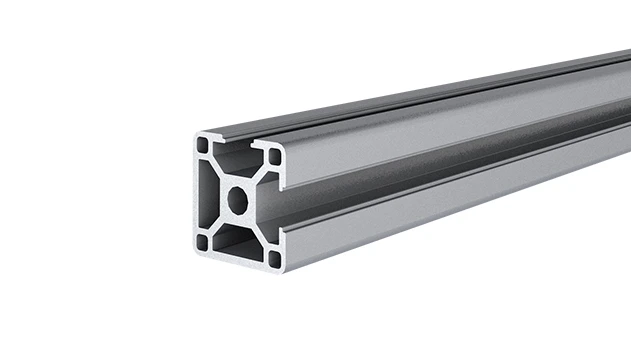
3030 is a 3.00 x 3.00CM fractional 30 series square extrusion T-slot profile with two side open T-slots, each side with 3.00cm face, 2 side with open slot, 2 side with closed face. The profile has align-a-grooves to assist in aligning connecting profiles.
The aerospace industry has always been a realm of relentless innovation, where every gram saved translates to better fuel efficiency, extended range, and enhanced performance. From the earliest days of aviation to today's cutting-edge spacecraft, materials science has been the unsung hero driving progress. Among the many materials that have shaped this industry, aluminum stands out—not just for its lightweight properties, but for its adaptability, strength, and cost-effectiveness. In recent years, a specific player has emerged as a game-changer in aerospace manufacturing floors: the 3030b EU Standard Aluminum Profile. More than just a structural component, this profile, paired with the right aluminum profile accessories, is redefining how aerospace teams build, adapt, and optimize their production environments. Let's dive into why this combination is becoming indispensable in an industry where precision and efficiency are non-negotiable.
The Aerospace Manufacturing Challenge: Balancing Weight, Strength, and Adaptability
Aerospace manufacturing is a high-stakes dance between conflicting demands. On one hand, the end products—aircraft, satellites, drones—require materials that are incredibly strong yet featherlight to meet strict performance and safety standards. On the other hand, the factories that build these products face their own set of challenges: workstations must be sturdy enough to handle delicate, high-value components (think turbine blades or avionics), flexible enough to adapt to frequent design changes, and efficient enough to keep up with tight production schedules. Add to this the pressure to reduce waste, lower operational costs, and minimize environmental impact, and it's clear why traditional manufacturing setups—often built with heavy steel or rigid plastic—are struggling to keep pace.
This is where lightweight solutions like aluminum extrusion profiles come into play. Unlike bulkier materials, aluminum extrusion profiles offer a unique blend of structural integrity and versatility. They're not just lighter; they're designed to be modular, meaning they can be easily reconfigured, extended, or repurposed as production needs evolve. And among the vast array of aluminum profiles available, the 3030b EU Standard Aluminum Profile has carved out a niche for itself in aerospace facilities. Its standardized dimensions, compliance with strict EU manufacturing norms, and compatibility with a wide range of aluminum profile accessories make it a go-to choice for teams looking to build lean, efficient, and future-ready workspaces.
What Makes 3030b EU Standard Aluminum Profile Special?
Before we explore its applications in aerospace, let's break down what the 3030b EU Standard Aluminum Profile is, and why it stands out from other profiles. First, the "3030" refers to its cross-sectional dimensions: 30mm by 30mm. This compact size makes it ideal for building medium-duty structures—strong enough to support tools, components, and even small assembly fixtures, but not so large that it adds unnecessary bulk. The "b" in its name denotes a specific design variant, often characterized by a smooth surface finish, precise tolerances, and a focus on compatibility with modular accessories. Most importantly, the "EU Standard" label ensures that the profile meets rigorous European union regulations for material quality, safety, and environmental sustainability—critical factors in aerospace, where compliance with international standards is non-negotiable.
Material Composition: Strength Meets Lightweighting
At its core, the 3030b profile is typically crafted from 6063-T5 aluminum alloy, a popular choice in extrusion for its excellent balance of strength, corrosion resistance, and machinability. This alloy contains magnesium and silicon as its primary alloying elements, which form Mg2Si precipitates during heat treatment—giving the profile its impressive mechanical properties. For aerospace applications, this translates to a material that can withstand the daily rigors of manufacturing (vibrations, tool impacts, repeated assembly/disassembly) without deforming, while still being up to 70% lighter than steel. To put this in perspective: a 2-meter length of 3030b profile weighs roughly 0.8 kg, compared to a similar steel profile, which might weigh 2.5 kg or more. Over an entire production line, this weight difference adds up, reducing the load on factory floors, simplifying transportation of modular structures, and even lowering energy costs associated with moving equipment.
Precision Extrusion: The Key to Consistency
The 3030b profile's value also lies in the extrusion process itself. Aluminum extrusion involves forcing heated aluminum billet through a die to create a continuous shape with a uniform cross-section. For the 3030b, this process is executed with extreme precision: tight dimensional tolerances (often within ±0.1mm) ensure that every profile is identical, making it easy to swap out components or expand structures without compatibility issues. This consistency is vital in aerospace manufacturing, where even minor misalignments can lead to errors in component assembly or tool calibration. Additionally, the extrusion process allows for the integration of T-slots along the profile's length—longitudinal grooves that serve as attachment points for accessories like brackets, connectors, and panels. These T-slots eliminate the need for welding or drilling, making assembly and reconfiguration fast and tool-free—a boon for lean manufacturing systems.

3030b in Action: Transforming Aerospace Manufacturing Workflows
Now that we understand the "what" and "why" of the 3030b profile, let's explore how it's actually used on aerospace factory floors. From workbenches to material racks, its versatility shines in a variety of applications—all aimed at creating leaner, more efficient, and more adaptable manufacturing environments.
Workbenches: The Heart of Assembly
In aerospace, assembly workbenches are more than just tables; they're command centers where technicians build, inspect, and test critical components. A well-designed workbench must be sturdy, ergonomic, and customizable to fit the task at hand. This is where the 3030b profile excels. By combining 3030b profiles with aluminum profile accessories like 90° connectors, end caps, and adjustable feet, teams can build workbenches tailored to specific assembly processes. For example, a workbench used to assemble avionic circuit boards might feature a static top (made of anti-static ESD material, another aerospace must-have) supported by 3030b legs, with T-slot-mounted tool holders, LED task lights, and cable management clips integrated directly into the profile. Because the 3030b is lightweight, the entire workbench can be easily moved (with the addition of casters) or reconfigured if the assembly process changes—say, when switching from one aircraft model to another.
What's more, the modular nature of the 3030b system allows for quick upgrades. If a team needs to add a shelf for component storage, they can simply attach new profiles and brackets to the existing frame without welding or cutting. This flexibility reduces downtime and ensures that workbenches evolve alongside manufacturing needs—critical in an industry where production lines are constantly being updated to accommodate new technologies or design revisions.
Material Racks and Flow Systems: Streamlining Component Handling
Aerospace manufacturing involves managing a vast array of components, from tiny fasteners to large structural parts. Keeping these components organized, accessible, and protected is essential to maintaining efficiency and reducing errors. Here, the 3030b profile, paired with accessories like roller tracks and shelf brackets, proves invaluable for building custom material racks and flow systems. For instance, a 3030b-based material rack might feature multiple levels (adjustable via T-slot connectors) to separate different component types, with dividers to prevent mixing and labeling holders for easy identification. Because the profile is lightweight, even fully loaded racks can be moved with minimal effort, allowing teams to position components closer to the assembly line—reducing walk time and improving workflow.
In lean manufacturing systems, which emphasize minimizing waste and maximizing value, flow racks built with 3030b profiles are particularly useful. These racks use gravity-fed roller tracks (another accessory that integrates seamlessly with the profile's T-slots) to move components from the back to the front as they're used, ensuring first-in, first-out (FIFO) inventory management. This not only reduces the risk of component expiration or obsolescence but also eliminates the need for manual handling, cutting down on fatigue and errors. For aerospace facilities, where components can be expensive and mission-critical, this level of organization is a game-changer.
Lightweight Test Frames: Supporting Innovation in R&D
Beyond production floors, the 3030b profile also plays a role in aerospace research and development. Engineers often need to build temporary test frames to evaluate new components, simulate loads, or prototype assembly processes. Traditional steel frames for these applications are heavy, time-consuming to build, and difficult to modify. The 3030b profile, however, offers a lightweight alternative that can be assembled in hours (not days) using simple hand tools and aluminum profile accessories. For example, a test frame for a drone's landing gear might be constructed from 3030b profiles, with sensors and measurement tools mounted directly to the T-slots. If the design needs tweaking, the frame can be quickly disassembled, modified, and reassembled—accelerating the R&D cycle and getting new technologies to market faster.
The Role of Aluminum Profile Accessories: Turning Profiles into Systems
While the 3030b profile itself is impressive, its true power lies in its compatibility with a wide range of aluminum profile accessories. These accessories—connectors, brackets, end caps, roller tracks, and more—transform individual profiles into fully functional systems. For aerospace manufacturing, this modularity is key: it allows teams to build exactly what they need, when they need it, without over-engineering or overspending.
Connectors: The Glue That Holds It All Together
Connectors are perhaps the most critical accessories for 3030b profiles. They come in various designs—90° angle connectors, T-joints, corner brackets—to join profiles at different angles, creating stable, rigid structures. Many connectors are designed to fit into the profile's T-slots, using bolts or set screws to secure them in place. This "tool-free" assembly (or minimal-tool, in some cases) is a huge advantage in aerospace facilities, where maintenance teams may need to reconfigure structures quickly. For example, a 90° aluminum profile connector can join two 3030b profiles to form a right angle, with the T-slot allowing for precise positioning before tightening. This level of adjustability ensures that structures are aligned correctly, which is crucial for applications like workbench tops or test frames, where flatness and squareness are important.
End Caps and Surface Treatments: Protecting Components and Personnel
Aerospace manufacturing environments prioritize safety, and even small details like sharp edges can pose risks. Aluminum profile end caps—plastic or rubber covers that snap onto the ends of 3030b profiles—prevent cuts and scrapes, while also keeping dust and debris out of the profile's internal channels. Some end caps even feature integrated cable management ports, allowing wires for tools or lights to be routed through the profile, keeping workspaces clean and reducing tripping hazards. Additionally, many 3030b profiles come with anodized surface treatments, which enhance corrosion resistance and create a smooth, non-slip finish—important for both durability and safety in busy factories.
Case Study: A Major Aerospace Manufacturer's Lean Transformation with 3030b
To illustrate the impact of 3030b EU Standard Aluminum Profile in aerospace, let's consider a hypothetical case study (inspired by real-world applications) of a mid-sized aerospace component manufacturer. Prior to adopting 3030b profiles, the company relied on steel workbenches and fixed wooden racks for their assembly line. These setups were heavy, difficult to reconfigure, and prone to rust in the facility's humidity-controlled environment. As the company expanded its product line to include smaller, more complex avionic components, they faced two major challenges: their existing workspaces were too rigid to accommodate new assembly processes, and the weight of steel structures was increasing floor load costs.
The solution? A complete overhaul of their manufacturing floor using 3030b profiles and aluminum profile accessories. The team replaced steel workbenches with modular 3030b-based workstations, each customized with ESD tops, adjustable shelves, and tool holders. Material racks were rebuilt using 3030b frames and roller tracks, allowing components to flow directly to the assembly line. Even test fixtures for component validation were constructed from 3030b profiles, enabling quick modifications as test requirements changed.
The results were striking: assembly line changeover time (when switching between component models) dropped by 40%, thanks to the easy reconfiguration of 3030b workstations. Floor space utilization improved by 25%, as the compact 3030b profiles allowed for denser, more efficient layouts. Most notably, the weight reduction from steel to aluminum led to a 15% decrease in energy costs associated with heating and cooling the facility (lighter structures require less support, allowing for better airflow and insulation). Perhaps most importantly, the team reported a 20% reduction in errors, attributed to the improved organization and accessibility of components on the new 3030b-based material racks.
Sustainability: A Growing Priority in Aerospace
In recent years, sustainability has become a key focus for the aerospace industry, driven by regulatory pressures, consumer demand, and corporate responsibility goals. Aluminum, being 100% recyclable with no loss in quality, aligns perfectly with these goals. The 3030b profile, in particular, offers sustainability benefits at every stage of its lifecycle: from production (aluminum extrusion requires less energy than steel manufacturing) to use (lightweight structures reduce energy consumption in factories) to end-of-life (profiles can be recycled into new aluminum products).
For aerospace manufacturers aiming to reduce their carbon footprint, the 3030b profile's recyclability is a significant advantage. Unlike plastic or composite structures, which may end up in landfills, aluminum profiles can be melted down and reused, closing the loop on material waste. Additionally, the modular nature of 3030b systems means that components can be repurposed rather than replaced when needs change—further reducing waste. In an industry where sustainability is increasingly tied to brand reputation and regulatory compliance, this is more than just a nice-to-have; it's a strategic imperative.
Comparing 3030b to Other Materials: A Clear Advantage for Aerospace
To truly appreciate the value of 3030b EU Standard Aluminum Profile, it's helpful to compare it to other common materials used in aerospace manufacturing setups. Below is a breakdown of how it stacks up against steel, plastic, and other aluminum profiles:
| Material | Weight (per 2m length) | Strength (Tensile Strength) | Customization | Sustainability | Cost (Relative) |
|---|---|---|---|---|---|
| 3030b Aluminum Profile (6063-T5) | ~0.8 kg | 210 MPa | High (modular accessories, T-slots) | High (100% recyclable, low energy production) | Moderate |
| Mild Steel Profile (30x30mm) | ~2.5 kg | 370 MPa | Low (requires welding, drilling) | Moderate (recyclable, high energy production) | Low |
| Plastic Profile (30x30mm) | ~0.5 kg | 40 MPa | Moderate (limited accessories) | Low (poor recyclability, petroleum-based) | Low |
| Larger Aluminum Profile (40x40mm) | ~1.2 kg | 210 MPa | High | High | High |
As the table shows, 3030b strikes an ideal balance: lighter than steel, stronger than plastic, and more cost-effective than larger aluminum profiles. Its modularity and sustainability further set it apart, making it the clear choice for aerospace manufacturers looking to optimize their operations.
Future Trends: 3030b and the Next Generation of Aerospace Manufacturing
Looking ahead, the role of 3030b EU Standard Aluminum Profile in aerospace manufacturing is only set to grow. As the industry moves toward more agile, flexible production models (like "lights-out" factories and on-demand manufacturing), the need for modular, reconfigurable infrastructure will intensify. The 3030b profile, with its lightweight design, compatibility with smart accessories (e.g., IoT sensors for monitoring workstation usage), and ease of integration with automation systems, is well-positioned to support these trends.
Additionally, advancements in aluminum extrusion technology—such as improved surface treatments for enhanced ESD protection or the integration of composite materials into profiles—could further expand the 3030b's capabilities. Imagine a 3030b profile with built-in RFID tags to track tool location, or a conductive variant for grounding sensitive aerospace components. The possibilities are endless, and as aerospace manufacturers continue to push the boundaries of innovation, the 3030b profile will undoubtedly be right there with them.
Conclusion: 3030b—More Than a Profile, a Catalyst for Aerospace Efficiency
In the fast-paced world of aerospace manufacturing, where every detail matters, the 3030b EU Standard Aluminum Profile has emerged as more than just a building material—it's a catalyst for efficiency, innovation, and sustainability. By combining lightweight strength, modular versatility, and compliance with strict industry standards, it addresses the unique challenges of aerospace production floors: the need for adaptability, the demand for precision, and the pressure to reduce waste.
Whether it's building ergonomic workbenches for assembling avionics, designing flow racks for component management, or creating test frames for R&D, the 3030b profile, paired with the right aluminum profile accessories, delivers solutions that are as flexible as they are reliable. As the aerospace industry continues to evolve, one thing is clear: the 3030b EU Standard Aluminum Profile will remain a cornerstone of modern manufacturing, helping teams build the next generation of aircraft and spacecraft—lighter, safer, and more efficient than ever before.