- Company Articles
- Industry articles
- Industry standards
- 3030b EU Standard Aluminum Profile in Lean Pipe Systems: Integration Tips

3030b EU Standard Aluminum Profile in Lean Pipe Systems: Integration Tips
Related Product
3030B EU Standard Aluminum Profile
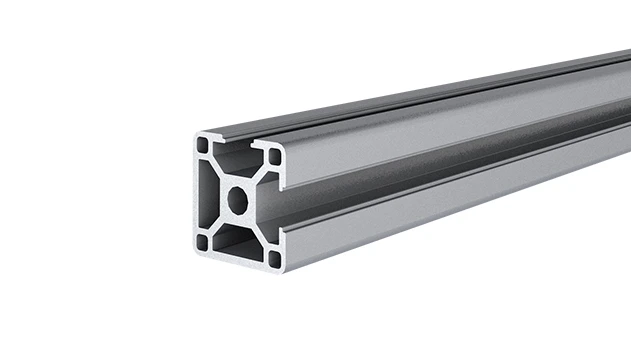
3030 is a 3.00 x 3.00CM fractional 30 series square extrusion T-slot profile with two side open T-slots, each side with 3.00cm face, 2 side with open slot, 2 side with closed face. The profile has align-a-grooves to assist in aligning connecting profiles.
In the fast-paced world of manufacturing and industrial operations, efficiency isn't just a buzzword—it's the backbone of success. Lean manufacturing, with its focus on minimizing waste and maximizing value, has become the gold standard for businesses aiming to stay competitive. At the heart of any effective lean system lies the equipment that brings these principles to life: sturdy, flexible, and adaptable structures that can keep up with evolving production needs. Enter the 3030b EU Standard Aluminum Profile—a workhorse in the realm of industrial framing that's quietly revolutionizing how lean pipe systems are built and integrated.
If you've ever walked through a well-organized factory floor, chances are you've seen aluminum profiles hard at work: supporting workbenches, framing flow racks, or forming the skeleton of modular conveyor systems. But not all profiles are created equal. The 3030b EU Standard stands out for its unique blend of strength, versatility, and cost-effectiveness, making it a go-to choice for engineers, plant managers, and lean specialists alike. In this article, we'll dive deep into what makes the 3030b profile tick, how it integrates seamlessly into lean pipe systems, and share actionable tips to help you get the most out of this unsung hero of industrial efficiency. Whether you're building a new workbench, revamping a flow rack, or designing a fully customized lean solution, understanding the 3030b could be the key to unlocking smoother workflows, reduced downtime, and a more agile operation.
If you've ever walked through a well-organized factory floor, chances are you've seen aluminum profiles hard at work: supporting workbenches, framing flow racks, or forming the skeleton of modular conveyor systems. But not all profiles are created equal. The 3030b EU Standard stands out for its unique blend of strength, versatility, and cost-effectiveness, making it a go-to choice for engineers, plant managers, and lean specialists alike. In this article, we'll dive deep into what makes the 3030b profile tick, how it integrates seamlessly into lean pipe systems, and share actionable tips to help you get the most out of this unsung hero of industrial efficiency. Whether you're building a new workbench, revamping a flow rack, or designing a fully customized lean solution, understanding the 3030b could be the key to unlocking smoother workflows, reduced downtime, and a more agile operation.
What Is the 3030b EU Standard Aluminum Profile?
Let's start with the basics. The 3030b EU Standard Aluminum Profile is a extruded aluminum component defined by its dimensions, material composition, and compliance with European union standards. As the name suggests, it measures 30mm by 30mm in cross-section—squarish in shape, with a "b" designation that typically refers to specific design nuances, such as wall thickness, slot configuration, or compatibility with EU-standard accessories. Unlike generic aluminum tubing, this profile is engineered with precision: its T-slot design (longitudinal grooves running along its length) allows for easy attachment of accessories like brackets, connectors, and panels, making it infinitely customizable.
Material-wise, the 3030b is usually crafted from 6063-T5 aluminum alloy, a heat-treated grade known for its excellent balance of strength, corrosion resistance, and machinability. This alloy is lightweight—about a third the weight of steel—yet surprisingly robust, able to support medium to heavy loads without bending or warping. The surface is often anodized, a process that creates a hard, protective oxide layer, giving it a sleek, matte finish that resists scratches, fingerprints, and rust. This makes it ideal for use in environments where cleanliness (like electronics manufacturing) or durability (like automotive plants) is critical.
What truly sets the 3030b apart, though, is its adherence to EU standards. These standards ensure uniformity in dimensions, tolerances, and accessory compatibility across manufacturers, meaning you can mix and match components from different suppliers without worrying about fit issues. Whether you're ordering a 3030b profile from Germany, Italy, or a local distributor, you can trust that it will work seamlessly with EU-standard brackets, hinges, and end caps. This interoperability is a game-changer for lean systems, where adaptability and quick reconfiguration are essential.
Key Features That Make 3030b Ideal for Lean Pipe Systems
Modularity: Build, Break, Rebuild—No Tools Required (Almost)
Lean manufacturing thrives on flexibility. Production lines change, workflows evolve, and what worked yesterday might not work tomorrow. The 3030b's T-slot design is tailor-made for this reality. Instead of welding or drilling permanent holes, you can attach accessories using T-slot nuts and bolts, which slide into the grooves and lock in place with a simple turn of a wrench. Need to add a shelf to a workbench? Slide in a bracket, tighten a bolt, and you're done. Want to reconfigure a flow rack to accommodate a new product size? Loosen the connectors, adjust the profile lengths, and reattach—all in under an hour. This modularity drastically reduces downtime during reconfigurations and eliminates the need for specialized labor, putting the power to adapt directly in the hands of your team.
Strength Without the Bulk
Lean systems can't afford to sacrifice strength for flexibility. A workbench that wobbles under tool weight or a flow rack that sags under inventory isn't just inefficient—it's dangerous. The 3030b strikes a perfect balance here. Thanks to its 6063-T5 alloy and optimized wall thickness (usually around 1.5mm to 2mm, depending on the manufacturer), it can handle impressive loads. While exact capacities vary, a typical 3030b profile can support 50-100 kg per linear meter when properly installed—more than enough for most assembly line tools, bins of components, or finished goods. Compare that to flimsier 2020 profiles (better for light-duty tasks) or bulkier 4040 profiles (overkill for smaller setups), and the 3030b emerges as the "just right" option for medium-duty applications.
Cost-Effective in the Long Run
At first glance, aluminum profiles might seem pricier than steel pipes or wooden frames. But factor in longevity, reusability, and maintenance, and the 3030b becomes a cost-saver. Unlike steel, it won't rust, so you won't need to repaint or replace it every few years. Unlike wood, it doesn't warp, splinter, or attract pests. And because it's modular, you can reuse components when you reconfigure your system—no need to throw away old parts and buy new ones. For example, a 3030b workbench frame can be disassembled and repurposed into a material rack or a mobile trolley with minimal new parts. Over time, this reusability drastically lowers the total cost of ownership, making it a smart investment for lean operations focused on waste reduction.

Integrating 3030b into Lean Pipe Systems: Real-World Applications
Workbenches: The Heart of the Assembly Line
Workbenches are where the magic happens in manufacturing—where components become products, and workers spend most of their shifts. A well-designed workbench should be sturdy, ergonomic, and customizable to the task at hand. The 3030b excels here. Let's say you're setting up a workbench for electronics assembly. Start with a frame: four vertical 3030b legs, connected by horizontal profiles at the top and bottom for stability. Add a solid top (plywood, MDF, or aluminum honeycomb panel) using brackets that slide into the T-slots. Then, customize: attach a shelf for tools, a pegboard for hanging equipment, or a LED light bar above for better visibility. Need to adjust the height? Swap out the leg profiles for longer ones, or add height-adjustable feet (another EU-standard accessory). The result? A workbench that grows with your needs, reduces worker fatigue, and keeps tools within arm's reach—all hallmarks of lean efficiency.
Flow Racks: Streamlining Material Handling
Flow racks are essential for "first in, first out" (FIFO) inventory management, ensuring that older materials are used before newer ones, reducing waste. A typical flow rack consists of sloped shelves with roller tracks, allowing boxes or bins to glide forward as items are removed. The 3030b provides the perfect frame for these racks. Build vertical supports with 3030b profiles, then attach horizontal rails at an angle. Mount roller tracks (often made of plastic or aluminum) to the rails using T-slot brackets. The modularity of the 3030b lets you adjust the number of shelves, their height, and the slope angle to match your bin size and weight. For example, if you're storing small electronic components, you might use narrow shelves with 0.5-inch swivel roller balls. For heavier automotive parts, wider shelves with 1-inch steel rollers would be better. Either way, the 3030b frame ensures stability, while the T-slots make it easy to add dividers, labels, or even ESD (electrostatic discharge) mats for sensitive components.
Mobile Trolleys: Moving Materials with Ease
In lean systems, minimizing movement is key—workers shouldn't have to walk far to fetch materials. Mobile trolleys solve this by bringing materials directly to the assembly line. The 3030b is ideal for trolley frames because it's lightweight enough to roll but strong enough to carry heavy loads. Build a rectangular frame with 3030b profiles, add a base shelf, and mount casters (swivel or fixed, with brakes for safety) to the bottom. Customize with side rails to prevent items from falling off, or fold-down shelves for extra space when needed. Whether you're transporting raw materials from the warehouse or finished products to shipping, a 3030b trolley is agile, durable, and easy to clean—perfect for keeping your floor free of clutter and your workflow smooth.
| Profile Type | Dimensions (mm) | Wall Thickness (mm) | Approx. Load Capacity (kg/m) | Common Applications |
|---|---|---|---|---|
| 2020 EU Standard | 20x20 | 1.0-1.5 | 30-50 | Light-duty shelving, small enclosures, 3D printer frames |
| 3030b EU Standard | 30x30 | 1.5-2.0 | 80-120 | Workbenches, flow racks, mobile trolleys, medium-duty frames |
| 4040 EU Standard | 40x40 | 2.0-3.0 | 150-200 | Heavy-duty machinery frames, conveyor supports, large storage racks |
| 3060 EU Standard | 30x60 | 1.5-2.5 | 100-150 | Wide workbenches, partition walls, material handling systems |
Essential Aluminum Profile Accessories for 3030b
A profile is only as good as the accessories that bring it to life. Luckily, the EU standard ensures a wide range of compatible accessories for the 3030b. Here are the must-haves for any lean integration:
- Connectors: These are the glue that holds your system together. 90° connectors join profiles at right angles (perfect for workbench corners), while 45° connectors add angled supports. There are also 135° connectors for corners, and T-connectors for branching off a main frame. Look for aluminum or zinc-plated steel connectors for durability.
- End Caps: Simple but essential. These plastic or rubber caps fit over the ends of profiles, preventing dust, debris, or sharp edges from causing harm. They also give your system a polished, professional look.
- Brackets and Supports: Use angle brackets to attach shelves, panels, or roller tracks to the T-slots. For heavier loads, use gusset brackets (triangular supports) to reinforce joints. There are also specialized brackets for mounting signs, lights, or even small machinery.
- Leveling Feet and Casters: For workbenches and trolleys, leveling feet (adjustable screws with rubber bases) keep the system stable on uneven floors. Casters (swivel or fixed, with brakes) turn static frames into mobile ones—ideal for trolleys or temporary workstations.
- Panels and Inserts: Attach plywood, acrylic, or metal panels to create enclosures, dividers, or work surfaces. T-slot inserts (rubber or plastic strips) can be added to the grooves to reduce noise, prevent small parts from falling through, or provide a snug fit for accessories.
Integration Tips: Getting the Most Out of Your 3030b System
Integrating 3030b into your lean pipe system is straightforward, but a few best practices can make the process smoother and the results more effective. Here's what we've learned from working with manufacturers and plant managers:
- Start with a Sketch (or a CAD Model): Before you order profiles and accessories, map out your system. Draw a rough sketch of your workbench, flow rack, or trolley, noting dimensions, load requirements, and accessory placements. For complex systems, use CAD software (like SolidWorks or SketchUp) to visualize the design. This helps you avoid over-ordering (or under-ordering) parts and ensures everything fits together on the first try.
- Test Load Capacity First: Don't assume the 3030b can handle any load. Check the manufacturer's load capacity chart (usually available online) and do a test assembly with weights before putting it into production. For example, if your flow rack will hold 50kg bins, stack a few sandbags on a test shelf to see how the profiles bend (they shouldn't!). Better safe than sorry—overloading can lead to accidents or system failure.
- Use the Right Tools for Assembly: T-slot nuts and bolts are easy to tighten, but using the wrong tool can strip the threads or damage the profile. Invest in a set of hex keys (Allen wrenches) in the correct sizes, and a torque wrench if you're working with heavy loads—most manufacturers recommend a specific torque (e.g., 4-6 Nm) for optimal tightness.
- Leave Room for Growth: Lean systems evolve, so design with reconfiguration in mind. Add extra T-slots (i.e., don't fill every groove with accessories) so you can attach new components later. Use longer profiles than you need initially, so you can cut them down if the system shrinks, or extend them with couplers if it grows. This foresight saves time and money down the line.
- Involve Your Team in Design: Who better to ask about workbench height, shelf placement, or flow rack slope than the workers who'll use the system daily? Their input can uncover ergonomic issues (like a shelf that's too high) or workflow inefficiencies (like a trolley that's too wide to fit through doorways) that you might miss. This not only improves the design but also boosts buy-in—team members are more likely to embrace a system they helped create.
Common Challenges and How to Solve Them
Even with careful planning, you might run into hiccups when integrating 3030b profiles. Here are a few common challenges and simple fixes:
Challenge:
Profiles don't align perfectly during assembly.
Solution: Use a square tool to check angles as you build, and tighten connectors gradually (don't fully tighten one joint before the others—this can pull the frame out of alignment). If profiles are slightly bent (common in shipping), gently straighten them with a rubber mallet or a vice (be careful not to kink the aluminum).
Solution: Use a square tool to check angles as you build, and tighten connectors gradually (don't fully tighten one joint before the others—this can pull the frame out of alignment). If profiles are slightly bent (common in shipping), gently straighten them with a rubber mallet or a vice (be careful not to kink the aluminum).
Challenge:
Accessories slip or loosen over time.
Solution: Use lock washers or thread-locking adhesive (like Loctite) on bolts to prevent them from vibrating loose. For T-slot nuts, choose "spring-loaded" or "ball-lock" designs, which grip the groove more tightly than standard nuts.
Solution: Use lock washers or thread-locking adhesive (like Loctite) on bolts to prevent them from vibrating loose. For T-slot nuts, choose "spring-loaded" or "ball-lock" designs, which grip the groove more tightly than standard nuts.
Challenge:
The system feels wobbly under load.
Solution: Add diagonal bracing (using 3030b profiles and 45° connectors) to reinforce the frame—this is especially important for tall systems like flow racks. Check that leveling feet are fully adjusted, and that casters (if used) have their brakes engaged when stationary. If the load is heavier than expected, upgrade to thicker-walled profiles (e.g., 3030c or 4040) or add more support columns.
Solution: Add diagonal bracing (using 3030b profiles and 45° connectors) to reinforce the frame—this is especially important for tall systems like flow racks. Check that leveling feet are fully adjusted, and that casters (if used) have their brakes engaged when stationary. If the load is heavier than expected, upgrade to thicker-walled profiles (e.g., 3030c or 4040) or add more support columns.
Challenge:
Corrosion in humid or wet environments.
Solution: While 6063-T5 is corrosion-resistant, it's not immune to saltwater or heavy moisture. In these cases, opt for profiles with a thicker anodized coating, or use stainless steel accessories. You can also apply a clear, protective spray (like acrylic sealer) to the surface for extra protection.
Solution: While 6063-T5 is corrosion-resistant, it's not immune to saltwater or heavy moisture. In these cases, opt for profiles with a thicker anodized coating, or use stainless steel accessories. You can also apply a clear, protective spray (like acrylic sealer) to the surface for extra protection.
Conclusion: Why 3030b Is a Lean Game-Changer
In the world of lean manufacturing, every component counts. The 3030b EU Standard Aluminum Profile might not be the most glamorous part of your operation, but it's one of the most impactful. Its modularity lets you build systems that adapt to change, its strength keeps workers safe and materials secure, and its cost-effectiveness reduces waste—all while aligning with the core principles of lean. Whether you're assembling a workbench, a flow rack, or a custom material handling system, the 3030b gives you the flexibility to design for today and reconfigure for tomorrow.
At the end of the day, lean manufacturing is about empowering your team to work smarter, not harder. With the 3030b, you're not just building a frame—you're building a foundation for efficiency, agility, and continuous improvement. So the next time you walk through your factory floor, take a closer look at those aluminum profiles. Chances are, they're 3030b—and they're quietly making your operation leaner, one T-slot at a time.