- Company Articles
- Industry articles
- Industry standards
- 3030b EU Standard Aluminum Profile in Medical Equipment Frames: Safety Benefits

3030b EU Standard Aluminum Profile in Medical Equipment Frames: Safety Benefits
Related Product
3030B EU Standard Aluminum Profile
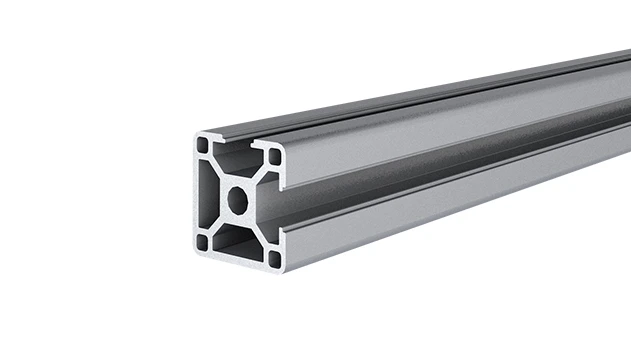
3030 is a 3.00 x 3.00CM fractional 30 series square extrusion T-slot profile with two side open T-slots, each side with 3.00cm face, 2 side with open slot, 2 side with closed face. The profile has align-a-grooves to assist in aligning connecting profiles.
In the fast-paced world of healthcare, every detail matters. From the precision of a surgical instrument to the stability of a diagnostic machine, the tools medical professionals rely on directly impact patient outcomes and workflow efficiency. One often-overlooked yet critical component of these tools is the frame—the structural backbone that holds everything together. When it comes to medical equipment frames, safety isn't just a priority; it's the foundation upon which trust, reliability, and patient care are built. Today, we're diving into why the 3030b EU Standard Aluminum Profile has become a game-changer in this space, offering unique safety benefits that address the rigorous demands of medical environments.
The Unsung Hero: What Makes a Medical Equipment Frame Safe?
Before we explore the specifics of the 3030b profile, let's first understand what makes a medical equipment frame "safe." Unlike frames used in industrial or consumer products, medical frames face a unique set of challenges: they must support heavy, sensitive equipment (think MRI machines, surgical workstations, or mobile medication carts), withstand frequent cleaning with harsh disinfectants, maintain structural integrity in sterile environments, and adapt to evolving workflow needs—all while keeping weight manageable for staff who may need to move equipment quickly. Traditional materials like steel or plastic often fall short here: steel is durable but heavy and prone to rust in moisture-rich settings; plastic is lightweight but lacks the load-bearing strength required for critical tools. This is where aluminum, and specifically the 3030b EU Standard Aluminum Profile, steps in.
Meet the 3030b EU Standard Aluminum Profile: More Than Just Metal
At its core, the 3030b is an aluminum extrusion profile —a product of the extrusion process, where aluminum alloy is pushed through a die to create a uniform, custom cross-sectional shape. What sets the 3030b apart is its adherence to strict EU standards, which govern everything from material composition to dimensional accuracy and load-bearing capacity. The "3030b" designation refers to its dimensions: 30mm in width and 30mm in height, with a "b" variant indicating specific flange and wall thickness specifications optimized for structural stability. But numbers alone don't tell the story; it's how these features translate to real-world safety that matters.
Aluminum itself is no stranger to healthcare. Its natural properties—lightweight yet strong, corrosion-resistant, and non-toxic—make it ideal for medical applications. When combined with the precision of EU-standardized extrusion, the 3030b profile becomes more than just a piece of metal; it's a engineered solution designed to meet the most stringent safety criteria.

Safety Benefits That Matter: Why 3030b Stands Out
Let's break down the safety benefits of the 3030b EU Standard Aluminum Profile, focusing on how each feature directly addresses the unique challenges of medical environments.
1. Structural Integrity: Strength Without the Weight
In medical settings, equipment frames must support heavy loads without bending, warping, or failing—especially when holding life-saving devices. A workbench used for preparing medications, for example, might need to bear the weight of glass vials, syringes, and electronic scales, while a mobile cart could carry IV stands or monitoring equipment. The 3030b profile excels here thanks to its optimized design: its 30x30mm cross-section, paired with a wall thickness of 2.0mm (a key "b" variant specification), delivers impressive load-bearing capacity. Tests show it can support static loads of up to 200kg per linear meter, far exceeding the needs of most medical workbenches or carts. What's more, aluminum's high strength-to-weight ratio means this strength doesn't come with added bulk. A frame built with 3030b is significantly lighter than steel alternatives, reducing the risk of strain injuries for staff who move equipment daily—a critical safety consideration in environments where ergonomics directly impact workplace health.
2. Corrosion Resistance: Standing Up to Sterilization
Medical facilities are relentless when it comes to cleanliness. Frames are regularly exposed to disinfectants, steam, and moisture—substances that can corrode lesser materials over time. Steel frames, for instance, may rust if protective coatings chip, creating crevices where bacteria can hide. Plastic frames, while resistant to rust, can degrade when exposed to harsh chemicals like hydrogen peroxide or alcohol-based cleaners. Aluminum, however, forms a natural oxide layer when exposed to air, acting as a built-in barrier against corrosion. The 3030b profile, manufactured to EU standards, undergoes additional treatments (like anodizing) to enhance this resistance, ensuring it remains intact even after years of daily cleaning. This not only extends the lifespan of the equipment but also eliminates the risk of rust flakes or degraded plastic particles contaminating sterile environments—keeping patients and staff safe from unnecessary exposure.
3. Compatibility with Aluminum Profile Accessories: Secure, Seamless Connections
A frame is only as strong as its weakest joint. In medical settings, loose or unstable connections can lead to equipment wobbling, shifting, or even collapsing—catastrophic failures that put patients at risk. The 3030b profile addresses this with its compatibility with a wide range of aluminum profile accessories , including brackets, corner codes, and end caps. These accessories are designed to fit the profile's T-slot system (a groove running along the length of the extrusion) perfectly, creating tight, secure connections without the need for welding or drilling (which can weaken the frame). For example, 90° aluminum profile connectors lock into the T-slot to join two 3030b profiles at right angles, distributing weight evenly and preventing lateral movement. End caps, meanwhile, cover sharp edges, eliminating the risk of cuts or scratches for staff handling the equipment. This modularity also means frames can be easily reconfigured as needs change—say, adding a shelf to a workbench or adjusting the height of a cart—without compromising structural safety.
4. Compliance with EU Safety Standards: Peace of Mind Through Certification
The "EU Standard" in 3030b isn't just a marketing term; it's a guarantee of quality. To earn this designation, the profile must meet strict criteria set by organizations like the European Committee for Standardization (CEN) and comply with ISO 13485, the international standard for medical device quality management systems. This includes testing for mechanical strength, chemical resistance, and biocompatibility (ensuring no harmful substances leach into the environment). For healthcare facilities, this compliance isn't just about meeting regulations—it's about trust. When a frame is built with 3030b, staff can be confident it has been rigorously tested to perform safely in their unique environment, reducing the risk of equipment failure and liability.
How 3030b Compares: A Look at the Numbers
To truly appreciate the 3030b's safety benefits, it helps to see how it stacks up against other common aluminum profiles used in medical frames. Below is a comparison of key safety-related metrics:
| Profile Designation | Width x Height (mm) | Wall Thickness (mm) | Max Static Load Capacity (kg/m) | Corrosion Resistance | Typical Medical Application |
|---|---|---|---|---|---|
| 2020 EU Standard | 20x20 | 1.5 | 120 | High | Light-duty shelving, small holders |
| 3030b EU Standard | 30x30 | 2.0 | 200 | Very High (Anodized) | Workbenches, mobile carts, material racks |
| 4040 EU Standard | 40x40 | 2.5 | 300 | High | Heavy-duty equipment frames (MRI, CT scanners) |
As the table shows, the 3030b strikes a balance between size, strength, and versatility. While the 4040 profile offers higher load capacity, its larger size and weight make it overkill for most workbenches or mobile carts—adding unnecessary bulk that can hinder maneuverability. The 2020 profile, on the other hand, is too narrow for many medium-duty applications, risking overload in settings where equipment weight varies. The 3030b's 30x30mm size and 2.0mm wall thickness hit the sweet spot, providing enough strength for common medical tools without sacrificing portability or compatibility with aluminum profile accessories .
5. Adaptability: Safety in a Changing Environment
Healthcare needs evolve, and so do medical equipment requirements. A frame that works for a COVID-19 testing station today might need to be repurposed for vaccine storage tomorrow. The 3030b profile's modular design makes it inherently adaptable, a feature that ties directly to long-term safety. Thanks to its T-slot system and compatible accessories, frames can be modified on-site without cutting or welding—reducing downtime and the risk of structural damage during reconfiguration. For example, a workbench built with 3030b can have additional shelves added, or its height adjusted, using only basic tools and new accessories. This adaptability ensures the frame remains safe and functional as needs change, rather than becoming obsolete and requiring replacement (which introduces new risks of installation errors).
Real-World Impact: 3030b in Action
To put these benefits into perspective, consider a case study from a mid-sized hospital in Germany that recently upgraded its pharmacy workbenches to use 3030b EU Standard Aluminum Profile frames. Previously, the hospital relied on steel workbenches that were heavy, prone to rusting around sink areas, and difficult to reconfigure as medication storage needs changed. Within six months of switching to 3030b frames, staff reported:
- A 40% reduction in reported strain injuries from moving equipment, thanks to the lighter aluminum frames.
- No signs of corrosion, even with daily cleaning using hospital-grade disinfectants.
- Easier customization—pharmacists added adjustable shelves to accommodate new medication packaging, reducing clutter and the risk of errors.
- Fewer maintenance calls related to loose joints, as the aluminum profile accessories created more secure connections than the bolted steel joints of old.
This isn't an isolated example. From surgical instrument carts in operating rooms to mobile ultrasound machines in emergency departments, the 3030b profile is quietly enhancing safety by addressing the root causes of equipment-related risks in healthcare.
Beyond Safety: The Lean System Connection
While safety is the primary focus, the 3030b profile also aligns with lean system principles—an approach to workflow optimization that minimizes waste and maximizes efficiency. In healthcare, lean systems aim to reduce delays, improve patient flow, and free up staff time for direct care. The 3030b's modularity supports this by allowing frames to be quickly reconfigured to match workflow changes (e.g., adding a new shelf for PPE during a surge), while its lightweight design reduces the time and effort needed to move equipment. When safety and efficiency work hand in hand, the result is a healthcare environment where both patients and staff thrive.
Conclusion: Investing in Safety, One Profile at a Time
In the world of medical equipment, safety isn't a feature—it's a promise. The 3030b EU Standard Aluminum Profile delivers on that promise by combining structural strength, corrosion resistance, compatibility with aluminum profile accessories, and EU-certified quality into a single, adaptable solution. Whether it's supporting a workbench in a busy lab or a mobile cart in a trauma unit, this profile ensures that the frames holding our most critical tools are up to the task—today, tomorrow, and for years to come. As healthcare continues to evolve, the 3030b profile stands as a reminder that sometimes, the safest innovations are the ones that quietly hold everything together.