- Company Articles
- Industry articles
- Industry standards
- 3030b EU Standard Aluminum Profile: Load Capacity & Structural Integrity

3030b EU Standard Aluminum Profile: Load Capacity & Structural Integrity
Related Product
3030B EU Standard Aluminum Profile
3030 is a 3.00 x 3.00CM fractional 30 series square extrusion T-slot profile with two side open T-slots, each side with 3.00cm face, 2 side with open slot, 2 side with closed face. The profile has align-a-grooves to assist in aligning connecting profiles.
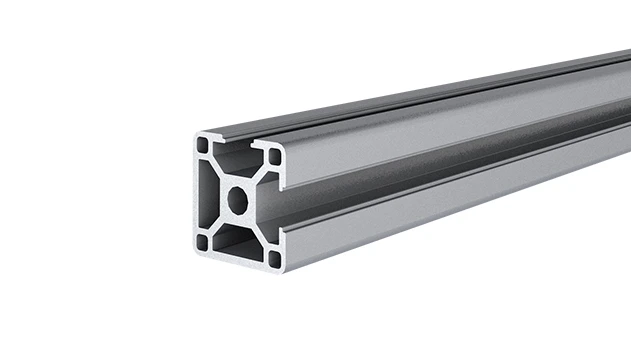
In the world of industrial manufacturing and workspace design, the unsung heroes are often the materials that form the backbone of daily operations. From assembly lines to storage racks, from workbenches to conveyor systems, the right structural components can mean the difference between a smooth, efficient workflow and a frustrating, error-prone one. Among these components, the aluminum profile stands out as a versatile, reliable choice—and within the vast family of aluminum profiles, the 3030b EU Standard Aluminum Profile has earned a reputation as a workhorse. Designed to balance strength, flexibility, and compliance with strict European standards, this profile is more than just a metal extrusion; it's a foundation for building spaces that work as hard as the teams using them. In this article, we'll dive deep into what makes the 3030b profile unique, focusing on its load capacity and structural integrity—two critical factors that determine its performance in real-world applications. Whether you're a factory manager looking to upgrade your material racks, a workshop owner building custom workbenches, or simply curious about the engineering behind industrial structures, understanding the 3030b EU Standard Aluminum Profile will give you insight into how the right materials can transform productivity.
Understanding the 3030b EU Standard Aluminum Profile
Before we explore its load capacity and structural integrity, let's start with the basics: what exactly is the 3030b EU Standard Aluminum Profile? At its core, it's a type of aluminum extrusion profile—a long, slender structure with a specific cross-sectional shape, created by forcing heated aluminum through a die. The "3030b" designation refers to its dimensions: 30mm in width and 30mm in height, with "b" indicating a specific variation in design (often related to groove size, wall thickness, or accessory compatibility). The "EU Standard" label is equally important; it means the profile meets rigorous European norms for quality, safety, and performance, ensuring consistency across manufacturers and reliability for end-users.
Most 3030b profiles are made from aluminum alloy 6063-T5, a material chosen for its excellent combination of strength, corrosion resistance, and machinability. This alloy undergoes a heat treatment process (T5) that enhances its mechanical properties, making it ideal for structural applications. The extrusion process itself is key to the profile's utility: by shaping the aluminum into a precise cross-section—typically featuring T-slots along its length—the 3030b profile becomes compatible with a wide range of aluminum profile accessories, from connectors and end caps to brackets and panels. These T-slots are the profile's "secret weapon," allowing for quick, tool-free assembly and reconfiguration—essential in dynamic work environments where layouts change to adapt to new projects or production needs.
But why 30x30mm? This size strikes a sweet spot between smaller profiles (like the 2020 EU Standard) and larger ones (like the 4040 series). Smaller profiles are lightweight and agile but lack the load-bearing capacity for heavier tasks, while larger profiles offer more strength but can be overkill for applications that don't require maximum weight support. The 3030b, by contrast, is designed for medium-duty use: think workbenches that need to hold tools and parts, material racks with 3 rows and 3 floors (Rack B), or roller track systems that transport components between workstations. Its dimensions make it easy to handle during assembly, yet robust enough to form stable structures that stand the test of time.
Load Capacity: The Backbone of Performance
Load capacity—the maximum weight a structure can support without deforming or failing—is perhaps the most critical specification for any aluminum profile. For the 3030b EU Standard Aluminum Profile, this isn't just a number on a datasheet; it's a promise that the racks, workbenches, and trolleys built with it will perform safely and reliably, even under daily stress. To understand how the 3030b delivers on this promise, we need to break down the factors that influence its load capacity: material properties, cross-sectional design, and connection methods.
Material Strength: The Foundation of Load Capacity
As mentioned earlier, the 3030b profile is typically made from aluminum alloy 6063-T5. This alloy's mechanical properties are impressive: it has a tensile strength of approximately 210 MPa (megapascals) and a yield strength of 180 MPa. Tensile strength measures how much pulling force the material can withstand before breaking, while yield strength is the point at which it starts to deform permanently. For structural applications, yield strength is particularly important—you don't want your material rack or workbench to bend under load, even if it doesn't break. The 6063-T5 alloy's yield strength ensures that the 3030b profile can handle significant weight without warping, making it suitable for static loads (like stored parts on a shelf) and dynamic loads (like components moving along a roller track).
Another key material property is modulus of elasticity, which measures stiffness. Aluminum 6063-T5 has a modulus of elasticity of about 69 GPa (gigapascals), meaning it resists bending under load. For example, a 2-meter length of 3030b profile used as a beam in a workbench will deflect (bend) minimally even when loaded with 50 kg at its center—a level of stiffness that keeps work surfaces flat and stable, crucial for precision tasks like assembly or quality inspection.
Cross-Sectional Design: Efficiency in Shape
While material strength provides the raw power, the cross-sectional design of the 3030b profile determines how efficiently that strength is used. Unlike a solid square rod, which would be heavy and wasteful, the 3030b is a hollow extrusion with a carefully engineered shape. Its T-slots (the grooves running along its length) aren't just for accessories—they also contribute to the profile's rigidity. By distributing material along the edges and corners (where stress is highest in bending), the design maximizes strength while minimizing weight. This is known as "section modulus," a measure of a beam's resistance to bending. The 3030b's section modulus is optimized for its 30x30mm size, allowing it to outperform solid rods of the same weight and dimensions.
Wall thickness is another design factor that impacts load capacity. Most 3030b profiles have a wall thickness of 1.5mm to 2.0mm (varies by manufacturer, but EU standards ensure consistency). A thicker wall increases strength, but also adds weight and cost. The 3030b strikes a balance: 1.5mm walls are sufficient for medium-duty applications, while 2.0mm walls are available for heavier loads. For example, a material rack with 3 rows and 3 floors (Rack B) using 1.5mm wall 3030b profiles can safely hold up to 50 kg per shelf, while upgrading to 2.0mm walls might increase that to 70 kg per shelf—ideal for denser or heavier parts like metal components or machinery parts.
Connection Methods: The Weakest Link? Not Here.
Even the strongest profile will fail if its connections are weak. That's why the 3030b's compatibility with high-quality aluminum profile accessories is so important. Take the 90° aluminum profile connector, for instance. This small component joins two 3030b profiles at a right angle, whether you're building the corner of a workbench or the frame of a material rack. A well-designed connector—made from reinforced plastic or die-cast aluminum—distributes weight evenly across the joint, preventing stress concentrations that could cause the profile to crack. For example, when assembling a workbench, using two 90° connectors per corner (top and bottom) ensures that the load from the work surface is spread across both vertical and horizontal profiles, rather than.
Another critical accessory is the end support for roller track placon mount, which is used when integrating roller tracks into 3030b-based structures. Roller tracks, like the plastic roller track guide rail (yellow or grey), rely on the profile for stability. A flimsy connection here could cause the track to sag, leading to jams as components move along it. The 3030b's T-slots allow for secure mounting of these supports, ensuring the roller track remains level and the dynamic load of moving parts is transferred safely to the profile.
Load Capacity Comparison: 3030b vs. Common Profiles
| Profile Type | Cross-Section (mm) | Wall Thickness (mm) | Static Load Capacity (kg/m) | Dynamic Load Capacity (kg/m) |
|---|---|---|---|---|
| 3030b EU Standard | 30x30 | 1.5 | 220 | 180 |
| 2020 EU Standard | 20x20 | 1.2 | 120 | 90 |
| 4040a EU Standard | 40x40 | 2.0 | 350 | 290 |
| 3030a EU Standard | 30x30 | 1.2 | 180 | 150 |
*Data based on standard EU specifications and typical manufacturer testing. Actual load capacity may vary by application and assembly quality.

Structural Integrity: Durability Beyond the Numbers
Load capacity tells you how much weight a profile can hold, but structural integrity is about how well it holds up over time. Will that material rack still be stable after a year of daily loading and unloading? Will the workbench frame resist corrosion in a humid factory environment? For the 3030b EU Standard Aluminum Profile, structural integrity is built into its design, from the material choice to the surface treatment and beyond.
Corrosion Resistance: Fighting the Elements
Aluminum is naturally resistant to corrosion, thanks to a thin oxide layer that forms on its surface when exposed to air. But in industrial settings—where moisture, oils, and chemicals are common—this natural protection needs a boost. That's why most 3030b profiles undergo anodization: an electrochemical process that thickens the oxide layer, creating a hard, durable barrier. Anodized 3030b profiles can withstand exposure to water, mild acids, and industrial cleaning agents without rusting or pitting. This is particularly important for applications like turnover trolleys, which may move between indoor and outdoor areas, or workbenches near washing stations where spills are frequent. Even in dry environments, anodization prevents the profile from tarnishing, keeping it looking professional and maintaining its structural integrity for years.
Impact Resistance: Handling the Unexpected
Industrial spaces are busy, and accidents happen. A forklift might bump a material rack, a heavy tool could slip off a workbench and hit the frame, or a trolley could collide with a roller track support. In these moments, the 3030b's impact resistance becomes critical. Aluminum alloy 6063-T5 has good ductility, meaning it can absorb energy from impacts without shattering. Unlike brittle materials (like some plastics or even low-grade steel), the 3030b will bend slightly under a sudden load, then return to its shape—minimizing damage. For example, if a worker accidentally bumps a hand trolley (Hand Trolley A) into a 3030b-based rack, the profile's flexibility will absorb the shock, preventing the rack from collapsing or the profile from cracking.
Thermal Stability: Performing in All Conditions
Factories and workshops rarely have perfect temperature control. A facility in northern Europe might face freezing winters, while one in southern Europe could see summer temperatures over 35°C. The 3030b profile is designed to handle these extremes. Aluminum has a high thermal conductivity, but its coefficient of thermal expansion is moderate—meaning it expands and contracts predictably with temperature changes. This stability is crucial for structures like roller conveyors, where even a small amount of warping could cause jams. The 3030b's consistent performance across temperatures ensures that conveyor systems remain aligned, workbenches stay level, and material racks don't develop gaps that could trap or damage parts.
Real-World Applications: Where 3030b Shines
To truly appreciate the 3030b EU Standard Aluminum Profile, let's look at how it's used in real-world settings. From automotive factories to electronics workshops, this profile is the backbone of countless systems that keep production moving.
Workbenches: The Heart of the Workshop
Workbenches are where the magic happens—assembly, testing, repair, and inspection all take place on these surfaces. The aluminum workbench A, B, or E (single deck without casters) often uses 3030b profiles for its frame. Imagine a workbench in an electronics manufacturing plant: it needs to support a soldering station, a microscope, bins of components, and the weight of the technician working at it. A 3030b frame, with its 220 kg/m static load capacity, easily handles this. The 3030 aluminum profile end cap adds a finishing touch, covering sharp edges to prevent cuts when reaching under the bench or moving around it. Even better, the T-slots allow for custom accessories: tool hooks, monitor mounts, or small shelves—all attached without drilling, making it easy to reconfigure the workbench as tasks change.
Material Racks: Organizing Efficiency
Material Rack B (3 rows and 3 floors) is a common sight in warehouses and factories, used to store everything from small plastic parts to metal components. Each shelf in this rack relies on 3030b profiles for support. With a static load capacity of 220 kg/m, a 1.5-meter shelf can hold up to 330 kg—more than enough for 3 rows of heavy parts. The 90° aluminum profile connectors ensure the vertical and horizontal profiles stay locked together, even when shelves are loaded to capacity. Over time, as inventory changes, the rack can be reconfigured: add more shelves, adjust heights, or even convert it into a different style (like Rack C or D) by simply moving the connectors—no need to buy a whole new rack.
Roller Tracks: Keeping Parts Moving
In assembly lines, roller tracks are the highways that transport parts from one workstation to the next. The plastic roller track guide rail (yellow or grey) is mounted on 3030b profiles, which provide the stability needed for smooth movement. Whether it's a 40 steel roller track with yellow wheels or a 38 aluminum roller track with side guides, the 3030b profile acts as the foundation. Dynamic load capacity comes into play here: as parts slide along the track, the profile must support not just the weight of the parts, but also the momentum of their movement. The 3030b's 180 kg/m dynamic load capacity ensures the track doesn't sag, even when parts are moving quickly. And with roller track placon mounts (like the ones for aluminum profile flat or high), the track stays securely attached to the profile, preventing misalignment that could slow down production.
Accessories: Enhancing Performance, One Component at a Time
A profile is only as good as the accessories that go with it, and the 3030b EU Standard Aluminum Profile has a wide range of aluminum profile accessories designed to maximize its potential. These components don't just add functionality—they enhance structural integrity, safety, and versatility.
End Caps and Edge Protection
We've already mentioned the 3030 aluminum profile end cap, but its importance bears repeating. Beyond safety, end caps also prevent debris from entering the profile's T-slots, which could jam accessories like connectors or brackets. In dusty environments, this is crucial: a blocked T-slot might make it impossible to adjust a shelf height or add a new component. End caps are inexpensive, easy to install, and save countless hours of maintenance down the line.
Connectors: The Glue That Holds It All Together
The 90° aluminum profile connector is just one of many connector types compatible with 3030b. There's also the 45° aluminum profile connector for angled structures, the 135° connector for corners that aren't 90°, and even three-way connectors for joining profiles in multiple directions. Each connector is designed to fit snugly into the 3030b's T-slots, with screws or locking mechanisms that create a tight, rattle-free joint. For heavy-duty applications, metal connectors are preferred over plastic, as they offer higher strength and durability. No matter the connector type, the key is that they work with the 3030b's design to distribute load evenly, ensuring the entire structure remains stable.
Casters and Leveling Feet: Mobility and Stability
While some structures (like Workbench E) are stationary, others need to move. Hand Trolley A, B, or C uses 3030b profiles for its frame, with casters attached to the bottom. The caster accessories, like the castor installation base, ensure the casters are securely mounted to the profile. When the trolley is loaded, the 3030b's load capacity supports the weight, while the casters allow for easy movement across the factory floor. For stationary structures, anti-slip adjustable leveling feet replace casters. These feet screw into the bottom of the 3030b profile, allowing the structure to be leveled on uneven floors—critical for ensuring shelves are flat or workbenches don't wobble during precision tasks.
Conclusion: The 3030b Profile—A Foundation for Success
The 3030b EU Standard Aluminum Profile is more than just a piece of metal; it's a solution. It solves the problem of building structures that are strong enough to handle daily loads, flexible enough to adapt to changing needs, and durable enough to last for years. Its load capacity, driven by high-quality aluminum alloy and smart design, ensures safety and reliability. Its structural integrity, enhanced by corrosion resistance, impact resistance, and thermal stability, means it performs in even the toughest industrial environments. And when paired with the right aluminum profile accessories—90° connectors, end caps, casters—it becomes a versatile system that can be customized for workbenches, material racks, roller tracks, and more.
For anyone involved in industrial design, manufacturing, or workspace management, the 3030b EU Standard Aluminum Profile is a reminder that the best solutions are often the ones that balance strength and simplicity. It doesn't overcomplicate things with unnecessary features, but it doesn't skimp on the essentials either. It's a profile that works as hard as the teams who rely on it, day in and day out. So the next time you walk through a factory, a workshop, or a warehouse, take a closer look at the racks, workbenches, and trolleys around you—chances are, you'll spot the 3030b EU Standard Aluminum Profile, quietly supporting the work that keeps the world running.