- Company Articles
- Industry articles
- Industry standards
- 3030b EU Standard Aluminum Profile Recycling: Environmental Impact & Sustainability

3030b EU Standard Aluminum Profile Recycling: Environmental Impact & Sustainability
Related Product
3030B EU Standard Aluminum Profile
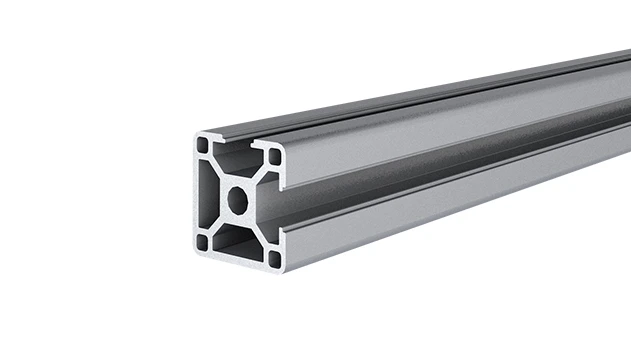
3030 is a 3.00 x 3.00CM fractional 30 series square extrusion T-slot profile with two side open T-slots, each side with 3.00cm face, 2 side with open slot, 2 side with closed face. The profile has align-a-grooves to assist in aligning connecting profiles.
In today's manufacturing world, where "going green" isn't just a buzzword but a business imperative, the materials we choose and how we reuse them shape the future of our planet. Walk through any automotive plant, electronics workshop, or logistics hub, and you'll notice a common sight: sleek, silver structures holding tools, guiding workflows, and organizing materials. Chances are, many of those structures are built with 3030b EU standard aluminum profile —a workhorse of modern industry prized for its strength, flexibility, and lightweight design. But as we build more with aluminum, there's a critical question we can't ignore: What happens to these profiles when they're no longer needed? The answer lies in recycling—a process that not only cuts costs but drastically reduces our environmental footprint. Let's dive into how recycling 3030b EU standard aluminum profile is transforming sustainability in manufacturing, one extrusion at a time.
1. The 3030b EU Standard Aluminum Profile: A Backbone of Lean Manufacturing
Before we talk about recycling, let's get to know the star of the show: the 3030b EU standard aluminum profile . If you've ever assembled a modular workbench, built a material rack, or designed a production line, you've probably encountered this profile. Named for its dimensions (30mm x 30mm) and compliance with EU manufacturing standards, it's part of a broader family of aluminum extrusion profile —products made by forcing heated aluminum through a die to create consistent, custom shapes. What makes the 3030b so popular? It strikes the perfect balance: strong enough to support heavy tools, light enough to reconfigure without machinery, and compatible with a wide range of aluminum profile accessories like connectors, brackets, and panels.
In lean manufacturing settings—where efficiency and adaptability are king—this profile is everywhere. It's the frame of workbenches where technicians assemble circuit boards, the backbone of flow racks that feed parts to assembly lines, and the structure of mobile trolleys that move materials across the shop floor. Unlike rigid steel structures, 3030b profiles can be quickly disassembled and reconfigured as production needs change, which is why lean system supplier companies often recommend them. But here's the catch: even the most durable aluminum profiles have a lifecycle. When a production line is upgraded, a workbench is retired, or a facility is renovated, those profiles often end up in scrap yards—unless we choose to recycle them.
2. Why Recycling Aluminum Profiles is a Game-Changer for the Planet
Aluminum is often called the "forever metal" for a reason: it's 100% recyclable, meaning it can be melted down and reused indefinitely without losing quality. But the environmental benefits of recycling go far beyond just reusing material. Let's break it down with some hard numbers. Producing aluminum from raw bauxite ore is an energy-intensive process. To make one ton of primary aluminum (from ore), you need roughly 15,000 kWh of electricity—enough to power an average home for over a year. Recycling aluminum, on the other hand, uses just 5% of that energy. That's a 95% reduction in energy consumption for the same amount of metal! When you scale that up to the millions of tons of aluminum used in manufacturing each year, the savings are staggering.
| Metric | Primary Aluminum (From Ore) | Recycled Aluminum | Environmental Savings |
|---|---|---|---|
| Energy Consumption (per ton) | 15,000 kWh | 750 kWh | 95% reduction |
| CO₂ Emissions (per ton) | 12 tons CO₂ | 0.6 tons CO₂ | 95% reduction |
| Water Usage (per ton) | 1,000 liters | 50 liters | 95% reduction |
| Bauxite Ore (per ton) | 4-5 tons of ore | 0 tons (uses scrap) | 100% reduction in mining |
These numbers aren't just impressive—they're transformative. For manufacturers, switching to recycled aluminum profiles can slash their carbon footprint while keeping costs in check. Since recycled aluminum is often cheaper than primary aluminum (thanks to lower energy costs), it's a win-win: better for the planet, better for the bottom line. And when you consider that aluminum can be recycled repeatedly without degradation, it's a cornerstone of the circular economy—an economic model that aims to eliminate waste by reusing resources. So, the next time you look at a 3030b profile, remember: it's not just a piece of metal. It's a resource that can keep contributing to your operations for decades, long after its first use.

3. From Scrap Pile to Production Line: The Recycling Journey
Recycling aluminum profiles isn't as simple as tossing them in a bin—and that's a good thing. To turn old profiles into new 3030b EU standard aluminum profile , there's a careful process that ensures quality and consistency. Let's walk through it step by step, starting from the workshop floor.
Collection and Sorting: The First Step to Quality
It all starts with collection. When a manufacturer upgrades a production line or retires a workbench, the old 3030b profiles (and their aluminum profile accessories like connectors and brackets) are gathered instead of being sent to landfills. This scrap is then sorted—critical because contaminants like steel bolts, plastic panels, or paint can affect the recycling process. Most lean system supplier companies now offer take-back programs for old aluminum structures, making it easier for manufacturers to participate. Once sorted, the clean aluminum scrap is crushed into smaller pieces to make melting more efficient.
Melting and Purification: Stripping Away the Old
Next, the scrap is loaded into a furnace and melted at around 660°C (the melting point of aluminum). Unlike primary aluminum production, which requires massive amounts of energy to extract aluminum from ore, recycling only needs enough heat to melt the existing metal—a fraction of the energy. As the aluminum melts, impurities like dirt or paint rise to the surface and are skimmed off. For higher-grade applications (like the 3030b profile, which requires precise dimensions), additional purification steps may be taken, such as adding chemicals to remove trace elements. The result? A pool of pure, molten aluminum ready for a new life.
Re-Extrusion: Shaping the Future
Once purified, the molten aluminum is cast into ingots—large blocks that can be fed into an extrusion press. Here's where the magic happens: the ingot is heated again (to make it malleable) and forced through a die shaped like the 3030b profile. As the aluminum exits the die, it cools rapidly, retaining the 30mm x 30mm cross-section that makes the profile so versatile. After extrusion, the new profiles are cut to length, heat-treated for strength, and finished with coatings or anodization if needed. The end result? A brand-new 3030b EU standard aluminum profile that's indistinguishable from one made with primary aluminum—at a fraction of the environmental cost.
Reuniting with Accessories: Completing the Cycle
It's not just the profiles themselves that get a second chance. Many aluminum profile accessories —like connectors, hinges, and brackets—can also be recycled, either alongside the profiles or through separate streams. Some manufacturers even design accessories with recycling in mind, using all-aluminum components to avoid mixed-material waste. This closed-loop approach ensures that every part of the aluminum structure, from the main profile to the smallest bracket, contributes to sustainability.
4. The Supplier's Role: How Lean System Suppliers Drive Sustainable Practices
While manufacturers play a key role in recycling, lean system supplier companies are the unsung heroes of this movement. These suppliers—who provide everything from aluminum profiles to complete lean manufacturing systems—are uniquely positioned to promote recycling by integrating it into their business models. Here's how they're making a difference:
First, many suppliers now offer recycled-content options for their 3030b profiles. By sourcing recycled aluminum ingots for extrusion, they allow manufacturers to choose sustainable materials without sacrificing quality. Some suppliers even provide certification, verifying the percentage of recycled content in each profile—a valuable tool for companies reporting their ESG (Environmental, Social, Governance) metrics. Second, take-back programs are becoming standard. Instead of leaving manufacturers to figure out how to dispose of old profiles, suppliers pick up scrap aluminum, sort it, and send it to recycling facilities—often offering discounts on new profiles in exchange. This not only reduces waste but also creates a steady stream of raw material for the supplier, lowering their own costs.
Third, suppliers are innovating in design to make recycling easier. For example, some aluminum profile accessories now use friction-fit connections instead of adhesives or non-aluminum fasteners, making disassembly and sorting faster. Others are developing modular systems where profiles and accessories can be reused directly (without melting) by simply reconfiguring them—extending their lifecycle even further. By prioritizing recyclability in design, these suppliers are ensuring that sustainability isn't an afterthought but a core part of the product.
5. Overcoming Challenges: The Roadblocks to Aluminum Profile Recycling
Of course, recycling 3030b profiles isn't without its challenges. One of the biggest hurdles is contamination, especially from aluminum profile accessories . If a profile is held together with steel bolts, glued to a plastic panel, or painted with lead-based paint, sorting becomes time-consuming and costly. Even small amounts of non-aluminum materials can ruin a batch of recycled aluminum, leading to lower quality or higher purification costs. To combat this, manufacturers and suppliers are working together to standardize "clean" design—using aluminum-only fasteners, removable panels, and eco-friendly coatings that burn off during melting.
Another challenge is awareness. Many small and medium-sized manufacturers still don't realize they can recycle their old aluminum profiles, or they assume the process is too complicated. That's where lean system supplier education comes in. By training their clients on the benefits of recycling and simplifying the collection process, suppliers are turning apathy into action. Finally, there's the issue of scale. While large manufacturers can negotiate take-back programs with suppliers, smaller shops may struggle to collect enough scrap to make recycling economically viable. To solve this, some regions are setting up community recycling centers specifically for industrial aluminum, pooling scrap from multiple small businesses to reach critical mass.
6. Real-World Impact: How One Manufacturer Cut Emissions by 40%
To see the power of aluminum profile recycling in action, let's look at a real example: a mid-sized electronics manufacturer in Germany that specializes in assembling medical devices. A few years ago, the company decided to upgrade its production lines to meet growing demand. Instead of buying new 3030b EU standard aluminum profile for the new workbenches and flow racks, they partnered with their lean system supplier to recycle their old profiles. Here's what happened:
First, the old aluminum structures were disassembled, sorted, and sent to a recycling facility. The supplier then used the recycled aluminum to extrude new 3030b profiles, which were used to build the new production lines. The result? The company reduced its carbon emissions by 40% for that project compared to using primary aluminum. They also saved 15% on material costs, as recycled aluminum was cheaper than new. But the benefits didn't stop there: by reusing some of the aluminum profile accessories (like connectors and brackets) directly, they cut waste even further. Today, the company has made recycling a standard practice, and they report that their clients—many of whom are in the medical industry, where sustainability is a priority—view their commitment to recycled materials as a competitive advantage.
This story isn't unique. From automotive plants in Japan to logistics hubs in the U.S., manufacturers are discovering that recycling aluminum profiles isn't just good for the planet—it's good for business. As more companies follow suit, the demand for recycled aluminum grows, driving innovation and lowering costs even further. It's a virtuous cycle that starts with a simple choice: to recycle instead of discard.
7. The Future of Aluminum Profile Recycling: What's Next?
So, where do we go from here? The future of 3030b profile recycling looks bright, thanks to advancements in technology, policy support, and shifting consumer expectations. One emerging trend is "design for recycling"—a mindset where manufacturers and lean system supplier companies collaborate from the start to create profiles and accessories that are easy to disassemble, sort, and recycle. For example, some suppliers are experimenting with digital tagging: embedding QR codes in profiles that store information about their material composition, making sorting faster and more accurate.
Another trend is the rise of "urban mining"—recycling aluminum from end-of-life products (like old laptops, cars, or construction materials) and using it to make new profiles. As the world becomes more digital, the amount of aluminum in electronic devices is growing, creating a new source of scrap for recycling. Innovations in furnace technology are also making recycling more efficient, with new designs that reduce energy use by another 10-15% compared to traditional recycling methods.
Perhaps most importantly, governments are starting to take notice. The EU's Circular Economy Action Plan, for example, sets targets for increasing recycling rates and reducing waste, with aluminum explicitly mentioned as a priority material. Incentives like tax breaks for using recycled materials or penalties for sending scrap to landfills are encouraging manufacturers to take action. As these policies take hold, recycling 3030b profiles will become not just a sustainable choice, but a necessary one.
Conclusion: Building a Greener Future—One Profile at a Time
At the end of the day, recycling 3030b EU standard aluminum profile is about more than metal—it's about reimagining how we build, use, and reuse materials in manufacturing. Every time we choose to recycle an old profile, we're not just saving energy or cutting costs; we're reducing the need for mining, lowering emissions, and preserving resources for future generations. For manufacturers, it's a chance to lead in sustainability while staying competitive. For lean system supplier companies, it's an opportunity to innovate and partner with clients on shared environmental goals. And for all of us, it's a step toward a world where industry and the planet thrive together.
So, the next time you're standing in front of a workbench, a flow rack, or a production line built with 3030b profiles, take a moment to appreciate the journey that metal has been on—and the journey it has ahead. With recycling, that profile isn't just part of your today; it's part of your tomorrow. And that's a future worth building.