- Company Articles
- Industry articles
- Industry standards
- 3030b EU Standard Aluminum Profile Specifications: A Complete Guide

3030b EU Standard Aluminum Profile Specifications: A Complete Guide
Related Product
3030B EU Standard Aluminum Profile
3030 is a 3.00 x 3.00CM fractional 30 series square extrusion T-slot profile with two side open T-slots, each side with 3.00cm face, 2 side with open slot, 2 side with closed face. The profile has align-a-grooves to assist in aligning connecting profiles.
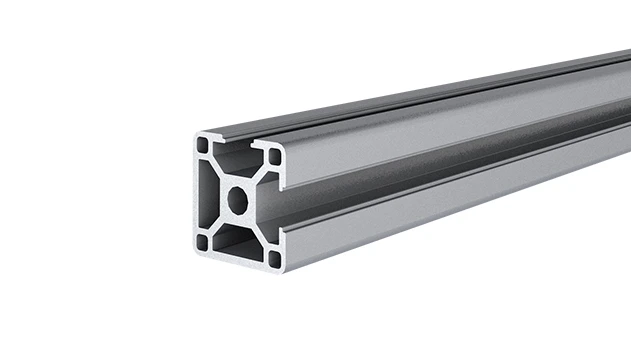
Walk into any modern manufacturing facility, warehouse, or workshop today, and you'll likely spot a common element tying everything together: sleek, silver structures that seem to adapt effortlessly to their surroundings. These aren't just random metal frames—they're aluminum extrusion profiles , the unsung heroes of modular design. Among them, the 3030b EU Standard Aluminum Profile stands out as a workhorse, trusted by engineers, small business owners, and industry giants alike for its versatility, strength, and adherence to strict quality standards. Whether you're building a workbench for a local repair shop, a material rack for a logistics hub, or a custom machine guard for a factory floor, understanding the 3030b profile is key to unlocking efficient, cost-effective solutions.
This guide dives deep into what makes the 3030b EU Standard Aluminum Profile tick. We'll break down its specifications, explore its design benefits, and show you how it integrates with aluminum profile accessories to create endless possibilities. By the end, you'll not only know the numbers behind the profile but also why it's become a cornerstone of lean manufacturing and modular design across Europe and beyond.
What Is the 3030b EU Standard Aluminum Profile?
First things first: let's clarify what "3030b EU Standard" actually means. The "3030" refers to the profile's cross-sectional dimensions—30mm in width and 30mm in height, making it a square-shaped extrusion. The "b" denotes a specific variant within the 3030 family, often differing in wall thickness, slot design, or weight from other 3030 models (like 3030a or 3030c). Most importantly, "EU Standard" confirms that the profile meets the rigorous safety, quality, and performance criteria set by European union regulations, ensuring consistency and reliability no matter where it's used.
But why does this matter? In an industry where precision and durability are non-negotiable, using a EU-standardized profile eliminates guesswork. It means you can source components from different suppliers across Europe and trust they'll fit together seamlessly. It means your structures will withstand the demands of daily use, from heavy tool storage to constant vibration on a production line. And for businesses exporting products or operating across borders, compliance with EU standards simplifies regulatory hurdles—a critical advantage in today's global market.
The Basics: How Aluminum Extrusion Profiles Are Made
To truly appreciate the 3030b profile, it helps to understand how aluminum extrusion profiles come to life. The process starts with raw aluminum billets, typically made from alloy 6063 (the most common for profiles like the 3030b). These billets are heated to around 500°C—soft enough to shape but not molten—then forced through a steel die under extreme pressure. The die, custom-designed with the 3030b's exact cross-section, transforms the billet into a long, continuous length of aluminum with the profile's signature T-slots, walls, and edges.
After extrusion, the profile undergoes heat treatment (often T5 tempering) to strengthen its structure, followed by surface finishing—usually anodizing or powder coating—to enhance corrosion resistance and appearance. The result? A lightweight yet sturdy product with precise dimensions, uniform strength, and a surface that's easy to clean and maintain. This manufacturing method is what gives aluminum profiles their modular superpower: the T-slots running along their length allow for quick, tool-free attachment of accessories, turning a simple length of aluminum into a building block for almost any structure.

Key Specifications: The Numbers That Matter
At the heart of the 3030b's appeal are its specifications—detailed measurements and properties that ensure it performs reliably in real-world applications. Below is a breakdown of its core attributes:
| Specification | Value | Notes |
|---|---|---|
| Cross-Section Dimensions | 30mm x 30mm | Square profile; width and height both 30mm |
| Wall Thickness | 2.0mm | Consistent across all sides for balanced strength |
| Weight per Meter | 1.45 kg/m | Lightweight for easy handling, yet robust for load-bearing |
| Material Grade | 6063-T5 | Aluminum-magnesium-silicon alloy; excellent strength-to-weight ratio |
| Surface Finish | Anodized (natural, black, or custom colors); powder-coated options | Anodizing provides 10-15μm thick protective layer; powder coating for enhanced durability |
| T-Slot Dimensions | 8mm width x 6mm depth (standard EU T-slot) | Compatible with most EU-standard aluminum profile accessories |
| Length Options | 3m, 4m, or custom-cut | Standard lengths reduce waste; custom cuts available for specific projects |
| Tolerance | ±0.2mm (length); ±0.1mm (cross-section) | Meets EN 755-9 standards for dimensional accuracy |
| Maximum Load Capacity (Unsupported span) | ≈150kg (at 1m span) | Load decreases with longer spans; consult engineering tables for specifics |
These numbers aren't just arbitrary—they're the result of extensive testing to ensure the profile can handle the demands of industrial use. For example, the 2.0mm wall thickness strikes a perfect balance: thick enough to support heavy tools on a workbench, yet thin enough to keep the profile lightweight for mobile applications like carts or temporary structures. The 6063-T5 alloy, meanwhile, offers corrosion resistance that makes the 3030b suitable for both indoor and sheltered outdoor use, from humid warehouses to automotive plants with frequent washdowns.
Material Composition & Mechanical Properties: More Than Just Aluminum
The 3030b's performance starts at the atomic level. Its 6063-T5 alloy is a carefully balanced mix of aluminum (97.5%), magnesium (0.7%), and silicon (0.4%), with trace amounts of iron, copper, and zinc. This composition gives it a unique set of mechanical properties that make it ideal for structural applications:
- Tensile Strength: 180-220 MPa. This means the profile can withstand pulling forces up to 220 million Pascals before breaking—strong enough to support heavy machinery parts or stacked inventory without deformation.
- Yield Strength: ≥150 MPa. Yield strength is the point at which the material starts to bend permanently. For the 3030b, this high yield strength ensures it maintains its shape under regular use, even with repeated loading and unloading.
- Elongation: 8-10%. A measure of how much the material can stretch before breaking. This flexibility prevents brittleness, making the profile resistant to cracking under sudden impacts—critical in busy workshops where accidental bumps are common.
- Corrosion Resistance: Excellent. The alloy's natural oxide layer, enhanced by anodizing, protects against rust and chemical damage. This is why you'll find 3030b profiles in food processing facilities, marine environments, and outdoor applications where steel would quickly degrade.
Thermally, aluminum's high conductivity (≈201 W/m·K) also plays a role. In industrial settings, this means the 3030b can help dissipate heat from machinery, preventing overheating in enclosed spaces. Conversely, in cold environments, it insulates better than steel, reducing condensation buildup on work surfaces.
Design Features: The T-Slot Advantage
Look closely at the 3030b, and you'll notice the T-shaped slots running along each of its four sides. These slots are more than just a design quirk—they're the secret to its modularity. Unlike traditional welded steel frames, which require cutting, grinding, and repainting to modify, the T-slots let you attach, reposition, or remove components in minutes using bolts, nuts, and aluminum profile accessories like brackets and connectors.
For example, a 90° aluminum profile connector slides into the T-slot of two perpendicular 3030b profiles, locking them together with a hex key—no welding required. Need to adjust the height of a shelf? Loosen the bolts, slide the connector up or down, and retighten. This flexibility is a game-changer for businesses that evolve quickly: a workshop that starts with a small assembly line can expand into a full production station by adding more 3030b sections and accessories, without investing in entirely new infrastructure.
The T-slots also accommodate specialized accessories, from cable management clips to tool holders, turning bare profiles into functional workstations. Even the smallest details matter: rounded edges on the profile prevent snags on clothing or cables, while smooth surfaces make cleaning a breeze—essential in environments like laboratories or medical device manufacturing where hygiene is paramount.
Why 3030b? Comparing with Other Profiles
With so many aluminum profiles on the market—2020, 4040, 3060, to name a few—why choose the 3030b? The answer lies in its "just right" balance of size, strength, and cost. Let's see how it stacks up:
- vs. 2020 Profiles: 2020 profiles (20mm x 20mm) are smaller and lighter, making them great for lightweight projects like 3D printer frames or small shelving. But for heavier loads—say, a workbench holding power tools—the 3030b's larger cross-section and thicker walls provide 50% more load capacity, reducing the risk of sagging over time.
- vs. a 4040 Profiles: 4040 profiles (40mm x 40mm) are beefier, designed for industrial-grade applications like heavy machinery frames. They can handle more weight, but they're also bulkier and pricier. For most small to medium businesses, the 3030b offers enough strength (150kg per linear meter in supported spans) without the extra cost or space requirements of a 4040.
- vs. Non-EU Standard Profiles: Cheaper, non-standard profiles may seem appealing, but they often cut corners on material quality or dimensional accuracy. A 3030 "lookalike" might have inconsistent wall thickness, making it weaker in spots, or T-slots that don't align with standard accessories. The 3030b's EU certification guarantees every piece meets the same strict standards, so you never have to worry about compatibility or hidden weaknesses.
In short, the 3030b is the Goldilocks of profiles—not too small, not too large, but perfectly suited for the majority of modular projects. It's the profile you'll reach for whether you're a hobbyist building a garage organizer or a factory manager scaling up production lines.
Essential Accessories: Building Blocks for Customization
A profile is only as good as the accessories that bring it to life. The 3030b works seamlessly with a range of aluminum profile accessories , each designed to solve specific challenges. Here are the must-knows:
3030 Aluminum Profile End Cap:
These small, plastic or aluminum caps snap onto the ends of the profile, covering sharp edges and preventing dust, debris, or moisture from entering the T-slots. They're a small detail, but they make a big difference in safety (no more accidental cuts) and longevity (keeping internal slots clean reduces wear on connectors). Available in colors like black, white, or natural aluminum to match your profile's finish.
90° Aluminum Profile Connector:
The most common connector for joining two profiles at a right angle. These come in two styles: "corner brackets" (attaching to the outside of the profile) and "internal connectors" (sliding inside the T-slots for a cleaner look). Both use bolts to clamp tightly, creating a rigid joint that won't loosen under vibration—a must for machinery or conveyor systems.
T-Slot Nuts and Bolts:
The foundation of T-slot assembly. These specialized nuts slide into the T-slot and rotate to lock in place, allowing you to attach almost anything—shelves, panels, handles—without drilling holes. Pair them with hex bolts or thumb screws for tool-free adjustments.
Gussets and Reinforcement Plates:
For high-load applications, gussets (triangular metal plates) add extra stability at joints, preventing flexing or twisting. They're especially useful for cantilevered structures, like a workbench with an overhanging tool rack.
Wheels and Casters:
Attach casters to 3030b profiles, and suddenly your static workbench becomes a mobile cart. Look for locking casters to keep the cart stable when in use—essential for tasks that require both mobility and precision, like moving components between assembly stations.
Real-World Applications: Where the 3030b Shines
Talk to manufacturers who use the 3030b, and you'll hear stories of transformation. Take "MechWorks," a small automotive parts shop in Germany. Before switching to 3030b profiles, their assembly line relied on wooden workbenches that warped in the humid workshop, and metal shelving that was impossible to reconfigure. Today, their entire setup—workbenches, parts racks, and even a custom conveyor—uses 3030b profiles. "We added a new production step last month," says owner Markus Weber. "Instead of building a new bench, we just bought a few extra profiles and connectors. The whole thing took two hours to assemble. With wood, that would've taken a week and cost twice as much."
Another example: "GreenLogistics," a logistics firm in France, uses 3030b to build adjustable material racks for warehouses. "Our clients have different-sized boxes every day," explains operations manager Sophie Dubois. "With the 3030b, we can move the shelves up or down in minutes to fit whatever's coming in. The anodized finish also holds up to the forklift bumps and rain when we load trucks outdoors—we haven't replaced a single rack in three years."
Beyond manufacturing and logistics, the 3030b pops up in unexpected places: art studios (custom display frames), schools (science lab workstations), and even retail (modular product shelving). Its adaptability is limited only by imagination—and with the right accessories, the possibilities are endless.
Installation Tips: Getting It Right the First Time
Assembling with 3030b profiles is straightforward, but a few tips can save you time and frustration:
- Measure Twice, Cut Once: Standard 3m or 4m lengths are cost-effective, but always double-check your project's dimensions before cutting. A miter saw with a fine-tooth blade works best for clean, straight cuts—ragged edges can make T-slot accessories hard to slide in.
- Deburr the Edges: After cutting, use a deburring tool or sandpaper to smooth sharp edges. This prevents cuts and ensures 3030 aluminum profile end caps fit snugly.
- Use the Right Torque: Over-tightening bolts can strip T-slots or warp the profile; under-tightening leads to loose joints. A torque wrench set to 3-5 Nm (for M5 bolts) is ideal—most accessory kits include recommended torque specs.
- Plan for Expansion: Leave extra T-slot space if you think you might add components later. It's easier to have unused slots than to disassemble a fully built structure to add a bracket.
- Level First: For workbenches or racks, use a spirit level during assembly to ensure everything is flat and square. A wobbly base will throw off the entire structure, no matter how tight the connectors are.
Maintenance & Longevity: Making Your Investment Last
One of the 3030b's biggest advantages is its low maintenance. With proper care, it can last decades—even in harsh environments. Here's how:
- Clean Regularly: Wipe down profiles with a damp cloth to remove dust, grease, or chemicals. For stubborn grime, use mild soap and water—avoid abrasive cleaners that scratch the finish.
- Inspect Joints Annually: Check connectors and bolts for tightness, especially in high-vibration areas like near machinery. Retighten as needed to prevent loosening over time.
- Protect from Extreme Conditions: While anodized 3030b resists corrosion, prolonged exposure to saltwater or industrial chemicals may require extra protection (like a clear sealant). For outdoor use, opt for powder-coated profiles, which add an extra layer of defense against UV rays.
- replace Worn Accessories: Nuts, bolts, and end caps are cheap compared to replacing an entire profile. If a connector starts to slip or an end cap cracks, swap it out immediately to prevent damage to the profile itself.
Many manufacturers report 3030b profiles lasting 10+ years with minimal upkeep—a testament to their durability and the quality of EU-standard materials.
Choosing a Supplier: What to Look For
Not all 3030b profiles are created equal. To ensure you're getting a genuine EU-standard product, look for suppliers who:
- Provide Certification: Ask for EN 755-9 compliance documents, which confirm the profile meets EU dimensional and material standards.
- Offer Custom Cuts: Reputable suppliers will cut profiles to your exact length, reducing waste and saving you time.
- Stock Accessories: Buying profiles and accessories from the same supplier ensures compatibility—no more mismatched T-slots or connectors.
- Have Positive Reviews: Check customer feedback for mentions of consistency, delivery times, and after-sales support. A supplier who stands behind their product will help resolve issues like warped profiles or missing accessories.
Remember, investing in a quality supplier upfront prevents headaches later. A slightly cheaper, non-certified profile might save you a few euros today, but it could cost you dearly in failed projects or replacement parts down the line.
Conclusion: The 3030b Profile—Your Partner in Modular Design
The 3030b EU Standard Aluminum Profile isn't just a piece of metal—it's a tool for innovation. Its blend of strength, flexibility, and compliance with EU standards makes it the go-to choice for anyone looking to build smarter, not harder. Whether you're a small business owner streamlining your workshop or an engineer designing the next big manufacturing system, the 3030b profile adapts to your needs, grows with your business, and stands the test of time.
So the next time you walk into that manufacturing facility or workshop, take a closer look at those silver structures. Chances are, they're 3030b profiles—quietly working behind the scenes to make efficiency, creativity, and progress possible. And now, with this guide in hand, you're ready to join the ranks of those who've unlocked their potential.