- Company Articles
- Industry articles
- Industry standards
- 3030b EU Standard Aluminum Profile Surface Treatments: Anodizing vs Powder Coating

3030b EU Standard Aluminum Profile Surface Treatments: Anodizing vs Powder Coating
Related Product
3030B EU Standard Aluminum Profile
3030 is a 3.00 x 3.00CM fractional 30 series square extrusion T-slot profile with two side open T-slots, each side with 3.00cm face, 2 side with open slot, 2 side with closed face. The profile has align-a-grooves to assist in aligning connecting profiles.
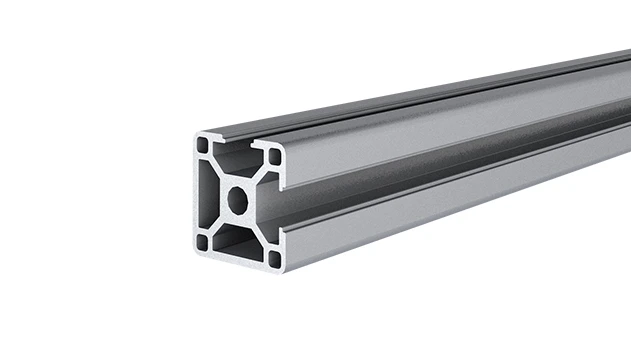
Walk into any modern factory, warehouse, or even a high-tech lab, and you'll likely spot the unsung hero of industrial design: aluminum profiles. These sleek, modular structures form the backbone of workbenches, material racks, conveyor systems, and everything in between. Among the countless options available, one stands out for its versatility and reliability: the 3030b EU standard aluminum profile . But what makes this profile so indispensable? It's not just its 30x30mm dimensions or its adherence to strict EU quality standards—it's also the care put into its surface. Today, we're diving deep into two of the most popular surface treatments for this workhorse: anodizing and powder coating. Let's explore how each process works, why they matter, and how to choose the right one for your project.
First Things First: What is 3030b EU Standard Aluminum Profile?
Before we jump into surface treatments, let's get to know the star of the show. The 3030b EU standard aluminum profile is a staple in manufacturing and logistics for good reason. Picture a sturdy, lightweight beam with a square cross-section, 30 millimeters on each side, crafted from high-grade aluminum alloy—typically 6063, known for its excellent strength-to-weight ratio and malleability. What sets the "EU standard" apart? It's all about consistency. EU standards ensure every piece meets strict criteria for material purity, dimensional accuracy, and structural integrity, so you know you're getting a profile that'll hold up under pressure, whether you're building a workbench or a heavy-duty material rack.
But what really makes the 3030b profile shine is its adaptability. Thanks to its T-slot design (those grooves running along its length), it pairs seamlessly with aluminum profile accessories like brackets, connectors, and even aluminum guide rail a for sliding mechanisms. This means you can customize it to fit almost any need—no welding required. From assembly lines in automotive plants to lab benches in research facilities, the 3030b profile is the Swiss Army knife of industrial design. But to keep it performing at its best, that surface needs some love.
Why Surface Treatments Matter: More Than Just a Pretty Face
Aluminum is naturally resistant to corrosion, thanks to a thin oxide layer that forms when it reacts with oxygen. But in tough industrial environments—think humidity, chemicals, or heavy wear—that thin layer can wear down, leaving the metal vulnerable. Surface treatments step in to (qiánghuà/strengthen) that protection, while also adding benefits like improved aesthetics, better grip, or enhanced durability. For the 3030b profile, two treatments rise above the rest: anodizing and powder coating. Each has its own superpowers, and choosing between them depends on what you need your profile to do.

Anodizing: The "Natural Armor" Treatment
How Anodizing Works: Turning Aluminum into Its Own Shield
Anodizing is like giving your aluminum profile a supercharged version of its natural defense system. Instead of letting nature form that thin oxide layer, anodizing accelerates the process using electrolysis. Here's the CliffsNotes version: the aluminum profile is submerged in an electrolyte bath (usually sulfuric acid), and an electric current is passed through the bath. The profile acts as the anode (positive electrode), causing oxygen ions to bond with the aluminum surface. This creates a thick, porous layer of aluminum oxide—up to 100 microns thick, compared to the 0.1 microns of the natural layer. After anodizing, the profile is often sealed (with hot water or a chemical sealant) to close those pores, locking in protection.
The Perks of Anodizing: Why It's a Factory Favorite
So, why do manufacturers swear by anodized 3030b profiles? Let's start with durability. That thick oxide layer is incredibly hard—harder than the aluminum itself—so it resists scratches, dents, and wear like a champ. If you're building a workbench where tools will slide across the surface or a material rack where parts are constantly loaded and unloaded, anodizing ensures your profile won't show signs of wear anytime soon.
Corrosion resistance is another big win. The sealed oxide layer acts as a barrier, keeping moisture, oils, and even mild chemicals from reaching the underlying aluminum. This makes anodized profiles ideal for indoor environments like factories or labs, where humidity or occasional spills are common. And unlike paint, the anodized layer is integral to the metal—it won't chip, peel, or fade over time. Ever noticed how old anodized aluminum still looks sharp? That's because the color (usually a natural silver, black, or gold) is part of the oxide layer itself, not a coating on top.
Aesthetics matter too. Anodizing gives the 3030b profile a clean, matte finish that's understated yet professional. It's perfect for applications where you want the metal's natural beauty to shine, like high-end workstations or display racks. Plus, the porous layer (before sealing) can absorb dyes, offering a range of color options without sacrificing durability. Need a custom shade to match your company's branding? Anodizing can handle that—within reason (think earth tones and neutrals; bold hues are trickier).
The Catch: When Anodizing Might Not Be the Best Fit
Anodizing isn't a one-size-fits-all solution. For starters, it's not great for outdoor use in harsh climates. While it resists corrosion indoors, constant exposure to rain, salt, or extreme UV rays can eventually break down the oxide layer. If you're building something for an outdoor warehouse or a coastal facility, anodizing alone might not cut it.
Cost is another consideration. Anodizing is a multi-step process that requires specialized equipment, so it's often pricier than basic painting. For large-scale projects where budget is tight, this could be a dealbreaker. And while you can dye anodized profiles, the color range is limited compared to other treatments. If you need bright red, electric blue, or a custom neon shade, anodizing might leave you disappointed.
Powder Coating: The "Colorful Workhorse" Treatment
How Powder Coating Works: Spraying on Strength (and Style)
If anodizing is the "natural armor," powder coating is the "colorful shield." Instead of using electrolysis, powder coating applies a dry powder (usually a mix of resin, pigment, and additives) to the aluminum surface using an electrostatic gun. The powder particles are charged, so they stick to the grounded profile like a magnet. Then, the profile is baked in an oven (around 180–200°C), melting the powder into a smooth, hard coating that bonds tightly to the metal.
The result? A thick, uniform layer that's both tough and vibrant. Unlike anodizing, powder coating is a coating —it sits on top of the aluminum—but don't let that fool you. When done right, it's incredibly durable.
The Perks of Powder Coating: Why It's a Designer's Dream
Powder coating's biggest claim to fame? Color options . Want your 3030b profile to be fire-engine red, sunny yellow, or even a metallic finish? Powder coating delivers. With thousands of shades and textures (matte, gloss, textured, metallic), you can match any aesthetic or branding need. This makes it perfect for consumer-facing applications, like retail display racks or office workstations, where looks matter as much as function.
Outdoor durability is another standout feature. Powder-coated layers are thick (50–150 microns) and UV-resistant, so they hold up to rain, snow, and sun without fading or peeling. If you're building a material rack for an outdoor warehouse or a conveyor system that extends outside, powder coating is your best bet for long-term performance.
Chip and scratch resistance? Check. That baked-on layer is flexible enough to withstand minor impacts without cracking, making it ideal for high-traffic areas. Ever seen a powder-coated metal chair that still looks new after years of use? Same principle applies to your 3030b profile.
Eco-friendliness is a bonus too. Powder coating produces little to no volatile organic compounds (VOCs), unlike liquid paint, and overspray can be recycled. For companies prioritizing sustainability, this is a big plus.
The Catch: When Powder Coating Falls Short
Powder coating isn't without drawbacks. For one, that thick layer can affect precision. If you're using 3030b profiles with tight-tolerance accessories—like aluminum profile rubber strip that needs to fit perfectly into a T-slot—a thick powder coat might make the slot too narrow, causing installation headaches. You'll need to factor in the coating thickness when designing your project.
Repairs are also trickier. If a powder-coated profile gets a deep scratch, touching it up is tough. The new powder won't bond as well to the damaged area, and the color might not match perfectly. Anodized profiles, on the other hand, can often be buffed or re-anodized if needed.
Finally, while powder coating is durable, it's not as hard as anodized aluminum. In ultra-high-wear scenarios—like a workbench where heavy machinery is dragged across the surface daily—powder coating might wear thin faster than anodizing.
Anodizing vs. Powder Coating: A Side-by-Side Showdown
Still on the fence? Let's break down the key differences with a quick comparison:
| Feature | Anodizing | Powder Coating |
|---|---|---|
| Process | Electrolytic oxidation creates an integral oxide layer | Electrostatic application of dry powder, baked to form a top coating |
| Coating Thickness | 5–100 microns (thinner, hard layer) | 50–150 microns (thicker, flexible layer) |
| Color Range | Limited (natural, black, gold, earth tones) | Unlimited (any shade, texture, or finish) |
| Corrosion Resistance | Excellent (indoor); fair (outdoor harsh climates) | Excellent (indoor and outdoor) |
| Scratch/Wear Resistance | Very high (hard oxide layer) | High (flexible, impact-resistant layer) |
| Cost | Higher (multi-step process) | Lower (simpler process, recyclable overspray) |
| Best For | Indoor use, high-wear surfaces, natural aesthetics | Outdoor use, bold colors, consumer-facing applications |
| Repairability | Easier (can be re-anodized or buffed) | Harder (touch-ups may not match) |
Real-World Scenarios: Choosing the Right Treatment for Your 3030b Profile
Let's put this into context with a few examples. Imagine you're a manufacturer building workbenches for a electronics assembly line. The workbenches will be indoors, with workers sliding circuit boards and tools across the surface all day. You need something scratch-resistant, easy to clean, and professional-looking. Anodizing is the way to go—it'll stand up to the wear, resist oil spills, and keep that sleek, industrial look for years.
Now, say you're designing a material rack for an outdoor warehouse in a coastal city. The rack will be exposed to rain, salt air, and direct sunlight. You also want it to match your company's bright blue branding. Powder coating is perfect here—it'll block corrosion from the elements and let you rock that bold blue color without fading.
What if you're building a lab workstation that needs both durability and precision? The workstation uses aluminum guide rail a for sliding trays, and you need the rail to fit perfectly with its accessories. Anodizing's thin layer ensures the guide rail's dimensions stay accurate, while its scratch resistance keeps the sliding mechanism smooth for years.
Beyond the Coating: How Surface Treatments Impact Accessories
We can't talk about 3030b profiles without mentioning their accessories—those brackets, connectors, and rails that make the profile so versatile. And here's the thing: your surface treatment choice affects how well these accessories work. Take aluminum profile rubber strip , for example. This handy accessory lines T-slots to reduce friction, dampen noise, or protect delicate parts. If you've powder-coated your profile too thickly, the rubber strip might not fit into the slot properly, leading to loose connections or uneven sliding. Anodizing, with its thinner layer, ensures a snug fit every time.
Or consider aluminum extrusion profile connectors. These small but crucial parts rely on precise measurements to lock profiles together securely. A thick powder coat can throw off those measurements, making connectors feel loose or requiring extra force to install. Anodizing preserves the profile's original dimensions, so your connectors work as intended—no guesswork, no frustration.
Final Thoughts: It's All About Your Project's Needs
At the end of the day, choosing between anodizing and powder coating for your 3030b EU standard aluminum profile comes down to one question: what do you need your profile to do? If you're prioritizing indoor durability, natural aesthetics, or precision with accessories, anodizing is your go-to. If you need bold colors, outdoor resilience, or a budget-friendly option, powder coating won't let you down.
And remember: there's no "better" treatment—only the right one for your project. Whether you're building a workbench, a material rack, or a custom conveyor system, the 3030b profile's versatility paired with the right surface treatment will ensure it performs reliably for years to come. So, take a moment to assess your environment, your aesthetic goals, and your budget—and then let your 3030b profile shine, in whatever color or finish you choose.