- Company Articles
- Industry articles
- Industry standards
- 3030b EU Standard Aluminum Profile vs Non-EU Standard: Which Is Better for Your Project?

3030b EU Standard Aluminum Profile vs Non-EU Standard: Which Is Better for Your Project?
Related Product
3030B EU Standard Aluminum Profile
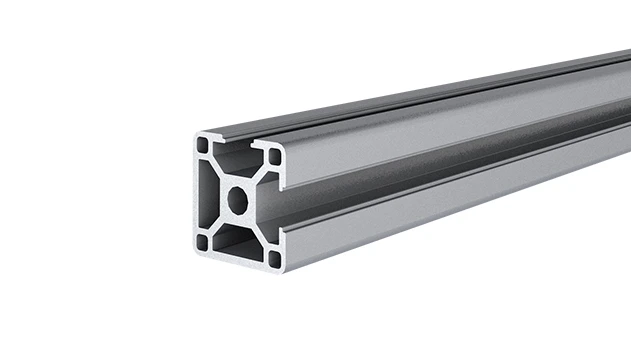
3030 is a 3.00 x 3.00CM fractional 30 series square extrusion T-slot profile with two side open T-slots, each side with 3.00cm face, 2 side with open slot, 2 side with closed face. The profile has align-a-grooves to assist in aligning connecting profiles.
Picture this: You're a project manager at a mid-sized manufacturing facility, staring at a stack of aluminum profiles on the workshop floor. Your team needs to build new workbenches, material racks, and conveyor supports—structures that will bear the weight of daily operations, withstand constant use, and keep production flowing smoothly for years. The question on your mind? Which aluminum profile should we choose? If you've ever found yourself in this position, you're not alone. The debate between EU standard and non-EU standard aluminum profiles is one that plagues manufacturers, workshop owners, and engineers worldwide. Today, we're diving deep into one of the most popular EU standard options—the 3030b EU Standard Aluminum Profile—and pitting it against non-EU alternatives. By the end, you'll have a clear roadmap to decide which is better for your project.
First Things First: What Exactly Is 3030b EU Standard Aluminum Profile?
Let's start with the basics. The term "3030b EU Standard Aluminum Profile" might sound technical, but break it down, and it's surprisingly straightforward. "3030" refers to the cross-sectional dimensions: 30mm in width and 30mm in height. The "b" denotes a specific design variant—typically, this means a standard groove size (often 8mm or 10mm) along the profile's length, which allows for easy attachment of accessories like brackets, connectors, and panels.
What makes it "EU Standard"? These profiles are manufactured to strict European union guidelines, which cover everything from material composition to extrusion tolerances, surface finish, and safety compliance. Most 3030b EU Standard profiles are made from aluminum extrusion profile—meaning they're formed by pushing heated aluminum alloy through a die to create a consistent, uniform shape. The EU standards ensure that every batch of 3030b profiles meets tight specifications: consistent wall thickness (usually 1.5mm to 2mm), precise groove dimensions, and minimal variation in straightness or squareness.
Materials matter here, too. EU standard profiles often use high-grade aluminum alloys, such as 6063-T5, known for its excellent balance of strength, corrosion resistance, and machinability. This alloy is heat-treated to enhance durability, making the profiles rigid enough to support heavy loads (think workbenches holding tools or material racks stacked with components) while remaining lightweight enough for easy assembly and reconfiguration.
Non-EU Standard Aluminum Profiles: The Other Side of the Coin
Now, let's turn to non-EU standard aluminum profiles. These are profiles manufactured outside the EU's regulatory framework, often to local or regional standards (e.g., Chinese national standards, Indian industrial norms, or generic "global" specs with looser tolerances). Unlike the 3030b EU Standard, there's no universal definition for non-EU profiles—their dimensions, materials, and quality can vary drastically between suppliers.
At first glance, a non-EU 30x30mm profile might look identical to its EU counterpart. But dig deeper, and differences emerge. For starters, dimensions are often less consistent. A non-EU "3030" profile might measure 29.5mm in width on one end and 30.5mm on the other, thanks to wider extrusion tolerances. Wall thickness can also vary—some suppliers use thinner materials (as low as 1.0mm) to cut costs, while others might thicken certain sections but skimp on others, leading to uneven strength distribution.
Material quality is another wildcard. Many non-EU profiles are made from recycled aluminum or lower-grade alloys, which can contain impurities or inconsistent metal compositions. This isn't inherently bad—recycled aluminum is sustainable—but without strict quality control, these profiles may lack the tensile strength or corrosion resistance of EU standard options. In practice, this might mean a non-EU profile bends under heavy loads or starts to rust in humid workshop environments faster than expected.
Non-EU profiles are often marketed as "budget-friendly" alternatives, and they do serve a purpose. They're common in low-volume production facilities, small workshops, or projects where precision and long-term durability are less critical. But as we'll explore next, those initial cost savings can come with hidden downsides.

Head-to-Head: 3030b EU Standard vs. Non-EU Standard
To truly understand which profile is better for your project, let's compare them across five critical areas: dimensional consistency, material quality, accessory compatibility, compliance, and cost.
| Aspect | 3030b EU Standard Aluminum Profile | Non-EU Standard Aluminum Profile |
|---|---|---|
| Dimensions & Tolerance | Strict tolerances (±0.1mm for width/height); consistent straightness and squareness. Groove size uniform across lengths. | Wider tolerances (±0.5mm or more); frequent variations in straightness. Groove sizes may differ between batches. |
| Material Quality | High-grade alloys (e.g., 6063-T5); heat-treated for strength (tensile strength ~180 MPa). Low impurity levels; excellent corrosion resistance. | Often recycled or lower-grade alloys; inconsistent heat treatment. May contain impurities; variable corrosion resistance. |
| Accessory Compatibility | Seamless fit with aluminum profile accessories (connectors, brackets, aluminum profile end cap). Standardized groove size ensures tight, secure connections. | Often incompatible with off-the-shelf accessories. Mismatched grooves may require custom parts or force-fitting, risking looseness. |
| Compliance & Certifications | CE marked; compliant with RoHS (no hazardous substances) and ISO 9001 quality standards. Suitable for EU/global markets. | Rarely CE/RoHS certified; may lack quality management certifications. Risk of non-compliance in regulated markets. |
| Cost (Per Meter) | Higher upfront cost ($8–$15/meter, depending on supplier). | Lower upfront cost ($4–$8/meter, but hidden costs for replacements/repairs). |
Dimensional Consistency: Why "Close Enough" Isn't Enough
Imagine building a workbench with profiles that vary in width by 0.5mm. One section might align perfectly, while the next wobbles because the profile is slightly warped. For projects requiring precision—like assembly lines where components must align with millimeter accuracy—this inconsistency is a nightmare. 3030b EU Standard profiles solve this with tight manufacturing tolerances. Every meter of profile is checked for straightness, and width/height variations are kept to a minimum (often ±0.1mm). This consistency ensures that when you bolt two profiles together, they fit flush, and when you add a shelf, it sits level.
Non-EU profiles, by contrast, often cut corners on quality control. A batch might include profiles that bow slightly or have uneven cross-sections. This might not matter for a simple storage rack, but for a conveyor system or a workbench where tools and parts must stay in place, even small misalignments can lead to jams, spills, or worker frustration.
Material Quality: Strength When It Counts
Aluminum extrusion profile is only as strong as the alloy and manufacturing process behind it. 3030b EU Standard profiles use 6063-T5 aluminum, a alloy known for its structural integrity. After extrusion, the profiles undergo heat treatment to strengthen the metal, resulting in a material that can support heavy loads without bending. For example, a 3030b profile with 2mm wall thickness can typically support 50–70kg per linear meter when used as a horizontal beam—critical for workbenches or material racks stacked with heavy tools.
Non-EU profiles, however, often skip the heat treatment step or use cheaper alloys. A profile that looks the same might bend under just 30kg of weight, leading to sagging shelves or unstable workbenches. Over time, this can cause structural failures—like a material rack collapsing under inventory—or require frequent replacements, eating into cost savings.
Accessory Compatibility: The Hidden Cost of "Almost Right"
Aluminum profiles rarely work alone—they rely on accessories like connectors, brackets, and aluminum profile end cap to form functional structures. 3030b EU Standard profiles are designed with standardized grooves that perfectly match these accessories. Slide an aluminum profile end cap onto a EU standard profile, and it snaps into place, creating a clean, finished look while protecting workers from sharp edges. Attach a corner bracket, and it locks securely, with no wiggle room.
Non-EU profiles? Their grooves are often "close but not quite." A bracket might fit loosely, requiring you to drill extra holes or use zip ties to keep it in place. An aluminum profile end cap might be too small, leaving gaps that collect dust or pose safety hazards. In some cases, you'll need to order custom accessories, which are more expensive and delay project timelines. Over time, these mismatched parts can loosen, leading to wobbly structures and increased maintenance.
Compliance: Avoiding Regulatory Headaches
If your project involves selling products in the EU or operating a facility there, compliance isn't optional. 3030b EU Standard profiles come with CE marking, indicating they meet EU safety, health, and environmental requirements. They're also RoHS compliant, meaning they don't contain lead, mercury, or other hazardous substances—critical for electronics manufacturing or medical device production. For global companies, these certifications streamline exporting and avoid costly customs delays or product recalls.
Non-EU profiles rarely carry these certifications. If you're supplying parts to a European client, using non-EU profiles could result in your products being rejected at the border. Even locally, safety audits might flag uncertified profiles as a risk, especially in industries like automotive or aerospace where structural integrity is non-negotiable.
Cost: Short-Term Savings vs. Long-Term Value
Let's talk numbers. A non-EU 3030 profile might cost $5 per meter, while a 3030b EU Standard profile costs $10 per meter. At first glance, the non-EU option seems like a no-brainer—you're saving 50%! But this ignores the hidden costs:
- Replacement costs: Non-EU profiles bend or corrode faster, requiring replacements every 1–2 years vs. 5–7 years for EU standard.
- Accessory expenses: Custom brackets or adapters for mismatched grooves can add $2–$5 per connection.
- Downtime: Wobbly workbenches or collapsed racks disrupt production, costing $100–$500 per hour in lost output.
- Compliance fines: Selling non-compliant products in the EU can result in fines up to €100,000 or more.
For a project with 100 meters of profile and 50 connections, the non-EU "savings" of $500 upfront could balloon into $2,000+ in extra costs within two years. EU standard profiles, with their higher initial cost, often prove cheaper in the long run.
Which Profile Is Right for Your Project? Real-World Scenarios
The "better" profile depends on your project's unique needs. Let's break it down with two common scenarios:
Scenario 1: Small Local Workshop with Low-Volume Production
You run a small woodworking shop with 5 employees, building custom furniture. You need a simple material rack to store lumber and a workbench for assembly. Your budget is tight, and you don't export products—most clients are local.
In this case, a non-EU profile might work. The rack won't bear extreme weight, and you can replace it cheaply if it sags after a year. You don't need CE marking, and custom accessories (like drilling extra holes) are manageable with your in-house tools. The upfront savings let you invest in other equipment, like a better saw or sander.
Scenario 2: Multinational Electronics Manufacturer
You manage a production line for a company that supplies circuit boards to EU-based tech firms. Your facility runs 24/7, with workbenches holding sensitive equipment and conveyor systems moving components between stations. Compliance with EU regulations is mandatory, and downtime costs $300 per hour.
Here, 3030b EU Standard is non-negotiable. The consistent dimensions ensure conveyor belts align perfectly, preventing jams. The high-grade alloy supports heavy equipment without bending, and RoHS compliance keeps your products sellable in the EU. While the initial cost is higher, the reliability and compliance reduce risk—and that's priceless for a company with global clients.
Scenario 3: Growing Startup with Eyes on Expansion
You're launching a startup making modular shelving systems. Right now, you sell locally, but you plan to expand to the EU in two years. You need profiles for your prototype shelving units and eventual production lines.
Investing in 3030b EU Standard now saves headaches later. When you enter the EU market, you won't need to redesign your products—they're already compliant. The durable profiles also build trust with early customers, leading to positive reviews and repeat business. The higher upfront cost is an investment in scalability.
Real-World Impact: A Manufacturer's Success Story
To illustrate the difference, let's look at a case study. A mid-sized automotive parts supplier in Poland was using non-EU aluminum profiles for their assembly workbenches. They frequently dealt with wobbly surfaces, which led to misaligned parts and increased defects (about 5% of products were rejected). Their maintenance team replaced bent profiles every 18 months, costing $8,000 annually in materials and labor.
In 2022, they switched to 3030b EU Standard profiles from a lean system supplier specializing in EU-compliant materials. Within six months, defect rates dropped to 1.5%—the stable workbenches ensured precise part alignment. Maintenance costs plummeted; two years later, the profiles still look brand-new. The supplier estimates the switch saved them $15,000 in the first year alone, not counting the value of improved product quality and customer trust.
The Verdict: Choose Based on Your Project's "Why"
There's no one-size-fits-all answer, but this much is clear: 3030b EU Standard Aluminum Profile excels in projects where consistency, durability, compliance, and long-term reliability matter. It's the better choice for global operations, regulated industries, or anyone who wants to avoid hidden costs down the line.
Non-EU profiles have their place—small, low-stakes projects with tight budgets and no compliance needs. But for most manufacturers, workshops, and project managers, the peace of mind that comes with EU standard profiles is worth the upfront investment. After all, a project is only as strong as its foundation—and when that foundation is 3030b EU Standard aluminum, you're building something that lasts.