- Company Articles
- Industry articles
- Industry standards
- 3030b EU Standard Aluminum Profile vs Steel Profiles: Weight & Strength Comparison

3030b EU Standard Aluminum Profile vs Steel Profiles: Weight & Strength Comparison
Related Product
3030B EU Standard Aluminum Profile
3030 is a 3.00 x 3.00CM fractional 30 series square extrusion T-slot profile with two side open T-slots, each side with 3.00cm face, 2 side with open slot, 2 side with closed face. The profile has align-a-grooves to assist in aligning connecting profiles.
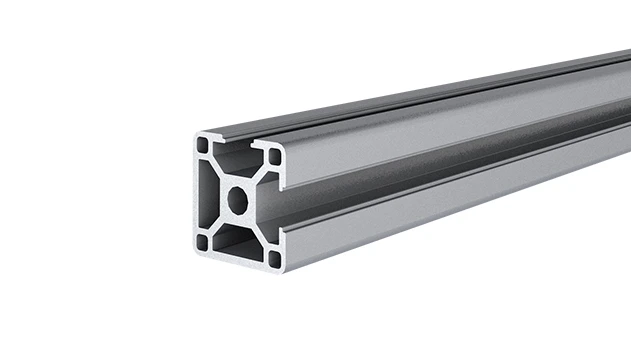
In the world of manufacturing, warehousing, and lean production systems, the choice of materials can make or break operational efficiency. Every component, from workbenches to material racks, relies on a foundation of sturdy, reliable structures—and that's where profiles come into play. Two of the most common options on the market today are aluminum profiles and steel profiles. But when it comes to balancing weight, strength, and versatility, how do they stack up? In this article, we'll take a deep dive into one of the most popular aluminum profiles—the 3030b EU standard aluminum profile —and compare it head-to-head with traditional steel profiles, focusing on the critical factors of weight and strength. Whether you're a small workshop owner or a procurement manager at a large facility, understanding these differences will help you make smarter, more cost-effective decisions for your operations.
What is the 3030b EU Standard Aluminum Profile?
Before we jump into comparisons, let's get to know the star of the show: the 3030b EU standard aluminum profile. If you've ever walked through a modern factory or warehouse, you've likely seen aluminum profiles in action—they're the backbone of everything from assembly line workbenches to automated conveyor systems. The "3030b" designation refers to its dimensions: 30mm in width and 30mm in height, with a specific cross-sectional design that follows EU manufacturing standards. Unlike generic aluminum extrusions, EU standard profiles are engineered for consistency, precision, and compatibility with a wide range of aluminum profile accessories , such as connectors, end caps, and brackets.
What sets the 3030b apart is its construction process: aluminum extrusion profile manufacturing. This process involves heating aluminum billets and forcing them through a die to create the desired cross-sectional shape. The result? A lightweight, yet surprisingly strong profile with a smooth surface finish and integrated T-slots. These T-slots are game-changers—they allow for easy attachment of accessories without the need for welding or drilling, making customization and reconfiguration a breeze. For example, if you need to add a shelf to a workbench or adjust the height of a material rack, you can simply slide a bracket into the T-slot and secure it with a bolt. No special tools, no downtime, just quick, flexible adjustments.
Fun Fact:
The "EU standard" in 3030b EU standard aluminum profile ensures that profiles from different manufacturers are interchangeable. This means you can mix and match components from various suppliers without worrying about compatibility issues—a huge plus for businesses that value flexibility and scalability.
Steel Profiles: The Traditional Heavyweight
Now, let's turn to steel profiles—the tried-and-true workhorses of the industrial world. Steel has been a staple in manufacturing for decades, prized for its raw strength and durability. Common types of steel profiles include angle iron, C-channels, I-beams, and square tubes, each designed for specific load-bearing applications. Unlike aluminum, steel profiles are often hot-rolled or cold-formed, processes that give them a rugged, industrial look and a high density that contributes to their weight.
Steel's reputation for strength is well-earned. It has a high tensile strength (the maximum stress it can withstand before breaking) and excellent resistance to bending under heavy loads. This makes it ideal for applications where structural integrity is non-negotiable, such as supporting heavy machinery, building large storage racks, or constructing mezzanines. However, this strength comes with a trade-off: weight. Steel is significantly denser than aluminum, which means even small steel profiles can be surprisingly heavy. For example, a 30mm x 30mm steel square tube (wall thickness 2mm) weighs roughly 1.7 kg per meter, while an equivalent aluminum profile might weigh less than half that.
Another consideration with steel is its susceptibility to corrosion. Unless coated with zinc (galvanized steel) or painted, steel will rust over time, especially in humid or outdoor environments. This adds maintenance costs and reduces the lifespan of structures, whereas aluminum profiles naturally form a protective oxide layer that resists corrosion—no extra treatment needed.

Weight Comparison: Aluminum vs. Steel
Weight might seem like a simple metric, but in industrial settings, it has a ripple effect on everything from installation costs to energy efficiency. Let's break down the numbers. The density of aluminum is approximately 2.7 g/cm³, while steel clocks in at around 7.85 g/cm³—that's nearly three times denser! Translating that into real-world terms, let's compare a 3030b EU standard aluminum profile with a similar-sized steel profile (30mm x 30mm, wall thickness 2mm):
| Profile Type | Dimensions (W x H x Wall Thickness) | Weight per Meter (kg/m) | Weight for 10-Meter Length (kg) |
|---|---|---|---|
| 3030b EU Standard Aluminum Profile | 30mm x 30mm x 2mm | 0.8 – 1.0 | 8 – 10 |
| Mild Steel Square Tube | 30mm x 30mm x 2mm | 1.7 – 1.9 | 17 – 19 |
| Galvanized Steel Angle Iron (30x30x3mm) | 30mm x 30mm x 3mm | 1.3 – 1.5 | 13 – 15 |
As you can see, even a basic steel square tube is almost twice as heavy as the 3030b aluminum profile. For a 10-meter structure, that's a difference of 7–9 kg—enough to make installation teams break a sweat. Imagine scaling that up to a large facility with hundreds of meters of profiles: the total weight savings with aluminum could be in the tons. This not only reduces labor costs during setup but also makes it easier to reconfigure or relocate structures as your needs change. For example, a team of two people can easily move an aluminum workbench, whereas a steel workbench might require a forklift or extra manpower.
Weight also impacts transportation costs. Shipping steel profiles requires larger vehicles and more fuel, driving up logistics expenses. Aluminum profiles, on the other hand, are lighter, meaning you can fit more units per truckload and reduce carbon emissions in the process. For businesses aiming to cut costs and meet sustainability goals, this is a significant advantage.
Strength Comparison: Don't Let Aluminum's Lightweight Fool You
At this point, you might be thinking: "Aluminum is lighter, but is it strong enough?" It's a fair question. Steel has long been synonymous with strength, so it's natural to assume aluminum can't measure up. But here's the surprise: when it comes to strength-to-weight ratio, aluminum often outperforms steel. Let's clarify: steel has a higher absolute strength, but aluminum offers more strength per unit of weight. For example, a 3030b aluminum profile might not support as much weight as a steel profile of the same size, but it can support nearly the same weight while weighing half as much.
Let's look at the numbers. The tensile strength of the 3030b EU standard aluminum profile (typically made from 6063-T5 aluminum alloy) is around 180 MPa (megapascals), with a yield strength of 110 MPa. In comparison, mild steel has a tensile strength of about 400 MPa and a yield strength of 250 MPa—impressive, but remember, steel is much denser. When we calculate strength-to-weight ratio (tensile strength divided by density), aluminum comes out on top: 180 MPa / 2.7 g/cm³ = 66.7 MPa·cm³/g, versus steel's 400 MPa / 7.85 g/cm³ = 50.9 MPa·cm³/g. That means for every kilogram of material, aluminum delivers more strength.
In practical terms, what does this mean for your operations? Let's take a common application: a workbench. A 3030b aluminum workbench with a plywood top can easily support 100–150 kg of tools and materials—more than enough for most assembly or packaging tasks. If you need to support heavier loads, you can simply use thicker aluminum profiles (e.g., 4040 or 4080 EU standard profiles) or add reinforcement with cross-braces. Steel workbenches, while stronger, would be overkill for many light-to-medium duty applications, adding unnecessary weight and cost.
Key Takeaway:
For most industrial applications (e.g., workbenches, material racks, conveyor systems), the 3030b aluminum profile offers more than enough strength. Save steel for extreme load-bearing scenarios, like supporting heavy machinery or structural beams.
Real-World Applications: When to Choose Aluminum vs. Steel
Now that we've compared weight and strength, let's explore when to choose each material. The 3030b EU standard aluminum profile shines in applications where flexibility, weight savings, and corrosion resistance are priorities. Here are a few examples:
- Lean Manufacturing Systems: Lean production relies on minimizing waste and maximizing efficiency. Aluminum profiles are perfect for this, as they're easy to assemble, reconfigure, and transport. A lean system supplier will often recommend aluminum profiles for workstations, flow racks, and turnover trolleys because they reduce setup time and allow for quick adjustments as production needs change.
- Automated Conveyor Systems: Conveyors need to be lightweight to reduce strain on motors and drive systems. Aluminum profiles, paired with roller tracks and accessories, create smooth, energy-efficient conveyor lines that are easy to install and maintain.
- Clean Rooms & Food Processing: Aluminum's natural corrosion resistance makes it ideal for environments where hygiene is critical. Unlike steel, it won't rust when exposed to water or cleaning chemicals, making it a favorite in pharmaceutical, food, and electronics manufacturing.
Steel profiles, on the other hand, are better suited for heavy-duty applications, such as:
- Heavy Machinery Frames: Equipment like industrial presses or CNC machines require the absolute strength of steel to withstand constant vibration and heavy loads.
- Outdoor Structures: While aluminum is corrosion-resistant, steel (especially galvanized or stainless steel) is better for outdoor applications where extreme weather or UV exposure is a concern.
- High-Load Storage Racks: Racks designed to hold pallets of heavy goods (e.g., automotive parts, construction materials) often use steel for its ability to support thousands of kilograms per shelf.
Aluminum Profile Accessories: The Secret to Versatility
One of the biggest advantages of the 3030b EU standard aluminum profile is its compatibility with a vast array of aluminum profile accessories . These accessories turn basic profiles into fully functional systems, eliminating the need for custom fabrication. Let's explore some of the most popular ones:
- Connectors: From 90° angle connectors to T-joints and corner brackets, these allow you to join profiles at any angle without welding. Many connectors are designed to fit into T-slots, making assembly tool-free.
- End Caps: These plastic or aluminum caps snap onto the ends of profiles, preventing dust and debris from entering the T-slots and giving structures a clean, finished look.
- Panels & Shelves: Aluminum honeycomb panels, plywood, or acrylic sheets can be attached to profiles using panel holders, creating work surfaces, dividers, or storage shelves.
- Castors: Adding castors to aluminum frames turns static structures into mobile trolleys, perfect for transporting materials between workstations.
The beauty of these accessories is that they're affordable and widely available. A quick search for "aluminum profile accessories" online will reveal hundreds of options, from budget-friendly plastic brackets to heavy-duty metal connectors. This availability means you can prototype, build, and modify structures in-house, without relying on external fabricators. For small businesses or startups, this translates to lower costs and faster time-to-market.
Cost Considerations: Aluminum vs. Steel
Cost is always a factor, and at first glance, aluminum profiles may seem more expensive than steel. It's true: the upfront cost of aluminum is higher—3030b EU standard aluminum profiles typically cost $3–$5 per meter, while steel angle iron or square tubes can cost $2–$4 per meter. But when you factor in the total cost of ownership (TCO), aluminum often becomes the more economical choice.
Here's why: First, aluminum requires less labor to install. Its lightweight nature means fewer workers are needed to transport and assemble structures, reducing labor costs. Second, aluminum is low-maintenance. No painting, no rust removal, just an occasional wipe-down to keep it clean. Steel, especially uncoated steel, requires regular maintenance to prevent corrosion, adding long-term costs. Third, aluminum is recyclable. At the end of its lifespan, you can sell aluminum profiles as scrap for a higher price than steel, offsetting some of the initial investment.
For example, let's say you're building a 5-meter long material rack. Using 3030b aluminum profiles and accessories, the total material cost might be $50, with 2 hours of labor ($40). Total: $90. Using steel profiles, material cost might be $40, but labor could take 3 hours ($60) due to heavier lifting and welding. Total: $100. Over time, the aluminum rack would require no maintenance, while the steel rack might need repainting in 2–3 years ($20). Suddenly, aluminum is the cheaper option.
Conclusion: Why the 3030b EU Standard Aluminum Profile is a Smart Choice
When it comes to choosing between the 3030b EU standard aluminum profile and steel profiles, the decision boils down to your specific needs. Steel is unbeatable for extreme load-bearing and high-stress applications, but for most industrial, manufacturing, and warehousing tasks, aluminum profiles offer a better balance of weight, strength, and versatility.
The 3030b EU standard aluminum profile, in particular, stands out for its precision, compatibility with aluminum profile accessories , and cost-effectiveness over time. Its lightweight design reduces installation and transportation costs, while its strength-to-weight ratio ensures it can handle most light-to-medium duty tasks. Add in its corrosion resistance and recyclability, and it's clear why more and more businesses are making the switch to aluminum.
Whether you're building a simple workbench, a complex conveyor system, or a modular storage rack, the 3030b EU standard aluminum profile gives you the flexibility to adapt and grow with your business. And with the support of a reliable lean system supplier , you can source high-quality profiles and accessories at competitive prices, ensuring your operations run smoothly for years to come.
So, the next time you're planning a project, don't default to steel out of habit. Give aluminum profiles a closer look—you might be surprised by how much they can improve your efficiency, reduce your costs, and simplify your workflow. After all, in the world of lean manufacturing, every gram saved and every minute optimized counts.