- Company Articles
- Industry articles
- Industry standards
- 3030r EU Standard Aluminum Profile: Environmental Certifications & Sustainability Features

3030r EU Standard Aluminum Profile: Environmental Certifications & Sustainability Features
Related Product
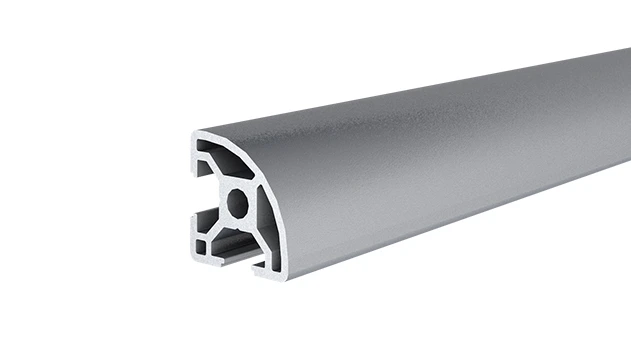
3030R EU Standard Aluminum Profile
3030R is a 3.00 x 3.00CM fractional 30 series square extrusion T-slot profile with four open T-slots, two side with 3.00cm face, the other side with round face. The profile has align-a-grooves to assist in aligning connecting profiles.
Walk into any modern manufacturing facility today, and you'll likely notice a quiet revolution unfolding. The clatter of heavy machinery is still there, but so is a new focus—one that balances productivity with purpose. Manufacturers are no longer just chasing output; they're asking: How can we build better, without breaking the planet? This shift isn't driven by trend alone. With EU regulations tightening on carbon emissions, waste reduction, and hazardous materials, sustainability has become a business imperative. And at the center of this movement lies a material that's quietly transforming workspaces: the 3030r EU Standard Aluminum Profile. More than just a component, it's a statement—a commitment to building lean, green, and future-ready operations. Let's explore why this profile has become a cornerstone for sustainability-minded manufacturers and lean system suppliers alike.
The Case for Sustainable Materials in Modern Manufacturing
To understand the buzz around the 3030r EU Standard Aluminum Profile, we first need to talk about the elephant in the workshop: waste. Traditional manufacturing setups often rely on materials like steel or plastic, which come with hidden costs to the environment. Steel, for example, requires massive energy inputs to mine and refine, and while it's recyclable, the process is far from efficient. Plastic, on the other hand, is lightweight but prone to wear and tear, leading to frequent replacements—and most plastics end up in landfills, taking centuries to decompose.
Enter aluminum. As a material, aluminum has long been praised for its strength-to-weight ratio, but its true superpower lies in sustainability. Unlike steel or plastic, aluminum is 100% recyclable, and it retains its quality through endless recycling loops. Best of all, recycling aluminum uses just 5% of the energy required to produce it from raw bauxite ore—a statistic that makes even the most cost-conscious CFO sit up and take notice. When you shape that aluminum into an extrusion profile—specifically, one designed to meet EU standards—you get a material that's not just strong and versatile, but a force for environmental good.
What Makes the 3030r EU Standard Aluminum Profile Unique?
At first glance, the 3030r might look like any other aluminum extrusion profile. But its "EU Standard" badge is more than just a marketing term—it's a promise of rigorous testing and compliance. Let's start with the basics: the "3030" refers to its dimensions, typically 30mm x 30mm, making it a versatile choice for everything from workbenches to material racks. The "r" often denotes a rounded edge design, which adds safety (no sharp corners!) and a sleek aesthetic. But the real magic is in the "EU Standard" part.
EU standards for aluminum profiles are some of the strictest in the world, covering everything from material composition to manufacturing processes. For a lean system supplier, this means peace of mind. When they recommend the 3030r to clients, they're not just selling a part—they're selling compliance. Let's break down the key certifications that set this profile apart:
- CE Marking: Essential for any product sold in the EU, the CE mark confirms that the 3030r meets health, safety, and environmental protection requirements. For manufacturers exporting to Europe, this isn't optional—it's a legal necessity.
- RoHS Compliance: The Restriction of Hazardous Substances (RoHS) directive bans the use of 10 substances, including lead, mercury, and cadmium, in electrical and electronic equipment. While the 3030r itself isn't electronic, many of its applications (like ESD workstations) are. RoHS compliance ensures it won't introduce harmful chemicals into the production line or the environment.
- ISO 14001: While not a product certification, many manufacturers of 3030r profiles hold ISO 14001 certification, which means they follow strict environmental management systems. This includes reducing waste in production, optimizing energy use, and minimizing carbon footprints—ensuring the profile is green from factory to facility.
"We had a client in Germany who was struggling to meet EU waste regulations," recalls a sales manager at a leading lean system supplier. "They were using steel racks that rusted quickly, leading to frequent replacements and tons of scrap metal. Switching to 3030r profiles cut their replacement costs by 60% and made their recycling process a breeze. Now, they're not just compliant—they're proud of their sustainability reports."

Sustainability Features That Go Beyond Certifications
Certifications are important, but the 3030r's sustainability story doesn't end with a stamp of approval. Let's dig into the features that make it a workhorse for eco-friendly manufacturing:
1. Endless Recyclability
Aluminum's ability to be recycled indefinitely without losing quality is game-changing. When a 3030r profile reaches the end of its life in a workstation or material rack, it doesn't become waste—it becomes a resource. Melt it down, and it can be re-extruded into a new profile, a car part, or even a soda can. This closed-loop system aligns perfectly with the circular economy model, where waste is eliminated, and materials are kept in use for as long as possible.
2. Lightweight Design = Lower Emissions
Aluminum is about 30% lighter than steel, which might not sound like much until you scale it up. A typical production line uses dozens of profiles—racks, workbenches, flow racks, and more. The lighter weight reduces transportation emissions (less fuel needed to ship materials) and makes on-site reconfiguration easier, cutting down on the use of heavy machinery. "We once helped a client reconfigure their assembly line in a single day using 3030r profiles," says a lean system consultant. "With steel, that would have taken a week and required a crane. The energy savings alone were staggering."
3. Durability That Reduces Waste
Sustainability isn't just about recycling—it's about not needing to recycle in the first place. The 3030r's aluminum extrusion profile is built to last. Its resistance to corrosion (especially when paired with aluminum profile accessories like anodized brackets) means it can withstand the wear and tear of a busy factory floor for decades. Compare that to plastic profiles, which crack under heavy loads, or untreated steel, which rusts—both of which end up in landfills far sooner.
4. Modularity = Less Waste, More Adaptability
One of the biggest wastes in manufacturing is obsolescence —when a workspace is redesigned, and perfectly good equipment gets tossed because it can't be reconfigured. The 3030r profile, with its compatible aluminum profile accessories (like internal rotatary aluminum joints and aluminum guide rails), is modular by design. Need to shorten a workbench? Disassemble and reuse the profiles. Want to add a new shelf to a material rack? Just snap on a few brackets. This adaptability means fewer new materials are needed over time, and fewer old ones end up as waste.
Aluminum Profile Accessories: The Unsung Heroes of Sustainability
A profile is only as good as its accessories, and the 3030r's ecosystem of aluminum profile accessories is designed with sustainability in mind. Let's take a closer look at a few standouts:
Internal Rotary Aluminum Joints: These joints allow for 360-degree rotation, making it easy to adjust the angle of shelves or workbench components without cutting or welding. No cutting means no scrap metal, and no welding means lower energy use on-site.
Aluminum Guide Rails: Used in flow racks and conveyor systems, these rails are smooth, durable, and lightweight. Unlike plastic guide rails, which wear down and need replacement, aluminum rails last for years—and when they do need to be replaced, they're 100% recyclable.
Plastic Roller Track Guide Rails (Yellow/Grey): While not aluminum, these accessories are often made from recycled plastic, closing the loop on waste. They're also designed to snap into place on 3030r profiles, eliminating the need for glue or screws that can damage the profile (and make recycling harder).
"We think of the 3030r and its accessories as a puzzle," says an engineer at an aluminum extrusion profile manufacturer. "Every piece is designed to fit perfectly, so you never have to force or modify parts. That means less waste during assembly and more opportunities to reuse components later."
3030r Aluminum Profile vs. Traditional Materials: A Sustainability Showdown
Still not convinced the 3030r is worth the switch? Let's put it head-to-head with traditional materials like steel and plastic in a sustainability showdown. The table below compares key metrics for a typical 3030mm length of material:
| Sustainability Metric | 3030r EU Standard Aluminum Profile | Traditional Steel Profile | Plastic Extrusion Profile |
|---|---|---|---|
| Recyclability Rate | 100% (infinite recycling loops) | 85% (loses quality after 2-3 cycles) | 10-15% (most plastic isn't recycled) |
| Energy Use (Production) | Low (95% less energy for recycled aluminum) | High (requires coal-fired smelting) | High (made from fossil fuels) |
| Carbon Footprint (per kg) | 2.5 kg CO₂e (recycled) | 1.8 kg CO₂e (virgin steel), but higher when accounting for shorter lifespan | 6-8 kg CO₂e (from production to disposal) |
| Typical Lifespan | 20+ years | 10-15 years (prone to rust) | 5-8 years (prone to cracking/warping) |
| Weight (kg/m) | 1.2 kg/m | 3.5 kg/m | 0.8 kg/m (but less durable) |
| Lean System Compatibility | High (modular, easy to reconfigure) | Medium (heavy, requires welding to reconfigure) | Low (weak, limited load capacity) |
The numbers speak for themselves. While plastic is lighter, its short lifespan and poor recyclability make it a non-starter for long-term sustainability. Steel, while strong, is heavy, energy-intensive to produce, and harder to recycle without quality loss. The 3030r profile, with its balance of durability, recyclability, and modularity, emerges as the clear winner for eco-conscious manufacturers.
Real-World Impact: How Manufacturers Are Using 3030r to Go Green
Let's step into the shoes of a small electronics manufacturer based in Poland. Two years ago, they were struggling with two problems: high waste costs and a production line that couldn't keep up with changing product designs. Their old steel workbenches and material racks were heavy, hard to adjust, and rusting—leading to frequent replacements and a mountain of scrap metal. Their sustainability report was a source of embarrassment, and they were at risk of missing EU carbon targets.
Then, they partnered with a lean system supplier who recommended switching to 3030r EU Standard Aluminum Profiles. Here's what happened next:
- Reduced Waste: By reusing 3030r profiles and aluminum profile accessories when reconfiguring workstations, they cut waste by 75%. Old profiles were recycled locally, generating a small rebate from the recycling plant.
- Lower Energy Bills: The lighter weight of the profiles reduced the need for heavy machinery during reconfigurations, cutting energy use by 15% in the factory.
- Compliance Made Easy: CE and RoHS certifications for the 3030r profile helped them pass EU audits with zero violations, avoiding potential fines of up to €50,000.
- Happier Employees: The modular workstations, with adjustable heights and smooth aluminum surfaces, reduced ergonomic injuries and boosted morale. "Our team loves how easy it is to adjust their benches now," says the plant manager. "It's not just green—it's better for people, too."
Today, the manufacturer is on track to become carbon-neutral by 2026, and they've even started marketing their "green production" as a selling point to eco-conscious clients. "The 3030r profile wasn't just a material upgrade," the plant manager adds. "It was a mindset shift. We're no longer just making products—we're building a sustainable future."
The Future of Manufacturing: Why 3030r Is Here to Stay
As the EU continues to tighten environmental regulations—with targets like carbon neutrality by 2050 and zero-waste manufacturing by 2030—the demand for sustainable materials will only grow. The 3030r EU Standard Aluminum Profile, with its certifications, durability, and recyclability, is perfectly positioned to meet this demand.
But its impact goes beyond compliance. For lean system suppliers and manufacturers, the 3030r represents a new way of thinking: sustainability and efficiency don't have to compete—they can collaborate . By choosing a material that's easy to reconfigure, lasts longer, and recycles infinitely, manufacturers can reduce costs, improve workflow, and do their part for the planet—all at once.
So, whether you're a small workshop looking to cut waste or a large facility aiming for carbon neutrality, the 3030r EU Standard Aluminum Profile isn't just a smart choice—it's the future. And with a trusted lean system supplier and the right aluminum profile accessories, you'll be ready to build that future, one sustainable profile at a time.