- Company Articles
- Industry articles
- Industry standards
- 3030r EU Standard Aluminum Profile: Essential Specifications & Dimension Guide

3030r EU Standard Aluminum Profile: Essential Specifications & Dimension Guide
Related Product
3030R EU Standard Aluminum Profile
3030R is a 3.00 x 3.00CM fractional 30 series square extrusion T-slot profile with four open T-slots, two side with 3.00cm face, the other side with round face. The profile has align-a-grooves to assist in aligning connecting profiles.
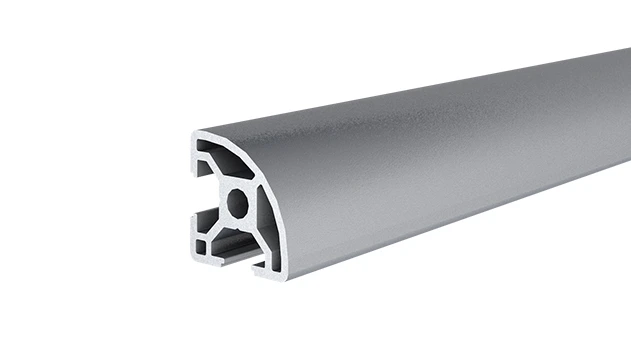
Walk into any modern factory, workshop, or even a retail stockroom, and you'll likely spot structures that seem to effortlessly balance strength, flexibility, and precision. From workbenches where technicians assemble delicate electronics to material racks organizing inventory, these structures often share a common backbone: aluminum profiles. Among the countless options available, the 3030r EU Standard Aluminum Profile stands out as a workhorse, trusted by engineers, manufacturers, and facility managers worldwide. But what makes this profile so indispensable? Why do lean system suppliers and workshop designers reach for it time and again? In this guide, we'll unpack everything you need to know about the 3030r EU Standard Aluminum Profile—from its core specifications and dimensions to its real-world applications, compatibility with aluminum profile accessories, and how to source it from reliable suppliers. Whether you're building a custom workbench, designing a production line, or simply curious about the materials shaping today's industrial spaces, this article will turn complex specs into practical insights.
What Is the 3030r EU Standard Aluminum Profile?
Before diving into dimensions and tolerances, let's start with the basics: What exactly is the 3030r EU Standard Aluminum Profile? At its core, it's a type of aluminum extrusion profile—meaning it's formed by pushing heated aluminum through a die to create a consistent cross-sectional shape. The "3030r" label gives us key clues: "3030" refers to its nominal width and height (30mm x 30mm), while the "r" often denotes a specific design variant, such as rounded edges or a particular slot configuration common in EU-standard profiles.
What sets the "EU Standard" apart? Unlike generic aluminum profiles, EU-standard versions adhere to strict manufacturing norms set by organizations like the European Committee for Standardization (CEN). These standards ensure uniformity in dimensions, material quality, and performance—so a 3030r profile from one lean system supplier will fit seamlessly with accessories from another, whether you're in Germany, France, or beyond. This interoperability is a game-changer for businesses: it reduces downtime during assembly, simplifies repairs, and allows for easy reconfiguration as needs evolve.
Think of the 3030r as the "Swiss Army knife" of aluminum profiles. It's not the smallest (that might be the 2020 series) or the beefiest (hello, 4080), but it strikes a near-perfect balance between weight, strength, and versatility. This makes it ideal for medium-duty applications—think workbenches that need to support tools and components without sagging, material racks that hold boxes of parts, or even lightweight conveyor systems. And because it's part of the EU standard family, it plays well with a vast ecosystem of aluminum profile accessories, from end caps to connectors, making customization a breeze.
Material Composition: Why 6063-T5 Aluminum?
The performance of any aluminum profile starts with its material, and the 3030r EU Standard doesn't cut corners here. Most 3030r profiles are made from 6063-T5 aluminum alloy—a choice rooted in decades of engineering wisdom. Let's break down what that means.
The "6063" designation refers to the alloy's composition: primarily aluminum, with small amounts of magnesium (0.45-0.9%) and silicon (0.2-0.6%). This blend gives the alloy excellent formability (critical for extrusion) while maintaining good strength. It's also highly weldable and corrosion-resistant, two must-haves for industrial environments where moisture, oils, or chemicals might be present.
The "T5" in 6063-T5 denotes the heat treatment process. After extrusion, the profile is solution heat-treated (heated to a specific temperature to dissolve alloying elements) and then artificially aged (held at a lower temperature to precipitate those elements, strengthening the material). The result? A profile that's strong enough to handle daily use but still lightweight—typically weighing around 0.8-1.2 kg per meter, depending on wall thickness.
Surface treatment is another key detail. Most 3030r EU Standard profiles undergo anodization—a process that electrochemically coats the aluminum with a layer of aluminum oxide. This layer is hard, wear-resistant, and can be dyed (common colors include silver, black, or blue). Anodized finishes not only protect against scratches and corrosion but also give the profile a clean, professional look that holds up in visible spaces like retail backrooms or customer-facing workshops.
Pro Tip:
When sourcing 3030r profiles, always ask about the anodization thickness. EU standards typically require a minimum of 10μm (microns) for industrial use, which ensures durability in high-traffic areas. Thinner coatings might save costs upfront but can wear off quickly in busy workshops.

Key Specifications: Dimensions, Tolerances, and Slot Design
Now, let's get into the nitty-gritty: the specifications that make the 3030r EU Standard Aluminum Profile reliable and consistent. While exact measurements can vary slightly between manufacturers, EU standards (like EN 755-9 for extruded profiles) set strict tolerances to ensure compatibility. Below is a detailed breakdown of the most critical specs:
| Specification | Typical Value | EU Standard Tolerance | Why It Matters |
|---|---|---|---|
| Width x Height | 30mm x 30mm | ±0.2mm | Ensures profiles stack evenly and accessories fit without gaps. |
| Wall Thickness | 1.5mm – 2.0mm (common options) | ±0.1mm | Thicker walls increase load capacity; 1.5mm suits most workbenches, 2.0mm for heavier racks. |
| Slot Size (Width x Depth) | 8mm x 6mm (standard EU slot) | ±0.1mm | Matches standard T-slot nuts and bolts, the "glue" that holds accessories in place. |
| Weight per Meter | 0.8kg (1.5mm wall) – 1.2kg (2.0mm wall) | ±5% | Light enough for manual handling but heavy enough to resist bending under load. |
| Length | 3m, 4m, or custom-cut | ±2mm per 3m length | Long lengths reduce the need for joints; custom cuts minimize waste. |
| Surface Finish | Anodized (silver, black, or custom colors) | ≥10μm thickness | Protects against corrosion and wear; consistent color improves aesthetics. |
One spec that deserves extra attention is the slot design. EU-standard profiles like the 3030r feature T-slots—longitudinal grooves along the profile's length—that allow for easy attachment of accessories. The standard 8mm slot width is compatible with M5 or M6 T-slot nuts, which slide into the slot and lock in place with a bolt. This system turns the 3030r into a modular building block: want to add a shelf? Slide a bracket into the slot and tighten. Need to move a lamp holder? Loosen the bolt, reposition, and retighten. No drilling, no welding—just quick, tool-free adjustments.
The "r" in 3030r often refers to rounded edges, a subtle but important detail. Sharp edges can pose safety risks in busy workshops (think scraped hands or snagged clothing), while rounded edges reduce these hazards. They also give the profile a cleaner, more professional look—important if the structure will be visible to clients or visitors.
Real-World Applications: Where the 3030r Shines
Numbers and specs tell part of the story, but the true test of a profile is how it performs in the field. Let's explore some of the most common applications where the 3030r EU Standard Aluminum Profile proves its worth:
Workbenches:
Walk into any electronics assembly line, and you'll likely find workbenches framed with 3030r profiles. Why? They're sturdy enough to support soldering irons, oscilloscopes, and bins of components, yet lightweight enough to move if the layout changes. Pair the 3030r with a plywood or aluminum honeycomb top, add some LED task lights (attached via T-slot brackets), and you've got a workstation that's both functional and ergonomic. Many lean system suppliers offer pre-designed workbench kits using 3030r, but the real beauty is customization—add a pegboard for tools, a bin rail for small parts, or even an ESD (electrostatic discharge) mat for sensitive electronics.
Material Racks and Shelving:
Warehouses and stockrooms thrive on organization, and 3030r profiles excel here. A basic material rack might use vertical 3030r posts with horizontal crossbars, creating shelves for boxes or bins. For heavier loads, doubling up the profiles (using parallel aluminum joint a accessories) increases stability. What about flow racks, where items slide forward as they're picked? The 3030r's T-slots make it easy to mount roller tracks—simply attach brackets to the slots, snap in the rollers, and you've got a gravity-fed system that keeps inventory accessible.
Production Line Structures:
In manufacturing, flexibility is key. Production lines need to adapt as products change, and 3030r profiles make reconfiguration simple. For example, a car parts manufacturer might use 3030r to build a frame for a conveyor system, with brackets holding motors and guides. If the line needs to expand, just add more profiles and connectors—no need to rebuild from scratch. Even small details, like tool holders or part trays, can be attached via T-slots, keeping tools within arm's reach of operators.
Machine Guards and Enclosures:
Safety is non-negotiable in industrial settings, and 3030r profiles are often used to build guards around machinery. Their strength ensures the guard can withstand accidental impacts, while their lightweight nature makes them easy to remove for maintenance. Add a polycarbonate panel (secured with aluminum profile accessories like clamps) and you've got a guard that protects workers without blocking visibility.
Retail Displays:
It's not just factories—3030r profiles are finding their way into retail spaces too. Pop-up shops, trade show booths, and in-store displays often use 3030r frames due to their clean look and easy assembly. Want to highlight a new product? Build a custom shelf with 3030r, add branding via slot-in signs, and disassemble it when the promotion ends. The anodized finish ensures it looks polished, even in customer-facing environments.
Aluminum Profile Accessories: The Key to Customization
A 3030r profile alone is just a length of aluminum—but paired with the right accessories, it becomes a building block for endless possibilities. Aluminum profile accessories are the unsung heroes of modular design, turning simple frames into fully functional systems. Let's explore some of the most essential ones:
Connectors and Joints:
These are the "hinges" of the aluminum profile world. The 90° aluminum profile connector is a staple—used to join two profiles at right angles (think the corner of a workbench). For more complex angles, there are 45° and 135° connectors, while three-way or four-way connectors let you branch off in multiple directions. Many connectors are designed to be hidden within the profile, giving structures a sleek, uncluttered look.
End Caps:
Ever noticed how some aluminum profiles have smooth, finished ends? That's thanks to end caps. The 3030 aluminum profile end cap snaps into the open ends of the profile, covering sharp edges and preventing dust or debris from collecting inside. They're available in colors matching the profile's finish (silver, black) and are a small detail that makes a big difference in safety and aesthetics.
T-Slot Nuts and Bolts:
These tiny components are the glue that holds everything together. T-slot nuts slide into the profile's slot and rotate 90° to lock in place; when paired with a bolt, they secure accessories like brackets, shelves, or lights. Look for high-quality steel nuts with a zinc coating to resist rust—cheap nuts can strip or seize, making adjustments a headache.
Wheels and Casters:
Need a mobile structure, like a rolling workbench or cart? Attach casters to the 3030r frame using caster mounting plates (secured via T-slots). Swivel casters with brakes let you move the structure easily, then lock it in place when needed. Just be sure to match the caster weight rating to the load—most 3030r carts can handle 100-200kg with the right casters.
Panels and Covers:
To turn a frame into a fully enclosed structure (like a machine guard or storage cabinet), you'll need panels. Plywood, acrylic, or polycarbonate panels can be attached using panel brackets or clamps—both designed to fit 3030r's T-slots. For ESD-sensitive areas, there are even conductive panels that dissipate static electricity.
The takeaway? The 3030r profile is only as versatile as the accessories it pairs with. A reliable lean system supplier will stock not just the profiles but also a full range of connectors, end caps, nuts, and brackets—ensuring you have everything you need to bring your design to life.
Installation Tips: Getting the Most Out of Your 3030r Profiles
So you've ordered your 3030r profiles and accessories—now what? Installing aluminum profile structures is relatively straightforward, but a few tips can save you time and frustration:
Measure Twice, Cut Once:
While many suppliers offer custom cutting, you may need to trim profiles to length on-site. Use a miter saw with a fine-tooth blade (aluminum-specific blades work best) to avoid burring. After cutting, deburr the edges with a file or sandpaper—sharp edges can damage accessories or cause injury.
Use the Right Tools:
A hex key (Allen wrench) is essential for tightening T-slot bolts, but invest in a torque wrench if you're building load-bearing structures. Over-tightening can strip threads or warp the profile; under-tightening leads to wobbly joints. Most suppliers recommend a torque of 4-6 Nm for M5 bolts in 3030r profiles.
Check for Squareness:
When assembling frames (like a workbench or rack), use a carpenter's square to ensure corners are 90°. Even a small misalignment can throw off the entire structure, making it harder to attach accessories later. For larger frames, clamp the profiles to a workbench while tightening the connectors to keep them steady.
Plan for Adjustments:
One of the perks of T-slot systems is adjustability, so don't over-tighten bolts during initial assembly. Leave them slightly loose until the structure is square and level, then go back and snug them up. This makes it easier to tweak positions if something isn't lining up.
Support Long Spans:
While 3030r is strong, long horizontal spans (over 1.5m) can sag under load. Add vertical supports or use cross-bracing (diagonal profiles) to increase rigidity. For example, a 2m-long shelf might need a support in the middle to prevent bowing.
Label and Organize Accessories:
Aluminum profile accessories come in dozens of shapes and sizes—connectors, brackets, end caps, etc. Keep them organized in bins or drawers, and label each type to avoid confusion during assembly. A simple label maker can save you from rummaging through a pile of parts to find the right connector.
Sourcing the 3030r: How to Choose a Lean System Supplier
You've decided on the 3030r EU Standard Aluminum Profile—now, where do you buy it? With so many suppliers claiming to offer "EU-standard" products, it's crucial to choose wisely. Here's what to look for in a lean system supplier:
Compliance with EU Standards:
This is non-negotiable. Ask for certificates proving compliance with EN 755-9 (aluminum extrusions) and EN 12020-2 (tolerances). A reputable supplier will have these documents readily available—if they hesitate, walk away. Non-compliant profiles may have inconsistent dimensions, weak material, or poor surface finishes, leading to fit issues or premature failure.
Range of Products:
Look for a supplier that stocks not just 3030r profiles but also a full line of aluminum profile accessories (connectors, end caps, T-slot nuts, etc.). This ensures compatibility—you won't have to worry about a connector from Supplier A not fitting a profile from Supplier B. Bonus points if they offer related products like roller tracks, casters, or workbench tops.
Customization Options:
While standard lengths (3m, 4m) work for many projects, you may need custom-cut profiles or drilled holes for specific applications. A good supplier should offer cutting, drilling, or even anodizing services to meet your needs. Just be sure to ask about lead times—custom work may take a few extra days.
Technical Support:
Even seasoned engineers have questions. Does the supplier offer technical support? Can they help with load capacity calculations, or suggest accessories for a specific application? A supplier with knowledgeable staff can turn a vague idea ("I need a workbench for electronics assembly") into a detailed plan, saving you time and money.
Customer Reviews and References:
Don't take a supplier's word for it—check online reviews or ask for references from other customers. Look for feedback on product quality, delivery times, and customer service. A supplier with a history of happy clients is more likely to deliver on their promises.
Lead Times and Delivery:
In manufacturing, downtime is costly. Ask about lead times for in-stock items (ideally 1-3 days) and custom orders. Also, inquire about delivery options—can they ship to your location, and do they offer expedited shipping if needed?
Pricing Transparency:
Avoid suppliers with hidden fees (e.g., cutting charges, minimum order quantities). A trustworthy supplier will provide clear, upfront pricing, and may even offer volume discounts if you're ordering large quantities.
Remember, the cheapest supplier isn't always the best. A slightly higher price for compliant, high-quality 3030r profiles and accessories will pay off in fewer headaches, better performance, and longer-lasting structures.
FAQs: Common Questions About the 3030r EU Standard Aluminum Profile
Q: What's the maximum load a 3030r profile can support?
A: It depends on the wall thickness and span. A 3030r with a 1.5mm wall can typically support ~50kg over a 1m span (when used horizontally), while a 2.0mm wall can handle ~75kg over the same span. For vertical loads (like posts supporting a shelf), it's much higher—often 200kg+ per post. Always consult the supplier's load charts for your specific application.
Q: Can 3030r profiles be painted or powder-coated?
A: Yes! While most come anodized, you can paint or powder-coat 3030r profiles for custom colors. Just note that painting may reduce the effectiveness of T-slots (paint can clog the slots), so it's best to paint before assembling, then clean the slots with a small brush. Powder-coating is more durable than paint but requires professional equipment.
Q: Are 3030r profiles compatible with non-EU standard accessories?
A: It depends on the accessory's slot size. EU-standard slots are typically 8mm wide, while some non-EU profiles use 6mm or 10mm slots. Accessories designed for 8mm slots (like M5 T-slot nuts) will work, but those for other sizes may not. To avoid issues, stick with EU-standard accessories or check slot dimensions before buying.
Q: How do I clean and maintain 3030r profiles?
A: Anodized 3030r profiles are low-maintenance. Wipe them down with a damp cloth to remove dust or grease—avoid abrasive cleaners, which can scratch the anodized finish. For stubborn stains, use a mild detergent (like dish soap) and a soft sponge. Check T-slot bolts periodically for tightness, especially in structures that vibrate (like near machinery).
Q: Can I use 3030r profiles outdoors?
A: Yes, but consider the environment. The anodized finish offers basic corrosion resistance, but in coastal areas (saltwater) or industrial zones (chemicals), you may want to upgrade to a thicker anodization (15μm+) or a powder-coated finish. Also, use stainless steel accessories (nuts, bolts) to prevent rust staining the profile.
Final Thoughts: Why the 3030r Remains a Industry Favorite
The 3030r EU Standard Aluminum Profile isn't just another piece of industrial hardware—it's a testament to the power of smart design. By balancing strength, flexibility, and compliance with EU standards, it has earned its place as a go-to choice for workbenches, racks, production lines, and beyond. Its modular nature means it grows with your business: today's workbench can become tomorrow's material rack with a few accessory swaps. And when paired with high-quality aluminum profile accessories and sourced from a reliable lean system supplier, it delivers durability that stands the test of time.
Whether you're a small workshop owner building your first workbench or a large manufacturer redesigning a production line, the 3030r offers something invaluable: peace of mind. You know it will fit, it will perform, and it will adapt as your needs change. In a world where efficiency and agility are everything, that's more than just a profile—it's a partner in progress.