- Company Articles
- Industry articles
- Industry News
- 3030r EU Standard Aluminum Profile in 2025: Market Trends & Demand Forecast

3030r EU Standard Aluminum Profile in 2025: Market Trends & Demand Forecast
Related Product
3030R EU Standard Aluminum Profile
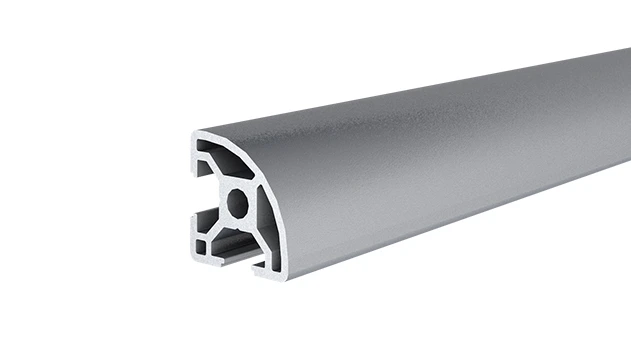
3030R is a 3.00 x 3.00CM fractional 30 series square extrusion T-slot profile with four open T-slots, two side with 3.00cm face, the other side with round face. The profile has align-a-grooves to assist in aligning connecting profiles.
Walk into any modern factory, warehouse, or tech facility today, and you'll likely spot a silent workhorse holding everything together: aluminum profiles. These unassuming structural components—sleek, lightweight, and endlessly adaptable—are the backbone of lean manufacturing systems, smart workstations, and efficient material handling setups. Among the many profiles shaping industries in 2025, one stands out for its versatility and reliability: the 3030r EU Standard Aluminum Profile. Whether you're a lean system supplier designing custom workflows or a manufacturer upgrading your production line, understanding the trends driving this profile's demand isn't just helpful—it's essential for staying ahead.
In this article, we'll unpack what makes the 3030r EU Standard Aluminum Profile a linchpin in today's industrial landscape, explore the key trends reshaping its market in 2025, and forecast where demand is headed. We'll also dive into real-world applications, regional hotspots, and the challenges and opportunities that lie ahead for suppliers, buyers, and industry professionals alike. Let's start by getting to know this profile a little better.
What Is the 3030r EU Standard Aluminum Profile?
First things first: Let's break down the name. The "3030r" refers to its dimensions—30mm in width and 30mm in height—with "r" indicating a rounded edge design, which adds both safety (fewer sharp corners) and aesthetic appeal. The "EU Standard" tag is crucial here: it means the profile adheres to strict European manufacturing norms for material quality, dimensional accuracy, and compatibility with aluminum profile accessories . This standardization is a game-changer for businesses operating across borders, as it ensures parts from different suppliers will fit together seamlessly—no more guesswork or costly custom modifications.
Made from high-grade aluminum alloy (typically 6063-T5, known for its strength-to-weight ratio and corrosion resistance), the 3030r profile features T-slots along its length. These slots are like built-in puzzle pieces, allowing users to attach accessories—such as brackets, panels, conveyor rails, or caster wheels—without welding or drilling. This modularity is why it's a favorite for workbench construction, material racks, and even automated systems. Imagine a production line where a single profile can be reconfigured in hours to adapt to a new product launch—that's the flexibility the 3030r brings to the table.
2025 Market Landscape: A Snapshot
2025 isn't just another year for the aluminum profile industry—it's a year of recovery, innovation, and strategic realignment. After the supply chain disruptions of the past few years, manufacturers are doubling down on resilience, and the 3030r EU Standard Aluminum Profile is emerging as a key tool in this effort. Let's look at the numbers: Global demand for aluminum extrusion profiles is projected to grow at a 5.2% CAGR through 2025, with the 3030r segment outpacing this average, driven by its adoption in high-growth sectors like electric vehicles (EVs), electronics, and renewable energy.
One of the biggest drivers? The global push for "leaner" manufacturing. As companies strive to cut waste, reduce downtime, and boost productivity, lean system solutions built on modular aluminum profiles are becoming non-negotiable. The 3030r, with its balance of strength (it can support up to 200kg per linear meter in some configurations) and light weight (about 1.5kg/m), is perfectly suited for these systems. From assembly line workbenches to gravity-fed flow racks, it's the profile of choice for engineers looking to build efficient, scalable setups.

Key Market Trends Shaping Demand in 2025
1. Sustainability: The Green Imperative
Sustainability isn't just a buzzword anymore—it's a business imperative, and the 3030r EU Standard Aluminum Profile is riding this wave. Aluminum is 100% recyclable, and recycling it uses just 5% of the energy required to produce new aluminum. For manufacturers under pressure to reduce their carbon footprints, this is a huge selling point. In 2025, we're seeing a surge in demand for profiles made from recycled aluminum, with some lean system supplier s now offering "green lines" of 3030r profiles certified by the Aluminum Stewardship Initiative (ASI). These profiles aren't just eco-friendly; they're also cost-effective, as recycled aluminum prices have stabilized, making them competitive with virgin material.
Another sustainability trend? The shift toward circular economy models. Companies are designing products with end-of-life recycling in mind, and the 3030r's modular design fits this perfectly. Instead of scrapping an entire workbench when a component wears out, you can simply swap out the damaged part—reducing waste and extending the system's lifespan. This "repairability" is becoming a key differentiator for buyers, and suppliers are taking note, offering extended warranties and take-back programs for used profiles.
2. Customization: One Profile, Endless Possibilities
Gone are the days of one-size-fits-all industrial equipment. In 2025, manufacturers want solutions tailored to their unique workflows, and the 3030r EU Standard Aluminum Profile is rising to the challenge—thanks in large part to innovative aluminum profile accessories . Today's suppliers offer a dizzying array of compatible parts: corner brackets, T-connectors, panel mounts, even LED light strips that fit into the profile's T-slots. This means a single 3030r profile can be transformed into a cleanroom workbench for semiconductor manufacturing, a mobile picking cart for a warehouse, or a test rig for automotive components—all with minimal retooling.
Take the electronics industry, for example. As devices get smaller and more complex, assembly requires precision workbenches with integrated ESD (electrostatic discharge) protection. Suppliers are now offering 3030r profiles with conductive anodized coatings, paired with ESD-safe accessories like anti-static mats and grounding clips. This level of customization wasn't widely available five years ago, but today, it's table stakes. Buyers expect profiles that can adapt to their specific needs, and the 3030r's versatility is making it the go-to choice.
3. Integration with Smart Manufacturing
Industry 4.0 is no longer a distant vision—it's here, and the 3030r EU Standard Aluminum Profile is becoming a critical part of the smart factory ecosystem. Modern manufacturing facilities are filled with sensors, IoT devices, and automated guided vehicles (AGVs), and these need sturdy, flexible structures to operate. The 3030r's T-slots make it easy to mount sensors, cameras, and cable management systems, turning static workbenches into data-collecting hubs.
Consider a typical EV battery assembly line. The 3030r profile is used to build the frame of the workbench, but it also houses sensors that monitor temperature, humidity, and torque during cell installation. These sensors feed data to a central dashboard, alerting operators to potential issues before they cause downtime. In this way, the profile isn't just a structural component—it's a bridge between physical and digital systems, enabling the real-time insights that drive smart manufacturing.
Demand by Industry: Where Is the 3030r Most Wanted?
The 3030r EU Standard Aluminum Profile's appeal isn't limited to one sector—it's a cross-industry star. Let's take a closer look at the industries driving its demand in 2025:
Automotive: Powering the EV Revolution
The automotive industry is undergoing a seismic shift, with EV production expected to hit 30 million units globally by 2025. This transition is fueling demand for lightweight, durable materials, and the 3030r is stepping up. EV battery packs, for instance, require rigid frames to protect cells during transport and assembly. The 3030r, with its high strength-to-weight ratio, is ideal for these frames, as it reduces overall vehicle weight (boosting range) while ensuring safety. Additionally, EV factories are using 3030r profiles to build modular assembly lines that can quickly adapt to new battery chemistries or vehicle models—critical in an industry where innovation cycles are measured in months, not years.
Electronics: Precision in Every Slot
In electronics manufacturing, precision is everything, and the 3030r EU Standard Aluminum Profile delivers. From smartphone assembly to semiconductor testing, workbenches built with 3030r profiles offer the stability and flexibility needed for delicate operations. Many electronics manufacturers are also upgrading to "cleanroom-compatible" profiles—3030r variants with smooth, easy-to-clean surfaces and sealed T-slots to prevent dust buildup. When paired with specialized aluminum profile accessories like adjustable shelving and tool holders, these profiles create workspaces that minimize errors and maximize efficiency.
Logistics & Warehousing: Moving Materials Smarter
E-commerce growth shows no signs of slowing, and warehouses are under pressure to handle more orders with fewer resources. Enter the 3030r: it's the backbone of modern material handling systems, from gravity flow racks that speed up order picking to conveyor systems that move packages with minimal energy. Unlike steel, aluminum profiles are lightweight, so racks and carts are easier to maneuver, reducing strain on workers. They're also corrosion-resistant, making them suitable for cold storage facilities or outdoor yards. In 2025, we're seeing a spike in demand for 3030r-based turnover trolleys and mobile workstations—tools that help warehouses adapt to fluctuating order volumes quickly.
Regional Demand: Who's Buying the Most 3030r Profiles?
The 3030r EU Standard Aluminum Profile's popularity isn't uniform across the globe. Let's take a closer look at regional trends, using data from industry reports and supplier insights:
| Region | Key Industries Driving Demand | 2025 Projected Growth Rate | Top Suppliers |
|---|---|---|---|
| Europe | Automotive (EVs), Machinery, Pharmaceuticals | 6.1% | Item Industrietechnik, Bosch Rexroth, TSL Aluminum |
| Asia-Pacific | Electronics, Consumer Goods, Logistics | 7.3% | Misumi, Lichen Industrial, Ningbo Jiexun |
| North America | Aerospace, Renewable Energy, Medical Devices | 5.8% | 80/20 Inc., Bosch Rexroth (US), Parker Hannifin |
| Latin America | Food & Beverage, Construction | 4.5% | Local distributors partnering with EU/Asian suppliers |
Europe, as the birthplace of the EU Standard, remains a stronghold for the 3030r. Germany, in particular, is a hotbed of demand, with automotive giants like Volkswagen and BMW integrating the profile into their EV production lines. Asia-Pacific, however, is the fastest-growing region, thanks to China's dominance in electronics manufacturing and India's burgeoning logistics sector. In North America, the push for reshoring manufacturing is driving demand, as companies build new factories with lean, modular systems. Latin America is a wildcard—while growth is slower, increasing investments in food processing and construction are creating opportunities for lean system supplier s willing to expand into the region.
Challenges & Opportunities for Suppliers
While the future looks bright for the 3030r EU Standard Aluminum Profile, suppliers face their share of challenges. Raw material costs are a persistent concern: Aluminum prices are volatile, tied to global energy markets and geopolitical tensions. To mitigate this, smart suppliers are investing in long-term contracts with smelters and exploring recycled aluminum sources. Another challenge is competition from lower-cost, non-standard profiles—especially from regions with less stringent manufacturing norms. However, buyers are increasingly prioritizing quality and compatibility over price, which plays to the 3030r's strengths as an EU Standard product.
On the opportunity side, the rise of "profile-as-a-service" models is intriguing. Some suppliers are now offering subscription-based access to 3030r systems, where customers pay a monthly fee for workbenches, racks, or conveyors, with the option to upgrade or return equipment as needed. This model appeals to startups and small manufacturers that can't afford large upfront investments, and it creates recurring revenue streams for suppliers. Additionally, as AI and machine learning become more integrated into design, suppliers that offer AI-powered configuration tools (e.g., software that helps customers design custom 3030r setups in minutes) are likely to gain a competitive edge.
Future Outlook: Beyond 2025
Looking ahead to 2030, the 3030r EU Standard Aluminum Profile's trajectory is clear: growth, driven by innovation and evolving industry needs. Here are three predictions:
1. Advanced Alloys Will Push Performance Limits: Research into new aluminum alloys is ongoing, and we can expect 3030r profiles with even higher strength, better thermal conductivity, and lower weight in the coming years. These alloys will open up new applications, such as in aerospace (where weight reduction is critical) and renewable energy (e.g., solar panel frames that can withstand extreme weather).
2. 3D Printing Will Complement, Not replace, Extrusion: While 3D printing is revolutionizing manufacturing, it's unlikely to replace aluminum extrusion for structural profiles anytime soon. Instead, we'll see hybrid systems: 3030r frames with 3D-printed custom accessories, allowing for even more personalized solutions.
3. Circular Economy Practices Will Become Standard: By 2030, most lean system supplier s will offer take-back programs for used 3030r profiles, recycling them into new products. This closed-loop approach will not only reduce environmental impact but also stabilize supply chains by reducing reliance on virgin material.
Final Thoughts: Why the 3030r Matters
In a world of constant change, the 3030r EU Standard Aluminum Profile is a steady, reliable presence—adaptable enough to keep up with innovation, yet consistent enough to build trust. It's more than just a piece of metal; it's a tool that empowers manufacturers to dream bigger, work smarter, and build more sustainably. For lean system supplier s, it's a product that bridges markets and creates opportunities. For buyers, it's a foundation for growth.
As we move through 2025 and beyond, one thing is certain: the 3030r won't just be part of the industrial landscape—it will help shape it. Whether you're designing a new production line, upgrading your warehouse, or building the next generation of smart factories, this profile deserves a spot at the center of your plans. After all, in the world of manufacturing, the best solutions are often the ones that quietly, reliably, get the job done. And that's the 3030r in a nutshell.