- Company Articles
- Industry articles
- Industry standards
- 3030r EU Standard Aluminum Profile: RoHS Compliance – Restricted Substances Checklist

3030r EU Standard Aluminum Profile: RoHS Compliance – Restricted Substances Checklist
Related Product
3030R EU Standard Aluminum Profile
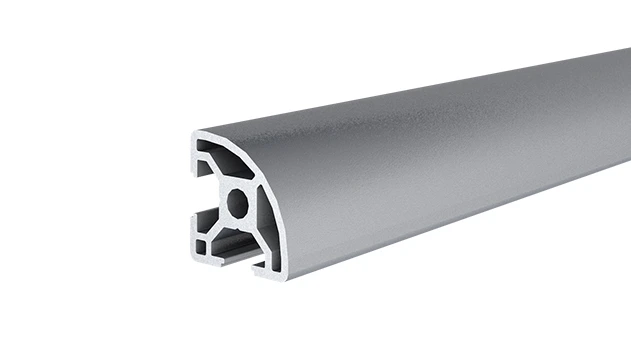
3030R is a 3.00 x 3.00CM fractional 30 series square extrusion T-slot profile with four open T-slots, two side with 3.00cm face, the other side with round face. The profile has align-a-grooves to assist in aligning connecting profiles.
3030r EU Standard Aluminum Profile: RoHS Compliance – Restricted Substances Checklist
The Backbone of Modern Factories: Why 3030r Aluminum Profiles Matter
Walk into any high-efficiency manufacturing plant today, and you'll likely spot it: sleek, silver frames holding up workbenches, material racks, and assembly lines. That's the
3030r EU standard aluminum profile
—a quiet workhorse that's redefining how factories operate. Unlike clunky steel structures of the past, this aluminum extrusion profile bends to the needs of lean production, adapting quickly to new layouts, reducing waste, and keeping teams moving. But in today's hyper-regulated world, its value isn't just in its versatility. It's in something far more critical: compliance. Specifically, RoHS compliance. For plant managers, purchasing officers, and safety teams, the stress of navigating global regulations is real. A single non-compliant component can halt production, damage reputations, or even lead to fines. That's why understanding the RoHS restricted substances checklist for 3030r profiles isn't just a box to tick—it's the foundation of responsible, sustainable manufacturing.
What Is the 3030r EU Standard Aluminum Profile, Anyway?
Let's start with the basics. The
3030r EU standard aluminum profile
is an
aluminum extrusion profile
—meaning it's shaped by forcing heated aluminum through a die to create its signature T-slot design. The "3030" refers to its dimensions: 30mm by 30mm, a sweet spot for balancing strength and flexibility. The "r" denotes its rounded edges, a small detail that makes a big difference in busy workshops, reducing the risk of scrapes or snags on clothing. But what truly sets it apart is its compatibility with
aluminum profile accessories
—joints, end caps, brackets, and connectors that snap into those T-slots, turning a simple tube into a custom workbench, a mobile material cart, or a precision flow rack.
Why do factories love it? Imagine a team launching a new product line. With traditional steel frames, reconfiguring the assembly area might take days—cutting, welding, repainting. With 3030r profiles? It's a matter of loosening a few bolts, swapping out accessories, and tightening them back up. This agility is the heart of lean manufacturing, and it's why the 3030r has become a staple in industries from electronics to automotive. But here's the catch: every part of that system, from the profile itself to the smallest
aluminum profile accessories
, must meet strict safety standards. And when it comes to global markets, RoHS compliance is the gold standard.
RoHS Compliance: More Than a Label—A Promise
RoHS, or the Restriction of Hazardous Substances Directive, isn't just another acronym. Enforced by the EU (and adopted by countries worldwide, including China, the US, and Japan), it limits the use of six hazardous substances in electrical and electronic equipment. The goal? Protect human health and the environment by reducing exposure to toxins like lead, mercury, and cadmium. For manufacturers, RoHS compliance isn't optional if they want to sell in the EU or other regulated markets. But beyond legal requirements, it's a commitment to workers and communities. Think about the technician who spends 8 hours a day assembling products on a
workbench
made with 3030r profiles. Or the recycler who processes old equipment at the end of its life. Non-compliant materials put these people at risk, and that's a responsibility no ethical business takes lightly.
For the 3030r profile, RoHS compliance means ensuring that neither the aluminum itself nor its coatings, finishes, or
aluminum profile accessories
contain restricted substances above allowable limits. That might sound straightforward, but aluminum extrusion is a complex process. From the raw aluminum ingots to the anodizing treatments that protect the surface, every step introduces potential sources of contamination. Even the lubricants used during extrusion or the adhesives in accessories can harbor hidden toxins. That's why a thorough restricted substances checklist is essential.
The Restricted Substances: What to Watch For in 3030r Profiles
RoHS restricts six key substances, each with its own risks and potential sources in aluminum profiles. Let's break them down, not as dry chemistry terms, but as real-world concerns for your team and your products.
Lead (Pb):
Once common in solders and coatings, lead is a neurotoxin that accumulates in the body, harming brain development in children and causing organ damage in adults. In 3030r profiles, lead might sneak in via old-style soldering in joints or lead-based pigments in colored anodizing. Even trace amounts matter—RoHS limits lead to 0.1% (1000 ppm) by weight.
Mercury (Hg):
A highly toxic heavy metal, mercury affects the nervous system, kidneys, and lungs. While rare in aluminum profiles, it can appear in certain preservatives used in cutting fluids during extrusion or in some types of plastic
aluminum profile accessories
(like end caps). RoHS caps mercury at 0.1% (1000 ppm).
Cadmium (Cd):
Known to cause kidney damage and bone disease, cadmium was once used in corrosion-resistant plating. Today, it's most often a contaminant in recycled aluminum scrap. If a
lean pipe supplier
cuts corners by using low-quality recycled aluminum, cadmium levels can spike. RoHS is strict here: just 0.01% (100 ppm) is allowed.
Hexavalent Chromium (Cr(VI)):
A carcinogen linked to lung cancer, hexavalent chromium is sometimes found in chromate conversion coatings—treatments used to protect aluminum from corrosion. While newer processes use safer alternatives, older methods or uncertified suppliers might still rely on it. RoHS limits it to 0.1% (1000 ppm).
Polybrominated Biphenyls (PBBs) and Polybrominated Diphenyl Ethers (PBDEs):
These flame retardants were once common in plastics but are now banned due to their persistence in the environment and links to hormone disruption. In 3030r systems, they could hide in plastic accessories like roller track guide rails or caster wheel covers. Both PBBs and PBDEs are limited to 0.1% (1000 ppm) under RoHS.
The 3030r Aluminum Profile RoHS Compliance Checklist
To turn this knowledge into action, we've created a practical checklist. Use it when evaluating suppliers, auditing existing inventory, or troubleshooting compliance concerns. Print it, share it with your team, and keep it handy during supplier meetings—it could save you from costly mistakes.
| Restricted Substance | RoHS Limit (by Weight) | Potential Sources in 3030r Profiles/Accessories | Testing Method | Compliance Tip |
|---|---|---|---|---|
| Lead (Pb) | 0.1% (1000 ppm) | Soldered joints, lead-based pigments in anodizing, recycled aluminum scrap | XRF screening; ICP-MS for confirmation | Ask suppliers for certificates of analysis (CoA) for raw aluminum ingots. |
| Mercury (Hg) | 0.1% (1000 ppm) | Cutting fluid preservatives, plastic end caps, adhesive-backed accessories | CV-AAS or ICP-MS | Choose accessories labeled "Hg-free" and request material safety data sheets (MSDS). |
| Cadmium (Cd) | 0.01% (100 ppm) | Low-quality recycled aluminum, old plating processes | XRF screening; AAS for trace levelsWork with suppliers who use primary aluminum or certified recycled scrap. | |
| Hexavalent Chromium (Cr(VI)) | 0.1% (1000 ppm) | Chromate conversion coatings, corrosion-resistant paints | UV-Vis spectroscopy; diphenylcarbazide method | Specify "chromate-free" anodizing in purchase orders. |
| PBBs/PBDEs | 0.1% (1000 ppm each) | Flame-retardant plastic accessories (e.g., roller track guides, caster covers) | GC-MS | Avoid generic "flame-retardant" plastics—opt for halogen-free alternatives. |
Beyond the Profile: Why Aluminum Profile Accessories Matter
Here's a common mistake: focusing only on the 3030r profile itself and ignoring the
aluminum profile accessories
that make it functional. A compliant profile is useless if the joint connecting it to a workbench is laced with lead. Or if the plastic roller track guide rail—intended to make material flow smoother—contains PBDEs. That's why a holistic approach is key. When vetting a
lean pipe supplier
, ask about their entire ecosystem: Do they manufacture accessories in-house, or source them from third parties? Can they provide RoHS certificates for every component, not just the profiles? A reputable supplier will have no trouble sharing this data—transparency is their best selling point.
Take end caps, for example. These small plastic pieces seal the ends of profiles, preventing dust buildup and protecting workers from sharp edges. But low-cost end caps might use recycled plastic containing flame retardants like PBDEs. Similarly, the joints that connect profiles—critical for stability—could have solder residues with lead. It's these "small" parts that often trip up compliance audits. Don't let them.
Choosing a Lean Pipe Supplier You Can Trust
At the end of the day, compliance starts with your
lean pipe supplier
. They're not just a vendor—they're a partner in keeping your factory safe and efficient. So what should you look for? First, certifications. A supplier with ISO 9001 (quality management) and ISO 14001 (environmental management) certifications is already ahead of the curve. But don't stop there. Ask for RoHS compliance certificates specific to their 3030r profiles and accessories. Reputable suppliers will have third-party test reports from accredited labs, not just self-declared statements.
Traceability is another red flag (or green flag, if done right). Can they track a batch of profiles back to the aluminum ingot supplier? Can they tell you which accessories were used in a specific order? In the event of a compliance issue, this traceability will let you isolate the problem quickly, instead of recalling an entire shipment. Finally, communication matters. A supplier who takes the time to explain their testing processes, answer your questions, and even visit your facility to understand your needs is one who values long-term partnerships over quick sales.
The Bottom Line: Compliance as a Competitive Advantage
In the end, RoHS compliance for 3030r EU standard aluminum profiles isn't just about avoiding penalties. It's about building a factory that workers are proud to be part of—a place where safety and sustainability are woven into the fabric of daily operations. It's about earning the trust of customers who care about the products they buy and the practices behind them. And yes, it's about staying competitive in a global market where compliance is increasingly a prerequisite for entry.
So the next time you're evaluating 3030r profiles or talking to a
lean pipe supplier
, pull out that restricted substances checklist. Ask the tough questions. Demand transparency. Because the best factories don't just make products—they make responsible choices. And in today's world, that's the most valuable product of all.