- Company Articles
- Industry articles
- Industry standards
- 3060 Aluminum Angle Yards & Workplace Safety: Compliance Standards

3060 Aluminum Angle Yards & Workplace Safety: Compliance Standards
Related Product
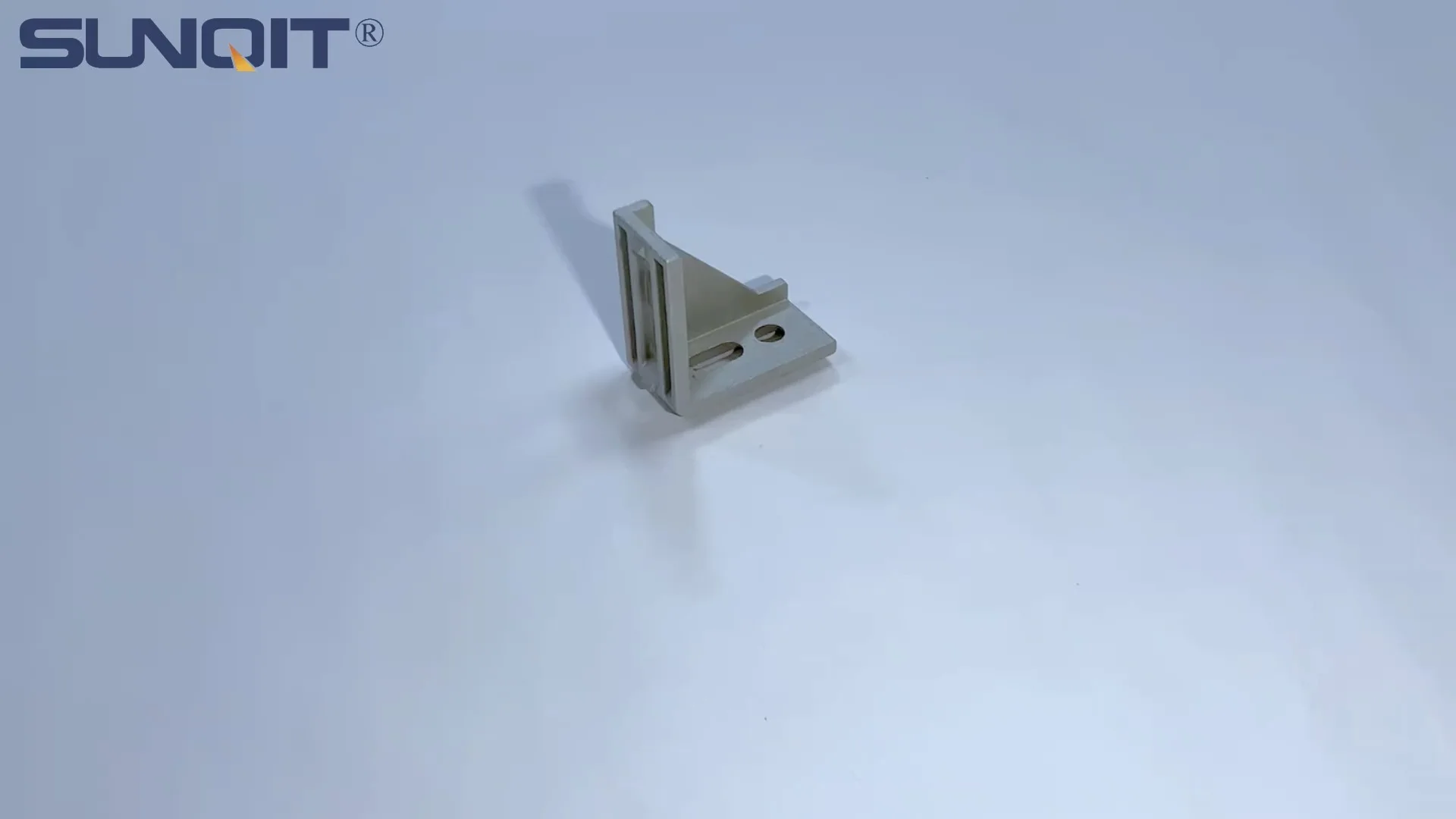
3060 Aluminum Angle Yards
It used for 90° flat connection for 20 series aluminum profile.
In today's fast-paced industrial environments, where efficiency and productivity often take center stage, there's one aspect that should never be compromised: workplace safety. Every year, thousands of workplace incidents stem from unstable workstations, poorly designed material racks, or ergonomically flawed assembly lines. These incidents don't just harm employees—they disrupt operations, damage reputations, and lead to costly fines. But here's the good news: many of these risks can be mitigated with the right tools and design choices. Enter 3060 aluminum angle yards —a humble yet powerful component that's quietly revolutionizing how businesses approach safety compliance in manufacturing, warehousing, and logistics.
If you're unfamiliar with 3060 aluminum angle yards, you're not alone. They're not the flashiest pieces of equipment on the factory floor, but their impact is undeniable. These aluminum extrusion profiles, often paired with aluminum profile accessories , form the backbone of stable workbenches, sturdy material racks, and efficient conveyor systems. What makes them special? Their unique combination of strength, flexibility, and adherence to strict safety standards. In this article, we'll dive deep into how 3060 aluminum angle yards bridge the gap between functional design and regulatory compliance, ensuring your workplace isn't just productive—but protected.
What Are 3060 Aluminum Angle Yards, Anyway?
Let's start with the basics. 3060 aluminum angle yards are a type of aluminum extrusion profile —meaning they're formed by pushing heated aluminum through a die to create a specific cross-sectional shape. The "3060" refers to their dimensions: 30mm in width and 60mm in height, with a right-angle (90-degree) cross-section. This L-shaped design isn't accidental; it's engineered to provide maximum structural support while keeping weight low. Aluminum, as a material, brings its own advantages: it's lightweight, corrosion-resistant, and infinitely recyclable—qualities that align with both safety and sustainability goals.
But 3060 angle yards don't work alone. They're part of a larger ecosystem of aluminum profile accessories —think brackets, connectors, end caps, and T-slot nuts—that turn them into versatile building blocks. Want to build a workbench? Combine 3060 angles with a plywood top and adjustable feet. Need a material rack? Attach them to vertical supports with corner brackets. The modularity here is key: unlike fixed steel structures, aluminum angle yards let you adapt and reconfigure on the fly, which is a game-changer for businesses that need to pivot quickly.
In industrial settings, these angles are everywhere once you start looking. They reinforce the edges of workbench surfaces to prevent warping, add rigidity to conveyor frames to reduce vibration, and stabilize multi-tiered material racks to prevent tipping. Their smooth, burr-free finish (thanks to precision extrusion) also minimizes the risk of cuts or scrapes—small details that add up to big safety wins.
Why Workplace Safety Compliance Matters (Spoiler: It's Not Just About Avoiding Fines)
Before we connect 3060 aluminum angle yards to compliance, let's clarify why compliance itself is non-negotiable. Sure, regulatory bodies like OSHA (Occupational Safety and Health Administration) in the U.S. or ISO (International Organization for Standardization) globally impose strict rules, and violating them can lead to fines ranging from thousands to millions of dollars. But compliance is about more than avoiding penalties. It's about creating a culture where employees feel valued and protected—a culture that, in turn, boosts morale, reduces turnover, and even improves productivity. After all, a worker who trusts their workstation won't second-guess their safety, allowing them to focus on the task at hand.
Compliance standards cover everything from load-bearing limits on racks to the height of work surfaces (ergonomics) and the fire resistance of materials. For example, OSHA's General Industry Standards (29 CFR 1910) mandate that "all walking-working surfaces shall be designed, constructed, and maintained to be safe" (1910.22(a)). That means a wobbly workbench or a material rack that sags under weight isn't just a hazard—it's a violation. Similarly, ISO 45001, the international standard for occupational health and safety management systems, requires organizations to "eliminate hazards and minimize OH&S risks" through proactive design choices.
The challenge? Meeting these standards isn't always straightforward. Traditional materials like wood or mild steel often fall short: wood warps under moisture, steel rusts, and both are heavy, making ergonomic adjustments (like raising a workbench height) difficult. This is where 3060 aluminum angle yards shine. Their design is inherently aligned with compliance goals, as we'll explore next.

How 3060 Aluminum Angle Yards Keep You Compliant: 5 Key Advantages
1. Unmatched Load-Bearing Stability
One of the most critical compliance requirements is load capacity. OSHA, for instance, specifies that storage racks must "be designed to safely support the intended load" (1910.176(b)). 3060 aluminum angle yards excel here. Thanks to their L-shaped cross-section and high-quality aluminum alloy (typically 6063-T5, known for strength), they can support significant weights without bending or deforming. A single 3060 angle yard, when properly mounted, can handle up to 200kg of evenly distributed weight—more than enough for most workbench tools or material bins.
But it's not just about raw strength. The T-slot design of these angles (a groove running along their length) allows for secure attachment of accessories like shelf brackets or cross-braces. This means you can reinforce joints and distribute weight evenly, reducing stress on any single point. Compare this to wood, which relies on nails or screws that can loosen over time, or steel, which requires welding (a permanent, non-adjustable solution). With 3060 angles, stability is built in—and compliance, as a result, is easier to maintain.
2. Ergonomic Flexibility for Every Workstation
Ergonomics is another compliance hot spot. OSHA's ergonomic guidelines emphasize that workstations should be "adjustable to fit the worker" to prevent musculoskeletal disorders (MSDs). 3060 aluminum angle yards are modular by design, making it simple to tweak heights, angles, and layouts. Need to lower a workbench to accommodate a shorter employee? Loosen the T-slot nuts, adjust the legs, and re-tighten. Want to add a keyboard tray under a desk? Attach it using angle brackets and slide it to the perfect position.
This flexibility isn't just about comfort—it's about reducing injury risk. A study by the National Institute for Occupational Safety and Health (NIOSH) found that adjustable workstations can cut MSD rates by up to 35%. With 3060 angles, you're not stuck with a one-size-fits-all setup; you can tailor each workstation to the person using it, ensuring compliance with OSHA's General Duty Clause (which requires employers to provide a "place of employment free from recognized hazards").
3. Corrosion Resistance for Long-Term Durability
Many workplaces—think food processing plants, pharmaceutical labs, or coastal warehouses—deal with moisture, chemicals, or salt air. In these environments, rust isn't just unsightly; it weakens structures, creating safety hazards. Steel racks, for example, can corrode quickly if not regularly painted, leading to sudden collapses. 3060 aluminum angle yards, however, are naturally corrosion-resistant. Aluminum forms a thin oxide layer when exposed to air, acting as a protective barrier against rust. For extra protection, they can be anodized (coated with a thicker oxide layer) or powder-coated, making them suitable for even the harshest environments.
This durability ensures that your workstations and racks stay compliant for years, not months. No more replacing rusted parts or dealing with unexpected failures—just consistent, reliable performance that meets ISO 9001 quality standards for material longevity.
4. Compatibility with Lean System Principles
While not a regulatory compliance standard per se, lean system practices (focused on minimizing waste and maximizing efficiency) often align with safety goals. Lean systems prioritize organization, clean workflows, and adaptability—all of which reduce clutter and, in turn, reduce trip or collision hazards. 3060 aluminum angle yards are a lean manager's dream: their modularity lets you build exactly what you need, no more, no less. Need a temporary assembly line for a new product? Put together a lightweight frame with 3060 angles and casters. Done with it? Disassemble and reuse the parts elsewhere. This reduces waste, keeps floors clear, and ensures your workspace stays organized—all key to maintaining a safe, compliant environment.
5. Safety-First Design Details
Sometimes, compliance comes down to the little things. 3060 aluminum angle yards are designed with safety in mind from the ground up. Their edges are rounded (not sharp) to prevent cuts, and their smooth finish eliminates snags that could catch clothing or gloves. Even the accessories play a role: end caps cover exposed T-slot ends, and rubber feet prevent slipping on smooth floors. These details might seem minor, but they add up to a workspace that's not just compliant on paper—but genuinely safe to work in.

Navigating the Compliance Maze: A Quick Guide to Key Standards
To put things in perspective, let's compare how 3060 aluminum angle yards stack up against some of the most common safety standards. The table below breaks down key requirements and how these angles deliver:
| Standard | Jurisdiction | Key Requirements for Workstations/Racks | How 3060 Aluminum Angle Yards Deliver |
|---|---|---|---|
| OSHA 1910.176 | USA | Racks must support intended loads; no overloading; stable base | High load capacity (200kg+ per angle); T-slot accessories for secure bracing; corrosion resistance prevents structural weakening |
| ISO 45001 | International | Ergonomic workstation design; risk assessment for MSDs | Modular height/angle adjustments; lightweight materials for easy reconfiguration |
| EN 15512 | EU | Safety of storage equipment; load-bearing testing; stability under dynamic loads | Tested for dynamic loads (e.g., sliding materials); L-shaped design resists tipping; compatible with anti-slip feet |
| ANSI/RIA R15.06 | USA (Robotics) | Guardrails and barriers for robotic cells; impact resistance | Strong enough to act as lightweight guardrails; easy to integrate with safety sensors |
As you can see, 3060 aluminum angle yards aren't just compliant with one standard—they're a cross-jurisdictional solution. Whether you're operating in the U.S., EU, or Asia, these angles provide a consistent foundation for meeting local and international rules.

Real-World Impact: How One Factory Cut Incidents by 40% with 3060 Angles
Let's put theory into practice with a real example. A mid-sized electronics manufacturer in Ohio was struggling with a string of safety issues: a workbench collapsed under the weight of testing equipment, a material rack tipped over, and several employees reported wrist pain from poorly positioned assembly stations. OSHA inspections flagged multiple violations, including inadequate load support and non-ergonomic workstations, leading to a $12,000 fine.
The company's solution? A complete overhaul of their workstations and racks using 3060 aluminum angle yards and aluminum profile accessories . They replaced wooden workbenches with aluminum frames, added adjustable height legs, and reinforced material racks with cross-braced 3060 angles. The results were striking: over six months, workplace incidents dropped by 40%, employee-reported MSDs decreased by 25%, and a follow-up OSHA inspection found zero violations. "We didn't just fix the problem—we future-proofed our safety," said the plant manager. "The modularity means we can adjust as we grow, and the aluminum is holding up better than steel ever did."
This isn't an isolated case. Across industries, businesses are discovering that investing in 3060 aluminum angle yards isn't just about compliance—it's about creating a workplace where employees feel safe, valued, and empowered to do their best work.
Choosing the Right 3060 Aluminum Angle Yards: What to Look For
Not all 3060 aluminum angle yards are created equal. To ensure compliance, you'll need to source high-quality profiles from reputable suppliers. Here's what to check:
- Material Grade: Opt for 6063-T5 aluminum alloy—it's the industry standard for structural applications, offering the best balance of strength and ductility.
- Extrusion Quality: Look for smooth surfaces, consistent wall thickness, and precise T-slot dimensions. Poorly extruded profiles may have burrs or uneven walls, weakening their load capacity.
- Accessory Compatibility: Ensure the supplier offers a full range of aluminum profile accessories (connectors, brackets, end caps) to avoid mismatched parts that compromise stability.
- Testing Certifications: Ask for load-testing reports or compliance certificates (e.g., ISO 9001) to verify the product meets safety standards.
Remember: cutting corners on quality might save money upfront, but it could cost you in fines, incidents, or replacements down the line. Invest in profiles that are built to last—and comply.
Final Thoughts: Safety Isn't Optional—But It Can Be Easy
Workplace safety compliance doesn't have to be a headache. With tools like 3060 aluminum angle yards, it becomes a natural part of your workflow. These versatile, durable profiles—paired with the right aluminum profile accessories —provide a foundation for stable workbenches, ergonomic stations, and secure material handling. They're not just about checking boxes on a regulatory form; they're about protecting the people who power your business.
So, the next time you walk through your factory or warehouse, take a closer look at your workstations and racks. Are they built to last? To adapt? To keep your team safe? If not, it might be time to consider 3060 aluminum angle yards. After all, compliance isn't just a legal requirement—it's a commitment to your employees, your operations, and your future success.