- Company Articles
- Industry articles
- Industry standards
- 3060 EU Standard Aluminum Profile: Common Myths vs Facts About Durability

3060 EU Standard Aluminum Profile: Common Myths vs Facts About Durability
Related Product
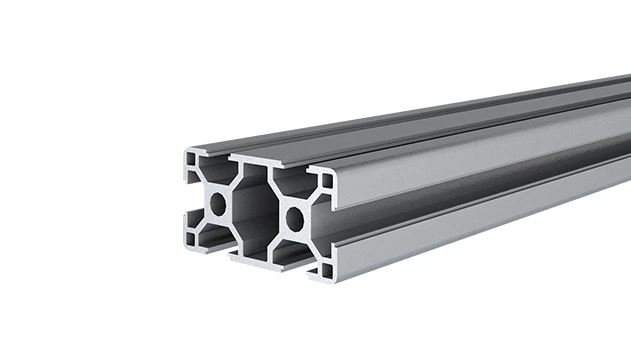
3060 EU Standard Aluminum Profile
3060 is a 3.00 x 6.00CM fractional 30 series square extrusion T-slot profile with four open T-slots, two side with 3.00cm face, two side with 6.0cm face. The profile has align-a-grooves to assist in aligning connecting profiles.
Let's start with a scenario we've all seen (or maybe even experienced). Walk into a busy manufacturing plant, a bustling warehouse, or a high-tech workshop, and you'll likely spot rows of sleek, silver structures: workbenches humming with activity, material racks stacked with components, and assembly lines gliding like clockwork. Chances are, many of those structures are built with aluminum profiles—and if they're up to EU standards, there's a good chance they're 3060 EU standard aluminum profiles. But here's the thing: despite their ubiquity, there's still a lot of misinformation floating around about these profiles, especially when it comes to their durability. Are they really as tough as they look? Or are they just pretty faces in the industrial world?
Today, we're diving deep into the 3060 EU standard aluminum profile—what it is, why it matters, and most importantly, separating the myths from the facts when it comes to how well it holds up over time. Whether you're a plant manager considering an upgrade, a small business owner building a custom workspace, or just someone curious about the backbone of modern lean systems, this is for you. Let's cut through the noise and get to the truth.
First Things First: What Even Is a 3060 EU Standard Aluminum Profile?
Before we tackle durability, let's make sure we're all on the same page. The "3060" in the name refers to the profile's cross-sectional dimensions: 30mm in width and 60mm in height. Think of it as the "size" of the profile, like choosing a 2x4 in woodworking, but way more precise. Now, the "EU standard" part is crucial. EU standards for aluminum profiles (officially under EN 755, if you want to get technical) aren't just fancy labels—they're strict guidelines for material composition, dimensional accuracy, mechanical properties, and quality control. These standards ensure that when you buy a 3060 EU standard profile, you're getting a product that's consistent, reliable, and built to perform in real-world conditions.
But what makes it an aluminum extrusion profile, exactly? Extrusion is the process where raw aluminum (usually an alloy, like 6063—more on that later) is heated to a malleable state and forced through a die to create the desired cross-sectional shape. This isn't just about making straight bars; extrusion allows for intricate designs, like the T-slots that run along the length of most profiles (those are the grooves that let you attach accessories, tools, or panels without drilling holes). For the 3060 profile, this process results in a structure that's lightweight, yet surprisingly strong—and that's where the durability questions start.
Why Does Durability Matter, Anyway?
Let's be honest: when you're investing in industrial equipment, you're not just buying metal—you're buying peace of mind. A flimsy workbench that wobbles under a few hundred pounds, or a material rack that bends after a month of use, isn't just a hassle; it's a safety risk, a productivity killer, and a waste of money. That's why durability is non-negotiable. And when it comes to aluminum profiles, which are often chosen for their light weight and flexibility, the stakes feel even higher. Can something that's easy to move and reconfigure really stand up to the daily grind of a busy facility?
The short answer? Yes—but only if you're using the right profile. That's where the 3060 EU standard comes in. Its design, materials, and manufacturing process are all optimized for durability, even in tough environments. But don't just take my word for it. Let's tackle the most common myths head-on.

Myth vs Fact: Debunking Durability Misconceptions
We've heard the whispers (and sometimes loud complaints) about aluminum profiles. Let's address the biggest myths and set the record straight with cold, hard facts.
Myth #1: "Aluminum profiles are too flimsy for heavy-duty use—they'll bend or break under pressure."
This is probably the most persistent myth out there. "Aluminum is soft," people say. "It's no match for steel when it comes to lifting heavy loads or withstanding impact." And sure, if we're talking about pure aluminum foil, that's true—but we're not. The 3060 EU standard aluminum profile is made from an aluminum alloy, not pure aluminum. Most often, it's 6063-T5 or 6061-T6 aluminum, which are heat-treated to strength. Let's break that down: 6063 is a magnesium-silicon alloy, known for its excellent extrudability and corrosion resistance. The "T5" or "T6" refers to the temper (heat treatment process), which significantly increases its tensile strength. For 6063-T5, that tensile strength is around 160 MPa (megapascals)—for context, that's strong enough to support the weight of a small car without permanent deformation. For 6061-T6, it's even higher, around 290 MPa.
But numbers alone don't tell the whole story. Let's talk real-world use. A standard 3060 EU profile, when properly supported, can easily handle static loads of 500-800 kg per meter—more than enough for most industrial workbenches, material racks, or assembly line structures. And because of its extrusion design, the profile's walls are thicker in critical areas (like the corners) and reinforced by internal ribs, distributing weight evenly and preventing bending. I've visited factories where 3060 profiles have been supporting heavy machinery for over a decade with zero signs of warping. Flimsy? Hardly.
Myth #2: "EU standard profiles are just a marketing gimmick—they're no better than cheap, non-standard alternatives."
Ah, the age-old "why pay more for a label?" argument. It's true: EU standard profiles often cost more upfront than generic, non-standard ones. But here's the thing: that "label" isn't just a sticker. EU standards (like EN 755) set strict limits on everything from material purity to dimensional tolerance. For example, a 3060 EU profile must measure exactly 30mm x 60mm along its entire length, with a tolerance of +/- 0.3mm. Non-standard profiles? They might start at 30x60mm, but by the end of the extrusion, they could be 29x58mm—or 31x62mm. That inconsistency might not seem like a big deal until you try to attach aluminum profile accessories (like brackets, connectors, or panels) and find they don't fit. Suddenly, that "cheaper" profile becomes a headache, requiring custom modifications or forcing you to buy overpriced, non-standard accessories.
But the real difference is in durability. EU standards require rigorous testing: impact resistance, corrosion resistance, and load-bearing capacity, to name a few. A non-standard profile might skip these tests, using lower-grade alloys or cutting corners in the extrusion process. The result? A profile that looks similar but fails after a fraction of the lifespan. I once worked with a client who switched to non-standard profiles to save money—only to replace them six months later when they started cracking under normal use. The EU standard profiles they installed afterward? Still going strong five years later. Sometimes, you really do get what you pay for.
Myth #3: "Adding accessories weakens the profile—holes and connectors make it less durable."
If you've ever built something with aluminum profiles, you know the joy of T-slots: no drilling, no welding, just slide in a bolt or bracket and tighten. But some skeptics argue that all those slots and accessories compromise the profile's integrity. "Every time you attach a connector, you're creating a weak point," they say. "Over time, those slots will wear out, and the whole structure will loosen."
Here's the truth: T-slots are designed to be load-bearing. The extrusion process shapes the slots with reinforced edges, so when you insert a T-nut or bracket, the force is distributed across the entire slot, not just a single point. Modern aluminum profile accessories, like corner brackets, hinges, and end caps, are engineered to work with the profile's design, not against it. In fact, many accessories actually strengthen the structure by adding rigidity. For example, a 90-degree corner bracket isn't just holding two profiles together—it's preventing them from twisting or shearing under stress. And because the connections are mechanical (not welded), they're actually more resistant to fatigue over time. Welds can crack under repeated stress; properly tightened T-slot connections? They just get stronger as they settle in.
I've seen this firsthand in a automotive parts plant where 3060 profiles were used to build a custom assembly line. The line had dozens of accessories—tool holders, light fixtures, even small conveyor belts—all attached via T-slots. After three years of 24/7 operation, the structure was still rock-solid. The maintenance manager told me they'd only had to retighten a few bolts once a year—hardly a sign of weakness.
Myth #4: "Aluminum profiles corrode easily—they're no good for humid or industrial environments."
Let's clarify: pure aluminum does oxidize, but that oxidation forms a thin, protective layer of aluminum oxide that prevents further corrosion. It's why aluminum siding on houses doesn't rust. But industrial environments are another beast—think humidity, chemicals, oils, and even salt (in coastal areas). Can 3060 profiles handle that?
Absolutely—especially if they're properly finished. Most 3060 EU standard profiles come with a clear anodized coating, which thickens that natural oxide layer, making it even more resistant to corrosion. Anodized aluminum can withstand exposure to salt spray, mild acids, and industrial oils for years without pitting or discoloration. For even harsher environments (like food processing plants or marine facilities), you can get profiles with a powder-coated finish, which adds an extra layer of protection. I visited a seafood processing plant once where 3060 profiles had been in use for eight years, exposed to saltwater mist daily—and they still looked brand new. No rust, no corrosion, just a slight dulling of the anodized finish. Compare that to steel, which would have needed constant painting or galvanizing to avoid rusting in the same environment.
The key here is the alloy, too. 6063 aluminum, commonly used in 3060 profiles, has excellent corrosion resistance by nature, thanks to its magnesium and silicon content. Even without additional coatings, it holds up better than many other metals in damp or chemical-heavy settings. So unless you're dumping concentrated acid on it (and let's hope you're not), corrosion is rarely an issue.
Myth #5: "Aluminum profiles have a short lifespan—they'll need to be replaced every few years."
Let's wrap up with the big one: lifespan. How long can you realistically expect a 3060 EU standard aluminum profile to last? The answer might surprise you: 15-20 years, and sometimes longer, with proper care. That's longer than many steel structures, which can rust through or fatigue over time. Why? Because aluminum doesn't fatigue the way steel does. Steel has a "fatigue limit"—a stress level below which it can withstand infinite cycles without breaking. Aluminum doesn't have that limit, but its fatigue resistance is still impressive, especially when the stress is low to moderate (which it often is in profile-based structures). And since aluminum doesn't corrode (as we covered), there's no hidden degradation happening inside the material.
I spoke with a facilities manager at a electronics manufacturing company who has been using 3060 profiles since the early 2000s. "We still have some of the original profiles from 2005," he told me. "They're a bit scratched, but structurally, they're as sound as the day we bought them. We've reconfigured them a dozen times—moved them from one workshop to another, added new accessories, even used them to build a temporary storage rack during a renovation. They just keep going." That's the beauty of aluminum profiles: their durability isn't just about standing still—it's about adapting and lasting through change.
Putting It All Together: How 3060 Profiles Power Real-World Systems
Okay, so we've established that 3060 EU standard aluminum profiles are durable. But how does that translate to actual use? Let's look at a common application: the aluminum workbench. A well-built aluminum workbench, made with 3060 profiles and quality accessories, is a workhorse. It can support heavy tools, withstand impacts from dropped parts, and resist spills from oils or cleaning chemicals—all while remaining lightweight enough to move (with casters, of course) if needed. In lean systems, where efficiency and flexibility are king, this is a game-changer. A lean system relies on minimizing waste, and a durable, reconfigurable workbench reduces waste by eliminating the need for constant replacements or custom-built furniture.
Take a typical assembly line workbench: it needs to hold a laptop, tools, bins of components, and maybe even a small testing device. A 3060-based bench can do all that, and more. Add a shelf using aluminum profile accessories, mount a light above with a T-slot bracket, and you've got a custom workspace that's sturdy enough for daily use but easy to adjust if the assembly process changes. And because the profile is part of a modular system, you can add or remove components without rebuilding the entire bench. That's durability and flexibility—two things that rarely go hand in hand with traditional steel furniture.
The Verdict: Durability You Can Trust
At the end of the day, the 3060 EU standard aluminum profile isn't just a piece of metal—it's a testament to smart engineering, rigorous standards, and the power of material science. It's lightweight without being weak, flexible without being flimsy, and durable without being overbuilt. The myths about its durability? They're just that—myths, born from outdated assumptions or experiences with low-quality, non-standard alternatives.
So, if you're in the market for industrial structures—whether it's workbenches, material racks, assembly lines, or anything in between—don't sleep on the 3060 EU standard aluminum profile. Its combination of strength, corrosion resistance, and longevity makes it a smart investment that will pay off for years (and even decades) to come. And when paired with the right aluminum profile accessories, it becomes a system that can adapt to your needs, grow with your business, and stand up to whatever your facility throws at it.
Durability isn't just about surviving—it's about thriving. And the 3060 EU standard aluminum profile? It thrives.
Myth vs Fact Summary Table
| Myth | Fact |
|---|---|
| Aluminum profiles are too flimsy for heavy use. | 3060 EU profiles use high-strength alloys (e.g., 6063-T5) with tensile strengths up to 160 MPa, supporting 500-800 kg/m static loads. |
| EU standard profiles aren't worth the cost. | EU standards ensure strict quality control (dimensional accuracy, material purity), leading to longer lifespans and fewer replacements. |
| Accessories weaken the profile. | T-slots and accessories are designed for load distribution; many accessories (brackets, hinges) strengthen the structure. |
| Aluminum profiles corrode easily. | Anodized or powder-coated finishes, plus corrosion-resistant alloys, make them suitable for humid/industrial environments. |
| Short lifespan compared to steel. | With proper care, 3060 profiles last 15-20+ years, outperforming steel in corrosion resistance and fatigue tolerance. |