- Company Articles
- Industry articles
- Industry standards
- 3060 EU Standard Aluminum Profile: Definition, Key Specifications & Compliance Guide

3060 EU Standard Aluminum Profile: Definition, Key Specifications & Compliance Guide
Related Product
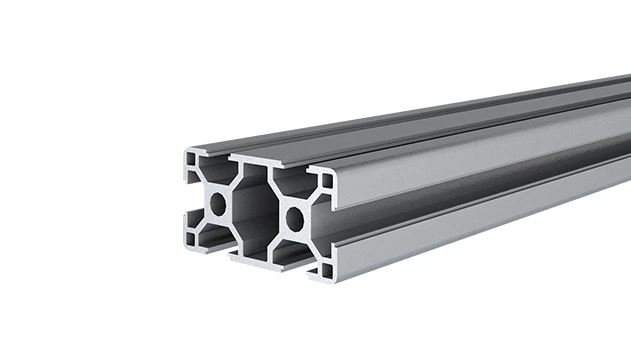
3060 EU Standard Aluminum Profile
3060 is a 3.00 x 6.00CM fractional 30 series square extrusion T-slot profile with four open T-slots, two side with 3.00cm face, two side with 6.0cm face. The profile has align-a-grooves to assist in aligning connecting profiles.
Introduction: The Backbone of Modern Industrial Design
Walk into any manufacturing plant, warehouse, or workshop across Europe, and you'll likely spot a silent workhorse holding everything together: aluminum profiles. These sleek, modular structures are the unsung heroes of efficient workflows, adaptable storage, and custom workstations. Among the many sizes and standards available, the 3060 EU Standard Aluminum Profile stands out as a versatile favorite—balancing strength, flexibility, and compliance with strict European regulations. Whether you're building a lightweight assembly line, a sturdy material rack, or a custom workbench, understanding what 3060 profiles offer can transform how you approach industrial design. In this guide, we'll break down its definition, key specs, compliance requirements, and real-world applications, so you can make informed choices for your next project.
What Is 3060 EU Standard Aluminum Profile? A Clear Definition
Let's start with the basics: the name "3060" isn't arbitrary. It refers to the profile's cross-sectional dimensions: 30 millimeters in width and 60 millimeters in height. This 30x60mm shape is a sweet spot in the world of aluminum extrusion—small enough to stay lightweight but robust enough to handle moderate loads, making it ideal for a wide range of industrial and commercial uses. Unlike generic aluminum tubes, 3060 EU profiles are engineered with precision, featuring the iconic T-slot design that has revolutionized modular construction.
The T-Slot Advantage: Why It Matters for Modularity
At first glance, you'll notice long, narrow grooves (T-slots) running along the profile's length. These slots are more than just a design quirk—they're the reason 3060 profiles are so adaptable. T-slots allow you to slide in accessories like brackets, connectors, shelves, and panels without drilling or welding. Need to reconfigure a workbench? Simply loosen the bolts, adjust the components, and tighten them back. This flexibility is a game-changer for businesses that need to adapt quickly to new projects or changing production demands. And because it's an EU standard, you can trust that T-slot dimensions are consistent across manufacturers, ensuring compatibility with aluminum profile accessories from different suppliers.
How It Compares to Other Profiles
To truly appreciate 3060, it helps to compare it to other common sizes. Take the 2020 profile (20x20mm), for example—it's great for small, lightweight projects like electronics enclosures but lacks the load capacity for heavy-duty tasks. The 4040 profile (40x40mm) is a workhorse for heavier loads, often used in machine frames, but it's bulkier than 3060. The 3060, by contrast, hits a middle ground: it's slimmer than 4040 but offers more vertical space than 2020 or 3030, making it perfect for applications where height matters—think shelving units, conveyor side rails, or multi-tiered workstations. It's no wonder it's a top choice for everything from automotive workshops to pharmaceutical labs.

Key Specifications: The Details That Define Performance
Not all 3060 profiles are created equal. To meet EU standards, manufacturers must adhere to strict specifications for material, dimensions, and mechanical properties. Let's dive into the details that ensure your 3060 profile is up to the task.
Material: The Alloy Behind the Strength
Most 3060 EU profiles are made from 6063-T5 aluminum alloy, a popular choice for extrusions. Why 6063-T5? This alloy blends aluminum with magnesium and silicon, creating a material that's lightweight (about 2.7g/cm³) yet surprisingly strong. The "T5" designation refers to the heat treatment process—profiles are cooled rapidly after extrusion and then artificially aged to enhance hardness and stability. The result? A profile that resists corrosion, handles moderate impacts, and maintains its shape even under continuous use. For applications needing extra durability (like outdoor use or heavy machinery), some manufacturers offer 6082-T6 alloy, which has higher tensile strength, but 6063-T5 remains the go-to for most industrial needs due to its balance of cost and performance.
Dimensions: Precision in Every Millimeter
EU standards leave no room for guesswork when it comes to size. A true 3060 profile will measure exactly 30mm in width and 60mm in height across its cross-section, with wall thickness typically ranging from 1.2mm to 2.0mm (depending on the intended load). Lengths are usually customizable, with common options from 1m to 6m, though longer lengths can be special-ordered. What about straightness? EU specs require profiles to deviate no more than 0.5mm per meter—critical for ensuring that when you assemble multiple profiles, they align perfectly without gaps or warping. This precision is why 3060 profiles are trusted in applications where alignment matters, like conveyor systems or automated assembly lines.
Mechanical Properties: Strength You Can Rely On
Numbers tell the story here. For 6063-T5 3060 profiles, you can expect:
- Tensile Strength: 160-180 MPa (megapascals). This means the profile can withstand a pulling force of 160-180 million Pascals before breaking—more than enough for holding up tools, parts, or even small machinery on a workbench.
- Yield Strength: 110-130 MPa. Yield strength is the point at which the profile might bend permanently under stress. At 110 MPa, it takes significant force to deform 3060, ensuring stability in daily use.
- Elongation: 8-10%. This measures how much the profile can stretch before breaking. A 10% elongation means a 1m profile can stretch up to 1.1m under extreme force—useful for absorbing shocks without snapping.
These properties make 3060 profiles suitable for loads up to 50-80kg per linear meter (depending on support spacing), which covers most workshop needs, from tool storage to light assembly tasks.
Surface Treatment: Durability Meets Aesthetics
Raw aluminum is prone to scratches and corrosion, so 3060 EU profiles undergo surface treatments to boost longevity and appearance. The most common options are:
- Anodizing: An electrochemical process that creates a protective oxide layer on the surface. Natural anodizing (silver) is standard, but you'll also find black, gold, or bronze options for better aesthetics. Anodized profiles resist fingerprints, corrosion, and UV damage—ideal for cleanrooms or outdoor use.
- Powder Coating: For a wider range of colors (blue, red, yellow, etc.), powder coating is the choice. A dry powder is electrostatically applied and baked on, forming a tough, chip-resistant finish. It's popular in settings where branding or color-coding (e.g., safety zones) matters.
Both treatments meet EU environmental standards, using low-VOC (volatile organic compound) processes to minimize ecological impact.
Tolerances: The Hidden Details That Ensure Compatibility
Ever tried to fit a square peg into a round hole? Poor tolerances can lead to the same frustration with aluminum profiles. EU standards (EN 12020-2) specify strict limits for dimensional accuracy: for 3060 profiles, width and height must be within ±0.3mm of the target 30x60mm, and T-slot dimensions (slot width, depth) must be consistent to ensure compatibility with aluminum profile accessories from different brands. This means a bracket made by Supplier A will fit a profile from Supplier B—critical for businesses that source components from multiple vendors. Tolerances also apply to surface flatness: no bumps or dents larger than 0.1mm per square meter, ensuring smooth assembly and a professional finish.
3060 vs. Other Profiles: A Quick Comparison
Still wondering how 3060 stacks up against other common EU standard profiles? The table below breaks down key differences to help you choose the right size for your project:
| Profile Type | Dimensions (WxH, mm) | Material Alloy | Tensile Strength (MPa) | Typical Applications |
|---|---|---|---|---|
| 3060 EU Standard | 30x60 | 6063-T5 | 160-180 | Workbenches, material racks, conveyor side rails, small machine frames |
| 3030 EU Standard | 30x30 | 6063-T5 | 150-170 | Light-duty shelving, electronics enclosures, small carts |
| 4040 EU Standard | 40x40 | 6063-T5 | 160-180 | Heavy workstations, industrial racks, robot bases |
As you can see, 3060 fills the gap between the smaller 3030 (too light for some tasks) and the larger 4040 (overkill for others). Its 30x60mm size makes it perfect for projects that need a mix of vertical storage (thanks to the 60mm height) and horizontal stability (30mm width), like the material rack b (3 row and 3 floor) —a common setup in warehouses where 3 rows and 3 tiers of shelving maximize space without overloading the frame.
Compliance Guide: Meeting EU Standards & Regulations
If you're sourcing 3060 profiles for use in Europe, compliance isn't optional—it's a legal and practical necessity. EU regulations ensure safety, quality, and environmental responsibility, and non-compliant products can be seized at customs or lead to fines. Let's break down the key standards you need to know.
EN 755: The Gold Standard for Extruded Profiles
EN 755 is the European norm for aluminum and aluminum alloy extruded profiles, with Part 2 (EN 755-2) specifically covering mechanical properties. To earn EN 755-2 certification, 3060 profiles must meet strict criteria for tensile strength, yield strength, and elongation (as we detailed earlier). Manufacturers must also provide test reports proving their profiles pass these benchmarks—ask for a copy before purchasing. EN 755 compliance is a mark of quality, signaling that the profile has been tested and validated for industrial use.
REACH & RoHS: Protecting People and the Planet
Europe takes environmental and health safety seriously, and two regulations stand out: REACH and RoHS. REACH (Registration, Evaluation, Authorization, and Restriction of Chemicals) restricts the use of 226 hazardous substances in products sold in the EU. For 3060 profiles, this means no lead, cadmium, or mercury in the alloy or surface treatments. RoHS (Restriction of Hazardous Substances) goes further, banning six specific substances (including lead and hexavalent chromium) in electrical and electronic equipment. While 3060 profiles themselves aren't "electrical," if they're part of a machine or device (e.g., a robotic workstation), RoHS compliance applies to the entire system. Choosing REACH/RoHS-compliant profiles isn't just about avoiding penalties—it's about protecting your workers and customers from harmful chemicals.
CE Marking: A Symbol of Conformity
Look for the CE mark on 3060 profile packaging—it's your assurance that the product meets all EU health, safety, and environmental requirements. To affix the CE mark, manufacturers must conduct a conformity assessment (either self-declaration for simple products or third-party testing for complex ones) and maintain technical documentation (test reports, production records) for at least 10 years. Without CE marking, importing or selling 3060 profiles in the EU is illegal, so always verify this before placing an order.
Load-Bearing Certifications: Ensuring Safety in Use
How much weight can a 3060 profile actually hold? EU standards require manufacturers to provide load-bearing data based on span (distance between supports). For example, a 3060 profile with 1.5mm wall thickness, supported every 1m, can typically carry 70-80kg evenly distributed (e.g., tools on a workbench). For longer spans (2m), the load drops to 30-40kg. Reputable suppliers will provide detailed load charts, and some even offer third-party certifications (e.g., TÜV, SGS) for critical applications like medical equipment or heavy machinery. Never exceed the rated load—overloading can cause bending, snapping, or collapse, putting workers at risk.
Real-World Applications: How 3060 Profiles Power Industries
Enough theory—let's talk about how 3060 EU profiles are used in the real world. Their versatility makes them a staple in countless industries, from automotive to food processing. Here are some common applications:
Workbenches: Customized for Every Task
A workbench is more than just a table—it's where precision meets productivity. 3060 profiles are ideal for building custom workstations because they let you add exactly what you need: tool hooks, monitor mounts, LED lights, or even ESD (electrostatic discharge) mats for electronics assembly. For example, the "Workbench E (single deck-without caster)" is a popular design using 3060 profiles as the frame, with a plywood or aluminum top for durability. Since 3060 is lightweight, the bench can be moved (with casters added) or bolted down for stability. Need to adjust the height? Swap out the leg profiles for longer ones—no need to buy a new bench.
Material Racks: Organized Storage That Scales
Warehouses and factories thrive on organized storage, and 3060 profiles excel here. Take the material rack b (3 row and 3 floor) —a classic setup with 3 vertical columns (3060 profiles) supporting 3 tiers of shelves. The T-slots let you adjust shelf heights to fit boxes, tools, or raw materials of different sizes, and adding dividers or bins keeps items separated. Since 3060 profiles are strong but lightweight, the rack is easy to assemble and reconfigure as inventory needs change. For heavier loads (e.g., metal parts), pair 3060 with 4040 profiles for the vertical columns, combining strength and flexibility.
Conveyor Systems: Smooth Material Flow
In assembly lines, moving parts from station to station needs to be seamless. 3060 profiles form the side rails of roller conveyors, guiding products along without jamming. The T-slots allow easy installation of guides, stops, or sensors, and the profile's straightness ensures smooth roller alignment. For lightweight items (e.g., plastic components), 3060 rails paired with aluminum or plastic roller tracks work perfectly. Heavier items may require reinforced 3060 profiles (thicker walls) or 4040 rails, but 3060 remains the go-to for most medium-duty conveyor applications.
Machine Guards: Safety Without Sacrificing Visibility
Industrial machinery needs guards to protect workers from moving parts, and 3060 profiles offer a safe, see-through solution. Frame the guard with 3060 profiles and fill the gaps with polycarbonate panels (slid into T-slots). The result is a lightweight barrier that resists impacts and allows supervisors to monitor operations. Since 3060 is corrosion-resistant, these guards work in wet or dusty environments (e.g., food processing, metalworking) without rusting or degrading.
Retail Displays: Aesthetic and Functional
It's not all heavy industry—3060 profiles shine in retail too. Pop-up shops, trade show booths, and in-store displays use 3060 frames to support signage, shelves, or product mounts. Powder-coated in brand colors and paired with acrylic panels, they create a modern, professional look that's easy to transport and assemble. Since T-slots allow quick accessory changes, retailers can update displays seasonally without rebuilding from scratch.
Choosing the Right Supplier: What to Look For
Now that you know what 3060 profiles offer, how do you find a reliable supplier? Here are key factors to consider:
- Compliance Documentation: Ask for EN 755-2, REACH, RoHS, and CE certificates. Avoid suppliers who can't provide these—non-compliant profiles may fail in use or get stuck in customs.
- Material Quality: Ensure they use 6063-T5 (or higher) alloy and provide mill test reports (MTRs) for traceability.
- Accessory Compatibility: Check that their profiles work with standard aluminum profile accessories (brackets, hinges, casters) from brands like Bosch Rexroth or Item—this ensures flexibility in design.
- Customization Options: Can they cut profiles to length, add custom holes, or apply specific surface treatments? The best suppliers offer tailored solutions for unique projects.
- Lead Times and Pricing: EU-based suppliers often have shorter lead times (1-2 weeks) than overseas ones, but compare costs—sometimes importing from a trusted Asian supplier (with EU compliance) can save money, provided you factor in shipping and customs.
Conclusion: Why 3060 EU Profile Deserves a Spot in Your Toolkit
The 3060 EU Standard Aluminum Profile isn't just another piece of metal—it's a building block for innovation. Its 30x60mm size, precision engineering, and compliance with EU standards make it the ideal choice for anyone who values flexibility, durability, and safety. Whether you're building a workbench , a material rack b (3 row and 3 floor) , or a custom conveyor system, 3060 profiles adapt to your needs, saving time and money on rework. By choosing compliant, high-quality profiles and pairing them with the right aluminum profile accessories , you can create solutions that grow with your business. So the next time you're planning an industrial project, remember: 3060 isn't just a size—it's a standard that delivers results.