- Company Articles
- Industry articles
- Industry standards
- 3060 EU Standard Aluminum Profile: Environmental Benefits of Reusable Design

3060 EU Standard Aluminum Profile: Environmental Benefits of Reusable Design
Related Product
3060 EU Standard Aluminum Profile
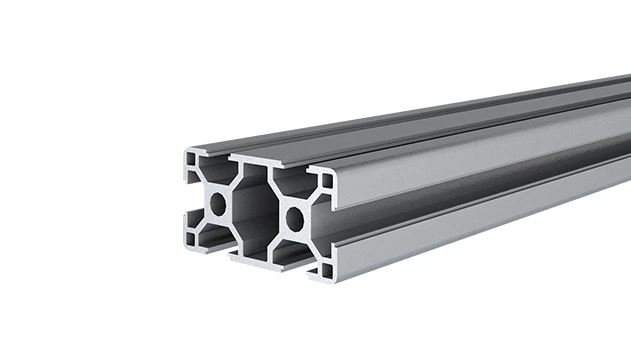
3060 is a 3.00 x 6.00CM fractional 30 series square extrusion T-slot profile with four open T-slots, two side with 3.00cm face, two side with 6.0cm face. The profile has align-a-grooves to assist in aligning connecting profiles.
In an era where sustainability isn't just a buzzword but a business imperative, manufacturers and facility managers are constantly seeking tools that align with eco-friendly goals without compromising efficiency. Enter the 3060 EU Standard Aluminum Profile —a yet powerful component that's quietly revolutionizing how we build, adapt, and reuse industrial structures. Let's explore how its reusable design isn't just good for the planet, but for your bottom line too.
What Is the 3060 EU Standard Aluminum Profile?
Before diving into its environmental perks, let's get familiar with the star of the show. The 3060 EU Standard Aluminum Profile is a type of aluminum extrusion profile —meaning it's formed by pushing heated aluminum through a die to create a consistent, custom cross-section. The "3060" refers to its dimensions: 30mm in width and 60mm in height, a sweet spot that balances strength and versatility. As an EU-standard product, it adheres to strict quality and safety regulations, ensuring compatibility and reliability across European markets (and beyond).
You'll find these profiles hard at work in factories, warehouses, and workshops, forming the backbone of workbenches, material racks, conveyor frames, and even assembly line structures. What makes them stand out isn't just their strength-to-weight ratio (aluminum is about 1/3 the weight of steel) but their modularity. Unlike welded steel frames or one-time-use plastic structures, 3060 profiles are designed to be taken apart, reconfigured, and repurposed—again and again.
Aluminum: The Eco-Friendly Metal at Its Core
To understand the environmental benefits of the 3060 profile, we first need to talk about aluminum itself. Unlike many metals, aluminum is infinitely recyclable. That means when a 3060 profile reaches the end of its first life, it can be melted down and reshaped into a new profile (or any aluminum product) without losing quality. In fact, recycling aluminum uses just 5% of the energy required to produce new aluminum from raw bauxite ore. Let that sink in: for every ton of aluminum recycled, we save roughly 95% of the energy that would have been spent mining, refining, and smelting new material.
But the 3060 profile takes this a step further. Its reusable design means we might not even need to recycle it right away. Instead of scrapping an entire workbench when your production line changes, you can disassemble the 3060 profiles and reassemble them into a new rack, a conveyor support, or a mobile trolley. This "reuse before recycle" approach cuts down on the need for new materials altogether—reducing both energy consumption and waste.

Reusable Design in Action: How It Works
The magic of the 3060 profile's reusability lies in its compatibility with aluminum profile accessories . Think of the profile as a Lego brick: the real versatility comes from how you connect it. EU-standard 3060 profiles feature T-slots along their length—long, narrow grooves that allow for easy attachment of brackets, connectors, end caps, and other accessories. No welding, no drilling, no permanent modifications. Just slide a bolt into the T-slot, tighten a nut, and you're done. When you need to reconfigure, simply loosen the nuts, take the structure apart, and start fresh.
Let's say you run a small electronics assembly plant. Initially, you use 3060 profiles to build a static workbench (like the "Workbench E (Single Deck-Without Caster)" from many supplier catalogs). A year later, you expand your production line and need a mobile trolley to transport components. Instead of buying a brand-new trolley, you can disassemble the workbench, add casters (using caster accessories like stem casters or flat swivel castors), and suddenly you've got a custom mobile trolley—no new materials required. That's the power of reusable design: it turns "one and done" into "one and many."
Real-World Example: A Automotive Parts Supplier's Journey
A mid-sized automotive parts supplier in Germany recently shared their experience with 3060 profiles. Five years ago, they built their assembly line using traditional steel frames. When they needed to retool for a new car model, 70% of those steel structures were too rigid to modify—they ended up in a landfill. Today, they've replaced most steel frames with 3060 aluminum profiles. Last quarter, when they shifted production, they reused 95% of their existing profiles by swapping out accessories (adding new roller track and accessories for a new conveyor system). The result? They saved €12,000 on new materials and diverted 2.3 tons of waste from landfills. "It's like having a factory that can rearrange itself," their operations manager noted.
Environmental Benefits: Beyond Just Recycling
The environmental perks of the 3060 profile's reusable design go far beyond aluminum's recyclability. Let's break them down:
1. Reduced Raw Material Extraction
Every time you reuse a 3060 profile, you're reducing the demand for new aluminum ore. Mining bauxite (the primary ore for aluminum) is energy-intensive and destructive to ecosystems, often leading to deforestation and soil erosion. By extending the life of existing profiles, we lower the need for new mining—protecting habitats and cutting carbon emissions from extraction and transportation.
2. Lower Waste Generation
Traditional industrial structures are often "built to last" in the worst way—so rigid that they can't adapt to changing needs. When a welded steel rack becomes obsolete, it's either scrapped (contributing to landfill waste) or recycled (which, while better than landfilling, still requires energy). The 3060 profile's reusable design minimizes this waste by keeping materials in use longer. A study by the European Aluminum Association found that modular aluminum structures have a "waste factor" of less than 5% over their lifetime, compared to 20-30% for traditional steel or plastic structures.
3. Energy Savings Across the Lifecycle
We've already touched on recycling energy savings, but reuse saves even more. Let's do the math: producing one ton of new aluminum emits about 12 tons of CO₂. Recycling that same ton emits just 0.6 tons. But reusing a ton of aluminum profiles? Emissions drop to nearly zero—you're just using energy to disassemble and reassemble, which is minimal compared to production or recycling. For a facility that reuses 10 tons of profiles annually, that's a potential CO₂ reduction of over 114 tons per year (120 tons for new production vs. 6 tons for recycling vs. ~0 for reuse).
Aligning with Lean Systems: Waste Reduction at Its Best
The 3060 profile's reusable design isn't just eco-friendly—it's also a perfect fit for lean system principles. Lean manufacturing focuses on eliminating waste ("muda") in all forms, from excess inventory to unnecessary motion. Reusable aluminum profiles tackle several types of waste head-on:
- Waste of Overproduction: Instead of overbuying structures "just in case," you can build only what you need now and reconfigure later.
- Waste of Inventory: No need to stockpile extra frames or workbenches—one set of profiles can become multiple tools over time.
- Waste of Defects: If a structure isn't working, you don't scrap it—you adjust it. No more writing off defective welded frames.
A lean system thrives on flexibility, and the 3060 profile delivers that flexibility in spades. Whether you're implementing 5S (sort, set in order, shine, standardize, sustain) or just trying to keep up with shifting customer demands, having structures that adapt with you reduces waste and keeps your operation agile.
Comparing Materials: Why Aluminum Profiles Beat Steel and Plastic
You might be wondering: "Why not just use steel or plastic? They're cheaper upfront." It's true—steel and plastic can have lower initial costs, but their long-term environmental and financial impact tells a different story. Let's compare:
| Factor | 3060 Aluminum Profile | Traditional Steel Framing | Plastic Structures |
|---|---|---|---|
| Recyclability | 100% recyclable, infinite times | Recyclable, but energy-intensive; quality degrades over time | Limited recyclability (often downcycled to lower-grade plastics) |
| Reusability | Highly reusable (modular, no permanent connections) | Low (welded joints are hard to disassemble) | Low (prone to cracking/weakening when disassembled) |
| Weight | Lightweight (easy to handle, lower transport emissions) | Heavy (higher transport and installation energy use) | Variable (often lightweight but less durable) |
| Lifespan | 50+ years with proper care | 30-40 years (prone to rust without coating) | 10-15 years (degrades in UV light, heat, and cold) |
| Total Cost of Ownership | Lower over time (reuse reduces need for new purchases) | Higher (frequent replacement, maintenance costs) | Higher (short lifespan requires frequent replacement) |
The data speaks for itself: while aluminum profiles might cost more initially, their reusability, durability, and recyclability make them the smarter long-term investment—for both your budget and the planet.
Choosing the Right Supplier: What to Look For
To fully unlock the environmental benefits of 3060 profiles, it's crucial to work with a reliable aluminum profile supplier . Here's what to prioritize:
- EU Standard Compliance: Ensure the profiles meet EU standards (like DIN 6060) for dimensions and material quality—this guarantees compatibility with accessories and ensures safety.
- Range of Accessories: Look for suppliers that offer a wide selection of aluminum profile accessories (connectors, casters, roller tracks, etc.) to maximize reusability.
- Recycled Content Options: Some suppliers offer profiles made from recycled aluminum, further reducing your carbon footprint.
- Technical Support: A good supplier will help you design reusable structures from the start, ensuring you're set up to adapt later.
Don't just buy profiles—partner with a supplier who understands your sustainability goals and can guide you toward the most reusable, efficient solutions.
The Future of Sustainable Manufacturing: Small Changes, Big Impact
At the end of the day, the 3060 EU Standard Aluminum Profile is more than just a piece of metal. It's a symbol of a shift in how we think about industrial design—one that prioritizes "circularity" over "linearity." Instead of the traditional "take-make-waste" model, we're moving toward "take-make-use-reuse-recycle." And in that model, reusable components like the 3060 profile are the building blocks.
Whether you're a small workshop owner or a facility manager at a large plant, the choice to use reusable aluminum profiles is a choice to reduce your environmental impact while building a more agile, cost-effective operation. It's not about grand gestures—it's about the thousands of small decisions that add up. And in those decisions, the 3060 profile is quietly proving that sustainability and efficiency can go hand in hand.