- Company Articles
- Industry articles
- Industry standards
- 3060 EU Standard Aluminum Profile: Fatigue Resistance in Repeated Load Scenarios

3060 EU Standard Aluminum Profile: Fatigue Resistance in Repeated Load Scenarios
Related Product
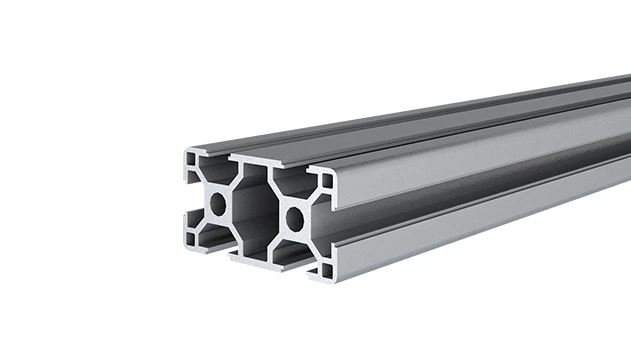
3060 EU Standard Aluminum Profile
3060 is a 3.00 x 6.00CM fractional 30 series square extrusion T-slot profile with four open T-slots, two side with 3.00cm face, two side with 6.0cm face. The profile has align-a-grooves to assist in aligning connecting profiles.
Walk into any busy factory, warehouse, or manufacturing plant, and you'll witness a silent battle unfolding every second. It's not between workers or machines, but between the equipment we rely on and the relentless stress of repeated use. A workbench where tools are dropped multiple times an hour. A material rack where boxes are slid on and off, day in and day out. A conveyor system that vibrates as parts rattle along its tracks. Over time, these small, repeated loads add up—creating invisible stress that weakens even the sturdiest structures. This is the challenge of
fatigue resistance
: the ability of a material to withstand cyclic stress without cracking, bending, or failing. And in this battle, one solution stands out for its quiet reliability: the 3060 EU Standard Aluminum Profile.
What Is the 3060 EU Standard Aluminum Profile, Anyway?
Before we dive into its superpowers, let's get to know this unsung hero. The
3060 EU standard aluminum profile
is a workhorse of industrial design—a long, extruded aluminum beam with a cross-section measuring 30mm by 60mm. Its name tells you two key things: "3060" refers to its width and height (30mm wide, 60mm tall), and "EU standard" means it meets strict European union regulations for quality, dimensional accuracy, and material safety. But numbers and standards only tell part of the story. What really makes this profile special is how it's built to thrive in the chaos of real-world use.
Think of it as the backbone of countless industrial setups. You'll find it in
workbenches
where technicians assemble circuit boards, in material racks that hold heavy inventory, and in the frames of
lean system
structures that streamline production lines. It's not just about strength—it's about versatility. Thanks to its T-slot design (those grooves running along its length), you can easily attach brackets, panels, or accessories without welding or drilling, making it a favorite for businesses that need to adapt quickly.
But how does it go from raw aluminum to the robust profile you see in factories? That's where
aluminum extrusion profile
technology comes in. The process starts with heating aluminum billets until they're malleable, then forcing them through a die (a custom-shaped mold) under high pressure. This creates a continuous length of aluminum with the exact cross-section needed—no seams, no weak points, just a uniform structure from end to end. For the 3060 profile, this extrusion process aligns the aluminum's internal grains, making it inherently stronger and more resistant to the kind of stress that causes fatigue.
The Science of Fatigue Resistance: Why 3060 Stands Up to Repeated Loads
Fatigue isn't about breaking under a single heavy load—it's about failing slowly, over time, under loads that might seem "light" on their own. Imagine bending a paperclip back and forth: one bend is fine, but after 20 or 30 bends, it snaps. That's fatigue in action. In industrial settings, this translates to cracks in workbench frames, sagging in material racks, or misalignment in conveyor systems—all of which lead to downtime, safety risks, and costly replacements.
The 3060 EU profile fights this battle on three fronts: material, design, and manufacturing precision. Let's break it down.
1. The Right Alloy: Strength Without Brittlenes
Not all aluminum is created equal. The 3060 profile is typically made from 6063-T5 aluminum alloy—a blend of aluminum, magnesium, and silicon. This mix hits a sweet spot: it's strong enough to handle heavy loads, yet ductile enough to flex slightly under stress without cracking. The "T5" designation means it's artificially aged (heated and cooled in a controlled process) to lock in strength, making it 30% stronger than untreated aluminum. This alloy is why you'll rarely see a 3060 profile develop hairline cracks, even after years of repeated use.
2. Extrusion: A Structure Built to Last
Remember that extrusion process we mentioned earlier? It's not just for shaping—the way the aluminum is forced through the die creates a microstructure that's inherently resistant to fatigue. Unlike welded or bolted structures, which have weak points at joints, extruded profiles are a single, continuous piece. This means stress distributes evenly across the entire cross-section, rather than concentrating in one spot. For example, when a worker slams a tool onto a 3060-framed workbench, the stress travels through the entire profile, not just a single weld or bolt hole. Over time, this even distribution prevents the kind of localized wear that leads to failure.
3. The 30x60 Shape: A Masterclass in Load Distribution
Ever noticed how a I-beam is shaped like a capital "I"? That design isn't random—it's engineered to resist bending under load. The 3060 profile uses a similar logic, but with a T-slot twist. Its 30mm width and 60mm height create a cross-section that's tall and relatively narrow, which makes it incredibly stiff when loaded vertically (like supporting a workbench top). The T-slots, which run along the length of the profile, add internal ridges that act like reinforcement ribs, boosting rigidity without adding unnecessary weight. This shape is why a 3060 rack can hold stacked boxes for years without sagging, even as workers slide boxes on and off multiple times a day.
| Profile Type | Cross-Section (mm) | Fatigue Limit* (MPa) | Max Repeated Load Capacity** (kg/m) | Common Use Case |
|---|---|---|---|---|
| 2020 EU Standard | 20x20 | 80-90 | 50-70 | Light-duty shelving, small workstations |
| 3030 EU Standard | 30x30 | 90-100 | 80-100 | Medium-duty racks, machine guards |
| 3060 EU Standard | 30x60 | 110-120 | 120-150 | Heavy workbenches, lean system frames, material flow racks |
| 4040 EU Standard | 40x40 | 105-115 | 110-130 | Industrial machinery frames, conveyor supports |
*Fatigue limit: The maximum stress a material can withstand indefinitely without failing under repeated load. **Based on standard 6063-T5 alloy, tested under cyclic loading (100,000 cycles).

In the Trenches: How 3060 Profiles Perform in Real-World Repeated Load Scenarios
Numbers on a spec sheet are one thing—but how does the 3060 profile hold up when the pressure is on? Let's look at two common scenarios where repeated loads are the norm: a manufacturing workbench and a lean system material rack.
Scenario 1: The Hardworking Workbench
Picture a workbench in an electronics factory. Every hour, technicians place circuit boards, solder irons, and toolboxes on its surface—each weighing 5-10kg. Over an 8-hour shift, that's 40-80 load cycles. Multiply that by 5 days a week, 50 weeks a year, and you're looking at 10,000-20,000 cycles annually. A weaker material might start to flex after a year, causing the workbench to wobble and precision tasks to suffer. But a 3060-framed workbench? It stays steady. The tall, narrow cross-section resists bending, while the extrusion's uniform structure prevents stress from concentrating in any one area. After 5 years of use, inspections show minimal signs of fatigue—no cracks, no permanent deformation, just a workbench that keeps up with the pace.
Scenario 2: The Nonstop Material Rack
Now imagine a lean system material rack in a automotive plant, designed to hold plastic bins of screws, washers, and small parts. Workers pull bins out (unloading) and push them back (loading) dozens of times per hour. Each bin weighs 8-12kg, and the rack has 3 shelves with 5 bins each—meaning the 3060 uprights support 120-180kg of dynamic load, day in and day out. The key here is how the 3060 profile handles the "shock" of bins being slid in and out. Its rigidity prevents the rack from swaying, and its fatigue resistance ensures the T-slots (where the shelves attach) don't wear out or strip, even after years of use. In contrast, a steel rack of the same weight might rust or develop loose welds, while a cheaper aluminum profile could bend under the repeated stress.
Beyond the Profile: How Aluminum Profile Accessories Boost Fatigue Resistance
A profile is only as good as the accessories that connect it. Even the strongest 3060 beam will fail if paired with flimsy brackets or low-quality fasteners. That's why choosing the right
aluminum profile accessories
is critical for maximizing fatigue resistance.
Take corner brackets, for example. High-quality aluminum corner codes (like 90° or 135° connectors) are designed to distribute stress evenly between two profiles, preventing the kind of shear force that can crack weaker materials. Similarly, end caps protect the ends of the profile from impact damage, while T-slot nuts and bolts with nylon washers reduce vibration-related loosening—another common cause of fatigue in assembled structures. Even small details, like using aluminum hinge brackets instead of plastic ones, make a difference over time. Plastic can degrade under repeated stress, but aluminum accessories match the 3060 profile's durability, creating a system that's greater than the sum of its parts.
Caring for Your 3060 Profile: Simple Maintenance to Extend Its Life
Even the most fatigue-resistant profile needs a little TLC. Here are three easy steps to ensure your 3060 structures last for decades:
1. Tighten Fasteners Regularly:
Vibration from repeated loads can loosen nuts and bolts over time. A quick monthly check with a hex key to tighten connections prevents stress from concentrating in loose joints.
2. Keep It Clean:
Dust, oil, and debris can trap moisture, leading to corrosion (even in aluminum). Wipe down profiles with a dry cloth, and use a mild detergent for greasy areas. Avoid harsh chemicals that can damage the anodized finish.
3. Stay Within Load Limits:
The 3060 profile is tough, but it's not indestructible. Always check the manufacturer's load ratings for your specific setup—overloading is the fastest way to cause fatigue failure.
Conclusion: More Than Metal—A Partner in Productivity
At the end of the day, the 3060 EU Standard Aluminum Profile isn't just a piece of metal. It's a silent partner in keeping factories running, workers safe, and businesses profitable. Its fatigue resistance isn't a "nice-to-have"—it's a necessity in a world where equipment is expected to perform, day in and day out, under the relentless stress of repeated loads. Whether it's supporting a workbench where precision matters, a lean system that keeps production flowing, or a material rack that holds the tools of the trade, this profile proves that strength isn't just about lifting heavy things—it's about standing strong, for years on end, when the pressure never lets up.
So the next time you walk through a factory, take a closer look at the structures around you. Chances are, if it's holding up to the chaos of repeated loads, there's a 3060 EU Standard Aluminum Profile at its core—quietly winning the battle against fatigue, one cycle at a time.