- Company Articles
- Industry articles
- Industry standards
- 3060 EU Standard Aluminum Profile for Assembly Fixtures: Reusable & Adjustable Solutions

3060 EU Standard Aluminum Profile for Assembly Fixtures: Reusable & Adjustable Solutions
Related Product
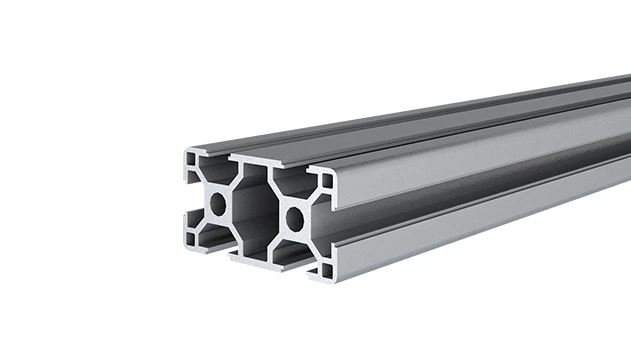
3060 EU Standard Aluminum Profile
3060 is a 3.00 x 6.00CM fractional 30 series square extrusion T-slot profile with four open T-slots, two side with 3.00cm face, two side with 6.0cm face. The profile has align-a-grooves to assist in aligning connecting profiles.
In the fast-paced world of manufacturing, where production lines shift, product designs evolve, and efficiency is non-negotiable, the tools and fixtures that keep operations running can make or break a business. Assembly fixtures, in particular, are the unsung heroes of the factory floor—they hold components steady, guide workflows, and ensure consistency in every product. But what happens when your fixtures can't keep up with change? What if reconfiguring a workstation takes days instead of hours, or replacing a worn-out part means scrapping an entire setup? This is where the 3060 EU Standard Aluminum Profile steps in, offering a blend of strength, flexibility, and reusability that's reshaping how manufacturers approach assembly line design.
What Makes the 3060 EU Standard Aluminum Profile Stand Out?
Let's start with the basics: the term "3060" refers to the profile's cross-sectional dimensions—30 millimeters in width and 60 millimeters in height. Unlike generic aluminum bars, this is an extruded profile, meaning it's shaped by forcing heated aluminum alloy through a precision die to create a consistent, repeatable cross-section. What truly sets it apart, though, is its adherence to EU standards, which guarantee uniformity in dimensions, material quality, and performance across suppliers. This standardization is a game-changer for manufacturers, as it means components from different sources will fit together seamlessly—no more frustrating mismatches or custom workarounds.
The 3060 profile is typically made from 6063-T5 aluminum alloy, a material chosen for its ideal balance of strength, lightweight properties, and corrosion resistance. T5 tempering (artificial aging) gives it a tensile strength of around 180 MPa, making it sturdy enough to support heavy tools, components, and even human operators on workbenches, yet light enough to be maneuvered during reconfiguration. Its surface is often anodized, creating a protective oxide layer that resists scratches, chemical exposure, and wear—critical for environments where daily use takes a toll.
The T-Slot Advantage: Modularity at Its Core
If there's one feature that makes the 3060 profile indispensable for assembly fixtures, it's the T-slot design. Running along its length, these slots act as built-in channels for attaching accessories—no welding, drilling, or specialized tools required. Imagine being able to mount a bracket, a shelf, or a guide rail in seconds by simply sliding a bolt into the slot and tightening a nut. That's the reality with T-slot profiles. This modularity transforms static fixtures into dynamic systems that adapt to your needs, whether you're scaling up production, switching product lines, or optimizing a workflow.
Why Reusability and Adjustability Matter in Assembly Fixtures
In traditional manufacturing setups, assembly fixtures are often "one and done." A steel workstation, for example, is welded into place, custom-built for a specific task. If your company launches a new product with different dimensions, that workstation becomes obsolete. You either invest in a brand-new fixture (costing time and money) or waste resources modifying the old one. This rigidity contradicts the principles of modern manufacturing, where agility is key to staying competitive.
The 3060 EU Standard Aluminum Profile flips this script. Its reusability starts with disassembly—since components are joined with aluminum profile accessories (like connectors, end caps, and clamps) instead of welds, you can take apart a workstation or flow rack and repurpose the profiles elsewhere. A section of 3060 used in a material rack today might become part of a workbench next month, or a conveyor guard the month after. This not only reduces waste but also slashes long-term costs by maximizing the lifespan of your equipment.
Adjustability, too, is a cornerstone of its value. Let's say your assembly line needs a taller work surface to accommodate ergonomic standing desks. With 3060 profiles, you don't need to rebuild the entire bench—simply loosen the connectors, adjust the leg height, and retighten. Need to add a shelf for tools? Slide a bracket into the T-slot and secure it. This flexibility minimizes downtime during reconfigurations, letting your team focus on what matters: producing quality products.

Real-World Applications: From Aluminum Workbenches to Flow Racks
The 3060 profile isn't just a theoretical solution—it's a workhorse in factories, warehouses, and workshops worldwide. Let's explore two key applications where it shines: aluminum workbenches and flow racks.
Aluminum Workbenches: The Heart of the Assembly Line
A workbench is more than a table; it's where precision meets productivity. Whether assembling electronics, automotive parts, or medical devices, operators need a stable, organized space tailored to their tasks. 3060 profiles excel here because they balance load capacity with customization. A typical aluminum workbench built with 3060 can support 200-300 kg (depending on the frame design), enough for heavy tools, jigs, and assembly materials.
What makes these workbenches truly special is their adaptability. Add a pegboard for tool storage using T-slot hooks, mount a monitor arm for digital work instructions, or attach a lighting strip to brighten the workspace—all without drilling holes. If your team shifts to a new product that requires a larger surface area, extend the bench by adding more 3060 sections and aluminum profile accessories like 90° connectors. Even the worktop can be swapped: choose a plywood surface for general use, a stainless steel top for cleanrooms, or an ESD (electrostatic discharge) panel for electronics assembly. This versatility ensures the workbench grows with your needs, not against them.
Flow Racks: Streamlining Material Handling
In lean manufacturing, minimizing waste—including time spent retrieving materials—is critical. Flow racks (or gravity-fed racks) solve this by using inclined roller tracks to feed components directly to the assembly line, reducing walk time and improving efficiency. The 3060 profile is the ideal frame for these racks, providing the structural support needed to hold stacked bins while remaining lightweight enough to position near workstations.
Imagine a flow rack built with 3060 uprights and crossbars. The T-slots make it easy to adjust the height of each shelf to fit different bin sizes, ensuring materials are always at eye level. Attach roller tracks (another accessory that slides into T-slots) at a slight angle, and gravity does the rest—bins glide forward as the front one is emptied, keeping the line stocked without manual restocking. If your production volume increases, add more levels or extend the rack by connecting additional 3060 sections. It's a system that adapts to higher throughput without requiring a complete overhaul.
Comparing 3060 with Other Profiles: Why Size Matters
Aluminum profiles come in dozens of sizes, from compact 20x20mm to heavy-duty 80x80mm. So why choose 3060 for assembly fixtures? The answer lies in balance. Let's compare it to other common EU standard profiles to see how it stacks up:
| Profile Type | Dimensions (WxH, mm) | Typical Load Capacity (kg/m) | Best For |
|---|---|---|---|
| 2020 EU Standard | 20x20 | 50-80 | Light-duty fixtures, small shelving, prototypes |
| 3030 EU Standard | 30x30 | 120-180 | Medium-duty workbenches, small trolleys, machine guards |
| 3060 EU Standard | 30x60 | 200-300 | Assembly workbenches, flow racks, material handling systems |
| 4040 EU Standard | 40x40 | 250-400 | Heavy-duty machinery frames, industrial shelving |
The 3060 profile hits the sweet spot between the smaller 3030 and larger 4040. Its 30x60mm cross-section offers more vertical rigidity than the square 3030, making it better suited for supporting overhanging loads (like workbench shelves or flow rack bins). At the same time, it's lighter and more compact than the 4040, which means easier handling during assembly and lower material costs. For most assembly fixtures—where load requirements are moderate but flexibility is high—the 3060 profile is the practical choice.
Sustainability: A Greener Choice for Modern Manufacturing
Today's manufacturers aren't just focused on efficiency—they're also prioritizing sustainability. The 3060 EU Standard Aluminum Profile aligns with this goal in two key ways: reusability and recyclability. Unlike steel fixtures that rust or wooden workbenches that warp, aluminum profiles can be disassembled, reconfigured, and reused repeatedly. A single 3060 section might serve in a dozen different fixtures over its lifetime, reducing the need for new materials.
When a profile finally reaches the end of its usable life, aluminum is 100% recyclable with no loss in quality. Recycling aluminum uses just 5% of the energy required to produce new aluminum, making it one of the most eco-friendly metals available. For companies aiming to reduce their carbon footprint, choosing reusable aluminum fixtures over disposable alternatives is a tangible step forward.
Choosing the Right Supplier: What to Look For
To fully leverage the benefits of the 3060 EU Standard Aluminum Profile, partnering with a reliable supplier is crucial. Here are a few key factors to consider:
- EU Standard Compliance: Ensure the supplier's profiles meet EU standards for dimensions, material composition, and surface treatment. This guarantees compatibility with accessories from other suppliers.
- Accessory Range: Look for suppliers that offer a full line of aluminum profile accessories —connectors, end caps, T-slot nuts, and brackets. Having everything from one source simplifies ordering and ensures parts work together.
- Custom Cutting: Many suppliers offer custom cutting to length, reducing waste and saving time on-site. This is especially useful for large projects where precise measurements are critical.
- Technical Support: Assembly fixtures can get complex—choose a supplier that provides design guidance, load capacity charts, and assembly tips. A supplier that understands your workflow can help you optimize your fixture designs.
Conclusion: Building a Future-Proof Assembly Line
In a manufacturing landscape where change is constant, the 3060 EU Standard Aluminum Profile stands out as more than just a building material—it's a foundation for agility. Its reusability means you'll spend less on new fixtures and more on innovation. Its adjustability ensures your assembly line adapts to new products, processes, and ergonomic needs. And its modularity lets you start small and scale up as your business grows.
Whether you're building an aluminum workbench for precision assembly, a flow rack for lean material handling, or a custom fixture for a unique task, the 3060 profile delivers the strength, flexibility, and sustainability modern manufacturers demand. It's not just about making fixtures—it's about building a production system that can keep up with the future. And in today's fast-paced world, that's the ultimate competitive advantage.