- Company Articles
- Industry articles
- Industry standards
- 3060 EU Standard Aluminum Profile for Flexible Production Lines: Adaptable Manufacturing

3060 EU Standard Aluminum Profile for Flexible Production Lines: Adaptable Manufacturing
Related Product
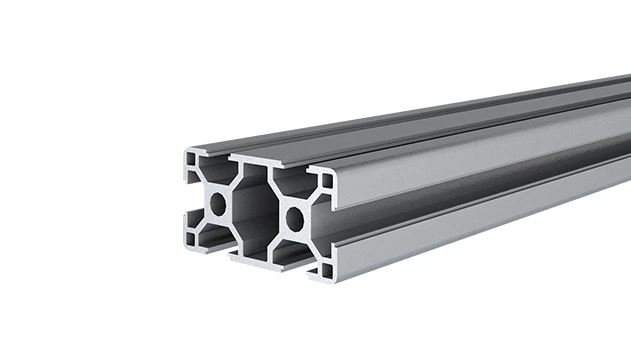
3060 EU Standard Aluminum Profile
3060 is a 3.00 x 6.00CM fractional 30 series square extrusion T-slot profile with four open T-slots, two side with 3.00cm face, two side with 6.0cm face. The profile has align-a-grooves to assist in aligning connecting profiles.
Walk into any modern manufacturing facility today, and you'll likely hear the same challenge echoed across shop floors: "We need to move faster." Whether it's an automotive plant shifting between electric and gas-powered vehicle parts, a electronics manufacturer ramping up production for a new smartphone model, or a medical device maker pivoting to meet sudden demand for critical supplies, the ability to adapt production lines quickly has become the difference between thriving and merely surviving. Yet for decades, many factories have been shackled to rigid, one-size-fits-nobody infrastructure—steel frames welded into fixed shapes, conveyor systems bolted to the floor, workbenches that take weeks to reconfigure. The result? Downtime measured in days, frustrated teams stuck waiting for retooling, and profit margins squeezed by inefficiency.
But what if there was a building block so versatile, so easy to assemble and reconfigure, that a single team could transform a production line from making Product A to Product B in hours—not weeks? Enter the 3060 EU Standard Aluminum Profile : a quiet revolution in manufacturing infrastructure. Part of the broader family of aluminum extrusion profiles , this unassuming piece of engineered aluminum is redefining what "flexible manufacturing" looks like. Lightweight yet surprisingly strong, modular by design, and compatible with a vast ecosystem of aluminum profile accessories , it's the backbone of lean, agile production lines that can keep pace with today's rapidly changing market demands. In this article, we'll explore how this profile works, why it's become indispensable for lean system implementations, and how it's empowering manufacturers to build the adaptable factories of tomorrow—starting with the workbench right next to you.
What Is 3060 EU Standard Aluminum Profile?
At its core, the 3060 EU Standard Aluminum Profile is a product of aluminum extrusion—a manufacturing process where heated aluminum alloy is forced through a die to create a consistent, cross-sectional shape. The "3060" refers to its dimensions: 30mm in width and 60mm in height, a sweet spot that balances structural strength with versatility. The "EU Standard" designation ensures compatibility with a wide range of components across Europe and beyond, meaning parts from different suppliers will fit together seamlessly—a critical detail for global manufacturers.
But numbers alone don't tell the story. What makes this profile special is its T-slot design: longitudinal grooves (or "slots") running the length of the profile, designed to accept bolts, brackets, and accessories without the need for welding or drilling. Imagine a Lego brick for adults, but for industrial use—each slot acts as a connection point, allowing you to attach shelves, panels, wheels, or even sensors with nothing more than a hex key and a few minutes of work. This simplicity is game-changing. Unlike steel, which requires skilled welders and heavy equipment, or traditional wooden workbenches that splinter and warp, the 3060 profile lets maintenance teams, supervisors, even line workers themselves reconfigure setups on the fly.
The Anatomy of Adaptability: Design Features That Drive Flexibility
To understand why the 3060 profile is a favorite for flexible production lines, let's break down its key design features—each engineered to solve a specific pain point in traditional manufacturing setups:
1. T-Slot Geometry: The Foundation of Modularity
The T-slots aren't just a convenience; they're a philosophy. Traditional steel frames require holes to be pre-drilled at specific intervals, limiting where you can attach components. If you need to add a shelf 2 inches to the left of a pre-drilled hole? You're out of luck. With 3060's T-slots, every inch of the profile is a potential connection point. Slide a T-nut into the slot, tighten a bolt, and you're done. This means workbenches can have tool holders positioned exactly where a worker's hand falls, conveyor rails can be adjusted to fit odd-sized boxes, and material racks can be modified to hold taller or shorter parts—no re-drilling, no welding, no fuss.
2. Lightweight Strength: Easy to Handle, Built to Last
Aluminum extrusion profiles like the 3060 punch well above their weight class. Despite being 60% lighter than steel (a 3-meter length of 3060 profile weighs just 2.8kg, compared to 7kg for a steel equivalent), they boast impressive load capacities. Thanks to their hollow, ribbed internal structure—shaped during the extrusion process to distribute weight evenly—3060 profiles can support up to 250kg per linear meter when properly braced. That's enough to hold heavy machinery parts, stacks of circuit boards, or even small assembly robots. For factory teams, this lightweight strength translates to safer, faster installations: two workers can carry and assemble a workbench frame in 20 minutes, versus four workers and a forklift for a steel equivalent.
3. Corrosion Resistance: Built for the Long Haul
Manufacturing environments are tough. Oils, coolants, cleaning chemicals, and even humidity can take a toll on metal over time. Steel rusts; wood warps; plastic cracks. But aluminum forms a natural oxide layer when exposed to air, creating a barrier that resists corrosion. For factories dealing with liquids (like automotive plants with lubricants or food packaging facilities with sanitizing sprays), this means less maintenance, longer lifespans, and fewer replacements. Even better, the 3060 EU standard often includes anodized finishes—an electrochemical process that thickens that oxide layer—making the profile even more durable and scratch-resistant.

Aluminum Profile Accessories: Turning a Profile into a Production Line
A 3060 profile alone is just a length of metal. What transforms it into a flexible production system is the ecosystem of aluminum profile accessories designed to work with it. Think of the profile as a smartphone; the accessories are the apps that make it useful. From connectors that let you join profiles at any angle to panels that turn frames into work surfaces, these components turn "good enough" setups into tailored, high-performance systems.
Let's dive into the most essential accessories and how they empower adaptability:
Connectors: The Glue That Holds (and Reholds) Everything Together
Gone are the days of welding or riveting. 3060 profiles use mechanical connectors that lock into T-slots, creating strong, reusable joints. The internal rotatary aluminum joint is a standout here: insert it into the end of two profiles, twist to align, and tighten a grub screw—no tools needed except a hex key. Need to reangle the joint later? Loosen the screw, rotate, and retighten. It's like a Swiss Army knife for angles, supporting 90°, 45°, even 135° connections. For straight runs, external straight aluminum joints link profiles end-to-end, while 90° aluminum crossing joints let two profiles intersect cleanly—perfect for building the frames of workbenches or material racks.
Panels and Worktops: From Frame to Functional Surface
A production line isn't much without a surface to work on. 3060 profiles pair with aluminum honeycomb panels —lightweight, rigid sheets that snap into T-slots to create workbench tops, shelving, or machine guards. These panels come in various thicknesses (from 10mm to 30mm) and finishes, including anti-static options for electronics manufacturing. For even more customization, T-slot aluminum pipe with board holders let you clamp wooden, plastic, or metal boards directly to the profile, so you can swap surfaces based on the task—say, a rubber mat for assembly work one day, a stainless-steel sheet for food-safe packaging the next.
Mobility Solutions: Taking Flexibility on the Go
Flexible production lines shouldn't be tied to one spot. That's where casters and accessories come in. Bolt a set of heavy-duty swivel casters (with brakes, of course) to the bottom of a 3060 frame, and suddenly your workbench becomes a mobile station that can roll to where it's needed—whether that's next to a conveyor line in the morning or a quality control station in the afternoon. For larger setups, expansion wheels (casters with extended bases) add stability, even when the frame is loaded with heavy parts. It's adaptability in motion.
Guides and Rails: Streamlining Material Flow
In lean manufacturing, efficient material flow is everything. 3060 profiles pair with aluminum guide rails (like aluminum guide rail A and aluminum guide rail B ) to create custom conveyor systems or slide tracks. These rails, which snap into T-slots, can guide everything from small circuit boards (using swivel roller balls 0.5 inch for smooth sliding) to larger boxes (with plastic roller track guide rails in yellow or grey for visibility). Best of all, since the rails are modular, you can add curves, splits, or merges by simply repositioning the guides—no need to replace the entire conveyor.
3060 Profile vs. Other Aluminum Profiles: Why Size Matters
The 3060 EU Standard isn't the only aluminum extrusion profile out there. There's the smaller 2020 (20x20mm), the square 4040 (40x40mm), and the larger 4080 (40x80mm), to name a few. So why has 3060 become the go-to for flexible production lines? The answer lies in its "goldilocks" dimensions: not too small, not too large, but just right for most mid-sized manufacturing needs. Let's compare using a table to see how it stacks up:
| Profile Model | Width x Height (mm) | Wall Thickness (mm) | Max Load Capacity (kg/m) | Best For | Limitations |
|---|---|---|---|---|---|
| 2020 EU Standard | 20 x 20 | 1.5 | 80 | Small shelving, lightweight frames, robotics mounts | Too narrow for workbench tops; low load capacity |
| 3060 EU Standard | 30 x 60 | 2.0 | 250 | Workbenches, material racks, conveyor frames, assembly stations | Not ideal for ultra-heavy machinery (e.g., 1-ton presses) |
| 4040 EU Standard | 40 x 40 | 2.5 | 400 | Heavy-duty workstations, machine guards, industrial shelving | Heavier; overkill for small to mid-sized tasks |
The 2020 is great for lightweight tasks, but its small size limits workbench surface area and load capacity—you wouldn't want to mount a 50kg tool on it. The 4040 is strong, but its square shape and extra weight make it less efficient for applications like conveyor frames, where a rectangular profile (like 3060) better distributes weight along the length. The 3060, with its 30mm width and 60mm height, offers the best balance: enough surface area for a comfortable workbench top (typically 600-1200mm wide), enough height to support overhead shelves, and enough strength for most assembly tools and materials. It's the profile that says, "I can handle whatever you throw at me—without being overkill."
Building a Lean System with 3060: From Workbench to Full Production Line
At its heart, the 3060 profile is a tool for lean system implementation. Lean manufacturing, with its focus on eliminating waste (muda) and continuous improvement (kaizen), thrives on flexibility. A lean system can't afford to wait for a week of retooling; it needs to adapt daily, hourly even, to small changes in demand or process. 3060 profiles and their accessories make that possible by turning abstract lean principles into tangible, reconfigurable infrastructure.
Let's walk through how a typical factory might use 3060 to build a lean production line, step by step:
Step 1: The Workbench—The Core of the Line
Every production line starts with the worker's workspace. A workbench built with 3060 profiles isn't just a table; it's a command center. Here's how it comes together:
- Frame: Four vertical 3060 profiles (height adjustable via aluminum foot bases ) connected by horizontal profiles at the top, middle, and bottom for stability.
- Worktop: An aluminum honeycomb panel (lightweight, rigid, and heat-resistant) mounted to the top frame using T-slot bolts. The panel can be swapped for a (ESD) surface for electronics assembly or a stainless-steel sheet for food-safe environments.
- Under-Shelf Storage: A middle horizontal frame supports a lower shelf, perfect for bins of parts. Using parallel aluminum joint A brackets, the shelf can be raised or lowered to fit taller bins or leave space for a stool.
- Tool Rail: A 3060 profile mounted vertically on the back of the bench, with plastic roller track guide rails to hold tool holders, barcode scanners, or small monitors. Tools slide along the rail, keeping them within arm's reach.
- Mobility: Casters and accessories (lockable swivel casters) bolted to the bottom frame, letting the workbench roll to where it's needed—whether that's next to a conveyor or in a temporary assembly area.
The result? A workbench that takes 2 hours to assemble, can be reconfigured in 20 minutes, and lasts for years—all while supporting the worker's specific needs.
Step 2: Material Racks—Feeding the Line Without Waste
In lean manufacturing, "material at the point of use" is key. Workers shouldn't walk 20 feet to grab a part; the part should come to them. 3060 profiles make building material rack B (3 row and 3 floor) systems simple. These racks, with inclined shelves using swivel roller balls 1 inch , let parts roll forward as the front bin is emptied—no bending, no reaching. The 3060 frame supports multiple levels, each adjustable via roller track placon mount brackets to fit different part sizes. When a new product line requires taller parts, just loosen the brackets, slide the shelves up, and retighten.
Step 3: Conveyor Frames—Moving Parts, Not Workers
Conveyors are the arteries of a production line, and 3060 profiles make them adaptable. A basic roller conveyor frame uses two parallel 3060 profiles as side rails, with roller track placon mount for aluminum profile flat brackets to hold 40 steel roller track (yellow wheels for visibility). Need to change the conveyor's angle to feed into a new machine? Adjust the height of one end using adjustable leveling feet . Adding a curve? Use 135° aluminum pipe joint outside connection brackets to bend the frame gently—no need for custom-machined steel curves.
Case Study: How a Medical Device Maker Cut Downtime by 70% with 3060 Profiles
To see the 3060 profile in action, let's look at a real-world example: a mid-sized medical device manufacturer in Germany that produces surgical instruments. Before 2022, their production lines were built with steel frames and wooden workbenches. When they needed to switch from producing scalpels to forceps (a common change), the process was painful:
- Steel workbenches had to be unbolted from the floor and moved using forklifts (2 days of downtime).
- Wooden shelves warped from sanitizing sprays, requiring replacement every 6 months ($12,000/year in replacements).
- Conveyor rails, bolted to steel frames, took 8 hours to reconfigure for the new instrument sizes.
In early 2022, they switched to 3060 EU Standard Aluminum Profiles and accessories. The results were transformative:
- Faster Changeovers: A team of 2 workers now reconfigures a production line in 4 hours (down from 2 days). Using internal rotatary aluminum joints and casters, workbenches roll into new positions, and material racks are adjusted with hex keys—no forklifts needed.
- Lower Maintenance: Aluminum frames and anodized worktops resist sanitizing sprays, eliminating shelf replacements. Over 2 years, they saved $24,000 in replacement costs alone.
- Higher Worker Satisfaction: Teams report less fatigue (lighter workbenches are easier to adjust) and more ownership over their workspace (they can tweak tool positions themselves). Absenteeism dropped by 15% in the first quarter.
- Scalability: When demand spiked for a new instrument, they added 3 new workbenches in a day—using leftover 3060 profiles from previous setups. With steel, this would have taken 2 weeks and a custom order.
The plant manager summed it up: "We used to see changeovers as a necessary evil. Now? We see them as an opportunity to improve. The 3060 profiles didn't just save us time—they changed how we think about production."
The Future of Manufacturing: 3060 Profiles and Industry 4.0
As factories move toward Industry 4.0—smart, connected systems where machines, sensors, and workers collaborate in real time—the 3060 profile is poised to play an even bigger role. Here's why:
1. IoT Integration Made Simple
Smart factories rely on sensors: temperature monitors, vibration detectors, cameras, and RFID scanners. 3060's T-slots make mounting these devices trivial. A sensor can be clamped to a profile in seconds, positioned exactly where data is needed. Cables? Run them through the hollow profiles or along T-slot rubber seal covers, keeping them organized and protected. When a new sensor is needed, just add another clamp—no drilling holes for wires.
2. Modular Automation
Collaborative robots (cobots) are becoming common on shop floors, but they're often fixed to steel pedestals. With 3060 profiles, cobot mounts can be repositioned as tasks change. A cobot that assembles circuit boards in the morning can be moved to package products in the afternoon—all by loosening a few bolts. This "plug-and-play" automation aligns with the agile, small-batch production models of the future.
3. Sustainability: The Green Advantage
Aluminum is 100% recyclable, and recycling it uses just 5% of the energy needed to produce new aluminum. For factories aiming to reduce their carbon footprint, 3060 profiles offer a sustainable alternative to steel (which requires more energy to produce and recycle). Even better, since they're reusable—disassembled and reassembled for new lines—they reduce waste from construction and demolition. It's lean manufacturing for the planet, too.
Conclusion: The 3060 Profile—Your Production Line's Swiss Army Knife
In a world where manufacturing demands change faster than ever, flexibility isn't a luxury—it's survival. The 3060 EU Standard Aluminum Profile, with its T-slot design, lightweight strength, and ecosystem of accessories, isn't just a building material. It's a mindset shift: from "this is how we've always done it" to "how can we do it better tomorrow?"
Whether you're building a single workbench or an entire production line, 3060 profiles offer the adaptability to grow, pivot, and innovate. They turn downtime into uptime, frustration into empowerment, and rigid systems into agile, lean machines. And in the end, that's what manufacturing is all about: making things—better, faster, and smarter than before.
So the next time you hear someone say, "We need to move faster," hand them a 3060 profile and a hex key. The future of manufacturing isn't welded in place—it's built to adapt.