- Company Articles
- Industry articles
- Industry standards
- 3060 EU Standard Aluminum Profile for Laboratory Benches: Safety & Chemical Resistance

3060 EU Standard Aluminum Profile for Laboratory Benches: Safety & Chemical Resistance
Related Product
3060 EU Standard Aluminum Profile
3060 is a 3.00 x 6.00CM fractional 30 series square extrusion T-slot profile with four open T-slots, two side with 3.00cm face, two side with 6.0cm face. The profile has align-a-grooves to assist in aligning connecting profiles.
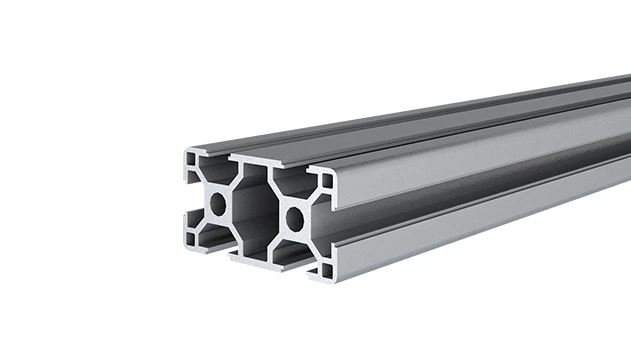
Walk into any busy laboratory—whether it's a university research lab, a pharmaceutical R&D facility, or an industrial testing center—and you'll notice a common thread: the workbench is the quiet backbone of the operation. It's where pipettes are calibrated, chemicals are mixed, samples are analyzed, and breakthroughs (big and small) happen. But not all workbenches are created equal. When safety, chemical resistance, and durability are non-negotiable, one material stands out: the 3060 EU standard aluminum profile . Designed to meet rigorous European safety standards and built to withstand the harsh realities of lab work, this aluminum extrusion profile isn't just a piece of furniture—it's a critical tool for protecting both people and research.
Why Lab Benches Can't Afford to Cut Corners
Laboratories are high-stakes environments. A single spill of hydrochloric acid, a drop of organic solvent, or even prolonged exposure to moisture can turn a "good enough" workbench into a liability. Traditional materials like wood or generic steel might seem cost-effective upfront, but they often fall short in key areas:
- Chemical vulnerability: Wood absorbs liquids, warps, and can harbor bacteria in its pores. Untreated steel rusts when exposed to acids. Even some plastics degrade when in contact with solvents like acetone.
- Safety risks: Warped or weakened benches can wobble, leading to spilled chemicals or damaged equipment. Materials that off-gas (like cheap particleboard) introduce contaminants into sensitive experiments.
- Regulatory headaches: EU labs must comply with strict safety standards (e.g., REACH, CE marking) to ensure worker protection and data integrity. Using non-compliant materials can result in fines or shutdowns.
This is where the 3060 EU standard aluminum profile shines. Engineered specifically for demanding environments, it addresses these pain points head-on—starting with its core material: aluminum extrusion profile.
What Makes 3060 EU Standard Aluminum Profile Different?
First, let's break down the name: "3060" refers to its dimensions—30mm in width and 60mm in height—making it sturdy enough to support heavy lab equipment (think centrifuges, spectrometers) while remaining lightweight. "EU standard" means it's manufactured to meet strict European regulations for quality, safety, and environmental impact. And "aluminum extrusion profile"? That's the process that gives it its unique strength and versatility.
Aluminum extrusion works like this: Molten aluminum is forced through a precision die, shaping it into long, uniform lengths with consistent cross-sections. For the 3060 profile, this results in a sleek, T-slotted design—those grooves along the edges aren't just for looks. They're the key to its adaptability, allowing labs to attach aluminum profile accessories (shelves, tool holders, lighting, even power strips) without drilling or welding. It's like building with a high-tech Erector Set, but for scientists.
But what really sets it apart is its commitment to safety and chemical resistance. Let's dive into those.

Safety First: Protecting People and Experiments
In a lab, safety isn't optional. The 3060 aluminum profile is built to mitigate risks at every turn:
Structural Integrity That Won't Let You Down
Aluminum is surprisingly strong for its weight. A 3060 profile bench can easily support 200kg of equipment—more than enough for most lab setups. Unlike wood, it won't warp under heavy loads or humidity. Unlike cheap steel, it won't bend or crack when bumped by a rolling cart. This stability is crucial when working with fragile glassware or volatile chemicals.
Fire Resistance: A Critical Safety Net
Labs deal with flammable solvents, so fire safety is paramount. Aluminum doesn't burn, and it melts at 660°C—far higher than the ignition point of wood (233°C) or many plastics (200-300°C). In the unlikely event of a fire, an aluminum bench won't fuel the flames, giving researchers precious time to evacuate or contain the situation.
Non-Toxic and Contamination-Free
Unlike some composite materials or treated woods, aluminum doesn't off-gas harmful chemicals. This is a game-changer for sensitive experiments, where even trace contaminants can skew results. It's also non-porous, so it won't harbor mold, bacteria, or residue from previous experiments—critical for sterile environments like microbiology labs.
Chemical Resistance: Standing Up to Spills and Splashes
Let's be real: Spills happen. A dropped beaker, an overfilled test tube, a clumsy elbow—even the most careful researchers aren't immune. The 3060 aluminum profile is designed to laugh off these accidents, thanks to aluminum's natural defense mechanism: a thin, protective oxide layer. When exposed to air, aluminum forms this invisible barrier, which resists corrosion from most acids, bases, and solvents.
To put it to the test, let's consider common lab chemicals:
- Hydrochloric acid (10% solution): Wipes clean with water; no pitting or discoloration.
- Ethanol (70%): Evaporates without leaving residue; won't degrade the aluminum surface.
- Sodium hydroxide (5%): Minimal reaction, easily neutralized and cleaned.
- Acetone: Dissolves oils but doesn't harm the oxide layer—perfect for degreasing the bench surface.
Compare this to wood, which would absorb these liquids and swell, or untreated steel, which would rust into a flaky mess. Even stainless steel, while resistant, can develop pinpoint corrosion over time with repeated acid exposure. Aluminum? It just keeps going.
| Material | Chemical Resistance | Durability | Weight (6ft Bench) | EU Safety Compliance |
|---|---|---|---|---|
| 3060 Aluminum Profile | Excellent (resists acids, solvents, bases) | High (no warping, rust, or rot; 10+ year lifespan) | ~100kg (easy to move/install) | Yes (meets REACH, CE standards) |
| Stainless Steel | Very Good (susceptible to pitting with strong acids) | High (heavy, prone to dents) | ~200kg (difficult to reposition) | Yes |
| Wood (Plywood) | Poor (absorbs liquids, swells, harbors bacteria) | Low (needs replacement every 2-3 years) | ~80kg (light but fragile) | No (fire risk, chemical off-gassing) |
The table says it all: aluminum strikes the perfect balance of resistance, durability, and practicality—especially for labs that need to stay flexible.
Customization with Aluminum Profile Accessories: Build the Bench You Need
No two labs are the same. A biochemistry lab might need ESD-safe surfaces and overhead lighting, while a materials science lab requires heavy-duty shelving for rock samples. The 3060 aluminum profile's T-slotted design makes customization a breeze, thanks to a wide range of aluminum profile accessories . Here are just a few ways labs tailor their benches:
- Adjustable shelves: Slide brackets into the T-slots to add shelves at any height—ideal for storing reagents, glassware, or equipment. Need to raise a shelf for a taller centrifuge? Just loosen the brackets and reposition.
- Tool rails: Mount magnetic strips or pegboards to hold pipettes, scissors, or lab tools within arm's reach. No more digging through drawers!
- Power strips and cable management: T-slots can hide unsightly cables, keeping the bench clutter-free and reducing tripping hazards. Add a built-in power strip for easy access to outlets.
- Worktop options: Pair the aluminum frame with a variety of tops—like chemical-resistant epoxy resin, stainless steel, or even marble for heat resistance. The frame supports it all.
This flexibility aligns perfectly with lean system principles, which focus on eliminating waste and improving efficiency. Instead of buying a new bench every time your lab's needs change, you can adapt your existing one with accessories—saving money, reducing waste, and keeping your workflow smooth.
Real Labs, Real Results: A Case Study
Let's hear from a lab that made the switch. The Molecular Biology Department at a major EU university was struggling with outdated wooden benches. "Spills were a nightmare—even small amounts of ethanol would stain the wood, and we were replacing benches every 3 years," says Dr. Elena Miro, lab manager. "We also needed more storage, but the wood couldn't support heavy shelves without sagging."
They upgraded to 3060 EU standard aluminum profile benches with accessories like adjustable epoxy resin tops, overhead lighting, and mobile shelving units. "It's been a game-changer," Dr. Miro reports. "Last month, a student spilled 50ml of hydrochloric acid—we wiped it up with a paper towel, and the bench didn't even flinch. The T-slots let us add a shelf for our new PCR machine, and we've cut down on clutter with cable management. Best of all, maintenance costs have dropped by 60%—we haven't had to repair or replace a single bench in 5 years."
Why Choose 3060 EU Standard Aluminum Profile for Your Lab?
At the end of the day, a lab workbench is more than just a surface—it's an investment in safety, efficiency, and the quality of your research. The 3060 EU standard aluminum profile delivers on all fronts:
- Safety: Meets EU standards, resists fire, and won't off-gas harmful chemicals.
- Durability: Withstands heavy loads, chemical spills, and daily wear and tear—lasts 10+ years.
- Customization: T-slots and aluminum profile accessories let you build the perfect bench for your needs.
- Cost-effective: Lower maintenance and replacement costs than wood or stainless steel.
- Lean-friendly: Adaptable design reduces waste and improves workflow efficiency.
Final Thoughts: More Than a Bench—A Foundation for Discovery
Labs are places of innovation, where breakthroughs start with the basics—including the workbench. The 3060 EU standard aluminum profile isn't just a piece of lab furniture; it's a partner in progress. It protects researchers from harm, ensures experiments are accurate, and adapts as science evolves.
So, if you're outfitting a new lab or upgrading an old one, don't settle for a bench that merely "works." Choose one that works for you—one built with safety, chemical resistance, and flexibility in mind. Choose 3060 EU standard aluminum profile. Your lab (and your research) will thank you.