- Company Articles
- Industry articles
- Industry standards
- 3060 EU Standard Aluminum Profile: Impact Resistance in Heavy-Duty Applications

3060 EU Standard Aluminum Profile: Impact Resistance in Heavy-Duty Applications
Related Product
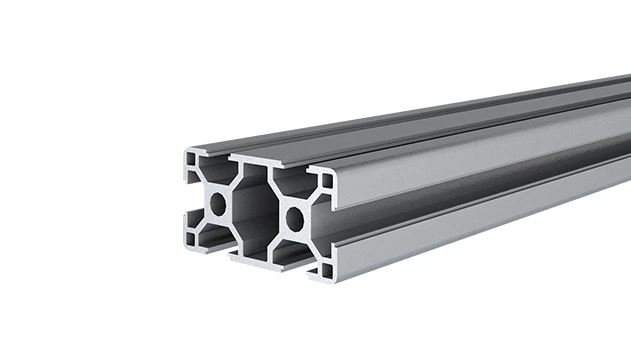
3060 EU Standard Aluminum Profile
3060 is a 3.00 x 6.00CM fractional 30 series square extrusion T-slot profile with four open T-slots, two side with 3.00cm face, two side with 6.0cm face. The profile has align-a-grooves to assist in aligning connecting profiles.
The Backbone of Heavy-Duty Operations
Walk into any bustling manufacturing plant, warehouse, or logistics hub, and you'll notice a silent hero holding everything together: the structural frameworks that support workbenches, material racks, conveyor systems, and more. These aren't just pieces of metal—they're the backbone of daily operations, tasked with withstanding constant use, heavy loads, and the occasional bump or jolt that comes with a busy workspace. In environments where downtime equals lost revenue, the choice of material for these frameworks isn't just a matter of cost; it's a decision that impacts efficiency, safety, and long-term reliability.
This is where the 3060 EU standard aluminum profile enters the picture. For years, industries have leaned on traditional materials like steel for heavy-duty tasks, drawn to its raw strength. But steel comes with trade-offs: it's heavy, prone to rust, and difficult to customize without specialized tools. Enter aluminum extrusion profiles—lightweight, corrosion-resistant, and surprisingly robust. Among these, the 3060 EU standard stands out as a workhorse, designed to balance strength, versatility, and impact resistance in ways that make it indispensable for modern heavy-duty applications.
Understanding 3060 EU Standard Aluminum Profile: More Than Just Metal
Dimensions and Specifications: The "3060" Story
Let's start with the basics: what does "3060 EU standard" actually mean? The numbers refer to the profile's cross-sectional dimensions: 30mm in width and 60mm in height. This specific sizing isn't arbitrary—it's the result of engineering precision, tailored to strike a balance between load-bearing capacity and adaptability. The "EU standard" label ensures compliance with strict European manufacturing norms, guaranteeing consistent quality, dimensional accuracy, and material purity across every piece.
Unlike generic aluminum bars, the 3060 profile is an extrusion, meaning it's formed by forcing heated aluminum alloy through a die to create its unique shape. This process allows for intricate internal structures, such as T-slots along its length. These slots are more than just design features; they're the key to the profile's versatility, letting users attach accessories like brackets, panels, and connectors without welding or drilling. For a lean system supplier, this flexibility is a game-changer, as it allows for quick assembly and reconfiguration to meet evolving production needs.
Material Composition: Why Aluminum Extrusion Stands Out
The 3060 EU standard profile is typically crafted from 6000-series aluminum alloys, most commonly 6063 or 6061. These alloys blend aluminum with magnesium and silicon, creating a material that's both strong and lightweight. 6063, in particular, is prized for its excellent extrudability—meaning it can be shaped into complex profiles with tight tolerances—while 6061 offers slightly higher tensile strength, making it ideal for applications where impact resistance is critical.
But what truly sets aluminum extrusion apart is its strength-to-weight ratio. Pound for pound, aluminum is about one-third the weight of steel, yet it can still support impressive loads. This not only makes installation easier (no need for heavy lifting equipment) but also reduces strain on supporting structures, extending the lifespan of floors, racks, and workbenches. For facilities that require frequent reconfigurations—common in lean manufacturing setups—this lightweight nature translates to less downtime and lower labor costs.

Impact Resistance: The Core Advantage in Demanding Environments
Testing and Real-World Performance
In heavy-duty settings, "impact resistance" isn't just a buzzword—it's a matter of safety and durability. Imagine a warehouse where forklifts maneuver tight corners, or a production line where metal components are regularly placed and moved on workbenches. A framework that dents, bends, or cracks under these conditions isn't just inefficient; it's a hazard. The 3060 EU standard aluminum profile is engineered to stand up to these challenges, thanks to its unique combination of material properties and structural design.
Laboratory tests show that 6000-series aluminum alloys exhibit excellent energy absorption, meaning they can withstand sudden impacts without permanent deformation. When paired with the 3060's thick walls (typically 1.5mm to 3mm, depending on the specific variant), this creates a profile that's both rigid and resilient. For example, a 3060 profile with a 2mm wall thickness can handle static loads of up to 500kg per linear meter in some configurations, and dynamic impacts from dropped tools or shifting materials without compromising its shape.
Real-world examples back this up. A leading automotive parts manufacturer in Germany, for instance, replaced steel workbenches with 3060 aluminum extrusion workbenches five years ago. Their production line involves daily use of heavy power tools and the movement of engine components weighing up to 30kg. Despite the constant activity, the aluminum workbenches show minimal signs of wear, with no bending or cracking—even in areas prone to accidental collisions with trolleys. The plant manager noted that maintenance costs dropped by 40% after the switch, as there was no need for regular repainting (unlike steel, aluminum resists corrosion) or structural repairs.
Comparing to Other Materials: Why 3060 Beats Steel and Plastic
To truly appreciate the 3060's impact resistance, it helps to compare it to alternatives. Steel, for example, is undeniably strong, but its weight makes it difficult to work with, and it's susceptible to rust in humid or industrial environments. A steel profile of similar dimensions to the 3060 would weigh three times as much, increasing installation time and transportation costs. Worse, steel's rigidity means it's more likely to crack under sudden impacts, whereas aluminum's ductility allows it to absorb energy and bounce back.
Plastic profiles, on the other hand, are lightweight and corrosion-resistant but lack the structural integrity needed for heavy-duty use. A plastic framework might flex under moderate loads, leading to instability in workbenches or material racks. Over time, plastic also degrades when exposed to UV light or harsh chemicals, making it unsuitable for long-term industrial applications.
The table below summarizes how the 3060 EU standard aluminum profile stacks up against common alternatives in key areas:
| Feature | 3060 EU Aluminum Profile | Steel Profile (Similar Size) | Plastic Profile (Similar Size) |
|---|---|---|---|
| Weight (kg/m) | 1.8–2.5 | 5.5–7.0 | 0.8–1.2 |
| Max Static Load (kg/m) | 300–500 | 600–800 | 50–150 |
| Impact Resistance | High (ductile, energy-absorbing) | High (rigid, prone to cracking) | Low (prone to bending/breaking) |
| Corrosion Resistance | Excellent (natural oxide layer) | Poor (requires coating) | Good (varies by plastic type) |
| Customization | High (T-slots, easy assembly) | Low (requires welding/drilling) | Medium (limited accessory options) |
As the table shows, while steel may have a higher maximum static load, the 3060 aluminum profile offers a far more balanced package—combining sufficient strength with lightweight handling, corrosion resistance, and adaptability. For most heavy-duty applications, this balance is far more valuable than raw load capacity alone.
Practical Applications: Where 3060 Shines
Workbenches: Stability for Precision Tasks
In manufacturing, a workbench isn't just a table—it's a platform for precision. Whether assembling electronics, testing machinery, or packaging delicate components, workers rely on stable surfaces that don't wobble, shift, or degrade over time. The 3060 EU standard profile excels here, providing the rigidity needed for accuracy while absorbing the minor impacts of daily use.
Consider a workbench E (single deck-without caster) built with 3060 profiles. The frame, constructed from interconnected 3060 rails, supports a thick plywood or aluminum honeycomb panel top. The T-slots in the profiles allow for easy attachment of accessories like tool holders, LED task lights, or ESD (electrostatic discharge) mats—critical for electronics manufacturing. What sets this workbench apart is its ability to handle both heavy tools (up to 100kg on the surface) and accidental knocks from carts or equipment. Unlike wooden workbenches, which can splinter, or plastic ones, which flex, the 3060 frame maintains its shape, ensuring the work surface remains level and stable for years.
Aerospace manufacturers, in particular, favor 3060 workbenches for their ability to support precision measuring tools. When aligning components with tolerances of just a few micrometers, even the slightest vibration or movement can throw off measurements. The 3060's rigidity minimizes flex, while its lightweight design reduces the transfer of floor vibrations to the work surface. This combination makes it a staple in quality control labs and assembly stations where precision is non-negotiable.
Material Racks: Supporting Weight Without Compromise
Warehouses and distribution centers are another area where the 3060 profile shines, especially in material racks. Take, for example, a Material Rack B (3 row and 3 floor) designed to hold heavy components like automotive parts or industrial machinery. Each shelf in this rack is supported by 3060 profiles, which distribute weight evenly across the structure. Even when fully loaded—with each shelf holding up to 200kg—the rack remains stable, thanks to the profile's high compressive strength.
What's impressive is how the 3060 handles dynamic loads, such as when pallets are placed or removed with a forklift. The sudden impact of a 50kg box being set down on a shelf can generate significant force, but the aluminum profile's ductility absorbs this energy without bending. Over time, this reduces the risk of shelf collapse or warping, which is a common issue with cheaper steel racks that rust and weaken at the joints.
Another advantage is the rack's adaptability. As inventory needs change, the 3060's T-slots allow for quick adjustment of shelf heights using aluminum profile accessories like brackets and clamps. A warehouse manager can reconfigure the rack from holding small parts to large machinery in a matter of hours, without needing to replace the entire structure. For a lean system supplier, this flexibility is a key selling point, as it aligns with the principles of lean manufacturing—maximizing efficiency by minimizing waste and adapting to change.
Conveyor Systems: Smooth Flow in Manufacturing
Conveyor systems are the arteries of production lines, moving parts from one station to the next with minimal human intervention. To keep this flow uninterrupted, the conveyor framework must be strong enough to support the weight of the belt or rollers, as well as the products being transported. The 3060 EU standard profile is often used here, providing a stable base for roller tracks, belts, and drive mechanisms.
Roller track systems, in particular, benefit from the 3060's rigidity. Aluminum guide rail A and B, which are often paired with 3060 profiles, create smooth paths for roller tracks, ensuring that products glide evenly without jamming. The 3060 frame absorbs the vibrations from moving rollers, preventing noise and reducing wear on the system. In food processing plants, where hygiene is critical, the 3060's corrosion resistance is a boon—unlike steel, it doesn't rust when exposed to water or cleaning chemicals, making it easy to sanitize.
A beverage bottling plant in Italy upgraded its conveyor systems to 3060 profiles a few years ago, replacing older steel frames. The result? A 20% reduction in maintenance costs, as there was no need to repaint rusted components, and a 15% increase in throughput, thanks to the smoother operation of the roller tracks. The plant's maintenance manager noted that the aluminum frames also made it easier to install sensors and automated stop mechanisms, as the T-slots allowed for precise positioning of these devices without drilling.
Aluminum Profile Accessories: Enhancing Versatility
A profile is only as good as the accessories that connect it, and the 3060 EU standard aluminum profile is supported by a wide range of aluminum profile accessories designed to maximize its potential. These include joints, brackets, connectors, and end caps, each engineered to work seamlessly with the profile's T-slots and dimensions.
Internal rotatary aluminum joints, for example, allow for 360-degree rotation between connected profiles, making it easy to build angled structures like workbench corners or material rack bays. 90° aluminum profile connectors, on the other hand, create rigid right-angle joints, ideal for framing workbenches or shelving. These accessories are typically made from the same aluminum alloy as the profiles, ensuring compatibility and uniform strength.
For heavy-duty applications, specialized accessories like heavy-duty split foot seats provide extra stability by distributing the weight of the structure across a larger area. These seats attach to the bottom of 3060 profiles, preventing them from sinking into soft floors or vibrating loose over time. Similarly, caster wheels with aluminum brackets can be added to workbenches or trolleys, turning static structures into mobile ones—perfect for facilities that need to reconfigure layouts quickly.
The beauty of these accessories is their simplicity. Most can be installed with just a hex key, no welding or specialized tools required. This makes it easy for even small teams to assemble or modify structures, reducing reliance on external contractors. For a lean system supplier, this means faster delivery times and happier customers, as projects can be completed on schedule without delays.
Choosing a Reliable Lean System Supplier
While the 3060 EU standard aluminum profile is inherently durable, its performance ultimately depends on the quality of the manufacturing process. Not all aluminum profiles are created equal—subpar materials, poor extrusion techniques, or inconsistent dimensional tolerances can weaken the profile, compromising its impact resistance and load capacity. That's why choosing a reputable lean system supplier is just as important as selecting the right profile.
When evaluating suppliers, look for those that adhere to strict quality control standards, such as ISO 9001 certification. This ensures that every batch of 3060 profiles is tested for strength, dimensional accuracy, and material purity. A good supplier should also offer detailed technical specifications, including load capacity charts and impact resistance data, to help you select the right profile for your application.
Another key factor is customization. A reliable supplier will work with you to design structures tailored to your specific needs, whether that means modifying the profile's wall thickness, adding custom holes, or creating unique accessory combinations. They should also provide after-sales support, including installation guidance and replacement parts, to ensure your investment lasts for years.
Finally, consider the supplier's experience in your industry. A supplier that specializes in automotive manufacturing, for example, will understand the unique demands of that sector (like ESD protection or high-temperature resistance) and can recommend solutions that meet those needs. This industry expertise can save time and money, as they'll anticipate challenges and offer proactive solutions.
Conclusion: Investing in Durability and Efficiency
In the fast-paced world of heavy-duty manufacturing and logistics, every component matters. The 3060 EU standard aluminum profile isn't just a structural element—it's an investment in efficiency, safety, and long-term reliability. Its unique combination of impact resistance, lightweight design, and versatility makes it ideal for workbenches, material racks, conveyor systems, and more, outperforming traditional materials like steel and plastic in key areas.
By choosing 3060 profiles and partnering with a trusted lean system supplier, businesses can reduce maintenance costs, minimize downtime, and adapt quickly to changing production needs. Whether you're building a single workbench or an entire factory layout, the 3060 EU standard aluminum profile delivers the strength and durability required to keep operations running smoothly, even in the most demanding environments.
In the end, it's simple: when your infrastructure is built to last, your business is too. The 3060 EU standard aluminum profile isn't just a material choice—it's a commitment to excellence, ensuring that your operations remain efficient, safe, and productive for years to come.