- Company Articles
- Industry articles
- Industry standards
- 3060 EU Standard Aluminum Profile in Battery Production Lines: Safety & Insulation

3060 EU Standard Aluminum Profile in Battery Production Lines: Safety & Insulation
Related Product
3060 EU Standard Aluminum Profile
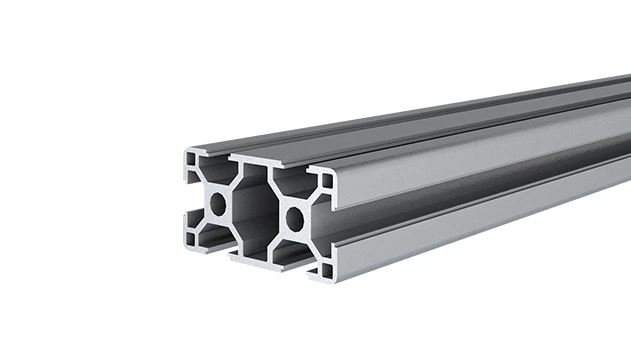
3060 is a 3.00 x 6.00CM fractional 30 series square extrusion T-slot profile with four open T-slots, two side with 3.00cm face, two side with 6.0cm face. The profile has align-a-grooves to assist in aligning connecting profiles.
Walk into any modern battery production facility, and you'll notice a symphony of precision. Robots glide silently, technicians monitor screens with focused intensity, and delicate components move from station to station—all with the goal of creating batteries that power everything from electric vehicles to renewable energy storage systems. But behind this harmony lies a critical challenge: balancing efficiency with the unique demands of battery manufacturing, where safety and insulation aren't just priorities—they're non-negotiable. That's where the 3060 EU Standard Aluminum Profile comes in. More than just a structural element, it's a backbone that supports the industry's push for safer, more reliable production. Let's dive into why this unassuming piece of aluminum has become a game-changer.
Why Battery Production Can't Compromise on Materials
Before we talk about the 3060 profile itself, let's set the stage. Battery production is unlike any other manufacturing process. The cells and components involved are sensitive to temperature fluctuations, static electricity, and physical damage. A single misstep—a sharp edge that scratches a cell, a static discharge that damages circuitry, or a structural failure that disrupts workflow—can lead to costly delays, compromised product quality, or worse, safety hazards. Traditional materials like steel, while strong, often fall short here: they're heavy, prone to corrosion (especially in environments with chemicals or humidity), and conduct electricity, posing risks of short circuits.
Enter aluminum. Lightweight, corrosion-resistant, and versatile, aluminum has long been a favorite in manufacturing. But not all aluminum profiles are created equal. The EU Standard designation matters because it ensures strict compliance with quality, safety, and dimensional standards. For battery producers, this consistency is key—when you're building a production line that needs to run 24/7, you can't afford surprises in material performance. And among EU standard profiles, the 3060 stands out for a simple reason: it's engineered to solve the specific pain points of battery manufacturing.
What Makes the 3060 EU Standard Aluminum Profile Unique?
Let's start with the basics. The "3060" refers to its cross-sectional dimensions: 30 millimeters in width and 60 millimeters in height. At first glance, those numbers might seem arbitrary, but they're the result of careful engineering. This size strikes a perfect balance—wide enough to provide stability for heavy equipment, yet compact enough to fit into the tight layouts of modern production lines. Unlike bulkier profiles that waste space or flimsier ones that sacrifice strength, the 3060 is the Goldilocks of aluminum extrusion profiles: just right.
But its real strength lies in how it's made. As an aluminum extrusion profile , it's formed by forcing heated aluminum through a die, creating a consistent, seamless shape. This process isn't just efficient—it ensures uniformity. Every 3060 profile off the line has the same strength, the same tolerances, and the same structural integrity. For battery producers, this means predictable performance. When you're building a workbench that needs to support sensitive battery modules or a roller track that must move components with micrometer precision, predictability is everything.
Another standout feature? Its adaptability. The 3060 profile is designed with T-slots—longitudinal grooves along its length—that make it easy to attach accessories. Need to add a tool holder? Screw a bracket into the T-slot. Want to mount a sensor? Slide a nut into the groove and tighten. This modularity is a lifesaver in an industry where production lines are constantly evolving to keep up with new battery chemistries and designs. Instead of rebuilding entire workstations from scratch, technicians can reconfigure the 3060-based setup in hours, not days. It's lean manufacturing in action, and it's why so many producers are making the switch.

Safety First: How 3060 Profiles Protect Workers and Products
In battery production, safety has two faces: protecting the people on the floor and protecting the products being made. The 3060 profile excels at both, starting with its physical design.
Let's talk about worker safety first. Traditional steel frames often have sharp edges or rough welds—small hazards that can lead to cuts or scrapes over time. The 3060 EU profile, however, is extruded with rounded edges as standard. These smooth contours aren't just a nice touch; they're a deliberate safety feature. In a fast-paced environment where technicians are moving quickly, the risk of accidental contact is high. Rounded edges reduce that risk significantly. Additionally, aluminum's lightweight nature makes installation and reconfiguration easier. Lifting heavy steel beams is a common cause of back injuries; with 3060 profiles, teams can handle components manually without straining, cutting down on workplace accidents.
Then there's product safety. Battery cells are delicate. A small impact or scratch can compromise their integrity, leading to performance issues or even thermal runaway—a dangerous chain reaction of overheating. The 3060 profile's rigidity plays a role here. When used in workbenches or material racks, it provides a stable, vibration-free surface. Unlike flimsy plastic or wood, which can warp or flex under load, aluminum maintains its shape, ensuring that cells and modules stay secure during assembly. Even better, when paired with aluminum profile accessories like soft-grip end caps or non-slip mats, the profile adds an extra layer of protection, preventing components from sliding or bumping into hard surfaces.
Perhaps most critically, the 3060 profile addresses electrical safety. While aluminum is conductive, the EU standard requires profiles used in sensitive environments to undergo surface treatments like anodization. This process creates a thin, non-conductive oxide layer on the aluminum's surface, reducing the risk of static discharge or accidental short circuits. In battery production, where even a tiny spark can damage components or ignite flammable electrolytes, this insulation is a lifesaver. It's a small detail, but one that underscores why EU standard profiles are trusted over generic alternatives.
Insulation: Keeping Temperatures—and Risks—in Check
Batteries are picky about temperature. Too hot, and their performance degrades; too cold, and their efficiency drops. Worse, extreme temperature fluctuations can cause internal stress, leading to leaks or failures. That's why battery production lines require precise thermal management, and the 3060 profile plays a surprisingly important role here.
Aluminum is known for its excellent thermal conductivity, which might seem counterintuitive for insulation. But here's the twist: in controlled environments, conductivity can be a strength. The 3060 profile acts like a heat sink, dissipating localized hotspots that might form near machinery or during component testing. For example, when assembling battery packs, certain processes (like laser welding or adhesive curing) generate heat. If that heat builds up, it could affect nearby cells. The aluminum profile, with its large surface area, spreads that heat out, preventing temperature spikes.
But what about cold environments? Many battery components need to be stored or assembled at specific low temperatures. Here, the 3060 profile's anodized coating comes into play again. While the aluminum itself conducts heat, the oxide layer slows down heat transfer, acting as a barrier between the cold interior of a workstation and the warmer factory floor. This means less energy is needed to maintain stable temperatures, reducing both costs and environmental impact. It's a subtle balance, but one that makes a big difference in the consistency of the final product.
Let's not forget about chemical insulation. Battery production involves electrolytes and cleaning agents that can be corrosive. Steel frames, even when painted, can rust over time, contaminating components or weakening structures. Aluminum, however, is naturally resistant to corrosion. The 3060 profile's extrusion process ensures a uniform surface that resists chemical attack, maintaining its integrity even in harsh environments. This longevity means fewer replacements, less downtime, and a lower risk of contamination—all critical for maintaining production quality.
3060 Profiles and Lean Systems: A Match Made in Manufacturing Heaven
The modern battery industry doesn't just need safe and insulated production lines—it needs efficient ones. That's where lean system principles come in: minimizing waste, maximizing flexibility, and continuously improving processes. The 3060 EU profile isn't just compatible with lean systems; it's designed to enable them.
Take flexibility, for example. Battery technology evolves at lightning speed. A production line that's optimized for a 5 kWh battery today might need to handle a 10 kWh model next year. Traditional rigid steel structures make reconfiguration a nightmare—cutting, welding, and rebuilding take time and money. The 3060 profile, with its T-slot design and modular accessories, changes that. Need to adjust the height of a workbench? Swap out a few brackets. Want to add a new roller track for a larger component? Slide in some connectors and secure with bolts. It's like building with industrial Legos—no specialized tools or heavy machinery required. This agility reduces changeover time from weeks to days, letting producers stay ahead of market demands.
Waste reduction is another lean principle the 3060 profile supports. Aluminum is 100% recyclable, so even when a production line is retired, the profiles can be melted down and reused. This aligns with the industry's push for sustainability, a key selling point for eco-conscious consumers. Additionally, the precision of EU standard profiles means less material waste during production. Each profile is cut to exact lengths, and accessories fit perfectly the first time, eliminating the need for on-site modifications that generate scrap.
Perhaps most importantly, the 3060 profile improves workflow efficiency. When integrated into workstations and material handling systems, it creates a seamless flow of components. For instance, a workbench built with 3060 profiles can be customized with tool holders, cable management channels, and integrated lighting—all within arm's reach of the technician. No more wasted steps searching for tools or untangling cords. Similarly, roller tracks supported by 3060 profiles ensure smooth, consistent movement of components, reducing bottlenecks and keeping production on schedule. It's these small, cumulative improvements that add up to big gains in productivity.
Real-World Applications: How 3060 Profiles Transform Production Lines
To understand the impact of 3060 profiles, let's look at a few common applications in battery production:
Assembly Workstations: The heart of any production line, assembly workstations need to be sturdy, ergonomic, and adaptable. A 3060-based workstation can be adjusted to the ideal height for technicians, reducing fatigue during long shifts. Its T-slots allow for easy mounting of ESD (electrostatic discharge) mats, which are critical for protecting sensitive electronics. Accessories like monitor arms and tool panels keep the workspace organized, while integrated roller track sections let components glide from one assembly step to the next without manual lifting.
Material Racks and Storage: Battery components—from electrodes to casings—need to be stored safely and accessed easily. 3060 profiles are perfect for building modular racks that can be adjusted to fit different component sizes. Unlike fixed shelving, these racks can grow with inventory, and their corrosion resistance ensures components stay clean and uncontaminated. Add dividers or bins (attached via T-slot brackets), and you have a storage system that's both organized and flexible.
Testing Stations: After assembly, batteries undergo rigorous testing for performance and safety. These stations require stable platforms for testing equipment and secure holding for batteries during charge/discharge cycles. The 3060 profile's rigidity minimizes vibration, ensuring accurate test results, while its thermal conductivity helps dissipate heat generated during testing. Anodized surfaces prevent electrical interference, keeping sensitive test equipment reliable.
Comparing 3060 EU Profile to Other Common Aluminum Profiles
Wondering how the 3060 stacks up against other profiles? Let's take a look at a comparison table highlighting key features relevant to battery production:
| Profile Type | Dimensions (mm) | Typical Load Capacity (kg/m) | Safety Features | Insulation Benefits | Best For |
|---|---|---|---|---|---|
| 3060 EU Standard | 30x60 | 200-300 | Rounded edges, lightweight, corrosion-resistant | Anodized coating, thermal conductivity for heat dissipation | Workstations, material racks, roller tracks (medium-heavy loads) |
| 2020 EU Standard | 20x20 | 50-100 | Lightweight, compact | Good thermal conductivity, limited load capacity | Small component holders, light-duty shelving |
| 4040 EU Standard | 40x40 | 300-400 | High strength, rigid | Similar to 3060, bulkier design | Heavy machinery frames, large storage systems |
As the table shows, the 3060 profile hits a sweet spot. It's stronger than the 2020 (making it suitable for medium-heavy loads) but more compact than the 4040 (saving space in tight production lines). For battery producers, this balance means they can build versatile systems without overengineering—or overspending.
The Future of Battery Production: Why 3060 Profiles Will Only Grow in Importance
As battery demand skyrockets—by 2030, the global battery market is projected to be worth over $400 billion—producers will face even greater pressure to scale production while maintaining safety and quality. The 3060 EU Standard Aluminum Profile is poised to play a central role in this growth. Its combination of safety, insulation, and flexibility makes it adaptable to new technologies, whether that's solid-state batteries, faster charging systems, or larger energy storage solutions.
Innovations in aluminum extrusion are only making it better. New alloys are improving strength-to-weight ratios, while advanced anodization techniques are enhancing insulation properties. Even accessories are evolving—magnetic brackets, quick-release connectors, and smart sensors that monitor profile stress or temperature are becoming more common, adding even more functionality to 3060-based systems.
Perhaps most importantly, the 3060 profile aligns with the industry's shift toward sustainability. As governments and consumers demand greener manufacturing, aluminum's recyclability and energy efficiency (it takes 95% less energy to recycle aluminum than to produce it from ore) will make it an even more attractive choice. Producers that adopt 3060 profiles today aren't just investing in safety and efficiency—they're future-proofing their operations.
Final Thoughts: More Than a Profile—A Foundation for Progress
At the end of the day, the 3060 EU Standard Aluminum Profile is more than just a piece of metal. It's a symbol of how manufacturing can evolve—prioritizing safety without sacrificing efficiency, embracing flexibility without compromising quality, and building for the future without losing sight of today's needs. In battery production, where the stakes are high and the challenges are unique, it's the kind of innovation that doesn't just support progress—it drives it.
So the next time you see a battery-powered device, take a moment to appreciate the unseen heroes behind it. The technicians, the robots, the engineers—and yes, the 3060 profiles that keep it all running safely and smoothly. In a world powered by batteries, they're the backbone we can all rely on.