- Company Articles
- Industry articles
- Industry standards
- 3060 EU Standard Aluminum Profile in Food Processing Equipment: Hygienic Design

3060 EU Standard Aluminum Profile in Food Processing Equipment: Hygienic Design
Related Product
3060 EU Standard Aluminum Profile
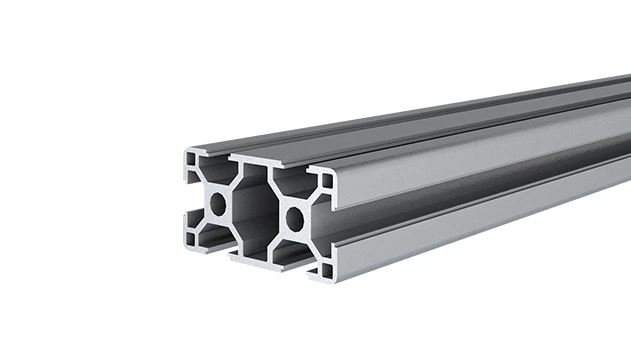
3060 is a 3.00 x 6.00CM fractional 30 series square extrusion T-slot profile with four open T-slots, two side with 3.00cm face, two side with 6.0cm face. The profile has align-a-grooves to assist in aligning connecting profiles.
In the fast-paced world of food processing, every detail matters. From the moment raw ingredients arrive at the facility to the second packaged products leave the warehouse, equipment must operate with precision, reliability, and—above all—uncompromising hygiene. For manufacturers, the challenge lies in balancing these demands while also adapting to evolving production needs, strict regulatory standards, and the pressure to keep costs in check. This is where material choice becomes more than just a practical decision; it's a strategic one. Enter the 3060 EU Standard Aluminum Profile: a versatile, durable, and hygienically designed solution that's transforming how food processing equipment is built, used, and maintained.
The Food Processing Landscape: Why Material Matters
Food processing environments are unforgiving. Daily exposure to moisture, cleaning chemicals, acidic or oily ingredients, and temperature fluctuations puts immense stress on equipment. Traditional materials like wood or mild steel quickly show their limitations—wood absorbs liquids and harbors bacteria, while steel rusts and requires constant repainting. Even stainless steel, a staple in the industry, comes with trade-offs: it's heavy, expensive to modify, and often requires professional welding to reconfigure. For small to mid-sized processors, in particular, these challenges can lead to downtime, regulatory headaches, and missed opportunities to scale.
Hygiene, too, is non-negotiable. Regulatory bodies like the FDA (U.S.) and EFSA (EU) enforce strict guidelines on surface materials, requiring they be "non-toxic, non-absorbent, and easily cleanable" to prevent cross-contamination. A single scratch or crevice in equipment can become a breeding ground for pathogens like Salmonella or E. coli , putting both consumers and brand reputations at risk. Add to this the need for flexibility—production lines that can quickly shift from processing dairy to baked goods, or from small-batch artisanal products to high-volume packaging—and it's clear: the ideal material must do more than just "work." It must adapt, endure, and elevate operational standards.
What Is 3060 EU Standard Aluminum Profile?
At its core, the 3060 EU Standard Aluminum Profile is a precision-engineered extrusion designed to meet the rigorous standards of the European union's industrial material regulations. The name itself gives clues to its design: "3060" refers to its cross-sectional dimensions—30mm in width and 60mm in height—while "EU Standard",,EN 755()REACH(,,).6063-T5T6,,.
What truly sets this aluminum extrusion profile apart, however, is its design. Unlike solid metal bars, 3060 profiles feature a hollow, rectangular cross-section with integrated T-slots running along their length. These T-slots are the profile's "secret weapon"—they allow for quick, tool-free attachment of accessories like brackets, connectors, or panels without the need for welding or drilling. This modularity is a game-changer for food processors, who can now build, modify, or expand equipment in-house, often in a matter of hours rather than days.
Key Features of 3060 EU Standard Aluminum Profile
- Anodized Surface Finish: The profile undergoes anodization, an electrochemical process that forms a protective oxide layer on the aluminum surface. This layer is ultra-smooth, non-porous, and resistant to scratches, ensuring no bacteria, dirt, or residue can cling to it—a critical feature for hygiene.
- Precision Extrusion: EU standards mandate tight dimensional tolerances, meaning every 3060 profile is consistent in size and shape. This uniformity ensures compatibility with accessories and guarantees structural integrity when building frames, racks, or workbenches.
- Lightweight Yet Strong: Aluminum is about one-third the weight of steel, making equipment easier to install, move, and reposition. Despite its lightness, 6063-T6 alloy offers a tensile strength of 240 MPa, enough to support heavy loads like stacked ingredient bins or conveyor systems.
- Corrosion Resistance: The anodized layer, combined with aluminum's natural resistance to oxidation, means the profile withstands exposure to water, cleaning agents (including caustic soda and peracetic acid), and food acids (like citrus or vinegar) without rusting or degrading.
- Thermal Stability: Aluminum conducts heat well, but its low thermal expansion rate ensures the profile maintains its shape even in environments with temperature swings—important for facilities with ovens, freezers, or washdown zones.

Hygienic by Design: How 3060 Aluminum Profile Meets Food Safety Needs
In food processing, "hygienic design" isn't just a buzzword—it's a science. The 3060 aluminum profile excels here by addressing three critical areas: surface integrity, ease of cleaning, and resistance to contamination.
Non-Porous, Smooth Surfaces: No Hiding Places for Bacteria
Traditional equipment often has welded joints, rivets, or rough surfaces where bacteria can thrive. The 3060 profile, by contrast, is extruded as a single piece with no seams. Its anodized finish creates a hard, glass-like surface that's impermeable to liquids and oils. Even the T-slots, which might seem like potential crevices, can be sealed with aluminum profile accessories like rubber strip covers or end caps, eliminating gaps where debris could accumulate. In third-party testing, anodized aluminum surfaces have been shown to harbor up to 90% fewer bacteria than uncoated steel after standard cleaning protocols—numbers that translate directly to safer products and fewer recalls.
Easy to Clean, Quick to Sanitize
Time is money in food processing, and lengthy cleaning routines cut into production hours. The 3060 profile's smooth surface allows for fast, effective cleaning with minimal effort. High-pressure hoses, steam cleaners, or chemical sanitizers glide over the anodized finish, removing residue without damaging the material. Unlike wood or plastic, which can warp or scratch under harsh cleaning, aluminum holds up to daily washdowns, ensuring equipment stays in top shape for years. For processors operating in shift-based environments, this means faster turnarounds between production runs—say, switching from meat processing in the morning to vegetable packaging in the afternoon—without sacrificing cleanliness.
Compliance with EU Food Safety Standards
For EU-based processors, compliance with regulations like EC 1935/2004 (which governs materials in contact with food) is mandatory. The 3060 profile's anodized coating is inert and non-toxic, meaning it won't leach chemicals into food or packaging. Its aluminum alloy is also REACH-compliant, free from heavy metals or harmful substances. This compliance isn't just about avoiding fines; it's about building trust with retailers and consumers who increasingly demand transparency in food production.
Beyond Hygiene: The Operational Benefits of 3060 Aluminum Profile
While hygiene is the star, the 3060 profile offers a host of operational benefits that make it a smart investment for food processors. Let's explore how it enhances flexibility, durability, and cost-efficiency.
Modularity: Build, Adapt, Grow—No Welding Required
One of the biggest advantages of aluminum extrusion profile is its modularity. Thanks to the T-slots and compatible accessories (think 90° connectors, hinges, or casters), processors can build custom equipment without hiring welders or fabricators. Need a new workbench for a packaging line? Assemble it on-site using 3060 profiles, a wooden or stainless steel top, and a few brackets. Want to add a second shelf to a material rack? Simply slide in new crossbars and secure them with T-slot nuts. This flexibility is invaluable for businesses that need to pivot quickly—for example, a bakery scaling up for holiday demand or a dairy processor adding a new yogurt flavor line.
Take the humble workbench, a staple in every food processing facility. A workbench built with 3060 profiles can be customized with tool holders, overhead lights, or even integrated scales—all attached via T-slots. When production needs change, the workbench can be disassembled and reconfigured in hours, rather than being replaced entirely. For small processors with limited space, this adaptability turns a fixed piece of equipment into a multi-purpose asset.
Durability That Lowers Long-Term Costs
While the upfront cost of aluminum profile may be higher than mild steel, its longevity more than makes up for it. Anodized aluminum resists corrosion, so there's no need for repainting or rust treatment. The material's high strength-to-weight ratio also reduces wear and tear on equipment—racks built with 3060 profiles can support hundreds of kilograms without bending, while conveyor frames maintain alignment even under constant use. In one case study, a poultry processor reported replacing steel workbenches every 3–5 years; after switching to 3060 aluminum, their workbenches remained in service for over a decade with minimal maintenance.
Lightweight Design: Easier Installation, Safer Work Environments
Aluminum's light weight simplifies installation and reduces the risk of workplace injuries. A typical 3-meter length of 3060 profile weighs just 2.5 kg, making it easy for two workers to carry and position. This is a stark contrast to stainless steel, which can weigh 7–8 kg per meter for a similar profile. Lighter equipment also means lower shipping costs and easier maneuverability—important for processors that rent space or need to rearrange lines seasonally.
Real-World Applications: How Food Processors Are Using 3060 Aluminum Profile
To understand the impact of 3060 EU Standard Aluminum Profile, let's look at how it's being used across different segments of the food processing industry.
Dairy Processing: From Milk to Yogurt, Cleanliness First
Dairy facilities face unique challenges: frequent washdowns with hot water and sanitizers, and the need to handle delicate products like milk or cream. A mid-sized dairy in Germany recently replaced its steel material racks with 3060 aluminum profile racks. The switch eliminated rust spots that had been a recurring issue, reduced cleaning time by 25% (thanks to the smooth surfaces), and allowed the dairy to add adjustable shelves to accommodate different-sized milk crates. The racks also proved lightweight enough to be moved by forklift when deep-cleaning the warehouse—something the old steel racks couldn't do without damaging floors.
Bakery Production: Flexibility for Seasonal Demands
Bakeries are seasonal businesses, with demand spiking during holidays. A family-owned bakery in France used 3060 profiles to build modular workbenches and dough-racking systems. In peak season, they add extra workbenches to their assembly line; in slower months, the benches are disassembled and stored, freeing up floor space. The bakery also customized material racks to hold flour sacks and mixing bowls, with adjustable heights to suit different ingredients. "We used to spend thousands on new equipment every winter," says the bakery's operations manager. "Now we just reconfigure what we have—it's like having a new production line without the cost."
Snack Manufacturing: Hygienic Conveyors for Crunchy Products
Snack processors (think potato chips or nuts) need conveyor systems that prevent product jams and are easy to clean. A snack manufacturer in Spain built a custom conveyor using 3060 profiles for the frame and plastic roller tracks for the product surface. The aluminum frame's corrosion resistance stood up to daily washdowns with citrus-based cleaners, while the T-slots allowed for quick adjustments to the conveyor's height and angle. When the company introduced a new, larger bag size, they modified the conveyor in a day by adding extension pieces—no welding required.
Aluminum Profile Accessories: The Finishing Touch for Versatility
A profile is only as good as its accessories, and the 3060 system offers a wide range of aluminum profile accessories that enhance functionality. These include:
- End Caps: Plastic or aluminum caps that seal the ends of profiles, preventing dust, water, or debris from entering T-slots.
- Connectors: 90° angle brackets, 45° connectors, and three-way joints for building sturdy frames. Many are designed for tool-free assembly, using hand-tightened bolts.
- Rubber Strips: Soft, flexible strips that line T-slots or cover edges, reducing noise (when products slide on racks) and preventing scratches on delicate items.
- Casters: Heavy-duty casters with locking brakes, turning stationary racks or workbenches into mobile units. Ideal for facilities where equipment needs to be moved for cleaning.
- Panels and Covers: Acrylic or metal panels that attach to profiles to create enclosures (e.g., for dust-free ingredient storage) or safety guards around conveyor systems.
These accessories transform the 3060 profile from a simple building block into a complete system. For example, adding casters to a workbench turns it into a mobile station that can be wheeled to where it's needed most—whether that's a packaging line, a quality control area, or a storage room.
3060 Aluminum Profile vs. Alternatives: A Clear Winner for Food Processing
To truly appreciate the 3060 profile's value, it helps to compare it to common alternatives. Let's break down how it stacks up against stainless steel, plastic, and wood.
| Feature | 3060 EU Aluminum Profile | Stainless Steel | Plastic (PVC/PP) | Wood |
|---|---|---|---|---|
| Hygiene | Excellent (non-porous, easy to clean) | Excellent (but seams/welds can harbor bacteria) | Good (but prone to scratches; can absorb oils) | Poor (absorbs moisture, harbors bacteria) |
| Durability | High (resists corrosion, scratches) | Very high (but heavy, prone to dents) | Low (bends under heavy loads; UV degradation) | Low (warps, rots, or splinters) |
| Modularity | Excellent (T-slots, tool-free assembly) | Poor (requires welding to modify) | Limited (glued or bolted; hard to reconfigure) | Poor (fixed shape; nails/screws weaken structure) |
| Weight | Light (1/3 the weight of steel) | Heavy (hard to move/install) | Light (but low load capacity) | Medium (varies by type) |
| Cost (Lifetime) | Moderate (higher upfront, low maintenance) | High (expensive upfront and to modify) | Low upfront, high long-term (frequent replacement) | Low upfront, very high long-term (short lifespan) |
The table tells a clear story: 3060 aluminum profile strikes a balance that no other material can match. It offers the hygiene of stainless steel, the flexibility of plastic, and the durability of steel—all at a weight and cost that makes it accessible to businesses of all sizes.
Conclusion: Building a Safer, Smarter Food Processing Future
In an industry where every decision impacts food safety, efficiency, and bottom lines, the 3060 EU Standard Aluminum Profile stands out as more than just a material—it's a partner in progress. Its hygienic design reduces contamination risks, its modularity adapts to changing needs, and its durability lowers long-term costs. For food processors looking to stay ahead, this profile isn't just a choice; it's a strategic investment in a safer, more efficient, and more flexible operation.
Whether you're building a new facility, upgrading existing equipment, or simply looking to solve a specific challenge—like reducing cleaning time or complying with new regulations—the 3060 profile delivers. It's a reminder that sometimes, the most innovative solutions in food processing aren't flashy machines or high-tech software. They're the quiet, reliable building blocks that make everything else possible.
So, the next time you walk through a food processing plant, take a closer look at the equipment. Chances are, if it's built to last, easy to clean, and ready to adapt, it's standing on a foundation of 3060 EU Standard Aluminum Profile. And that's a foundation you can trust.