- Company Articles
- Industry articles
- Industry standards
- 3060 EU Standard Aluminum Profile in Solar Panel Mounts: Weather Resistance & EU Compliance

3060 EU Standard Aluminum Profile in Solar Panel Mounts: Weather Resistance & EU Compliance
Related Product
3060 EU Standard Aluminum Profile
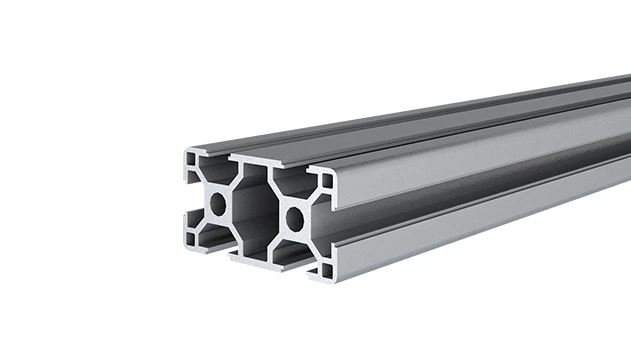
3060 is a 3.00 x 6.00CM fractional 30 series square extrusion T-slot profile with four open T-slots, two side with 3.00cm face, two side with 6.0cm face. The profile has align-a-grooves to assist in aligning connecting profiles.
Solar energy has quietly become the backbone of our transition to cleaner power—but have you ever stopped to think about what holds those sleek solar panels in place? Behind every efficient solar setup, there's a silent workhorse: the mounting system. It's not just about keeping panels off the ground; it's about withstanding years of rain, snow, scorching sun, and howling winds. And in Europe, where regulations are strict and weather can be unforgiving, one material has emerged as the gold standard: the 3060 EU standard aluminum profile. Let's dive into why this unassuming piece of metal is revolutionizing solar panel mounts, balancing tough weather resistance with the rigorous demands of EU compliance.
What Exactly Is 3060 EU Standard Aluminum Profile?
First things first: let's decode the name. "3060" refers to the profile's dimensions—30 millimeters in width and 60 millimeters in height. Think of it as the "size" of the aluminum beam, but don't let the numbers fool you. This isn't just any metal bar; it's an aluminum extrusion profile , meaning it's shaped by forcing molten aluminum through a die to create a precise, consistent cross-section. This process gives it unmatched structural integrity, perfect for supporting heavy solar panels.
Then there's the "EU standard" part. In Europe, construction materials don't just need to "work"—they need to meet strict safety, environmental, and performance benchmarks. For aluminum profiles, this means adhering to standards set by the European Committee for Standardization (CEN), like EN 755 for aluminum extrusions or EN 1090 for structural components. These standards cover everything from tensile strength to corrosion resistance, ensuring the profile can handle real-world stress without compromising safety.
But why does this matter for solar mounts? Imagine installing solar panels on your roof, only to have the mounts warp after a single winter. Or worse, failing a safety inspection because the materials contain harmful chemicals. The 3060 EU standard profile eliminates those risks, acting as a reliable foundation that installers and homeowners can trust.
Weather Resistance: Built to Outlast the Elements
Europe's weather is a mixed bag. From the rain-soaked coasts of the UK to the snowy peaks of the Alps, and the scorching summers of southern Spain, solar mounts need to stand up to it all. Aluminum, by nature, is a champion here—but the 3060 EU profile takes it a step further.
The Science of Corrosion Resistance
Aluminum forms a thin, invisible oxide layer when exposed to air, acting as a natural shield against rust. But the 3060 EU profile doesn't stop there. Most manufacturers add an extra layer of protection, like anodizing or powder coating. Anodizing thickens the oxide layer, making it even more resistant to salt spray (critical for coastal areas) and acid rain. Powder coating, on the other hand, adds a durable, colored finish that resists chipping and fading—ideal for areas with high UV exposure.
In lab tests, 3060 profiles with these treatments have shown resistance to 1,000+ hours of salt spray (per ASTM B117 standards) without red rust—a feat that would leave untreated steel crumbly and weak. For coastal homes or solar farms near the Baltic Sea, this isn't just a bonus; it's a necessity.
Handling Extreme Temperatures
Solar panels absorb heat, and the mounts beneath them take the brunt of temperature swings. In the Atacama Desert (one of the sunniest spots on Earth), panel temperatures can hit 70°C (158°F); in Siberia, they might drop to -40°C (-40°F). The 3060 profile's aluminum core handles these extremes gracefully.
Aluminum has a low coefficient of thermal expansion, meaning it doesn't expand or contract dramatically with temperature changes. This stability prevents warping or cracking, which could loosen panel connections over time. Compare that to wood, which swells in humidity and shrinks in dry air, or galvanized steel, which can become brittle in freezing temperatures. The 3060 profile stays steady, ensuring panels remain aligned for maximum energy absorption.
Wind, Snow, and Weight: A Structural Powerhouse
Solar panels aren't light—residential systems can weigh 15-20 kg per panel, and commercial setups even more. Multiply that by dozens of panels, plus the force of a winter storm, and you need a mount that won't budge. The 3060 profile's 30x60mm cross-section is engineered for this exact scenario.
Thanks to its extrusion design, the profile distributes weight evenly, reducing stress on individual points. Tests show it can withstand wind loads of up to 150 km/h (93 mph)—strong enough to handle the gusts of a Category 1 hurricane. For snowy regions, it supports snow loads of 1.5 kN/m² (about 150 kg/m²), which is more than enough for a heavy European winter.

EU Compliance: More Than Just a Stamp of Approval
In Europe, "compliance" isn't a buzzword—it's the law. For solar mounts, using non-compliant materials can lead to failed inspections, fines, or even legal liability if something goes wrong. The 3060 EU standard profile checks all the boxes, ensuring peace of mind for installers, homeowners, and businesses alike.
CE Marking: Your Ticket to Legal Installation
The CE mark is mandatory for most construction products in the EU, and aluminum profiles are no exception. To earn this mark, manufacturers must prove their profiles meet the "essential requirements" outlined in the Construction Products Regulation (CPR). This includes mechanical strength, fire resistance, and chemical safety.
For the 3060 profile, this means undergoing rigorous testing: tensile strength tests to ensure it doesn't snap under load, bending tests to check flexibility, and impact tests to simulate accidental damage. Only after passing these can the manufacturer affix the CE mark, signaling that the product is safe for use in EU construction projects.
REACH and RoHS: Keeping Harmful Chemicals Out
Europe takes environmental and health safety seriously, which is where REACH and RoHS come in. REACH (Registration, Evaluation, Authorization, and Restriction of Chemicals) restricts the use of substances that are harmful to humans or the environment—like lead, cadmium, or mercury. RoHS (Restriction of Hazardous Substances) goes a step further, banning these substances in electrical and electronic equipment.
The 3060 EU profile is manufactured with these regulations in mind. Its aluminum alloy is free from heavy metals, and any coatings (like powder paint) are tested to ensure they don't release harmful VOCs (volatile organic compounds). This isn't just good for the planet; it's good for installers too, who avoid exposure to toxic fumes during installation.
EN Standards: The Backbone of Quality
Behind the CE mark are specific EN standards that dictate how the profile is made. For example, EN 755-2 sets limits on the chemical composition of aluminum alloys, ensuring consistency and quality. EN 12020 specifies tolerances for extrusion dimensions, so every 3060 profile is exactly 30x60mm—no more, no less. This precision matters because it ensures compatibility with aluminum profile accessories like brackets, connectors, and end caps, making installation seamless.
Installers love this: imagine trying to attach a bracket to a profile that's slightly too narrow or warped. With EU-standard profiles, parts fit together like puzzle pieces, reducing installation time and errors. It's why so many European solar companies specify 3060 EU profiles in their projects—compliance translates to reliability, both on paper and on the roof.
Why 3060 Aluminum Profile Beats the Competition
There are other materials out there—steel, wood, even other aluminum profiles—so why has the 3060 EU standard become the go-to for solar mounts? Let's break it down.
| Material | Weather Resistance | EU Compliance | Weight (kg/m) | Best For |
|---|---|---|---|---|
| 3060 EU Aluminum Profile | Excellent (resists corrosion, UV, extreme temps) | Full compliance (CE, REACH, RoHS, EN standards) | 1.8-2.2 | Residential/commercial solar mounts, coastal/snowy regions |
| Galvanized Steel | Good (but prone to rust if coating chips) | Partial (may lack REACH/RoHS compliance) | 4.5-5.0 | Heavy-duty industrial setups (but adds roof load) |
| 2020 EU Aluminum Profile | Good (same aluminum benefits) | Compliant (but smaller dimensions) | 0.8-1.0 | Lightweight DIY projects (not ideal for large solar arrays) |
| Wood | Poor (rots, warps with moisture) | Limited (no structural or chemical standards) | 3.0-3.5 | Temporary setups (not recommended for long-term use) |
Lightweight but Strong: A Roof's Best Friend
Roofs have weight limits, and adding heavy mounts can lead to structural issues. The 3060 profile weighs just 1.8-2.2 kg per meter—about half the weight of galvanized steel. This lightness reduces stress on roofs, making it ideal for older homes or buildings with weight restrictions. Plus, it's easier to transport and install, cutting down on labor costs.
Modular Magic with Aluminum Profile Accessories
Solar mounts aren't one-size-fits-all. Roofs slope at different angles, panels come in various sizes, and homeowners have unique needs. The 3060 profile shines here because it's designed to work with a range of aluminum profile accessories . Need to adjust the panel angle? Use an adjustable bracket. Want to connect two profiles at 90°? Add a corner connector. Even end caps to protect against water ingress—everything clicks into place, no custom fabrication required.
This modularity saves installers time and homeowners money. Instead of cutting steel or drilling custom holes, they can assemble the mount like a giant Lego set, adapting to any roof shape or panel layout.
Sustainability: A Green Choice for Green Energy
Solar energy is all about sustainability, so why use a material that harms the planet? Aluminum is 100% recyclable, and recycling it uses just 5% of the energy needed to produce new aluminum. Many 3060 EU profiles are made from recycled content, aligning with the EU's circular economy goals. Plus, their long lifespan (50+ years) means less frequent replacement, reducing waste.
Real-World Success: 3060 Profiles in Action
Talk is cheap—let's look at how the 3060 EU profile performs in real solar projects across Europe.
Case Study 1: Coastal Solar Farm in Portugal
In the Algarve region of Portugal, a 5 MW solar farm faces relentless sea spray and 30°C+ summers. The project used 3060 EU profiles for its mounting rails, paired with anodized coatings for extra corrosion resistance. After 5 years, inspections showed zero signs of rust or degradation, and the system's energy output remains at 98% of its initial capacity. "We chose 3060 because we needed something that could handle the salt air," says the project engineer. "It's been rock solid."
Case Study 2: Residential Rooftop in Sweden
A homeowner in Stockholm installed a 6 kW solar system on their roof, which sees heavy snowfall and sub-zero temperatures for 4 months a year. The installer recommended 3060 profiles for their snow load capacity and lightweight design. After two winters, the mounts have held firm, even under 50 cm of snow. "I was worried about the roof caving in, but the installer explained the profile's load ratings," the homeowner says. "Now I don't think twice when it snows."
Case Study 3: Commercial Warehouse in Germany
A logistics company in Berlin wanted to reduce energy costs by installing solar panels on their warehouse roof. The challenge? The roof had strict weight limits. The solution: 3060 EU profiles, which kept the total system weight under 20 kg/m² (well within the roof's 25 kg/m² limit). The modular design also made installation quick—workers assembled the mounts in 3 days instead of the projected 5, minimizing downtime for the warehouse.
The Future of Solar Mounts: Innovations in 3060 Profiles
The 3060 EU standard profile isn't static—it's evolving to meet new challenges. Manufacturers are experimenting with recycled aluminum alloys to boost sustainability, while new coatings are being developed to withstand even harsher climates (like the increasing heatwaves in southern Europe). There's also a push for "smart" profiles, embedded with sensors that monitor load stress or corrosion, alerting owners to potential issues before they become problems.
Another trend is integration with aluminum guide rail A systems, which allow panels to slide into place more easily during installation. This not only speeds up setup but also ensures panels are perfectly aligned for maximum efficiency. As solar technology advances, the 3060 profile will likely remain a key player, adapting to new panel designs and installation methods.
Final Thoughts: Why 3060 EU Aluminum Profile is the Smart Choice
Solar panels are an investment—one that should last for decades. To protect that investment, you need a mount that's as reliable as the panels themselves. The 3060 EU standard aluminum profile delivers on every front: it laughs off harsh weather, meets Europe's strictest compliance standards, and works seamlessly with solar systems of all sizes.
Whether you're a homeowner installing panels on your roof or a developer building a solar farm, this profile isn't just a material—it's a promise. A promise that your system will stand strong through storms, pass every inspection, and keep generating clean energy for years to come. In the world of solar, where every detail matters, the 3060 EU aluminum profile is the foundation you can trust.