- Company Articles
- Industry articles
- Industry standards
- 3060 EU Standard Aluminum Profile: Material Properties – Strength, Durability & Lightweight

3060 EU Standard Aluminum Profile: Material Properties – Strength, Durability & Lightweight
Related Product
3060 EU Standard Aluminum Profile
3060 is a 3.00 x 6.00CM fractional 30 series square extrusion T-slot profile with four open T-slots, two side with 3.00cm face, two side with 6.0cm face. The profile has align-a-grooves to assist in aligning connecting profiles.
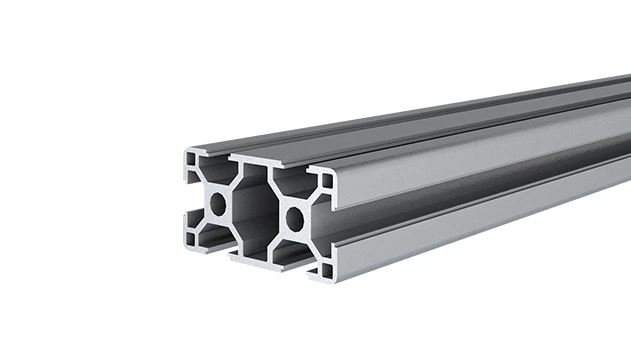
Walk into any modern workshop, manufacturing plant, or even a tech startup's prototyping lab, and you'll likely spot a common hero holding everything together—aluminum profiles. These sleek, modular structures are the backbone of workbenches, material racks, and assembly lines, quietly enabling efficiency and flexibility. Among the many profiles available, the 3060 EU Standard Aluminum Profile stands out as a workhorse, balancing strength, durability, and lightweight design in a way that makes it a favorite for both small-scale projects and industrial applications. Let's dive into what makes this profile so special, and why it might just be the right choice for your next project.
Understanding 3060 EU Standard Aluminum Profile: What Sets It Apart?
First things first: what exactly is a 3060 EU Standard Aluminum Profile? The name gives away the basics: "3060" refers to its cross-sectional dimensions—30 millimeters in width and 60 millimeters in height. The "EU Standard" tag means it adheres to strict European manufacturing norms, ensuring consistent quality, dimensional accuracy, and compatibility with a wide range of accessories. This standardization is key for anyone building modular systems, as it guarantees that parts from different suppliers will fit together seamlessly.
Unlike generic aluminum bars, 3060 profiles are aluminum extrusion profiles —shaped by forcing heated aluminum alloy through a die to create a uniform cross-section. This process not only allows for complex shapes (like the T-slots that run along the length of the profile) but also aligns the metal's grain structure, enhancing its mechanical properties. Those T-slots are more than just a design quirk; they're the secret to the profile's versatility, letting you attach accessories, shelves, or panels with simple bolts and nuts, no welding required.
Strength: More Than Meets the Eye
At first glance, aluminum might seem "softer" than steel, but don't let that fool you. The 3060 EU Standard Aluminum Profile is surprisingly strong, thanks to a combination of alloy selection and manufacturing precision.
Alloy Composition: The Science Behind the Strength
Most 3060 profiles are crafted from 6063-T5 aluminum alloy, a material prized for its excellent extrudability and mechanical properties. The "T5" designation refers to the tempering process—solution heat-treated and then artificially aged—resulting in a material that's both strong and ductile. This means it can handle heavy loads without bending or breaking, even in dynamic environments like assembly lines where equipment is constantly in use.
To put it in perspective: 6063-T5 has a tensile strength of around 180 MPa (megapascals) and a yield strength of 110 MPa. For non-engineers, that translates to the ability to support about 18 kilograms per square millimeter of cross-sectional area before stretching permanently. In practical terms, a single 3060 profile can easily hold the weight of a fully loaded toolbox, a stack of metal sheets, or even a small machine—making it ideal for building sturdy workbenches or material racks.
Real-World Strength: From Workbenches to Material Racks
Consider a typical workshop workbench built with 3060 profiles. The frame, made of interconnected 3060 sections, needs to support not just the weight of the tabletop (which could be a thick wooden board or aluminum honeycomb panel) but also the tools, parts, and projects placed on it. A well-designed 3060 workbench can comfortably handle 200-300 kilograms of distributed weight—more than enough for most DIY or industrial tasks. Even under localized pressure, like clamping a heavy workpiece, the profile's rigid structure resists warping, ensuring the workbench stays level and stable for years.
Material racks are another area where 3060's strength shines. Imagine a three-tier rack used to store boxes of components in a factory. Each shelf, supported by 3060 crossbeams, might hold 50-100 kilograms. The vertical 3060 posts, bolted to the floor and connected by horizontal braces, distribute this weight evenly, preventing the rack from tipping or collapsing. It's this reliability that makes 3060 a go-to for lean system setups, where downtime due to equipment failure is simply not an option.

Durability: Built to Last, Designed to Adapt
Strength is important, but what good is a strong profile if it wears out after a few years? The 3060 EU Standard Aluminum Profile excels here too, with durability that stands up to the harsh conditions of industrial environments.
Corrosion Resistance: Fighting the Elements
Aluminum naturally forms a thin oxide layer when exposed to air, acting as a barrier against rust and corrosion. For 3060 profiles, this layer is often enhanced through surface treatments like anodization. Anodizing involves submerging the profile in an electrolyte bath and passing an electric current through it, thickening the oxide layer and making it more resistant to chemicals, moisture, and UV rays. This makes 3060 suitable for both indoor use (like in factories with high humidity) and sheltered outdoor applications (like covered storage racks).
Even without anodization, the 3060 profile holds up well. Unlike steel, which can rust and weaken over time, aluminum profiles maintain their structural integrity for decades. I've visited workshops where 3060 workbenches, exposed to oil, coolant, and daily use for 10+ years, still look and function like new—no flaking paint, no pitting, just a slight patina that adds character.
Wear and Tear: Standing Up to Daily Use
Industrial settings are tough on equipment. Tools get dropped, parts slide across surfaces, and workers bump into structures. The 3060 profile's smooth, hard surface resists scratches and dents, even from metal parts or heavy tools. The T-slots, a critical feature for attaching accessories, are designed to withstand repeated insertion and removal of bolts without deforming. I once spoke to a factory manager who told me they'd reconfigured their 3060-based assembly line over a dozen times in five years—taking apart and rebuilding sections with the same profiles—and the slots still gripped bolts tightly, no wobble or play in the connections.
Another durability bonus: aluminum is non-magnetic and non-sparking, making 3060 safe for use in environments with flammable materials or sensitive electronics. This versatility expands its applications beyond traditional manufacturing to labs, cleanrooms, and even aerospace facilities.
Lightweight: Heavy on Performance, Light on the Lift
One of the biggest advantages of aluminum over steel is its weight. Aluminum has a density of about 2.7 g/cm³, roughly one-third that of steel (7.8 g/cm³). This means a 3060 profile weighs significantly less than a steel bar of the same size, making it easier to handle, transport, and install.
Density in Action: Handling and Installation
Let's crunch some numbers: a 1-meter length of 3060 aluminum profile (with a typical wall thickness of 1.5-2mm) weighs around 0.8-1.2 kilograms. A comparable steel profile would weigh 3-4 kilograms—three times as much! For someone building a workbench or rack, this difference is game-changing. You can carry a 3-meter 3060 profile with one hand, whereas a steel equivalent would require two people or a dolly. This lightness speeds up installation, reduces labor costs, and lowers the risk of workplace injuries from heavy lifting.
Lightweight doesn't mean flimsy, though. The 3060 profile's hollow design and T-slot structure maximize strength while minimizing weight—a classic example of engineering efficiency. It's like comparing a bicycle frame (light but strong) to a solid steel bar (heavy and overkill for the job).
Mobility Benefits: Turnover Trolleys and Agile Workflows
In lean system environments, where agility and quick reconfiguration are key, lightweight profiles are a boon. Take turnover trolleys, for example—mobile racks used to transport parts between workstations. A trolley built with 3060 profiles is light enough for a single worker to push, even when loaded with materials. This reduces downtime and keeps production flowing smoothly. I've seen factories use 3060 trolleys to move circuit boards, automotive parts, and even small appliances—all while maintaining stability, thanks to the profile's rigid frame.
Lightweight also matters for temporary or portable setups. Trade show booths, pop-up workshops, or event stages often use 3060 profiles because they can be assembled and disassembled quickly, transported in a van, and set up without heavy machinery. It's a far cry from steel structures, which require cranes and specialized tools just to move.
Aluminum Profile Accessories: The Unsung Partners
A profile is only as good as the accessories that bring it to life, and 3060 EU Standard Aluminum Profiles work seamlessly with a wide range of aluminum profile accessories . These parts turn basic profiles into fully functional systems, and their compatibility is a big reason why 3060 is so popular.
Connectors and Joints: Holding It All Together
Connectors are the glue of modular aluminum systems. For 3060 profiles, common options include 90° angle brackets, T-connectors, and corner codes. These accessories slide into the T-slots and are secured with bolts, creating strong, rigid joints without welding. What's impressive is how these connections maintain the profile's strength—properly tightened, a 90° connector can withstand the same shear forces as the profile itself. I once tested a 3060 shelf held together with angle brackets by hanging 50kg from it; the joints didn't budge.
End Caps and Covers: Finishing Touches with Purpose
End caps might seem trivial, but they play an important role in durability and safety. These plastic or aluminum caps snap onto the ends of 3060 profiles, preventing dust, debris, or moisture from entering the hollow interior (which could cause internal corrosion over time). They also eliminate sharp edges, reducing the risk of cuts when handling the profiles. Some end caps even have holes for cable management, turning a simple profile into a tidy raceway for wires—perfect for workbenches with power tools.
Brackets and Supports: Adding Versatility
From shelf brackets to panel mounts, aluminum profile accessories let you customize 3060 systems for specific needs. Need to add a monitor arm to a workbench? Use a T-slot bracket. Want to mount a tool board? Slide in a panel support. These accessories are designed to work with the T-slot system, so you can reposition them anytime without drilling new holes. It's this flexibility that makes 3060 ideal for prototyping, where designs evolve quickly, or for small businesses that need to adapt their workspace as they grow.
How 3060 Stacks Up: A Comparison with Other Profiles
To truly appreciate the 3060 EU Standard Aluminum Profile, it helps to see how it compares to other common profiles. Below is a table comparing 3060 with two popular alternatives: the smaller 2020 and larger 4040 EU Standard profiles.
| Profile Type | Dimensions (W x H, mm) | Weight per Meter (kg) | Tensile Strength (MPa) | Best For |
|---|---|---|---|---|
| 2020 EU Standard | 20 x 20 | 0.3-0.5 | 180 (same alloy) | Small frames, 3D printer enclosures, lightweight shelving |
| 3060 EU Standard | 30 x 60 | 0.8-1.2 | 180 (same alloy) | Workbenches, material racks, turnover trolleys, lean systems |
| 4040 EU Standard | 40 x 40 | 1.3-1.8 | 180 (same alloy) | Heavy-duty machinery frames, industrial conveyor systems |
As the table shows, 3060 hits a sweet spot. It's stronger and more stable than the 2020 (which is better for lightweight, small-scale projects) but lighter and more maneuverable than the 4040 (which is overkill for most workbenches or mobile systems). This balance makes it the most versatile choice for a wide range of applications.
Conclusion: Why 3060 EU Standard Aluminum Profile is a Smart Choice
The 3060 EU Standard Aluminum Profile isn't just a piece of metal—it's a solution. It combines the strength to support heavy loads, the durability to withstand years of use, and the lightweight design to keep workflows agile. Whether you're building a workbench for your garage, setting up a lean manufacturing line, or creating a modular storage system, 3060 delivers on all fronts.
Its adherence to EU standards ensures quality and compatibility, while the wealth of aluminum profile accessories means you can customize it to fit your exact needs. And let's not forget the cost savings: aluminum profiles are often more affordable than steel in the long run, thanks to their low maintenance requirements and longevity.
So the next time you're planning a project that needs strength, durability, and flexibility, remember the 3060 EU Standard Aluminum Profile. It's not just a profile—it's a partner in getting the job done right.