- Company Articles
- Industry articles
- Industry standards
- 3060 EU Standard Aluminum Profile: Recyclability & Sustainable Manufacturing Practices

3060 EU Standard Aluminum Profile: Recyclability & Sustainable Manufacturing Practices
Related Product
3060 EU Standard Aluminum Profile
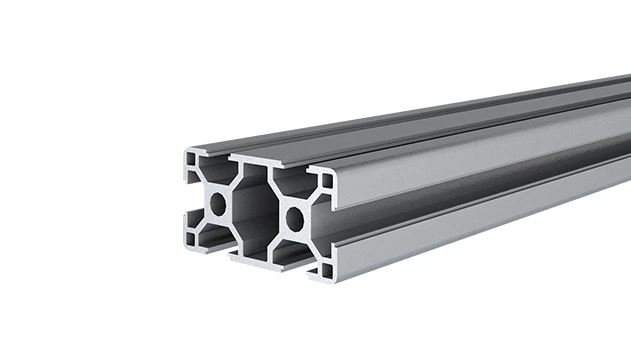
3060 is a 3.00 x 6.00CM fractional 30 series square extrusion T-slot profile with four open T-slots, two side with 3.00cm face, two side with 6.0cm face. The profile has align-a-grooves to assist in aligning connecting profiles.
In today's manufacturing landscape, the push for sustainability isn't just a trend—it's a critical shift driven by consumer demand, regulatory pressures, and a collective responsibility to reduce environmental impact. As factories, warehouses, and production facilities rethink their processes, the materials they choose play a starring role in this transformation. Among these materials, aluminum profiles have emerged as a standout, and one variant in particular—the 3060 EU Standard Aluminum Profile—has become a go-to for businesses aiming to balance efficiency, durability, and eco-friendliness. Let's dive into why this profile is making waves, focusing on its impressive recyclability and the sustainable manufacturing practices that set it apart.
What is the 3060 EU Standard Aluminum Profile?
First things first: let's demystify the name. The "3060" refers to its dimensions—30mm in width and 60mm in height—making it a versatile middleweight in the aluminum profile family. The "EU Standard" tag isn't just a label; it's a promise of quality, safety, and adherence to strict environmental and performance benchmarks set by the European union. This means the profile is engineered to meet rigorous standards for strength, corrosion resistance, and, importantly, sustainability.
At its core, the 3060 EU Standard Aluminum Profile is an
aluminum extrusion profile
. Extrusion is a manufacturing process where raw aluminum (often in the form of billets) is heated and pushed through a die to create long, uniform shapes with consistent cross-sections. Think of it like squeezing toothpaste out of a tube—except the "toothpaste" here is molten aluminum, and the "tube opening" is a precision-engineered die that shapes the metal into the 30x60mm profile we need. This process is not only efficient but also inherently sustainable, as it minimizes waste and allows for complex designs without excessive material use.
Common alloys used for 3060 profiles, like 6063 T5, are chosen for their excellent combination of strength, lightweight, and recyclability. These alloys are easy to extrude, machine, and assemble, making them ideal for a wide range of applications—from workbenches and material racks to conveyor systems and lean manufacturing setups. And because they're EU-standardized, businesses can trust that every batch meets the same high criteria, whether they're sourcing from a local supplier or an international partner.
Recyclability: Aluminum's Superpower
If there's one thing that makes aluminum a sustainability champion, it's its recyclability. Unlike many materials that degrade or lose quality when recycled, aluminum can be melted down and reused infinitely without compromising its properties. In fact, nearly 75% of all aluminum ever produced is still in use today—a staggering statistic that highlights its circular potential. For the 3060 EU Standard Aluminum Profile, this recyclability isn't just a bonus; it's a core design principle.
Let's break down the numbers. Producing aluminum from raw bauxite ore is energy-intensive, requiring massive amounts of electricity and generating significant carbon emissions. However, recycling aluminum uses just 5% of the energy needed to produce new aluminum from scratch. That's a 95% energy savings—equivalent to taking 40 cars off the road for a year for every ton of recycled aluminum. For manufacturers, this translates to lower carbon footprints and, often, lower production costs when using recycled materials.
The 3060 profile is designed to maximize this recyclability. Its simple, uniform structure (no complex composites or hard-to-separate coatings) makes it easy to dismantle and process at the end of its lifecycle. Even better, many manufacturers of 3060 profiles prioritize using recycled aluminum in their production. For example, a supplier might collect scrap aluminum from old profiles, melt it down, and use it to create new 3060 extrusions—closing the loop and reducing reliance on virgin materials.
Compare this to alternatives like steel or plastic. While steel is recyclable, it loses some strength with each recycling cycle, and the process still requires more energy than aluminum recycling. Plastic, on the other hand, is notoriously difficult to recycle; most plastic profiles end up in landfills or incinerators, releasing harmful pollutants. The 3060 aluminum profile, by contrast, offers a truly circular model—use, reuse, recycle, repeat.
Sustainability Comparison: 3060 Aluminum Extrusion Profile vs. Traditional Materials
| Metric | 3060 Aluminum Extrusion Profile | Steel Profile | Plastic Profile |
|---|---|---|---|
| Recyclability Rate | 95%+ (infinite recycling possible) | 80% (loses strength over cycles) | ~9% (limited recycling options) |
| Energy Used (per ton, recycled) | 5% of primary production energy | 75% of primary production energy | High (often not recycled) |
| Carbon Footprint (recycled vs. new) | 95% lower emissions | 25-30% lower emissions | Minimal to no reduction |
| End-of-Life Options | Recycled into new profiles/alloys | Recycled into lower-grade steel | Landfill, incineration, or downcycling |

Sustainable Manufacturing Practices Behind 3060 Profiles
Recyclability is only part of the story. The sustainability of the 3060 EU Standard Aluminum Profile starts long before it reaches the recycling plant—it begins in the manufacturing facility. Modern aluminum extrusion facilities that produce these profiles are adopting cutting-edge practices to minimize their environmental impact, from energy use to waste reduction.
One key area is energy efficiency. Many leading extrusion plants now power their operations with renewable energy sources like solar, wind, or hydroelectric power. For example, a facility in Germany might use solar panels to offset the electricity needed for heating aluminum billets, while a plant in Scandinavia could rely on hydropower for its extrusion presses. This shift drastically reduces the carbon footprint of each 3060 profile, aligning production with global net-zero goals.
Waste reduction is another priority. During extrusion, leftover scrap (like trimmed ends or defective profiles) is collected and immediately recycled on-site, feeding back into the production cycle. This "closed-loop" system means almost no aluminum goes to waste. Even the water used in cooling the extruded profiles is recycled and treated, reducing freshwater consumption. Some facilities have achieved waste-to-landfill rates of less than 1%, a testament to their commitment to circularity.
Coatings and finishes are also getting a sustainable makeover. Traditional anodizing processes, which enhance corrosion resistance, once used harsh chemicals. Today, many manufacturers use eco-friendly anodizing techniques that reduce toxic waste and water pollution. Alternatively, some 3060 profiles skip coatings altogether, relying on the natural corrosion resistance of aluminum alloys—perfect for indoor applications like workbenches or material racks where aesthetics take a backseat to functionality.
Aluminum Profile Accessories: Completing the Sustainable System
A profile is only as good as the system it's part of, and that's where
aluminum profile accessories
come in. From connectors and brackets to end caps and hinges, these accessories are designed to work seamlessly with the 3060 profile— and they're just as sustainable. Most accessories are made from the same recyclable aluminum alloys as the profiles themselves, ensuring the entire system remains eco-friendly from assembly to disassembly.
Take, for example, a 90° angle connector used to join two 3060 profiles. Made from extruded aluminum, it's lightweight, strong, and fully recyclable. When a production line is reconfigured, these connectors can be unscrewed, cleaned, and reused with new profiles—no need for custom parts or disposable fasteners. This modularity is a cornerstone of
lean system
principles, which aim to eliminate waste and optimize efficiency. By using reusable accessories, businesses reduce the need for constant replacement, cutting both costs and environmental impact.
Even non-aluminum accessories, like plastic end caps or rubber gaskets, are increasingly made from recycled or biodegradable materials. Suppliers are partnering with eco-conscious manufacturers to ensure every component, no matter how small, aligns with the sustainability goals of the 3060 system. It's a holistic approach that proves sustainability isn't just about the "big ticket" items—it's about the details, too.
Real-World Impact: 3060 Profiles in Action
To truly understand the difference the 3060 EU Standard Aluminum Profile makes, let's look at a real-world example. Imagine a mid-sized electronics manufacturer in Poland that recently upgraded its assembly line. Previously, the line relied on steel workbenches and wooden material racks—both heavy, hard to reconfigure, and difficult to recycle. When the company switched to 3060 aluminum profiles and accessories, the results were striking:
Reduced waste:
The modular aluminum workbenches were assembled with minimal cutting, and leftover scrap was recycled on-site. Compared to the steel benches, which generated 20kg of waste per unit, the aluminum setup produced just 2kg of recyclable scrap.
Lower energy use: Aluminum's lightweight nature reduced the energy needed to transport the workbenches and racks within the facility. Over a year, this translated to a 12% drop in forklift fuel consumption.
Easy reconfiguration: When the manufacturer launched a new product line, the 3060 profiles and accessories were disassembled and reassembled into a new layout in just two days. The old steel benches would have been scrapped, but the aluminum system was reused, saving €15,000 in new equipment costs.
End-of-life plan: Even when the workbenches eventually reach the end of their lifecycle, the manufacturer has partnered with a local recycler to melt down the aluminum and turn it into new profiles—closing the loop entirely.
Lower energy use: Aluminum's lightweight nature reduced the energy needed to transport the workbenches and racks within the facility. Over a year, this translated to a 12% drop in forklift fuel consumption.
Easy reconfiguration: When the manufacturer launched a new product line, the 3060 profiles and accessories were disassembled and reassembled into a new layout in just two days. The old steel benches would have been scrapped, but the aluminum system was reused, saving €15,000 in new equipment costs.
End-of-life plan: Even when the workbenches eventually reach the end of their lifecycle, the manufacturer has partnered with a local recycler to melt down the aluminum and turn it into new profiles—closing the loop entirely.
This isn't an isolated case. From automotive plants in Spain to logistics hubs in France, businesses across Europe are embracing 3060 EU Standard Aluminum Profiles as a way to meet sustainability targets while improving operational efficiency. It's a win-win: better for the planet, better for the bottom line.
The Future of Sustainable Manufacturing
As regulations like the EU's Circular Economy Action Plan tighten, and consumers increasingly choose brands with green credentials, the demand for sustainable materials will only grow. The 3060 EU Standard Aluminum Profile is well-positioned to lead this charge, thanks to its recyclability, eco-friendly manufacturing, and compatibility with lean, modular systems.
Looking ahead, we can expect even more innovations. Researchers are exploring new aluminum alloys that require less energy to produce, while extrusion facilities are experimenting with carbon capture technologies to further reduce emissions. Accessories may become even more modular, allowing for easier upgrades and customization without replacing entire systems. The goal? A future where every 3060 profile is part of a fully circular system—designed to be used, reused, and recycled, again and again.
Conclusion: More Than a Profile—A Sustainable Legacy
The 3060 EU Standard Aluminum Profile isn't just a piece of metal. It's a symbol of how manufacturing can evolve—prioritizing the planet without sacrificing performance. Its infinite recyclability, paired with sustainable production practices and eco-friendly accessories, makes it a cornerstone of the circular economy. For businesses ready to embrace sustainability, it's more than an investment in materials; it's an investment in a greener, more efficient future.
So, the next time you walk through a factory, warehouse, or workshop, take a closer look at the workbenches, racks, and conveyor systems. Chances are, you'll spot the 3060 profile hard at work—quietly proving that sustainability and productivity can go hand in hand. And that's a story worth celebrating.