- Company Articles
- Industry articles
- Industry standards
- 3060 EU Standard Aluminum Profile: Sustainable Improvement – Reduce Waste in Production

3060 EU Standard Aluminum Profile: Sustainable Improvement – Reduce Waste in Production
Related Product
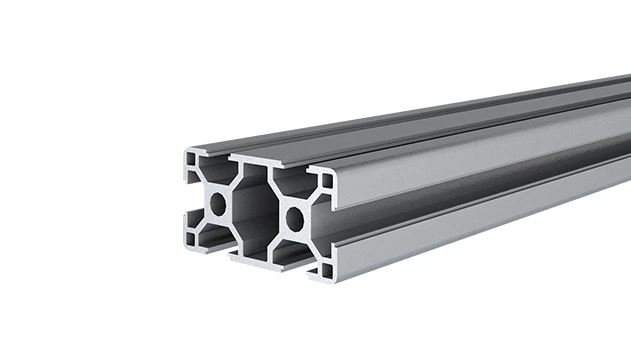
3060 EU Standard Aluminum Profile
3060 is a 3.00 x 6.00CM fractional 30 series square extrusion T-slot profile with four open T-slots, two side with 3.00cm face, two side with 6.0cm face. The profile has align-a-grooves to assist in aligning connecting profiles.
The Hidden Cost of Production Waste: Why Every Scrap Matters
Walk into any manufacturing facility, and you'll likely spot it: piles of leftover materials by the production line, half-assembled workbenches that didn't fit the new workflow, or conveyor parts gathering dust because they're no longer compatible with updated systems. These aren't just "messy corners"—they're silent profit killers. Production waste, whether in materials, time, or energy, eats away at margins, slows down operations, and creates unnecessary stress for teams already stretched thin. For small and medium-sized manufacturers, in particular, waste can feel like an unavoidable part of doing business. But what if there was a way to design production systems that actively reduce waste, rather than just cleaning it up afterward?
This is where the 3060 EU standard aluminum profile enters the conversation. More than just a piece of metal, it's a building block for sustainable, lean production environments. In this article, we'll dive into how this specific aluminum extrusion profile is changing the game for manufacturers, from reducing material waste to streamlining workflows. We'll explore its design, its role in lean systems, and real-world examples of how it's helping teams do more with less. Whether you're running a bustling automotive plant or a boutique electronics workshop, understanding the 3060 profile could be the first step toward a more efficient, waste-free future.
Meet the 3060 EU Standard Aluminum Profile: More Than Just Metal
Let's start with the basics: What exactly is a 3060 EU standard aluminum profile? At its core, it's a lightweight, durable aluminum extrusion with a specific cross-sectional shape—30mm in width and 60mm in height—designed to meet strict European union standards for quality and safety. But numbers and dimensions only tell part of the story. What makes this profile special is how it's engineered to solve common production headaches.
Imagine (oops, scratch that—let's think about ) a production manager who needs to build a new workbench for a team assembling circuit boards. In the past, they might have ordered custom steel frames, waited weeks for delivery, and then realized the height was off by 5cm once it arrived. That's wasted time, wasted money, and a frustrated team. With the 3060 profile, though, the process looks different. The profile's modular design means it can be cut to length on-site, connected with standard aluminum profile accessories like brackets and joints, and adjusted in minutes if the workflow changes. No more waiting, no more guesswork, and no more scrapping entire structures because of a small miscalculation.
But the EU standard label is key here. It ensures consistency across suppliers, so a 3060 profile from one manufacturer will fit seamlessly with accessories from another. This interoperability is a game-changer for reducing waste. In the past, manufacturers might stockpile "just in case" parts from a single supplier, leading to excess inventory that often becomes obsolete. With EU-standardized 3060 profiles, teams can mix and match components, using only what they need when they need it. It's like building with Lego blocks—versatile, reliable, and designed to work together.

Key Features of 3060: Why It's Built for Waste Reduction
To understand how the 3060 profile reduces waste, let's break down its most impactful features. These aren't just technical specs—they're solutions to real-world problems manufacturers face daily.
1. Precision Extrusion for Minimal Material Waste Aluminum extrusion is a process where molten aluminum is pushed through a die to create a specific shape. The 3060 profile's extrusion process is highly precise, meaning less material is wasted during production compared to traditional cutting or welding methods. For example, when creating steel frames, excess metal is often cut away and discarded. With extrusion, the profile is formed to near-net shape, so there's minimal scrap. This precision also means tighter tolerances—parts fit together perfectly the first time, reducing the need for rework or extra materials to fix gaps.
2. Lightweight Strength: Reducing Energy and Transportation Waste Aluminum is about 70% lighter than steel, but it's still strong enough to support heavy loads. A 3060 profile can easily hold the weight of tools, materials, or even small machinery on a workbench, but because it's lightweight, it requires less energy to transport and install. Think about a manufacturer shipping 100 workbench frames: steel frames would mean higher fuel costs, more frequent truck trips, and increased carbon emissions. With 3060 aluminum profiles, those same 100 frames weigh less, ship in fewer loads, and reduce the overall carbon footprint. Plus, lighter structures are easier for teams to move and reconfigure, cutting down on the time and labor wasted on rearranging production lines.
3. T-Slot Design: Endless Customization, Zero Waste One of the 3060 profile's most iconic features is its T-slot design—longitudinal grooves along its length that allow accessories like brackets, shelves, and panels to be attached without drilling or welding. This might sound simple, but it revolutionizes how production systems are built. In the past, adding a shelf to a workbench meant drilling holes, which often led to mistakes (a misplaced hole meant the shelf was crooked, and the entire frame was ruined). With T-slots, accessories slide into place and are secured with bolts, so adjustments are quick and tool-free. Need to move a shelf up by 10cm? Just loosen the bolts, slide, and retighten. No new parts, no wasted materials, and no downtime waiting for a welder.
4. Compatibility with Lean Systems: Aligning with "Just-in-Time" Principles Lean manufacturing is all about eliminating waste—whether it's overproduction, excess inventory, or unnecessary movement. The 3060 profile fits hand-in-glove with lean principles. Its modularity supports "just-in-time" production of workstations and material racks: build only what you need, when you need it, and reconfigure as demand changes. For example, a bakery that ramps up production during the holidays can quickly add extra shelving to a 3060 material rack using aluminum profile accessories, then disassemble it in January without wasting space or materials. This flexibility means manufacturers no longer have to invest in "future-proof" structures that sit idle for months—they can adapt in real time.
From Workbenches to Material Racks: Real-World Applications
Enough theory—let's talk about how the 3060 profile actually works on the production floor. Let's take a look at two common applications: workbenches and material racks. These are the backbone of many manufacturing operations, and where waste often accumulates.
Workbench E (Single Deck, Without Caster): A Case Study in Adaptability Workbench E is a popular configuration built using 3060 profiles. It's a simple, single-deck workbench designed for assembly tasks, but its simplicity is deceptive. Let's say a team in a medical device factory needs a workbench that can hold tools, a small microscope, and bins for components. With traditional wood or steel workbenches, they'd have to order a custom size, and if the team grows or the task changes, the bench becomes obsolete. With Workbench E, built from 3060 profiles, they can start with a 1.2m length, then add extensions using aluminum profile connectors if more space is needed. The T-slots let them attach tool holders, bin rails, or even a monitor arm without modifying the bench itself. When the project ends, the bench can be disassembled, and the 3060 profiles reused to build a new workstation for another task. No waste, no leftover materials—just a system that adapts to the team, not the other way around.
Material Rack B (3 Row, 3 Floor): Cutting Inventory Waste Material Rack B is another example of 3060's waste-reducing potential. This rack, with three rows and three floors, is designed to hold raw materials or finished products. In traditional warehouses, racks are often overbuilt—manufacturers buy larger racks than needed to "be safe," leading to wasted space and higher costs. With Material Rack B, built from 3060 profiles, the height, width, and number of shelves can be customized to fit exactly what's needed. For instance, a clothing manufacturer storing bolts of fabric can adjust the shelf height to fit 1.5m bolts instead of paying for extra vertical space. The rack's lightweight design also makes it easy to move, so if inventory levels drop, the rack can be relocated to a smaller area, freeing up floor space for other uses. And because the 3060 profiles are durable, the rack will last for years, even with frequent reconfigurations—no need to replace it every time the product line changes.
Sustainability Beyond Waste Reduction: The Environmental Edge
Reducing production waste isn't just good for the bottom line—it's good for the planet. Aluminum, the material at the heart of the 3060 profile, is one of the most sustainable metals on Earth. It's 100% recyclable, and recycling aluminum uses just 5% of the energy required to produce new aluminum from raw ore. This means that even if a 3060 profile does reach the end of its life (which, given its durability, is rare), it can be melted down and reused without losing quality. For manufacturers looking to meet sustainability goals or comply with increasingly strict environmental regulations, this is a huge advantage over materials like steel or plastic, which are harder to recycle and have higher carbon footprints.
But the sustainability benefits don't stop at recycling. The 3060 profile's lightweight design also reduces energy use during transportation. A truckload of 3060 profiles can carry more units than a truckload of steel profiles, meaning fewer trips and lower emissions. Plus, because the profiles are easy to assemble and reconfigure, production lines require less energy to maintain—no need for power tools or heavy machinery to make adjustments. Even the T-slot design plays a role: by eliminating the need for drilling or welding, it reduces energy use and air pollution from power tools and welding fumes.
For forward-thinking manufacturers, these sustainability features aren't just "nice to have"—they're a competitive advantage. Consumers and business partners are increasingly choosing suppliers with strong environmental credentials, and using 3060 profiles is a tangible way to demonstrate commitment to sustainability. It's not just about reducing waste today; it's about building a production system that can thrive in a future where sustainability is non-negotiable.
How 3060 Compares: A Look at the Numbers
To really understand the 3060 profile's impact, let's compare it to other common materials and profiles. The table below breaks down key factors like waste reduction, cost, setup time, and lifespan, so you can see how 3060 stacks up against steel profiles, 2020 aluminum profiles (smaller, less versatile), and traditional wood workbenches.
| Feature | 3060 EU Standard Aluminum Profile | Steel Profiles | 2020 Aluminum Profiles | Wood Workbenches |
|---|---|---|---|---|
| Material Waste | Low (precision extrusion, modular design) | High (cutting/welding scrap, hard to reconfigure) | Medium (smaller size limits reusability) | High (custom cuts, no reusability) |
| Setup Time | Fast (tool-free assembly with accessories) | Slow (requires welding/drilling) | Fast, but limited by size | Medium (cutting/assembling, but no adjustments) |
| Lifespan | 10+ years (durable, corrosion-resistant) | 10+ years (prone to rust without coating) | 8-10 years (less load capacity) | 3-5 years (prone to warping, scratches) |
| Recyclability | 100% recyclable | Recyclable, but high energy use | 100% recyclable | Limited (often ends up in landfill) |
| Cost Over Time | Low (reusable, minimal waste) | High (initial cost + rework/scrap) | Medium (needs replacement sooner for larger loads) | High (frequent replacement needed) |
As the table shows, 3060 profiles outperform alternatives in almost every category, especially when it comes to waste reduction and long-term cost. While steel might have similar durability, its weight and lack of adaptability lead to higher waste and energy use. Wood workbenches, meanwhile, are cheap upfront but costly in the long run due to frequent replacements. 2020 aluminum profiles are versatile but too small for many industrial applications, limiting their reusability. For manufacturers serious about reducing waste, 3060 is the clear choice.
The Ripple Effect: How 3060 Transforms Teams and Culture
Waste reduction isn't just about materials and money—it's about people. When production systems are flexible and efficient, teams feel empowered. Let's hear from Maria, a production supervisor at a small electronics plant in Portugal. "Before we switched to 3060 profiles, our workbenches were a nightmare," she says. "We'd spend hours trying to adjust them, and if a new product came in, we'd have to build a whole new bench from scratch. Now, with the T-slot design, the team can reconfigure the bench themselves in 20 minutes. They're more engaged, less frustrated, and they even come up with ideas for improving the setup—like adding a tool rail on the side. It's not just about less waste; it's about a better work environment."
This cultural shift is a hidden benefit of the 3060 profile. When teams can easily adapt their workspace, they take ownership of their efficiency. They're no longer passive users of production systems—they're active designers. This leads to a more innovative, collaborative culture where waste is seen as a problem to solve together, not an inevitable part of the job.
Conclusion: Building a Sustainable Future, One Profile at a Time
The 3060 EU standard aluminum profile isn't just a piece of metal—it's a tool for transformation. By combining precision engineering, modular design, and sustainability, it addresses the root causes of production waste, from material scrap to inefficient workflows. Whether you're building a workbench, a material rack, or an entire production line, 3060 profiles offer a way to do more with less—less waste, less cost, and less stress for your team.
As manufacturers face increasing pressure to be both profitable and sustainable, solutions like the 3060 profile will become essential. It's not just about meeting today's standards; it's about building systems that can adapt to tomorrow's challenges. So the next time you walk into your production facility and see that pile of scrap materials or that outdated workbench, remember: there's a better way. And it starts with a simple, versatile profile that's changing the way we think about manufacturing—one T-slot at a time.