- Company Articles
- Industry articles
- Industry standards
- 3060 EU Standard Aluminum Profile: Thermal Conductivity & Heat Resistance in Industrial Use

3060 EU Standard Aluminum Profile: Thermal Conductivity & Heat Resistance in Industrial Use
Related Product
3060 EU Standard Aluminum Profile
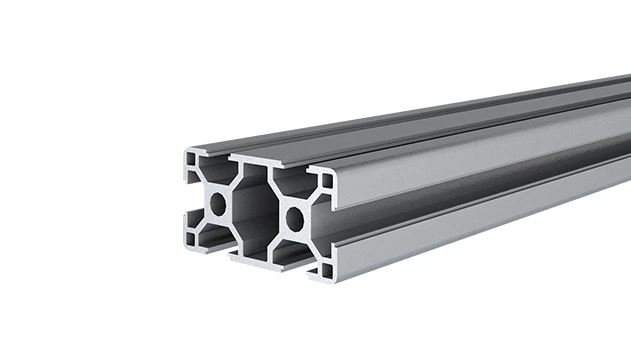
3060 is a 3.00 x 6.00CM fractional 30 series square extrusion T-slot profile with four open T-slots, two side with 3.00cm face, two side with 6.0cm face. The profile has align-a-grooves to assist in aligning connecting profiles.
In the fast-paced world of industrial manufacturing, every component on the factory floor plays a silent but critical role in keeping operations running smoothly. From the conveyor belts that move materials to the workbenches where precision assembly happens, the choice of materials can make or break efficiency, safety, and long-term cost-effectiveness. Among the unsung heroes of this ecosystem is the 3060 EU Standard Aluminum Profile—a workhorse of industrial design that's gaining traction not just for its strength or versatility, but for its exceptional thermal conductivity and heat resistance. Let's dive into why this aluminum extrusion profile has become a cornerstone of modern lean systems, and how its unique properties are reshaping industrial workflows.
What Is the 3060 EU Standard Aluminum Profile?
First, let's get acquainted with the star of the show. The 3060 EU Standard Aluminum Profile is a type of aluminum extrusion profile, meaning it's crafted by forcing heated aluminum through a die to create a specific cross-sectional shape. The "3060" refers to its dimensions: 30mm in width and 60mm in height—a balance of size and strength that makes it ideal for a wide range of industrial applications. As part of the EU standard, it adheres to strict quality and dimensional tolerances, ensuring consistency across manufacturers and compatibility with a vast array of aluminum profile accessories.
What sets this profile apart from generic aluminum extrusions is its T-slot design. Running along its length are precision-machined slots that allow for easy attachment of brackets, connectors, panels, and other accessories without the need for welding or drilling. This modularity is a hallmark of lean system design, where adaptability and quick reconfiguration are key to reducing waste and maximizing productivity. But beyond its modularity, the 3060 profile's thermal properties are where it truly shines—especially in environments where heat management is non-negotiable.
Thermal Conductivity: Why It Matters in Industrial Settings
Thermal conductivity is a material's ability to transfer heat. Measured in watts per meter-kelvin (W/m·K), it tells us how quickly heat moves through a substance. For industrial applications, this isn't just a technical specification—it's a lifeline. On a factory floor, machinery, electronics, and even human activity generate heat. If that heat isn't managed effectively, it can lead to equipment overheating, product defects, and even safety hazards. This is where the 3060 aluminum extrusion profile steps in, with a thermal conductivity of approximately 200 W/m·K (depending on the alloy), placing it far ahead of materials like steel (45 W/m·K) or plastic (0.2–0.5 W/m·K).
Imagine a conveyor system transporting hot components straight from a molding machine. If the conveyor's frame is made of steel, heat from the components could linger, causing the frame to expand or warp over time. But with a 3060 aluminum profile frame, heat dissipates quickly—moving through the aluminum and into the surrounding air, or even into cooling systems attached via the T-slots. This rapid heat transfer prevents hotspots, keeping the conveyor stable and extending its lifespan. Similarly, on a workbench where power tools or electronic testing equipment are in constant use, the aluminum profile acts as a passive heat sink, drawing heat away from sensitive components and keeping the workspace cooler for operators.
In lean system environments, where every second counts, downtime due to overheating is unacceptable. The 3060 profile's thermal conductivity doesn't just prevent breakdowns—it optimizes processes. For example, in automotive manufacturing, where parts must be assembled at specific temperatures, a workbench framed with 3060 aluminum ensures that heat from welding torches or curing ovens is evenly distributed, reducing the risk of thermal stress on parts and ensuring consistent quality.

Heat Resistance: Beyond the Numbers
Thermal conductivity is about how well a material transfers heat; heat resistance is about how well it holds up when exposed to high temperatures. Aluminum has a melting point of around 660°C (1220°F), which is lower than steel (1370°C) but more than sufficient for most industrial environments, where typical operating temperatures rarely exceed 200°C. What's more important is how aluminum behaves below its melting point—specifically, its ability to maintain structural integrity and mechanical strength when heated.
The 3060 EU Standard Aluminum Profile, often made from 6063-T5 alloy, retains about 80% of its room-temperature strength at 150°C and 60% at 200°C. This is critical for applications like material racks in foundries or near furnaces, where the frame must support heavy loads even as temperatures rise. Unlike plastic, which can warp or degrade at 60–100°C, or steel, which becomes brittle over time with repeated heating and cooling, aluminum remains stable, making it a reliable choice for long-term industrial use.
Another advantage is aluminum's natural oxide layer—a thin, protective film that forms when it's exposed to air. This layer resists corrosion, even at high temperatures, preventing rust or degradation that could compromise the profile's thermal or structural properties. For industries like food processing or pharmaceuticals, where cleanliness and durability are paramount, this resistance to heat and corrosion makes the 3060 profile a standout option for conveyor systems and workbenches.
Design Features That Enhance Thermal Performance
The 3060 profile's thermal efficiency isn't just due to aluminum's inherent properties—it's also a result of smart design. Let's break down how its structure amplifies its ability to manage heat:
Hollow Core Construction
Most 3060 aluminum extrusion profiles have a hollow core with internal ribs. This design reduces weight (aluminum is already 1/3 the weight of steel) while maintaining rigidity. But it also creates air pockets that act as insulators when needed, or—when paired with aluminum profile accessories like heat sinks—can channel airflow to enhance cooling. For example, in electronic enclosures built with 3060 profiles, the hollow core can be used to route cool air from fans, directing it over heat-generating components and out through vents, all without adding bulk.
T-Slot Flexibility for Thermal Accessories
The T-slots aren't just for mounting shelves or panels—they're for thermal management, too. Aluminum profile accessories like heat sink brackets, cooling fans, or thermal insulation panels can be easily attached to the slots, transforming the profile into a customized heat management system. In a lean system, where reconfiguration is frequent, this means you can add or remove cooling components as production needs change, without overhauling the entire structure. For instance, if a workbench is repurposed to assemble heat-sensitive circuit boards, you could quickly mount a small fan to the T-slot above the workspace, using the aluminum profile to dissipate the fan's own heat while keeping the boards cool.
Uniform Extrusion for Consistent Heat Distribution
Aluminum extrusion ensures that the 3060 profile has a uniform cross-section, meaning heat transfers evenly across its entire length. Unlike welded steel frames, which have weak points (welds) that can trap heat, the 3060 profile's seamless design allows heat to flow without interruption. This uniformity is critical in applications like roller tracks, where uneven heating could cause the track to bend, leading to jams or misaligned materials. With 3060, the roller track stays straight and reliable, even under continuous use.
Aluminum Profile Accessories: Supporting Thermal Efficiency
A profile is only as good as the accessories that bring it to life, and aluminum profile accessories are engineered to complement the 3060's thermal properties. Let's look at a few key examples:
Connectors and Brackets
Aluminum connectors, such as 90° aluminum profile connectors or 45° reinforce aluminum pipe joints, are made from the same high-conductivity aluminum as the profile itself. This ensures that heat flows seamlessly from one profile to another, maintaining the system's overall thermal integrity. Unlike plastic connectors, which act as insulators, aluminum accessories prevent heat from getting "stuck" at connection points—a common issue in mixed-material systems.
Panels and Covers
Aluminum honeycomb panels, often used as workbench tops or machine guards, pair perfectly with 3060 profiles. The honeycomb structure is lightweight but strong, and its air pockets provide insulation when needed, while the aluminum surface conducts heat away from the workspace. For example, a workbench with a honeycomb panel top and 3060 frame can handle hot tools without transferring excessive heat to the operator's hands, improving comfort and safety.
Casters and Mobility Accessories
Even mobility matters for heat management. Casters with aluminum mounts (rather than plastic) ensure that heat from the profile isn't blocked at the base. This is especially important for mobile workbenches or turnover trolleys, which might move between hot and cold zones in a facility. The aluminum caster mounts conduct heat away from the profile's base, preventing it from pooling and causing damage over time.
Real-World Applications: Where Thermal Properties Make a Difference
To truly appreciate the 3060 EU Standard Aluminum Profile's impact, let's explore its role in three critical industrial applications:
Workbenches: The Heart of the Factory Floor
Workbenches are where precision meets productivity, and heat can be a silent disruptor. Whether it's a soldering station, a 3D printing workbench, or an electronics assembly line, heat from tools or components can warp surfaces, damage sensitive parts, or fatigue operators. A workbench built with 3060 aluminum extrusion profiles addresses this by acting as a built-in heat sink. The profile's thermal conductivity draws heat away from the work surface, while its T-slots allow for easy mounting of task lights, tool holders, or even small fans—all without compromising structural stability. When paired with aluminum profile accessories like anti-slip adjustable leveling feet, the workbench stays steady and cool, even during marathon production runs.
Conveyors: Keeping Materials Moving (and Cool)
Conveyors are the arteries of manufacturing, transporting everything from raw materials to finished products. In industries like plastics, food processing, or metalworking, these materials often carry heat—either from production processes or ambient conditions. A conveyor frame made with 3060 profiles ensures that this heat doesn't linger. For example, in a bakery, a conveyor moving freshly baked goods needs to dissipate heat quickly to prevent condensation (which can make packaging soggy). The 3060's thermal conductivity allows heat to escape through the frame, while aluminum guide rails (another aluminum profile accessory) keep the conveyor belt aligned without adding unnecessary weight or heat resistance. Even in high-speed applications, like automotive part transfer, the profile's lightweight design reduces motor strain, while its heat resistance ensures the frame won't warp under the friction of moving parts.
Lean Systems: Efficiency Through Heat Management
Lean systems are all about eliminating waste—including waste caused by downtime, defects, or inefficient workflows. Heat-related issues are a major source of such waste, which is why the 3060 profile is a staple in lean manufacturing setups. For instance, a material rack built with 3060 profiles (like Material Rack B, a 3-row, 3-floor design) can store heat-sensitive components without risk of damage, thanks to the profile's ability to regulate temperature. The rack's modular design, enabled by aluminum profile accessories, allows for quick reconfiguration if production needs change—say, switching from storing cold parts to hot ones—without needing to replace the entire structure. In this way, the 3060 profile doesn't just support lean principles; it enables them, turning heat management from a challenge into a competitive advantage.
How 3060 Compares to Other Materials: A Quick Reference
| Material | Thermal Conductivity (W/m·K) | Max Operating Temp (°C) | Weight (kg/m for 30x60mm profile) | Best For |
|---|---|---|---|---|
| 3060 Aluminum Extrusion Profile | ~200 | 200 | 1.8–2.2 | Heat-sensitive environments, lean systems, mobile setups |
| Mild Steel | 45 | 400 | 5.5–6.0 | Heavy-load, high-heat (but low-conductivity) applications |
| Plastic (PVC/ABS) | 0.2–0.5 | 60–100 | 0.8–1.2 | Low-heat, lightweight, non-conductive needs |
| Stainless Steel | 15 | 800 | 5.8–6.3 | Corrosive, extremely high-heat environments |
As the table shows, while steel and stainless steel can handle higher temperatures, they're heavier and far less efficient at transferring heat—making them overkill for most industrial applications where heat management, not extreme heat resistance, is the priority. Plastic, meanwhile, fails in high-temperature settings and lacks the structural strength needed for heavy loads. The 3060 aluminum extrusion profile strikes the perfect balance: lightweight, thermally efficient, and strong enough for the demands of modern manufacturing.
Future Trends: Aluminum Extrusion for Smarter Thermal Management
The industrial landscape is evolving, with a growing focus on sustainability, automation, and smart manufacturing. Aluminum extrusion profiles like the 3060 are poised to play a key role in this evolution, thanks to ongoing innovations in alloy development and extrusion technology. For example, new aluminum alloys are being engineered to boost thermal conductivity even further, while retaining strength—a game-changer for electric vehicle manufacturing, where battery heat management is critical. Additionally, 3D printing of aluminum profile accessories is making customization easier, allowing for even more precise thermal tuning of systems.
In smart factories, where sensors and IoT devices monitor everything from temperature to vibration, the 3060 profile's T-slots provide the perfect mounting points for these technologies. Imagine a conveyor frame with embedded temperature sensors, feeding real-time data to a central system. If heat spikes, the system could automatically adjust fan speed or slow the conveyor—all made possible by the profile's thermal conductivity, which ensures the sensors get accurate readings. This level of integration turns passive heat management into active, data-driven optimization.
Conclusion: More Than a Profile—A Thermal Solution
The 3060 EU Standard Aluminum Profile is more than just a piece of metal; it's a testament to how thoughtful material design can solve real-world industrial challenges. Its thermal conductivity and heat resistance make it a standout choice for environments where heat management is critical, while its modularity and compatibility with aluminum profile accessories ensure it can adapt to evolving needs. Whether it's keeping a workbench cool, a conveyor running smoothly, or a lean system operating at peak efficiency, the 3060 profile delivers—proving that in manufacturing, sometimes the most powerful solutions are the ones that work quietly, behind the scenes.
As industries continue to push for higher productivity, lower costs, and greater sustainability, materials like the 3060 aluminum extrusion profile will only grow in importance. They're not just building blocks of the factory floor—they're building blocks of the future of manufacturing. And in that future, one thing is clear: when it comes to thermal management, the 3060 profile isn't just keeping up—it's leading the way.