
Let's start with a scenario we've all seen (or maybe even experienced): Walk into a manufacturing plant, and you'll likely hear the hum of high-speed machinery—conveyors zipping parts along, robotic arms pivoting with precision, assembly lines churning out products at a relentless pace. But beneath that hum lies an invisible challenge that can make or break a production line: vibration. Those tiny, constant shakes might seem harmless, but over time, they wear down equipment, misalign components, and even compromise the quality of the products being made. That's where the unsung hero of industrial setups comes in: the 3060 EU standard aluminum profile. In this article, we'll dive into why this specific profile has become a go-to solution for engineers and plant managers who need machinery that can handle high speeds without succumbing to the chaos of vibrations.
Why Vibration Resistance Matters More Than You Think
Before we get into the specifics of the 3060 profile, let's talk about why vibration resistance is non-negotiable in high-speed machinery. Imagine a smartphone assembly line where components as small as 0.5mm are being placed onto circuit boards. If the workbench vibrates even slightly, that tiny component could land off-center, rendering the entire phone defective. Multiply that by thousands of units a day, and suddenly, vibrations aren't just a nuisance—they're a drain on profits.
Or consider a conveyor system moving heavy automotive parts at 60 feet per minute. Excessive vibration here doesn't just create noise; it can loosen bolts holding the conveyor frame together, leading to jams, downtime, or even safety hazards. Over time, vibrations also fatigue materials, shortening the lifespan of expensive machinery. In short, vibration resistance isn't about "silencing the hum"—it's about maintaining precision, safety, and efficiency when every second (and every cent) counts.
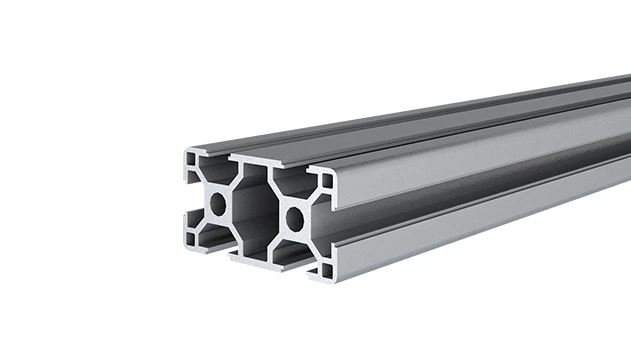
What Even Is a 3060 EU Standard Aluminum Profile?
You might be looking at that name and thinking, "3060? EU standard? Aluminum profile? That sounds like a bunch of technical jargon." Let's break it down. First, "aluminum profile" refers to a length of aluminum that's been shaped into a specific cross-section—think of it like a custom-built Lego brick for industrial use. These profiles are made using an aluminum extrusion profile process, where a heated aluminum billet is pushed through a die to create the desired shape. This process isn't just about aesthetics; it's about engineering a material that balances strength, weight, and functionality.
Now, "3060" tells us the dimensions: 30mm in width and 60mm in height. That might not sound like much, but those measurements are critical. The "EU standard" part is equally important. EU standards (like EN 755, which governs aluminum extrusions) ensure that the profile meets strict criteria for material quality, dimensional accuracy, and mechanical properties. So when you buy a 3060 EU standard aluminum profile, you're not just getting a piece of metal—you're getting a product that's been tested and certified to perform consistently, no matter where it's used in the world.
But what makes this profile stand out in a market flooded with options (2020, 4040, 4080, to name a few)? Let's start with its composition. Most 3060 profiles are made from 6000-series aluminum alloys, which blend aluminum with magnesium and silicon. This mix gives the profile a unique set of properties: it's lightweight (about 1/3 the weight of steel), corrosion-resistant, and—crucially for our topic—excellent at damping vibrations.

The Science of Vibration Resistance: Why 3060 Stands Apart
Vibration resistance isn't just about being "stiff." In fact, overly rigid materials (like steel) can sometimes make vibrations worse by transmitting them rather than absorbing them. Aluminum, on the other hand, has a natural ability to dampen vibrations, thanks to its internal structure. When vibrations hit an aluminum profile, the material's grains shift slightly, converting some of that kinetic energy into heat—effectively "soaking up" the shake. But the 3060 profile takes this a step further, thanks to its design and the extrusion process.
1. The Cross-Section: More Than Just a Shape
Take a look at a 3060 profile, and you'll notice it's not a solid block. Instead, it has a hollow center with internal ribs and T-slots (those grooves running along the length). Why does that matter? The hollow design reduces weight without sacrificing strength, but the real magic is in how those ribs distribute stress. When vibrations hit the profile, the ribs act like mini shock absorbers, dispersing the energy across the entire structure rather than letting it (concentrate) in one spot. The T-slots, often used for attaching accessories, also add rigidity—think of them as reinforcement beams that prevent the profile from bending or twisting under vibration.
2. Extrusion: Aligning Grains for Strength
Remember that aluminum extrusion profile process we mentioned earlier? When aluminum is extruded, its internal grains align along the length of the profile. This alignment makes the material stronger in the direction it's most likely to experience stress (like the vertical load of a workbench or the horizontal pull of a conveyor). For vibration resistance, this means the profile can flex slightly without cracking, absorbing energy that would otherwise rattle the machinery. It's like comparing a wooden stick (grain aligned) to a pile of sawdust (grains random)—the aligned structure holds up better under repeated stress.
3. EU Standards: Testing for the Worst-Case Scenarios
EU standards aren't just about ticking boxes. To earn the "EU standard" label, 3060 profiles undergo rigorous testing, including vibration tests. Engineers subject the profile to controlled vibrations at various frequencies (mimicking the shakes of high-speed motors, conveyor belts, or robotic arms) and measure how much energy it absorbs. If it transmits too much vibration, it doesn't meet the standard. This means when you install a 3060 profile, you're not guessing whether it can handle your machinery's vibrations—you're trusting a product that's been proven to perform in lab conditions that often exceed real-world demands.
How Does 3060 Compare to Other Profiles? Let's Break It Down
You might be thinking, "Okay, 3060 sounds good, but what about smaller profiles like 2020 or bigger ones like 4040? Couldn't they work too?" It's a fair question—vibration resistance isn't one-size-fits-all. Let's compare using a table to see where 3060 shines:
| Profile Type | Dimensions (mm) | Vibration Damping Capacity* | Max Load Capacity (kg/m) | Best For |
|---|---|---|---|---|
| 2020 EU Standard | 20x20 | Moderate | 150 | Light-duty setups (small workbenches, shelving) |
| 3030 EU Standard | 30x30 | Good | 300 | Medium-load machinery (assembly jigs, small conveyors) |
| 3060 EU Standard | 30x60 | Excellent | 450 | High-speed, high-precision machinery (electronics assembly, automotive conveyors) |
| 4040 EU Standard | 40x40 | Very Good | 500 | Heavy-load setups (industrial workbenches, large material racks) |
*Based on industry testing: "Excellent" = absorbs 70%+ of vibration energy; "Very Good" = 60-70%; "Good" = 50-60%; "Moderate" = 40-50%.
Notice that 3060 hits a sweet spot. It's not as bulky as 4040, so it's easier to integrate into tight machinery layouts, but it offers better vibration damping than smaller profiles. For high-speed machinery—where precision and space often go hand in hand—this balance is key. A 4040 profile might handle more weight, but if your conveyor only needs to move 300kg parts at high speeds, the 3060's vibration resistance and lighter weight make it the smarter choice.
Real-World Applications: Where 3060 Shines in High-Speed Settings
Let's move beyond theory and talk about how 3060 profiles are actually used. Here are three common scenarios where their vibration resistance makes all the difference:
1. Precision Workbenches in Electronics Manufacturing
Picture a workbench in a semiconductor factory, where workers use microscopes to solder components smaller than a grain of rice. Even the tiniest vibration can blur the view or misplace the solder. Many of these workbenches are built with 3060 profiles as their frame. The profile's vibration damping ensures the surface stays steady, while the T-slots let manufacturers attach accessories like LED lights, tool holders, or anti-static mats—all without weakening the structure. One electronics plant in Germany reported a 40% reduction in soldering defects after switching their workbenches from steel to 3060 aluminum profiles, citing "steadier surfaces and less downtime for re-calibration."
2. High-Speed Conveyor Systems
Conveyors moving at 100+ feet per minute are a staple in automotive and packaging plants. The problem? The faster they go, the more they vibrate—especially when carrying unevenly weighted parts. 3060 profiles are often used as the main frame for these conveyors. The hollow design keeps the system lightweight (reducing strain on motors), while the internal ribs dampen vibrations from the rollers. Add aluminum profile accessories like shock-absorbing brackets or rubber gaskets (placed in the T-slots), and you've got a conveyor that runs smoother, quieter, and with fewer jams. A car parts manufacturer in Poland noted that after upgrading to 3060-based conveyors, roller replacements dropped by 25% because the reduced vibration meant less wear on the bearings.
3. Automated Material Racks in Warehouses
Modern warehouses use automated systems to pick and drop items at speeds unthinkable a decade ago. These systems rely on material racks that can handle constant movement without shaking. 3060 profiles are ideal here because they're strong enough to support heavy loads (up to 450kg/m, as per our table) but flexible enough to absorb the vibrations of robotic arms slinging boxes. Some warehouses even use 3060 profiles with integrated sensors (mounted in the T-slots) to monitor vibration levels in real time—if a rack starts vibrating more than usual, it's a sign a component might be loose, allowing for proactive maintenance.
The Role of Aluminum Profile Accessories: Small Parts, Big Impact
A 3060 profile is only as good as the accessories that go with it. Aluminum profile accessories —things like brackets, joints, end caps, and gaskets—play a huge role in enhancing vibration resistance. Let's take a closer look at a few:
- Rubber Gaskets: Placed between two connected profiles, these gaskets act like mini shock absorbers, preventing metal-on-metal contact that can amplify vibrations.
- Reinforced Joints: Heavy-duty joints (often made from steel or reinforced plastic) lock profiles together tightly, reducing "play" that causes rattling. Some joints even have built-in springs to absorb sudden shocks.
- End Caps: These seal the ends of the profile, preventing dust and debris from entering the hollow center—debris can act like sandpaper, increasing friction and vibration over time.
- Adjustable Feet: Mounted at the base of a profile frame, these feet let you level the structure on uneven floors. A level frame vibrates less because stress is evenly distributed.
Think of it like building a house: the foundation (the 3060 profile) is critical, but the nails, screws, and insulation (the accessories) make it weatherproof. Without the right accessories, even the best profile can't live up to its vibration-resistant potential.
Why Lean Systems Love 3060 Profiles
Many manufacturers today adopt lean system principles—focused on minimizing waste, maximizing efficiency, and continuous improvement. 3060 profiles fit perfectly into this mindset, and not just because they reduce vibration-related waste (like defective products or downtime). Their modularity (thanks to those T-slots) means you can reconfigure a workbench, conveyor, or rack in minutes, without welding or drilling. Need to add a new tool holder to a workbench? Just slide a bracket into the T-slot. Want to extend a conveyor? Connect two 3060 profiles with a joint. This flexibility reduces the time and cost of retooling, a core tenet of lean manufacturing. One lean consultant I spoke to put it this way: "3060 profiles turn 'fixed infrastructure' into 'adaptable infrastructure.' You're not stuck with a setup that worked last year—you can tweak it today to work better tomorrow."
Looking Ahead: The Future of Vibration Resistance
As machinery gets faster and more precise, the demand for vibration-resistant materials will only grow. So what's next for 3060 profiles? Engineers are experimenting with new alloys—adding trace elements like scandium—to boost damping capacity even further. There's also work on "smart profiles" that integrate piezoelectric materials (which generate electricity from vibration) to power sensors or even counteract vibrations actively. Imagine a profile that detects excessive shaking and adjusts its stiffness automatically—science fiction today, but prototypes are already in the lab.
Another trend is sustainability. 3060 profiles are already 100% recyclable, but manufacturers are exploring ways to use more recycled aluminum in their production. This doesn't just reduce environmental impact; recycled aluminum requires 95% less energy to produce than new aluminum, making the profiles more cost-effective in the long run.
Final Thoughts: More Than Metal—A Foundation for Reliability
At the end of the day, the 3060 EU standard aluminum profile isn't just a piece of extruded metal. It's a solution to one of the biggest hidden challenges in high-speed machinery: vibration. Its unique combination of design, material science, and EU-tested performance makes it a go-to choice for engineers who refuse to compromise on precision, safety, or efficiency.
Whether you're building a workbench for microelectronics, a conveyor for car parts, or a material rack for a warehouse, remember this: the right foundation matters. And when that foundation is a 3060 profile—paired with the right aluminum profile accessories—you're not just building machinery. You're building reliability. And in the world of high-speed manufacturing, reliability is the ultimate competitive edge.