- Company Articles
- Industry articles
- Industry standards
- 3060 EU Standard Aluminum Profile vs Domestic Profiles: Import Considerations

3060 EU Standard Aluminum Profile vs Domestic Profiles: Import Considerations
Related Product
3060 EU Standard Aluminum Profile
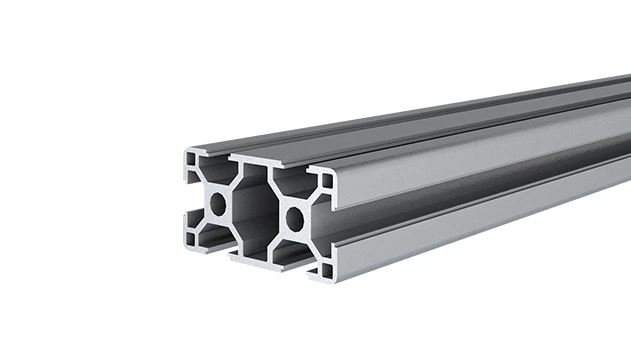
3060 is a 3.00 x 6.00CM fractional 30 series square extrusion T-slot profile with four open T-slots, two side with 3.00cm face, two side with 6.0cm face. The profile has align-a-grooves to assist in aligning connecting profiles.
Walk into any modern factory, warehouse, or assembly line, and you'll notice a silent framework holding everything together—sleek, metallic structures that support workbenches, guide conveyor belts, and organize tools with military precision. These are aluminum profiles, the unsung heroes of lean manufacturing and efficient workflows. Among the thousands of profiles available, the 3060 EU standard aluminum profile has earned a reputation as a gold standard for reliability. But for businesses eyeing imports, a critical question looms: how does this European benchmark compare to domestic alternatives? And what should you know before placing that first order?
This isn't just about metal and measurements. It's about the difference between a production line that hums along with minimal downtime and one that constantly battles loose joints, misaligned components, and unexpected failures. It's about choosing between short-term savings and long-term efficiency. Let's unpack the nuances of 3060 EU standard profiles, how they stack up against domestic options, and the key import considerations that could make or break your project.
What Makes the 3060 EU Standard Aluminum Profile Special?
First, let's decode the name: "3060" refers to the profile's cross-section—30mm wide and 60mm tall. Simple enough, right? But the "EU standard" part is where the magic (and the rigor) begins. In Europe, aluminum profiles are governed by strict standards like EN 755, which dictate everything from the alloy used to how straight the profile must be. For the 3060 EU standard, this translates to a product built for consistency, durability, and compatibility.
Alloy Quality: The Foundation of Strength
EU manufacturers almost exclusively use 6063 aluminum alloy for 3060 profiles, and for good reason. This alloy, rich in magnesium and silicon, offers a perfect balance of strength, corrosion resistance, and extrudability. Think of it as the "all-rounder" of aluminum alloys—strong enough to support heavy equipment but malleable enough to form complex shapes. To take it a step further, most EU profiles undergo heat treatment (T5 or T6 tempering), which strengthens the metal at a molecular level. A T6-tempered 3060 EU profile can handle up to 250kg of evenly distributed weight per meter—more than enough for most industrial applications.
Domestic profiles, on the other hand, are a mixed bag. While some reputable manufacturers use 6063, others cut corners with cheaper alloys like 6061 (weaker but easier to source) or even unalloyed aluminum. Heat treatment is also less consistent; many domestic profiles stop at T4 tempering, which offers lower yield strength. The result? A profile that might bend under heavy loads or corrode faster in humid environments.
Dimensional Accuracy: When Millimeters Matter
Imagine building a bookshelf where the shelves are slightly too wide for the brackets. Frustrating, right? Now scale that up to a factory workbench or a lean system with dozens of interconnected components. That's where dimensional accuracy becomes critical. EU standards demand that a 3060 profile's width stays within ±0.1mm and height within ±0.2mm. To put that in perspective, that's thinner than a human hair's diameter. This precision ensures that every T-slot, every hole, and every groove lines up perfectly with aluminum profile accessories —from brackets to end caps.
Domestic profiles often play by looser rules. Tolerances of ±0.3mm to ±0.5mm are common, and in some cases, even wider. This might not sound like much, but over a 3-meter profile, that 0.5mm error can add up. Suddenly, the 3060 aluminum profile end cap you ordered doesn't fit snugly, leaving sharp edges exposed. Or the connector designed for a 30mm width wobbles because the actual profile is 30.4mm. These small gaps lead to big problems: unstable structures, increased wear and tear, and frustrated workers spending extra time on assembly.
Surface Finish: More Than Just Looks
Run your hand along a 3060 EU profile, and you'll notice a smooth, uniform surface—no bumps, no scratches, no discoloration. EU standards require anodizing (a process that adds a protective oxide layer) with a thickness of at least 10 microns, making the profile resistant to scratches, corrosion, and even chemicals. This isn't just about aesthetics; it's about longevity. A well-anodized profile in a busy factory will still look new after years of use, while a poorly finished domestic profile might start showing rust or stains within months.
Domestic profiles often skimp on anodizing, with layers as thin as 5 microns or none at all. Some use cheap powder coating instead, which chips easily when components are assembled or moved. The result? A profile that not only looks worn but also becomes a safety hazard as sharp, corroded edges emerge.
The Domestic Profile Landscape: Pros, Cons, and Variability
To be clear, "domestic profiles" isn't a one-size-fits-all category. Just as there are high-quality EU manufacturers and budget European brands, domestic producers range from premium to "you-get-what-you-pay-for." Understanding this spectrum is key to making an informed choice.
The Appeal of Domestic Profiles
Let's start with the obvious: cost. Domestic profiles can be 20-30% cheaper than their EU counterparts, a difference that's hard to ignore for small businesses or startups. Shorter lead times are another plus—while EU imports might take 6-8 weeks (including shipping), domestic suppliers can often deliver in 2-3 weeks. For projects with tight deadlines, this speed can be a game-changer.
There's also familiarity. Domestic profiles are designed to work with local aluminum profile accessories , which are easier to source and replace. If a connector breaks, you can often run down to a local hardware store instead of waiting for an international shipment.
The Risks of Cutting Corners
But here's the catch: consistency. Walk into three different domestic factories, and you'll get three different versions of a "3060 profile." One might use high-grade 6063 alloy; another might mix in cheaper metals to cut costs. One might adhere to tight tolerances; another might treat measurements as suggestions. This variability is a nightmare for businesses scaling up or aiming for standardized processes.
Then there's the issue of aluminum extrusion profile quality. EU manufacturers invest in state-of-the-art extrusion presses that heat the alloy to precise temperatures (around 500°C for 6063) and apply uniform pressure, resulting in a dense, defect-free profile. Some domestic producers use older equipment that can't maintain consistent heat or pressure, leading to internal voids or weak spots. These flaws might not show up in a quick visual inspection, but they'll reveal themselves when the profile is under load—often at the worst possible moment.
| Feature | 3060 EU Standard Aluminum Profile | Typical Domestic Aluminum Profile |
|---|---|---|
| Alloy & Temper | 6063 (EN 755 compliant), T5/T6 temper (high strength) | 6061/6063 (inconsistent), often T4 temper (lower strength) |
| Dimensional Tolerance | ±0.1mm (width), ±0.2mm (height) | ±0.3mm to ±0.5mm (width/height) |
| Surface Treatment | Anodized (10-15 microns), corrosion-resistant | Thin anodizing (5 microns) or powder coating (prone to chipping) |
| Load Capacity (per meter) | 250-300kg (uniformly distributed) | 150-200kg (varies widely) |
| Accessory Compatibility | Universal with EU-standard accessories (e.g., 3060 end caps) | Often requires brand-specific accessories |

Importing 3060 EU Profiles: What You Need to Know
So, you've weighed the pros and cons and decided the 3060 EU profile is worth the investment. Now comes the tricky part: importing. This isn't as simple as clicking "buy" on a website. From navigating regulations to choosing the right lean system supplier , every step requires careful planning.
Regulatory Compliance: Paperwork That Protects You
The EU doesn't hand out "standard" status lightly. To import 3060 EU profiles, you'll need to ensure the supplier provides a CE certificate, which confirms compliance with EN 755 and other relevant standards. Ask for test reports too—look for data on alloy composition, tensile strength, and anodizing thickness. Without these documents, you risk importing non-compliant profiles that could fail safety inspections or, worse, cause accidents.
Don't forget about your country's import regulations. Some nations have strict rules on aluminum imports, including tariffs, customs duties, and safety certifications. For example, the US requires an Import Safety Certificate (ISC) for certain industrial products, while Australia mandates compliance with AS/NZS standards. Research these requirements early—missing a deadline or a document can lead to your shipment being held at the border, costing you time and money.
Choosing a Supplier: More Than Just a Price Tag
Not all EU suppliers are created equal. The best ones act as partners, not just vendors. Look for suppliers with a proven track record in exporting—ideally, ones who've worked with businesses in your industry. Ask for references or case studies: How did they handle a delayed shipment? What's their process for replacing defective profiles? A reliable lean system supplier will be transparent about their production timelines, quality control processes, and after-sales support.
Beware of "too good to be true" prices. A supplier offering 3060 EU profiles at domestic prices is likely cutting corners—using subpar alloy, skipping anodizing, or fudging test reports. Remember: you're paying for quality, and quality has a cost. That said, don't assume the most expensive supplier is the best. Compare quotes, but prioritize value over price alone.
Logistics: Planning for the Unexpected
Shipping aluminum profiles internationally isn't like sending a package. These are long, heavy items that require special handling. Most suppliers ship via sea freight, which is cheaper but slower (4-6 weeks from Europe to Asia, for example). Air freight is faster but exponentially more expensive—only viable for urgent, small orders.
Factor in extra time for customs clearance. Even with all the right documents, inspections can delay your shipment by a week or more. And don't forget about packaging: EU suppliers typically use sturdy wooden crates with foam padding to prevent bending or scratching, but it's worth confirming. A bent profile is useless, no matter how high-quality the alloy.
Total Cost of Ownership: Looking Beyond the Invoice
Let's do the math. A 3060 EU profile might cost $25 per meter, while a domestic one costs $18. At first glance, the domestic option saves $7 per meter. But consider this: the EU profile lasts 10 years, while the domestic one needs replacing after 5. Suddenly, the EU profile costs $2.50 per year, vs. $3.60 for the domestic one. Add in the cost of downtime from failed components, the labor hours spent fixing loose joints, and the replacement of aluminum profile accessories that don't fit, and the EU profile becomes the cheaper choice in the long run.
This is the "total cost of ownership"—the sum of purchase price, maintenance, replacement, and operational costs. EU profiles often win here because they're built to last, reducing the need for constant repairs or replacements.
Accessories: Ensuring Compatibility
You've ordered your 3060 EU profiles—now you need the accessories to go with them: brackets, connectors, 3060 aluminum profile end cap s, and so on. While EU-standard accessories are designed to work seamlessly with EU profiles, they're not always available locally. Some suppliers include accessories in their quotes, but others don't. Decide early whether to order accessories from your EU supplier (more expensive but guaranteed compatibility) or source them domestically (cheaper but riskier).
If you choose domestic accessories, bring a sample profile to the supplier to test fit. Even a small tolerance difference can mean a connector that doesn't lock properly or an end cap that falls off. It's better to spend an hour testing than to waste days returning incompatible parts.
Real-World Stories: Lessons from the Field
Consider the case of a mid-sized electronics manufacturer in Vietnam. They initially chose domestic profiles for their assembly line to save costs. Within six months, workers were complaining about wobbly workbenches and misaligned conveyor tracks. The aluminum extrusion profile s had warped slightly under heat, and the cheap powder coating was chipping, leaving sharp edges. The manufacturer switched to 3060 EU profiles, and while the upfront cost was higher, downtime dropped by 40%, and worker productivity increased. "We should have done this sooner," said their production manager. "The savings in frustration alone were worth it."
Then there's the automotive parts supplier in Brazil that imported EU profiles without checking accessory compatibility. They ordered domestic end caps, only to find they were 0.5mm too small. By the time they sourced EU-compatible end caps, their production line was delayed by two weeks. Lesson learned: plan for accessories from day one.
Final Thoughts: Making the Right Choice
Choosing between 3060 EU standard aluminum profiles and domestic alternatives isn't about patriotism or brand loyalty—it's about aligning your choice with your business goals. If you're running a small workshop with simple needs and tight budgets, a high-quality domestic profile might suffice. But if you're building a large-scale lean system , an assembly line with strict safety standards, or a workflow that demands precision, the EU standard is likely the smarter investment.
Remember: aluminum profiles are the backbone of your operation. Skimping on them is like building a house on a weak foundation—eventually, everything else will crumble. Do your research, vet your suppliers, and look beyond the price tag. Your production line, your workers, and your bottom line will thank you.
So, are you ready to take the plunge? With the right planning, importing 3060 EU standard aluminum profiles can transform your workflow from a source of frustration to a competitive advantage. The metal might be silent, but its impact will speak volumes.