- Company Articles
- Industry articles
- Industry standards
- 3060 EU Standard Aluminum Profile vs Non-EU Profiles: Quality & Compliance Differences

3060 EU Standard Aluminum Profile vs Non-EU Profiles: Quality & Compliance Differences
Related Product
3060 EU Standard Aluminum Profile
3060 is a 3.00 x 6.00CM fractional 30 series square extrusion T-slot profile with four open T-slots, two side with 3.00cm face, two side with 6.0cm face. The profile has align-a-grooves to assist in aligning connecting profiles.
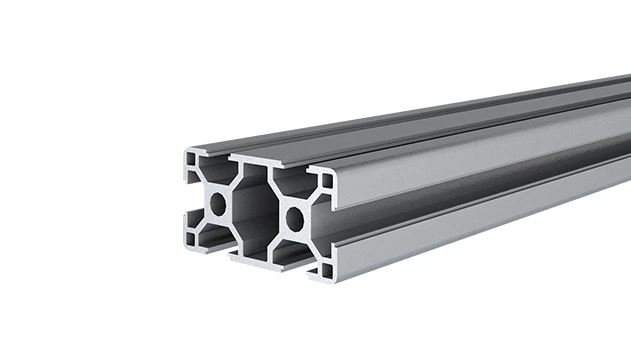
Walk into any modern factory, workshop, or even a well-organized garage, and you'll likely spot them: sleek, silver structures holding up shelves, framing workbenches, or guiding products along assembly lines. These are aluminum profiles—unassuming yet indispensable building blocks of efficient manufacturing. But not all aluminum profiles are created equal. In particular, the 3060 EU standard aluminum profile has become a gold standard for businesses that refuse to cut corners on quality. Today, we're diving deep into what makes these profiles stand out, why compliance matters more than you might think, and the hidden risks of choosing non-EU alternatives.
First Things First: What Even Is a 3060 Aluminum Profile?
Let's start with the basics. Aluminum profiles are created through a process called extrusion, where heated aluminum billets are pushed through a die to form specific cross-sectional shapes. Think of it like squeezing toothpaste through a tube—except the result is a strong, lightweight, and infinitely customizable structural piece. The "3060" in 3060 EU standard aluminum profile refers to its dimensions: 30mm in width and 60mm in height. It's a versatile size, commonly used for everything from workbench frames and material racks to conveyor supports and machine guards.
But here's the catch: "3060" is just a size. What makes the EU standard version special is the how and why of its production. EU standards aren't just a checklist—they're a promise of consistency, safety, and performance. To understand why that matters, let's first unpack what goes into making a truly high-quality aluminum extrusion profile .
The Anatomy of Quality: What Makes EU Standard Profiles Stand Out?
1. Material Purity: No Scrap Metal Shortcuts
Ever bought a cheap phone charger that melted after a week? Chances are, it was made with low-quality materials. The same logic applies to aluminum profiles. EU standards demand strict control over the aluminum alloy used. Most 3060 EU profiles are made from 6000-series aluminum (like 6063 or 6061), which blends aluminum with magnesium and silicon for optimal strength and corrosion resistance. These alloys are carefully tested to ensure they meet exact chemical composition requirements—no mixing in scrap aluminum or mystery metals to cut costs.
Contrast that with some non-EU profiles. I once visited a small workshop in Southeast Asia where the owner admitted, "We use whatever aluminum is cheapest that week." That might mean mixing recycled window frames with industrial scrap, resulting in profiles that are brittle, prone to warping, or even corrosive. Imagine building a workbench with that—one heavy toolbox later, and you've got a sagging mess.
2. Dimensional Precision: When "Close Enough" Isn't Enough
If you've ever tried to assemble furniture with mismatched screws, you know the frustration of poor fit. Now multiply that by 100 for a factory floor where hundreds of profiles need to connect seamlessly. EU standards for 3060 profiles enforce tight dimensional tolerances. That means every piece should measure exactly 30mm x 60mm (or within a tiny margin of error), with straight edges and consistent wall thickness. Why? Because when you're attaching aluminum profile accessories —like brackets, hinges, or sliding guides—even a 1mm discrepancy can throw off the entire system.
Take workbench construction, for example. A 3060 EU profile frame will align perfectly with pre-drilled holes for shelves, ensuring the worktop sits level and stable. A non-EU profile with uneven dimensions? You might end up with gaps between the frame and the shelf, leading to wobbly surfaces that shake when you're using power tools. Over time, that instability can damage equipment or even cause accidents.
3. Surface Finish: More Than Just Shiny Looks
A smooth, consistent surface on an aluminum profile isn't just for aesthetics. EU standards regulate surface treatments like anodizing (which creates a protective oxide layer) and powder coating (for color and extra durability). These finishes aren't just about making the profile look nice—they prevent corrosion, resist scratches, and even reduce friction for moving parts like sliding doors or conveyor rails.
I spoke with a manufacturer in Germany who switched to 3060 EU profiles for their cleanroom workbenches. "Before, we used non-EU profiles that would develop white rust spots after a few months in our humid environment," they told me. "The EU profiles? After two years, they still look brand new. The anodizing is so uniform, it even repels cleaning chemicals better." That's the difference a standardized surface finish makes.
4. Mechanical Strength: Built to Bear the Load
At the end of the day, aluminum profiles are structural—they need to hold weight, resist bending, and stand up to daily wear and tear. EU standards specify minimum mechanical properties for 3060 profiles, including tensile strength (how much force they can take before breaking) and yield strength (how much they can bend before deforming permanently). For 6063-T5 alloy (a common choice), that means a tensile strength of at least 160 MPa and a yield strength of 110 MPa—numbers that translate to real-world reliability.
Non-EU profiles, on the other hand, often skip mechanical testing. A friend who runs a small logistics company learned this the hard way. He bought non-EU 3060 profiles to build a material rack for heavy boxes. Within three months, the rack started sagging in the middle. "We thought we were saving money," he said, "but we ended up replacing the whole thing after a box fell through. The EU profiles we used for the replacement? They've been holding 50kg boxes per shelf for over a year with zero issues."

Compliance: It's Not Just a "Nice-to-Have"—It's the Law
Here's where things get really serious: EU standards aren't just about quality—they're about compliance with laws and regulations designed to protect workers, consumers, and the environment. Let's break down the big ones.
CE Marking: Your Ticket to EU Markets
If you want to sell products in the European union, CE marking is non-negotiable. It indicates that a product meets EU safety, health, and environmental requirements. For aluminum profiles, CE marking involves testing against standards like EN 755 (for extruded aluminum products) and EN 15085 (for railway applications, if applicable). This isn't a self-declaration—manufacturers must provide documentation from accredited labs proving their profiles meet the criteria.
Non-EU profiles often lack CE marking, which means selling them in the EU could land you with fines or product recalls. But even if you're not exporting, CE marking is a signal that the manufacturer cares about due diligence. Would you trust a profile that wasn't tested for safety to hold up a machine above your workers' heads?
REACH and RoHS: Keeping Hazardous Substances at Bay
REACH (Registration, Evaluation, Authorization, and Restriction of Chemicals) and RoHS (Restriction of Hazardous Substances) are two EU regulations that limit the use of harmful materials in products. REACH restricts over 200 substances, including heavy metals like lead and cadmium, while RoHS bans six hazardous chemicals in electrical and electronic equipment.
Why does this matter for aluminum profiles? Because many profiles are coated with paints, adhesives, or lubricants that could contain these substances. A non-EU profile might use cheap, lead-based paint to cut costs, which can flake off over time, exposing workers to toxic dust. Or its surface treatment might contain phthalates (plasticizers) that leach into the air, causing respiratory issues. EU standard profiles, by contrast, are required to test these coatings and prove they're REACH and RoHS compliant—protecting both your team and the planet.
Non-EU Profiles: The Hidden Costs of "Saving Money"
At this point, you might be thinking, "Okay, EU profiles sound great, but they must be more expensive. Can't I just use non-EU profiles for simple projects?" Maybe—but let's talk about the hidden costs.
1. Inconsistency: The Nightmare of "One Batch Good, One Batch Bad"
Non-EU manufacturers often prioritize quantity over consistency. One batch of profiles might be passable; the next could be riddled with defects. I worked with a furniture maker once who ordered 100 non-EU 3060 profiles for workbenches. Halfway through assembly, they noticed the second shipment was 2mm narrower than the first. "We had to re-drill all our brackets, which took an extra week of labor," they told me. "By the time we factored in the overtime, we would've saved money with EU profiles from the start."
2. Compatibility Issues with Accessories
Remember those aluminum profile accessories we mentioned earlier? Brackets, corner codes, end caps—they're designed to fit standard profiles. Non-EU profiles with odd dimensions often don't play nice with these parts. A client once tried to use non-EU 3060 profiles with EU-made T-slot nuts (small fasteners that slide into the profile's grooves). The nuts kept jamming because the slot width was off by half a millimeter. "We ended up buying special custom nuts, which cost three times as much as standard ones," they said. "Total disaster."
3. Short Lifespan: "Cheap Now, replace Later"
Aluminum is known for its durability, but that's only if it's made right. Non-EU profiles, especially those with poor surface treatments, can start corroding within months in humid or industrial environments. A warehouse in Texas used non-EU profiles for their material racks. After a year, the profiles near the loading dock (exposed to rain and humidity) developed pitting corrosion. "We had to replace all 12 racks," the warehouse manager said. "The cost of the new racks plus the downtime during replacement was 10 times what we saved by buying cheap."
When Does EU Compliance Actually Matter? Spoiler: More Than You Think
You might assume EU compliance only matters if you're selling products in Europe. But that's not true. Even if you're manufacturing locally, EU standard profiles offer benefits that impact your bottom line:
- Automotive and Aerospace: These industries demand precision. A 3060 EU profile used in a car assembly line's workbench ensures parts align perfectly, reducing errors and rework.
- Electronics Manufacturing: ESD (electrostatic discharge) workbenches require profiles with conductive coatings to protect sensitive components. EU standards ensure these coatings are consistent and reliable.
- Food and Pharmaceutical: Stainless steel and aluminum profiles in these industries must be easy to clean and corrosion-resistant. EU profiles meet strict hygiene standards, preventing bacterial growth.
- Even Small Workshops: A home-based maker using 3060 EU profiles for a CNC machine enclosure will enjoy better stability and longevity than with flimsy alternatives.
The Role of the Supplier: Why a Reputable Partner Makes All the Difference
Okay, so you're convinced EU standard profiles are worth it. Now, how do you find them? This is where choosing the right supplier comes in. A reliable lean system supplier —one that specializes in manufacturing solutions—won't just sell you profiles; they'll guide you to the right product for your needs.
Look for suppliers who can provide:
•
Certifications:
Ask to see CE certificates, REACH test reports, and material composition data sheets for their 3060 EU profiles.
•
Consistency:
Inquire about their quality control processes. Do they test every batch? How do they handle defective products?
•
Technical Support:
A good supplier will help you calculate load capacities, recommend accessories, or even custom-cut profiles to your exact specifications.
•
Transparency:
Avoid suppliers who hesitate to share documentation. If they can't prove their profiles meet EU standards, walk away.
EU vs. Non-EU Profiles: A Side-by-Side Comparison
| Feature | 3060 EU Standard Aluminum Profile | Non-EU Aluminum Profile |
|---|---|---|
| Material Quality | High-purity 6000-series aluminum; tested for composition | Often mixed with scrap aluminum; inconsistent alloys |
| Dimensional Tolerance | ±0.1mm for width/height; straightness guaranteed | ±1-2mm common; frequent warping or bowing |
| Surface Finish | Anodized/powder coated to EU standards; corrosion-resistant | Uneven coating; prone to chipping or rust |
| Compliance | CE marked; REACH/RoHS compliant; safety tested | Rarely certified; may contain hazardous substances |
| Accessory Compatibility | Fits standard aluminum profile accessories seamlessly | Often requires custom or expensive non-standard parts |
| Long-Term Cost | Higher upfront cost, but lower maintenance and replacement expenses | Cheaper upfront, but hidden costs from defects, labor, and replacements |
Final Thoughts: Invest in Quality, Reap the Rewards
At the end of the day, choosing between 3060 EU standard aluminum profiles and non-EU alternatives isn't just about "buying metal." It's about investing in the reliability of your equipment, the safety of your team, and the reputation of your business. EU standards exist to ensure that every profile you use is consistent, compliant, and built to last—whether you're building a simple workbench or a complex assembly line.
So, the next time you're sourcing aluminum profiles, ask yourself: "What's the real cost of cutting corners?" For most businesses, the answer is clear: peace of mind, better performance, and long-term savings are worth every penny. Choose 3060 EU standard aluminum profile —your future self (and your bottom line) will thank you.