- Company Articles
- Industry articles
- Industry standards
- 3060 EU Standard Aluminum Profile: Weight Reduction Benefits in Material Handling

3060 EU Standard Aluminum Profile: Weight Reduction Benefits in Material Handling
Related Product
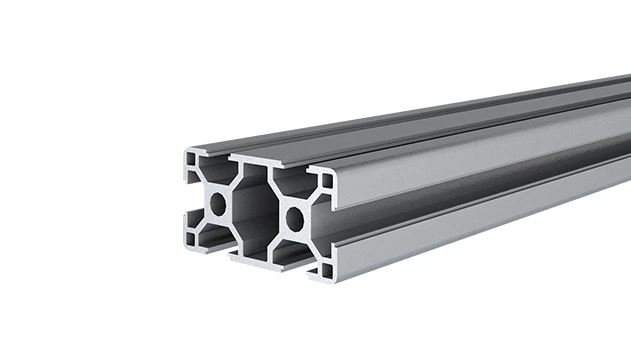
3060 EU Standard Aluminum Profile
3060 is a 3.00 x 6.00CM fractional 30 series square extrusion T-slot profile with four open T-slots, two side with 3.00cm face, two side with 6.0cm face. The profile has align-a-grooves to assist in aligning connecting profiles.
Walk into any busy manufacturing plant, warehouse, or assembly facility, and you'll quickly notice a silent but persistent challenge: the weight of the equipment that keeps operations running. From bulky steel workbenches that require two people to reposition, to rigid material racks that creak under their own heft, to roller tracks that feel like they're dragging through molasses—heavy material handling systems don't just slow down work; they drain energy, increase fatigue, and limit the flexibility modern businesses need to stay competitive. But what if there was a solution that cut the weight without sacrificing strength? Enter the 3060 EU standard aluminum profile—a lightweight, durable, and infinitely adaptable building block that's quietly revolutionizing how we design and use material handling equipment. In this article, we'll explore how this unassuming aluminum extrusion profile is tackling the weight problem head-on, making work easier, safer, and more efficient for teams across industries.
The Hidden Cost of Heavy Material Handling Systems
To understand why weight matters, let's start with a typical day in the life of a production worker. Maria, a line operator at a small electronics assembly plant, arrives at 7 a.m. and heads to her station—a steel workbench bolted to the floor. It's sturdy, sure, but at 200+ pounds, moving it even a few inches to align with a new assembly line layout would require a forklift and a team of coworkers. Instead, she adapts: hunching slightly to reach tools that don't quite fit, stretching to grab parts from a material rack that's just out of arm's reach. By mid-morning, her shoulders ache. Across the floor, Raj is loading components onto a steel roller track. The track itself is so heavy that even with wheels, it takes two people to reposition when a shipment arrives off-schedule. "We make it work," he says, wiping sweat from his brow, "but it feels like we're fighting the equipment half the time."
This scenario is all too common. Heavy material handling systems—often made of steel or thick plastic—come with a hidden cost that goes beyond the initial purchase price. First, there's worker fatigue: the Occupational Safety and Health Administration (OSHA) estimates that overexertion from lifting, pushing, or pulling heavy objects accounts for 20% of all workplace injuries. Then there's inefficiency: rigid, heavy racks and workbenches can't be quickly reconfigured to adapt to changing production needs, leading to bottlenecks when demand shifts. And let's not forget energy use: forklifts and conveyor systems working harder to move heavy loads guzzle more fuel or electricity, driving up operational costs.
The problem isn't just about "being strong enough"—it's about designing systems that work
with
people, not against them. That's where lightweight materials like aluminum come into play. But not just any aluminum: the 3060 EU standard aluminum profile, with its precise dimensions, T-slot design, and high strength-to-weight ratio, is emerging as a game-changer. Let's break down why.
What Is 3060 EU Standard Aluminum Profile, Anyway?
At first glance, the 3060 EU standard aluminum profile might look like a simple length of metal—but its design is anything but ordinary. Let's start with the basics: "3060" refers to its cross-sectional dimensions: 30mm in width and 60mm in height, measured across the outer edges. The "EU standard" tag ensures it meets strict European specifications for material quality, dimensional accuracy, and safety—so you know you're getting a product that's consistent, reliable, and built to last.
But the real magic lies in how it's made: as an aluminum extrusion profile. Extrusion is a manufacturing process where heated aluminum billets (cylindrical blocks of aluminum alloy) are pushed through a custom die, shaping the metal into complex cross-sections with incredible precision. For the 3060 profile, that die is engineered to create a sleek, rectangular shape with internal ribs for strength and, crucially, T-slots along its length. These T-slots are the profile's secret weapon: they allow for quick, tool-free attachment of aluminum profile accessories like brackets, connectors, and shelves, turning a simple length of aluminum into a modular building block.
The material itself is typically made from 6063-T5 aluminum alloy—a blend prized for its excellent strength, corrosion resistance, and machinability. When heat-treated (the "T5" designation), it gains a tensile strength of around 180 MPa—strong enough to support heavy loads, but at a fraction of the weight of steel. To put that in perspective: a 1-meter length of 3060 aluminum profile weighs just 1.5 kg, compared to a similar steel profile, which might weigh 5–6 kg. That's a 70% weight reduction—without skimping on durability.
Fun Fact:
The T-slot design of the 3060 profile isn't just for convenience—it's a nod to the "lean manufacturing" philosophy. By allowing quick reconfiguration, it supports the "just-in-time" and "continuous improvement" principles that keep modern production lines agile. No more waiting for welders or drill presses to adjust a workbench; with T-slots, you can add a shelf, reposition a tool holder, or even disassemble and rebuild a rack in minutes.

Weight Reduction: The Game-Changing Benefit
So, what does a 70% weight reduction actually mean for day-to-day operations? Let's break it down into tangible benefits that impact everything from worker safety to the bottom line.
Easier Manual Handling (No Forklift Required)
Remember Maria and her steel workbench? A workbench built with 3060 aluminum profiles changes the game. A typical 1.2-meter single-deck workbench (similar to the "workbench e (single deck-without caster)" model) weighs around 35 kg—light enough for one person to move, adjust, or even reposition by themselves. No more waiting for a forklift or recruiting coworkers; Maria can tweak her station's height, angle, or location in minutes, aligning it perfectly with her workflow. The same goes for material racks: a "material rack b (3 row and 3 floor)" unit, when constructed with 3060 profiles, weighs roughly 45 kg, compared to 120+ kg for a steel equivalent. This means Raj, instead of struggling with a two-person lift, can reposition the rack solo to clear space for a new shipment—saving time and reducing strain.Reduced Worker Fatigue and Injury Risk
Lifting, pushing, and pulling heavy objects is a leading cause of musculoskeletal disorders (MSDs) in the workplace. According to the Bureau of Labor Statistics, MSDs account for 30% of all workers' compensation claims, costing businesses billions annually. Lighter equipment directly addresses this: a study by the National Institute for Occupational Safety and Health (NIOSH) found that reducing the weight of tools and work surfaces by just 10% can lower injury rates by up to 25%. With 3060 aluminum profiles, the weight reduction is far more than 10%—meaning fewer strained backs, less chronic pain, and happier, healthier teams.Lower Energy Costs (For Machines and People)
It's not just human workers who benefit from lighter systems—machines do too. Roller tracks, for example, rely on gravity or motorized power to move materials along. A steel roller track, with its heavy frame and high friction, requires more energy to keep parts flowing. Swap in a roller track framed with 3060 aluminum profiles, and suddenly the system is easier to move, with less resistance. Over time, this translates to lower electricity bills for motorized conveyors or reduced physical effort for manual pushing. Similarly, forklifts transporting aluminum-framed racks use less fuel, since they're hauling less dead weight. These savings add up: a mid-sized warehouse switching to aluminum-based material handling could see a 15–20% drop in energy costs related to material movement.Flexibility to Adapt (Without the Headache)
Modern production lines aren't static. A factory might shift from assembling smartphones to tablets one month, or a warehouse might need to reconfigure storage for seasonal inventory the next. Heavy steel systems resist change—they're bolted down, welded, or too cumbersome to modify. Aluminum profiles? They thrive on change. Thanks to lightweight components and T-slot aluminum profile accessories (like quick-connect joints and adjustable brackets), a 3060-based workbench can be disassembled and rebuilt into a material rack, or a roller track can be extended by adding a few extra profile lengths—all without specialized tools or downtime. This flexibility lets businesses adapt on the fly, keeping up with customer demands without investing in entirely new equipment.From Extrusion to Application: How 3060 Aluminum Profiles Are Made to Work
To truly appreciate the 3060 profile's benefits, it helps to understand how it's engineered for real-world use. Let's walk through its journey from raw material to a fully functional workbench or roller track.
The Aluminum Extrusion Process: Precision Meets Strength
It starts with aluminum billets—typically 6063 alloy, chosen for its extrudability and strength. These billets are heated to around 500°C (932°F), making the metal malleable but not molten. A hydraulic press then pushes the heated billet through a custom die, which shapes it into the 3060 profile's signature rectangular cross-section with T-slots and internal ribs. The die is critical here: it's machined to micron-level precision to ensure consistent dimensions across every profile. After extrusion, the profiles are cooled, cut to length, and heat-treated (aged) to strengthen the alloy, resulting in the T5 temper that gives the 3060 its impressive strength-to-weight ratio.Aluminum Profile Accessories: The Glue That Holds It All Together
A profile alone is just a length of metal—it's the accessories that turn it into a functional system. Aluminum profile accessories for 3060 profiles include everything from brackets and joints to end caps and (casters). For example, internal rotary aluminum joints let profiles pivot, creating adjustable angles for workbenches or material racks. End caps protect workers from sharp edges and prevent dust buildup in T-slots. And caster wheels (often paired with caster accessories like brakes) turn static racks into mobile trolleys, making it easy to move materials across the factory floor. The beauty? These accessories are designed to snap or bolt into the T-slots, requiring no drilling or welding. It's modularity at its finest.Real-World Applications: Workbenches, Racks, and Roller Tracks
Let's put this into context with three common applications: Workbenches: A 3060-based workbench isn't just lightweight—it's customizable. The T-slots let workers add tool hangers, part bins, or even ESD (electrostatic discharge) mats for electronics assembly. Unlike fixed steel benches, the height can be adjusted by swapping out leg profiles, ensuring ergonomic comfort for workers of all sizes. And because it's light, teams can reconfigure benches for different tasks—say, switching from a standing assembly station to a seated inspection station—in minutes. Material Racks: Take the "material rack b (3 row and 3 floor)" design—a common multi-tiered storage solution. Built with 3060 profiles, this rack is strong enough to hold heavy components (think automotive parts or industrial tools) but light enough to rearrange when inventory needs change. The T-slots allow for adjustable shelf heights, so you can store both small parts bins and large boxes without wasted space. Plus, aluminum's corrosion resistance means it holds up in humid warehouses or cleanrooms, unlike steel, which can rust over time. Roller Tracks: Roller tracks are the backbone of material flow, moving parts from one station to the next. A steel roller track frame is heavy and prone to bending under stress; a 3060 aluminum frame, by contrast, stays rigid while reducing overall system weight. This makes the track easier to install, reposition, and maintain. Pair it with plastic roller track guide rails (yellow or grey, depending on your facility's color-coding needs) and swivel roller balls, and you've got a smooth, low-friction system that keeps materials moving with minimal effort.3060 vs. Steel vs. Plastic: How It Stacks Up
To really see the value of 3060 aluminum profiles, let's compare them to two common alternatives: steel and plastic. Here's how they measure up in key categories:
The takeaway? Steel is strong but heavy and inflexible. Plastic is light but weak and short-lived. 3060 aluminum profiles hit the sweet spot: strong enough for industrial use, light enough for easy handling, and flexible enough to adapt to changing needs—all with minimal maintenance. It's an investment that pays off in the long run, especially for businesses prioritizing agility and worker well-being.
| Category | 3060 Aluminum Profile | Steel (Mild Steel) | Plastic (PVC/Polypropylene) |
|---|---|---|---|
| Weight (per meter) | ~1.5 kg | ~5–6 kg | ~2–3 kg (but less rigid) |
| Strength-to-Weight Ratio | High (180 MPa tensile strength at low weight) | High strength, but low ratio (heavy for the strength) | Low (bends under moderate loads) |
| Corrosion Resistance | Excellent (natural oxide layer; can be anodized for extra protection) | Poor (prone to rust; requires painting/coating) | Good (resists moisture, but UV-sensitive) |
| Customization/Reconfiguration | High (T-slots + modular accessories; no tools needed) | Low (requires welding/drilling; permanent once built) | Moderate (can be cut, but limited to simple shapes) |
| Long-Term Cost | Moderate upfront cost; low maintenance; reusable | Low upfront cost; high maintenance (painting, rust repair) | Low upfront cost; short lifespan (fades, cracks over time) |
Real-World Impact: A Case Study
Let's wrap up with a real-world example of how 3060 aluminum profiles transformed a facility. PrecisionTech, a mid-sized electronics manufacturer in Germany, was struggling with outdated steel workbenches and material racks. Their assembly line required frequent reconfigurations to accommodate new product models, but the steel equipment was too heavy to move, leading to bottlenecks and frustrated workers.
In 2023, they switched to 3060 EU standard aluminum profiles for their workbenches and "material rack b (3 row and 3 floor)" units. The results were striking:
- Worker satisfaction: A survey found 85% of operators reported less physical fatigue at the end of shifts, with fewer complaints about back pain.
- Productivity: Line reconfigurations that used to take 4 hours (requiring forklifts and welding) now took 30 minutes, reducing downtime by 90%.
- Safety: Lifting-related injuries dropped by 40% in the first six months, cutting workers' compensation costs significantly.
- Flexibility: The modular racks allowed PrecisionTech to add a new product line without purchasing new storage equipment—they simply reconfigured existing 3060 profiles.
Conclusion: Lightweight, Strong, and Ready for Tomorrow
In a world where manufacturing and logistics move faster than ever, the weight of material handling systems has been a silent barrier to progress—until now. The 3060 EU standard aluminum profile, with its aluminum extrusion precision, lightweight design, and modular flexibility, is breaking that barrier down. It's not just a material upgrade; it's a shift in how we think about work: making it easier, safer, and more adaptable for the people on the front lines.
Whether you're building a workbench, a material rack, or a roller track, 3060 profiles offer a simple truth: lighter doesn't mean weaker. It means more energy, less strain, and the freedom to reimagine how things get done. For businesses ready to invest in their team's well-being and their own agility, the choice is clear: it's time to go light—with 3060 aluminum.