- Company Articles
- Industry articles
- Industry standards
- 3C Assembly Lines: 2020 EU Standard Aluminum Profile for Precision Workstations

3C Assembly Lines: 2020 EU Standard Aluminum Profile for Precision Workstations
Related Product
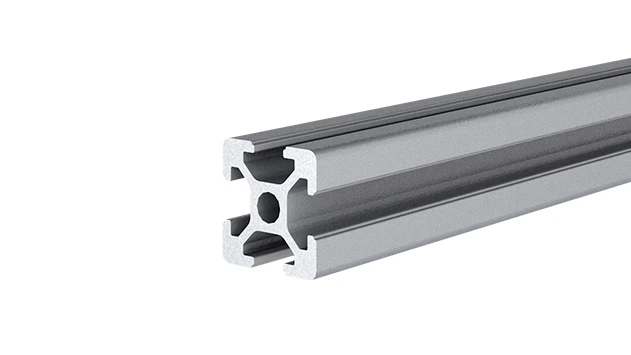
2020 EU Standard Aluminum Profile
2020 is a 2.00 x 2.00CM fractional 20 series square extrusion T-slot profile with four open T-slots, one on each 2.00 face. The profile has align-a-grooves to assist in aligning connecting profiles.
The Heartbeat of 3C Manufacturing: Precision Workstations
In the fast-paced world of 3C manufacturing—where "3C" stands for computers, communications, and consumer electronics—every millisecond and every millimeter matters. Imagine assembling a smartphone: its internal components, from microchips to batteries, are smaller than a fingernail, yet their alignment determines whether the device functions flawlessly. Or consider a laptop's motherboard, where hundreds of solder points must connect perfectly to avoid short circuits. In such environments, the workstation isn't just a table; it's the command center where precision meets productivity.
For decades, manufacturers relied on rigid, one-size-fits-all workstations made of steel or wood. But as 3C products evolved—becoming slimmer, more complex, and with shorter production cycles—these traditional setups began to show their flaws. They were heavy, hard to reconfigure, and often failed to address critical needs like electrostatic discharge (ESD) protection or ergonomic adjustability. Enter the era of modular solutions, and at the forefront of this revolution is the 2020 EU standard aluminum profile .
Today, forward-thinking 3C factories are ditching inflexible workstations for systems built with aluminum extrusion profiles. Why? Because these profiles combine strength, lightweight design, and unmatched modularity, making them the ideal building blocks for precision workstations. In this article, we'll explore how the 2020 EU standard aluminum profile is transforming 3C assembly lines, the key components that make these systems tick, and why they're becoming the go-to choice for manufacturers aiming to stay ahead in a competitive market.
The Shortcomings of Traditional Workstations: Why Change Was Necessary
To appreciate the impact of the 2020 EU standard aluminum profile, it's helpful to first understand the limitations of the workstations that came before. Let's take a step back: traditional assembly lines often used steel frames welded together to create fixed work surfaces. While steel is strong, it's also incredibly heavy. A single steel workstation could weigh hundreds of pounds, making it nearly impossible to reposition when production needs changed—say, when switching from assembling a tablet to a smartwatch.
Then there was the issue of customization. Wood-based workstations, though cheaper, lacked structural integrity. Over time, they'd warp under the weight of tools or exposure to factory humidity, leading to uneven surfaces that threw off precision tasks. Worse, neither steel nor wood offered easy integration with accessories like tool holders, cable management systems, or ESD mats—essentials in 3C manufacturing, where static electricity can fry sensitive microelectronics.
Scalability was another pain point. As product lines expanded, manufacturers often had to buy entirely new workstations, driving up costs and creating cluttered, inefficient floor plans. And let's not forget ergonomics: fixed-height workstations forced workers into uncomfortable positions, leading to fatigue and higher error rates. It was clear: the manufacturing world needed a material that could adapt as quickly as the products it helped build.

2020 EU Standard Aluminum Profile: The Game-Changer
Enter the aluminum extrusion profile . Aluminum, by nature, is a marvel of engineering: it's 30% lighter than steel but boasts comparable strength when alloyed. Its corrosion resistance means it holds up in factory environments, where dust, oils, and occasional spills are part of daily life. But what truly sets aluminum extrusion profiles apart is how they're made: through a process where heated aluminum is pushed through a die to create custom cross-sections. This allows for profiles with built-in T-slots—longitudinal grooves that act as attachment points for accessories—making modularity possible.
Among the various aluminum profiles available, the 2020 EU standard stands out for a reason. "2020" refers to its dimensions: 20mm in width and 20mm in height, a size perfectly suited for building compact, yet sturdy, workstations. The "EU standard" designation ensures compliance with strict European regulations for material safety, structural integrity, and environmental sustainability—critical for manufacturers exporting to global markets.
But why does size matter here? In 3C assembly, workspaces are often tight. A 20mm profile strikes the ideal balance: it's small enough to fit into crowded production lines but robust enough to support tools, components, and even automated arms. Unlike bulkier profiles (like 4040 or 8080), the 2020 profile minimizes wasted space, allowing factories to maximize floor efficiency. And because it's lightweight, workers can reconfigure workstations in minutes—no welding or heavy lifting required.
Let's break down the benefits:
- Flexibility: T-slots allow for quick attachment of accessories—think tool hooks, monitor mounts, or ESD wristband holders. Need to add a shelf for extra components? Just slide a bracket into the T-slot and tighten a screw.
- Durability: Aluminum's natural resistance to rust and wear ensures the workstation lasts for years, even with daily use.
- Cost-Efficiency: Modular design means you only buy what you need, and reconfiguring existing setups is cheaper than buying new workstations.
- Compliance: EU standards guarantee the profile is free from harmful substances (like lead) and meets load-bearing safety requirements, reducing liability risks.
To put this in perspective, consider a scenario: a factory needs to switch from assembling wireless earbuds to smart speakers. With a traditional steel workstation, this might require days of disassembly and re-welding. With a 2020 EU standard aluminum profile workstation? Workers can adjust the height, add a larger work surface, and attach cable management clips in under an hour. That's the difference between downtime and continuous production.
Beyond the Profile: The Role of Aluminum Profile Accessories
A profile is only as good as the accessories that bring it to life. The aluminum profile accessories are the unsung heroes of modular workstations, turning basic aluminum tubes into fully functional workspaces. Let's take a closer look at the essentials:
Connectors: These are the "glue" that holds the profile system together. From 90-degree angle brackets for corners to T-joints for branching structures, connectors allow for endless configurations. Many are designed for tool-free assembly—simply slide them into the T-slot and twist a knob to lock in place.
End Caps: These small plastic or aluminum caps fit over the ends of profiles, preventing dust buildup in T-slots and eliminating sharp edges that could snag clothing or damage components.
Hinges and Locks: For foldable work surfaces or adjustable shelves, hinges attach to profiles via T-slots, allowing for smooth rotation. Locks keep moving parts stable during use, ensuring the workstation doesn't shift mid-assembly.
Leveling Feet: Factory floors are rarely perfectly flat. Leveling feet screw into the bottom of profile legs, letting workers adjust each corner to keep the workstation stable—critical for precision tasks where even a slight tilt can throw off measurements.
ESD Components: In 3C manufacturing, static electricity is enemy number one. Conductive aluminum profiles, paired with ESD-safe accessories (like grounding clips and anti-static mats), channel static away from sensitive components, reducing the risk of costly damage.
Together, these accessories transform the 2020 EU standard profile from a simple aluminum bar into a customizable, all-in-one solution. It's like building with advanced Lego blocks—only these blocks can support the weight of industrial tools and withstand the rigors of factory life.
Building the Perfect Workstation: A Case Study
Let's bring this to life with a real-world example. Imagine a mid-sized 3C manufacturer producing smartwatch motherboards. Their old workstations were steel frames with wooden tops—heavy, hard to adjust, and lacking ESD protection. After frequent component failures due to static and rising costs from reconfiguring setups, they decided to switch to 2020 EU standard aluminum profile workstations.
The transformation was dramatic. First, the assembly team designed a basic frame using 2020 profiles and corner connectors. They added a plywood worktop (treated with ESD laminate) and attached it using T-slot brackets. Next, they installed a monitor arm (via a T-slot mount) to display assembly instructions, freeing up desk space. Tool hooks were added for screwdrivers and tweezers, and a small shelf above the worktop held component trays.
But the real win came when production shifted to a new smartwatch model with smaller components. Instead of buying new workstations, the team simply adjusted the shelf height, added a magnifying glass mount, and swapped out the component trays for smaller ones—all in under two hours. Static-related failures dropped by 70%, and workers reported less fatigue thanks to the adjustable height (made possible by telescoping profile legs with locking pins).
This isn't an isolated case. Across the 3C industry, manufacturers are discovering that aluminum profile workstations aren't just a upgrade—they're a strategic investment in agility and quality.
Lean System Integration: Waste Reduction, Productivity Boost
3C manufacturing thrives on lean principles—eliminating waste, optimizing flow, and continuous improvement. The lean system philosophy emphasizes that every process should add value, and anything that doesn't (like waiting for reconfigurations or searching for tools) is waste. Aluminum profile workstations align perfectly with this mindset.
Consider "motion waste"—the time workers spend reaching for tools or walking to retrieve components. With a modular workstation, tools are within arm's reach, and components are stored on shelves at eye level. "Inventory waste" is reduced, too: because workstations are configurable, factories can right-size storage, avoiding overstocking parts.
Even "overprocessing"—doing more work than necessary—is minimized. Traditional workstations often required custom fabrication for small changes (like adding a hole for a cable). With T-slots, accessories can be repositioned on the fly, eliminating the need for permanent modifications.
In short, aluminum profile workstations don't just support lean systems—they embody them. They're built for adaptability, ensuring that as production needs evolve, the workstation evolves with them.
Comparing Materials: Why 2020 Aluminum Profile Beats the Rest
Still not convinced? Let's compare the 2020 EU standard aluminum profile to traditional workstation materials.
| Feature | 2020 EU Aluminum Profile | Steel | Wood |
|---|---|---|---|
| Weight (per meter) | ~0.5 kg | ~2.0 kg | ~1.2 kg |
| Reconfigurability | Tool-free, 5–10 minutes | Requires welding, hours | Permanent, cannot reconfigure |
| ESD Compatibility | Yes (with conductive accessories) | Yes (but heavy) | No (insulates static) |
| Cost Over Time | High initial, low long-term (reusable) | High initial, high long-term (fixed) | Low initial, high long-term (replacement needed) |
| Space Efficiency | Compact (20x20mm), T-slots save space | Bulky, wasted space | Bulky, no built-in storage |
Clearly, the 2020 aluminum profile outperforms steel and wood in key areas that matter for 3C assembly: flexibility, efficiency, and cost-effectiveness over time.
The Future of 3C Assembly: Where Aluminum Profiles Lead
As 3C products continue to shrink in size and grow in complexity, the demand for precision workstations will only increase. The 2020 EU standard aluminum profile, with its combination of size, strength, and modularity, is poised to lead this charge. We're already seeing innovations: profiles with integrated LED lighting for better visibility, or smart sensors embedded in T-slots to track tool usage.
For manufacturers, the message is clear: investing in aluminum extrusion profile workstations isn't just about keeping up with the times—it's about staying ahead. Whether you're a small-scale producer or a global giant, the ability to adapt quickly, reduce waste, and ensure precision is no longer a luxury; it's a necessity.
So, the next time you pick up a smartphone or laptop, take a moment to appreciate the unseen hero behind its assembly: the humble aluminum profile workstation. It may not be as glamorous as the device itself, but without it, that device wouldn't exist.