- Company Articles
- Industry articles
- Industry standards
- 3C Assembly Lines: 2020 National Standard Profile Waste Reduction Case Studies

3C Assembly Lines: 2020 National Standard Profile Waste Reduction Case Studies
Related Product
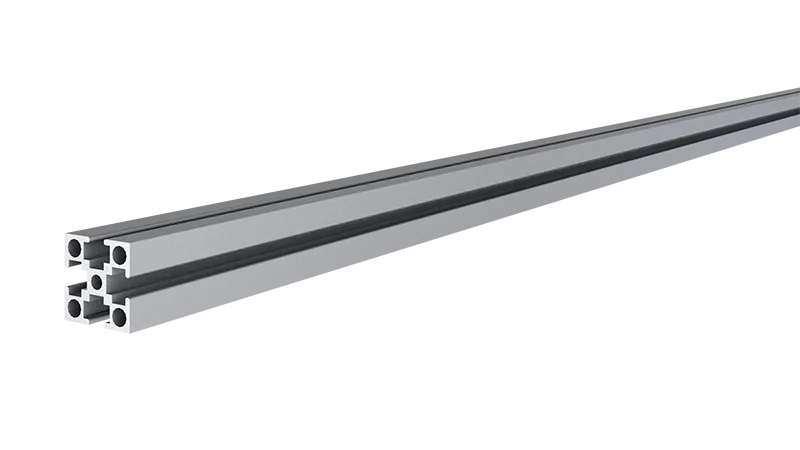
2020 National Standard Profile
45° external bending joint, used for 45° external connection of two aluminum pipes.
In the fast-paced world of 3C manufacturing—where smartphones, laptops, and tablets roll off production lines by the millions—efficiency isn't just a buzzword; it's the lifeblood of staying competitive. Tight margins, rapidly evolving product designs, and the pressure to cut costs while boosting output have long pushed manufacturers to rethink how they build and operate their assembly lines. One of the biggest pain points? Waste. From excess material scrap to time wasted reconfiguring rigid workstations, waste eats into profits and slows innovation. But what if there was a way to build assembly lines that adapt as quickly as your products do, slashing waste in the process? Enter the 2020 National Standard Profile, a game-changing aluminum extrusion profile that's transforming 3C assembly floors worldwide. Let's dive into real case studies of how this modular solution, paired with clever aluminum profile accessories, is driving lean system principles to new heights—and cutting waste like never before.
The Hidden Cost of Rigidity in 3C Assembly
Walk into a traditional 3C assembly plant, and you'll likely see workbenches bolted to the floor, custom-built racks that fit one product model, and conveyors that can't be adjusted without calling in a team of engineers. These setups work—until they don't. When a new smartphone model with a different screen size hits the pipeline, or a laptop's motherboard design changes, those "permanent" structures become liabilities. Old workstations get scrapped, custom brackets end up in landfills, and teams spend weeks (and thousands of dollars) building replacements from scratch. It's a cycle of waste that manufacturers have accepted for decades—until now.
Consider the numbers: A typical mid-sized 3C manufacturer might spend 15-20% of its annual production budget on reconfiguring assembly lines for new products. Material waste alone—from unused steel pipes, non-recyclable plastic components, and custom-cut wood or metal—can account for 8-10% of total material costs. Add in labor hours lost to disassembly and rebuilds, and the price tag of rigidity becomes impossible to ignore. This is where the 2020 National Standard Profile steps in.
What Makes the 2020 National Standard Profile Different?
At its core, the 2020 National Standard Profile is a type of aluminum extrusion profile—meaning it's shaped by forcing aluminum through a die to create uniform, standardized cross-sections. But what sets it apart is its focus on modularity and compatibility. Unlike custom-made metal profiles, these aluminum extrusion profiles come in fixed, widely accepted dimensions (think 20mm x 20mm, 30mm x 30mm, etc.), making them instantly compatible with a range of aluminum profile accessories: connectors, end caps, hinges, and brackets that snap or bolt together without welding or specialized tools. It's like building with high-strength Legos for adults—only these "blocks" can support heavy loads, resist wear, and be taken apart and reassembled in hours, not days.
This standardization is key to waste reduction. Instead of ordering custom parts for every new product line, manufacturers can stock a few sizes of 2020 National Standard Profile and mix-and-match accessories to create workbenches, flow racks, or conveyors tailored to each job. When production needs change, those components aren't scrapped—they're repurposed. A workbench from a smartphone line might become a testing station for tablets; a flow rack used for laptop motherboards can be reconfigured to hold camera modules. It's lean system thinking in action: eliminate waste by maximizing the value of every component.

Case Study 1: Smartphone Manufacturer Cuts Material Waste by 35%
The Problem: Custom Racks for Every Model
A leading Chinese smartphone brand was struggling with a familiar issue: every new phone model required custom-built material racks to hold delicate camera modules, batteries, and screens. With 4-5 new models launching annually, the plant was drowning in "one-and-done" racks. By the end of each product cycle, these racks—made from non-standard steel pipes and plastic brackets—were too specialized to reuse, so they ended up in scrap yards. Material waste from rack production alone was costing the company $120,000 annually, not to mention the 200+ labor hours spent building new racks each quarter.
The Solution: 2020 National Standard Profile Racks
In 2023, the manufacturer partnered with a supplier to replace all custom racks with ones built from 2020 National Standard Profile and aluminum profile accessories. The new racks used 30mm x 30mm aluminum extrusion profiles as the main frame, connected with quick-release hinges and adjustable shelf brackets. Even better, the shelves were lined with swivel roller balls (a small but critical aluminum profile accessory) to let workers slide components in and out without lifting, reducing ergonomic strain too.
The Results: 35% Less Material Waste, 40% Faster Reconfigurations
Within six months, the results spoke for themselves. When the next smartphone model launched, instead of building 12 new racks, the team disassembled 8 old ones and reassembled them using the same 2020 National Standard Profile components. Material waste from rack production dropped from 12 tons/year to just 7.8 tons/year—a 35% reduction. Labor hours spent on rack reconfiguration plummeted by 40%, and the company saved $42,000 in the first year alone. "We used to see racks as disposable," said the plant manager. "Now, they're assets we can keep refining."
Case Study 2: Laptop Assembly Plant Slashes Changeover Time by 50%
The Problem: Rigid Workstations Slow Down New Product Launches
A Taiwanese laptop manufacturer faced a different challenge: its assembly line workstations were built with fixed-height steel frames and custom-cut wooden tops. When a new laptop model required workers to install components at a different angle (to accommodate a slimmer chassis), the entire workstation had to be rebuilt. Changeover times for a single line averaged 14 days, delaying product launches and tying up workers in non-value-added tasks.
The Solution: Modular Workstations with 2020 National Standard Profile
The plant turned to 2020 National Standard Profile to build modular workstations. Using 40mm x 40mm aluminum extrusion profiles for the frame and adjustable aluminum profile accessories like height-locking joints and swivel brackets, the new workstations could be reconfigured in hours. Workers could adjust the table height with a wrench, swap out tops for ones with built-in cable management, or add side shelves—all without cutting new materials or welding.
The Results: 50% Faster Changeovers, 25% Less Labor Waste
The first test came when the company launched a lightweight laptop line. Instead of 14 days, the team reconfigured 12 workstations in just 7 days—a 50% reduction in changeover time. Labor hours spent on reconfiguration dropped from 360 to 270, saving $18,000 in labor costs per launch. Perhaps more importantly, the plant could now test new workstation layouts on the fly, improving ergonomics and cutting worker fatigue. "Our assembly line used to feel like a museum—fixed in time," noted the operations director. "Now, it's a living system that grows with us."
By the Numbers: Workstation Changeover Metrics
| Metric | Before (Rigid Workstations) | After (Modular Workstations) | Reduction |
|---|---|---|---|
| Changeover Time (Days) | 14 | 7 | 50% |
| Labor Hours Spent | 360 | 270 | 25% |
| Material Waste (kg/Changeover) | 850 | 120 | 86% |
| Cost per Changeover ($) | $32,000 | $14,000 | 56% |
Why Aluminum Profile Accessories Matter
It's easy to focus on the aluminum extrusion profile itself, but the real magic lies in the aluminum profile accessories that make modularity possible. Take the 2020 National Standard Profile's T-slot design: grooves along the profile's length let accessories like brackets, shelves, and even small tools slide into place and lock with a screw. Need to add a light above a workstation? Slide a bracket into the T-slot, tighten the screw, and you're done. No drilling, no welding, no waste.
Connectors are another star player. Instead of welding two aluminum extrusion profiles at a 90-degree angle, you can use a 90° aluminum profile connector that snaps into the T-slots and secures with a hex key. If you later need a 45-degree angle, just swap the connector—no new materials required. Even small accessories like end caps (which protect workers from sharp edges) or rubber strips (to dampen noise) are standardized, so you never have to order custom parts again. It's this ecosystem of compatible components that turns the 2020 National Standard Profile from a material into a lean system.
Beyond Waste Reduction: The Ripple Effects of Modularity
The benefits of the 2020 National Standard Profile go far beyond cutting material and labor waste. Manufacturers using the system report better inventory management (fewer custom parts cluttering warehouses), faster onboarding of new workers (modular systems are intuitive to assemble), and even improved sustainability. Aluminum is 100% recyclable, and since components are reused instead of scrapped, the carbon footprint of production lines drops significantly. One smartphone manufacturer calculated that switching to aluminum extrusion profiles reduced its annual carbon emissions by 12 tons—just from cutting material waste.
The 3C industry has always thrived on innovation, but for too long, assembly lines have been stuck in the past—rigid, wasteful, and slow to adapt. The 2020 National Standard Profile, paired with aluminum profile accessories, is changing that. By embracing modularity and lean system principles, manufacturers are not just cutting waste; they're building assembly lines that can evolve with their products, their workers, and their bottom lines. As one plant manager put it: "Waste isn't just about what you throw away. It's about what you could have reused, but didn't." With the 2020 National Standard Profile, the future of 3C assembly is looking a lot less wasteful—and a lot more flexible.