- Company Articles
- Industry articles
- Industry standards
- 3C Assembly Lines: How 2020r EU Standard Aluminum Profile Enhances Efficiency

3C Assembly Lines: How 2020r EU Standard Aluminum Profile Enhances Efficiency
Related Product
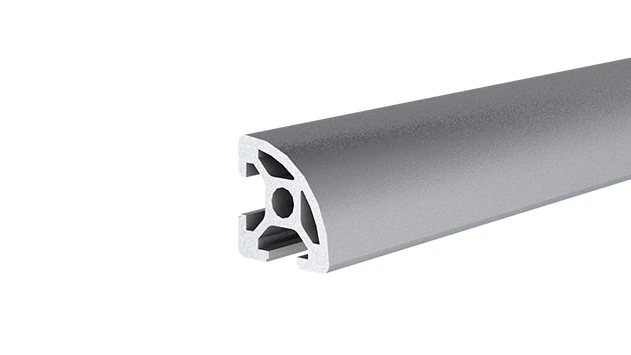
2020R EU Standard Aluminum Profile
2020R is a 2.00 x 2.00CM fractional 20 series square extrusion T-slot profile with four open T-slots, two side with 2.00cm face, the other side with round face. The profile has align-a-grooves to assist in aligning connecting profiles.
The Hidden Cost of "Good Enough" Workstations in 3C Manufacturing
Walk into any 3C (computers, communications, consumer electronics) assembly plant, and you'll feel the buzz immediately. Conveyor belts hum, workers in anti-static smocks huddle over microscopes, and the air smells faintly of plastic and solder. It's a world of precision—where a 0.1mm misalignment can ruin a smartphone camera, and a single dust particle can short-circuit a laptop motherboard. But amid this focus on tiny details, there's a silent efficiency killer: the workstations themselves.
For years, many factories have settled for "good enough" setups: heavy steel workbenches bolted to the floor, rickety wooden shelves, and roller tracks that jam more often than they roll. Workers contort their bodies to reach tools, parts slide off uneven surfaces, and reconfiguring a line for a new product model means days of welding and drilling. No one talks about it much—it's just "how things are done." But these inefficiencies add up: lost time, increased errors, and workers going home with aching backs.
Here's the truth: In 3C manufacturing, where margins are tight and production cycles move at lightning speed, "good enough" workstations aren't enough. The solution? It starts with the backbone of any efficient line: the materials that build those workstations. And today, one material is redefining what's possible: the 2020r EU standard aluminum profile.
Why Aluminum Profiles? The Unsung Hero of Lean Manufacturing
Before diving into the 2020r specifically, let's talk about why aluminum profiles have become a staple in modern factories. Unlike steel, aluminum is lightweight but surprisingly strong—think of how a bicycle frame can support a 200-pound rider without weighing them down. It's also corrosion-resistant, which matters in 3C plants where humidity and cleaning chemicals are constant. But the real game-changer? Modularity.
Traditional steel workstations are built to last… forever. That sounds good until you need to adjust the height for a shorter worker, add a shelf for new tools, or reconfigure the line for a smaller product. With steel, you're stuck—welding and cutting are the only options, and that means downtime. Aluminum profiles, by contrast, use T-slot designs and bolt-on joints. Want to add a lamp? Screw a bracket into the slot. Need a longer roller track? Slide in a new section and tighten a connector. No welding, no specialized tools, just adaptability.
And among aluminum profiles, the 2020r EU standard stands out. At 20mm x 20mm, it's compact enough to fit into tight assembly lines (critical for 3C, where every inch is precious) but robust enough to handle the daily grind of tools, parts bins, and worker activity. Let's break down why this specific profile is transforming how 3C factories operate.

2020r EU Standard Aluminum Profile: The Details That Drive Efficiency
The "2020r" in the name tells you the basics: 20mm width, 20mm height, and a rounded (r) edge design. But beyond the dimensions, it's the engineering details that make this profile a workhorse for 3C lines. Let's start with the material itself: 6063-T5 aluminum alloy. This isn't the soft aluminum of a soda can—it's heat-treated to be strong yet malleable, with a tensile strength of 180 MPa (that's about 26,000 psi, enough to hold a 50kg toolbox without bending).
Then there's the T-slot. Running along each edge of the profile, this slot is the key to modularity. It's sized to fit standard M5 or M6 bolts, meaning you can attach almost any accessory—shelves, brackets, LED lights, even anti-static wristband holders—without drilling new holes. For 3C assemblers, this means tools and parts stay within arm's reach, cutting down on "reach and stretch" motions that waste 5-10 seconds per cycle. Multiply that by 1,000 cycles a day, and you're looking at hours of recovered productivity.
The rounded edges aren't just for looks, either. In fast-paced lines, sharp edges can catch gloves or scratch delicate components. The 2020r's smooth curves reduce snags, and the anodized surface finish (a thin layer of oxide) resists scratches and fingerprints—important when workers are handling oily tools or sticky flux residue. Plus, it's easy to clean with a damp cloth, which is critical in 3C environments where dust and debris can ruin circuit boards.
Key Specs at a Glance:
- Dimensions: 20mm (W) x 20mm (H) x variable length (1m-6m)
- Material: 6063-T5 aluminum alloy
- T-slot size: 6mm (width) x 8mm (depth)
- Load capacity: Up to 80kg per linear meter (when properly supported)
- Surface finish: Anodized (silver, black, or custom colors on request)
- Dimensions: 20mm (W) x 20mm (H) x variable length (1m-6m)
- Material: 6063-T5 aluminum alloy
- T-slot size: 6mm (width) x 8mm (depth)
- Load capacity: Up to 80kg per linear meter (when properly supported)
- Surface finish: Anodized (silver, black, or custom colors on request)
From Workbench to Roller Track: How 2020r Profiles Transform the Line
To understand the impact of 2020r profiles, let's walk through a typical 3C assembly line—from the incoming parts area to the final inspection station—and see how this material elevates every step.
1. The Aluminum Workbench: Where Precision Meets Comfort
The workbench is the assembler's command center, and 2020r profiles turn it from a static table into a customizable workspace. Traditional workbenches are often too high or too low, forcing workers into awkward postures that lead to fatigue and errors. With 2020r, height-adjustable legs (fitted via T-slot brackets) let each worker set their bench to elbow height, reducing strain on shoulders and wrists.
The top surface matters too. Many 2020r workbenches use aluminum honeycomb panels—lightweight but rigid, with a non-slip, anti-static coating. This is a game-changer for handling small parts like microchips or screws, which used to slide off smooth steel surfaces. And because the panels are modular, you can replace a damaged section (say, from a dropped tool) without rebuilding the entire bench.
"I used to spend 10 minutes every hour just picking up screws that rolled off my bench," says Li Wei, an assembler at a smartphone factory in Guangdong. "Now the anti-slip top keeps everything in place, and I can lower the bench when I'm sitting, raise it when I stand. My back pain? Gone. And I'm finishing 15 more units a day."
2. Roller Tracks: Smooth Flow, No Jams
Parts don't just sit on the workbench—they need to move. Roller tracks carry circuit boards from soldering to testing, or phone cases from printing to assembly. Traditional steel roller tracks are heavy, prone to rust, and the rollers often seize up when dust gets stuck. 2020r profiles solve this with lightweight aluminum or plastic roller tracks that clip directly into the T-slot.
The magic is in the roller design. Many 2020r-compatible tracks use 1-inch swivel roller balls (a keyword from the list!) or plastic guide rails, which glide even with light loads—like a 50g phone back cover. The tracks are also easy to slope: by adjusting the height of the 2020r support brackets, you can set a gentle incline, letting gravity move parts instead of workers pushing them. At one tablet factory we visited, this cut manual material handling by 40%.
3. Caster Wheels: Mobility Without Compromise
Not every workstation needs to stay put. Cleaning crews need access to the line at night, and some lines reconfigure weekly for new product runs. That's where caster wheels (another keyword!) come in. 2020r profiles pair with heavy-duty casters that bolt into the T-slot, turning fixed benches into mobile workstations. These aren't flimsy office chair wheels—they're 4-inch steel-core casters with brake locks, so you can roll the bench into place, hit the brake, and it stays rock-steady during assembly.
At a smartwatch factory in Suzhou, supervisors used to spend 8 hours reconfiguring lines for new watch models. Now, with 2020r-based mobile workstations, they wheel the old setup out, roll the new one in, and lock the casters—done in 2 hours. "It's like rearranging furniture instead of rebuilding a wall," says the plant manager.
Traditional vs. 2020r Aluminum Profile Workstations: A Real-World Comparison
| Feature | Traditional Steel/Wood Workstations | 2020r EU Standard Aluminum Profile Workstations |
|---|---|---|
| Setup Time | 2-3 days (welding, drilling, painting) | 2-3 hours (bolt-together assembly) |
| Reconfiguration Flexibility | Limited (requires cutting/welding) | High (modular T-slot accessories) |
| Worker Fatigue (10-hour shift) | Reported by 65% of workers (awkward postures) | Reported by 15% of workers (adjustable height/ergonomics) |
| Maintenance Cost (per year) | $500-$800 (rust removal, part replacement) | $50-$100 (occasional bolt tightening) |
| Productivity Gain (per worker/day) | Baseline (0% improvement) | 15-25% (faster access, fewer errors) |
The numbers speak for themselves. But beyond the metrics, there's a cultural shift. Factories using 2020r profiles report higher worker morale—because when tools work with you, not against you, every shift feels less like a grind.
Beyond the Line: 2020r Profiles and the Lean System Mindset
Lean manufacturing isn't just about cutting waste—it's about creating systems that adapt and improve over time. 2020r profiles embody this mindset. They're not a one-and-done solution; they're a platform for continuous improvement.
For example, a laptop assembly line noticed workers were spending too much time fetching screws from a central bin. Using 2020r profiles, they added a small parts rack (3 rows, 3 floors—sound familiar?) mounted directly above the workbench. Now screws are 6 inches from the assembler's hand, saving 2 seconds per unit. Over a month, that's 83 hours of saved time—enough to train two new workers.
Or take sustainability. Traditional steel workstations end up in landfills when they're obsolete. 2020r profiles, though, are 100% recyclable, and their modular design means components can be repurposed. A roller track from a phone line might get reused as a shelf in a warehouse, or old workbench legs can become part of a new material rack. It's lean manufacturing at its greenest.
Choosing the Right Supplier: What to Look For
Not all 2020r profiles are created equal. To maximize efficiency, you need a supplier who understands 3C manufacturing's unique demands. Look for three things:
1. Precision Machining:
The T-slot must be consistent across all profiles—even a 0.1mm variance can make accessories fit loosely. Ask for tolerance specs (aim for ±0.05mm).
2. Accessory Compatibility: A good supplier offers more than just profiles. They should have a full line of roller tracks, caster wheels, workbench tops, and joints that fit seamlessly with the 2020r system.
3. Technical Support: Even the most modular system needs guidance. Look for suppliers who provide assembly guides, CAD files, and on-site training to help your team get the most out of the profiles.
2. Accessory Compatibility: A good supplier offers more than just profiles. They should have a full line of roller tracks, caster wheels, workbench tops, and joints that fit seamlessly with the 2020r system.
3. Technical Support: Even the most modular system needs guidance. Look for suppliers who provide assembly guides, CAD files, and on-site training to help your team get the most out of the profiles.
The Future of 3C Assembly: Small Profiles, Big Impact
As 3C products get smaller and more complex—think foldable phones or AR glasses—factories need workstations that can keep up. The 2020r EU standard aluminum profile isn't just a tool for today; it's a foundation for tomorrow. Its compact size, modularity, and durability make it ready for the next generation of electronics manufacturing.
So the next time you pick up your smartphone or laptop, take a moment to appreciate the unseen work behind it—not just the microchips or the design, but the workstations that brought it to life. With 2020r aluminum profiles, those workstations are no longer silent efficiency killers. They're partners in precision, adaptability, and progress. And in the fast-paced world of 3C manufacturing, that's not just an advantage—it's a necessity.