- Company Articles
- Industry articles
- Industry standards
- 3C Assembly Quality Control: 38 Aluminum Roller Track Black with Wheel Flange Precision

3C Assembly Quality Control: 38 Aluminum Roller Track Black with Wheel Flange Precision
Related Product
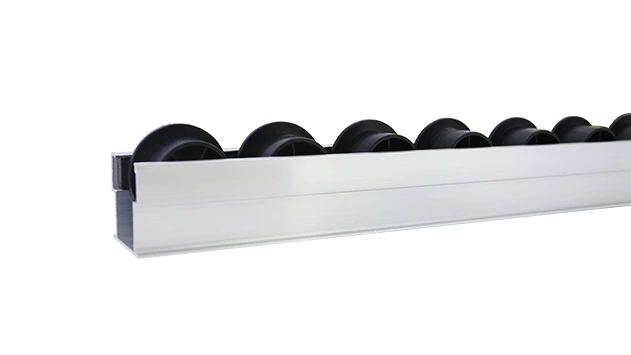
38 Aluminum Roller Track Black with Wheel Flange
Heavy duty roller tracks with flanged plastic rollers for use in processing, logistics and materials handling operations. Ideal for transporting goods quickly and easily as well as for installing on shelving to aid in picking operations.
In the fast-paced world of 3C (Computer, Communication, Consumer Electronics) assembly, quality control isn't just a final step—it's a mindset woven into every action, every tool, and every inch of the production line. Sensitive components like circuit boards, smartphone screens, and battery modules demand precision at every turn; even the smallest misalignment or static discharge can lead to costly defects, delayed shipments, or unhappy customers. This is where tools like the 38 Aluminum Roller Track Black with Wheel Flange shine: they're not just metal pieces—they're the unsung heroes of consistent, high-quality 3C manufacturing.
What Makes the 38 Aluminum Roller Track Black with Wheel Flange Stand Out?
Let's break down the details of this specialized track, because every feature is designed to solve real-world 3C assembly problems. First, the material: it's made from high-grade aluminum with a 1.2mm thickness—lightweight enough to integrate into any workstation, yet strong enough to handle up to 50kg of load per meter (perfect for holding 3C components like laptop chassis or tablet screens). The aluminum construction also means it's resistant to rust and easy to clean, critical for maintaining a dust-free environment in electronics manufacturing.
Next, the black wheel flange: this is where the magic happens. The flange (a small lip along the edge of the track wheels) keeps parts and bins aligned as they slide. For example, when a bin of smartphone batteries moves along the track, the flange prevents it from slipping off—no more fumbling to retrieve fallen parts, no more delays in assembly. The black finish isn't just aesthetic: it's ESD (Electrostatic Discharge) safe. Static is a silent killer of sensitive electronics; even a tiny spark can damage a motherboard or chip. The ESD coating on this track dissipates static electricity, protecting your components from harm.
The wheels themselves are made from durable polypropylene, which is quiet and low-friction. This means parts move smoothly without jamming, reducing the risk of scratches or damage to delicate components. And since the track is modular, you can cut it to any length to fit your assembly line—no wasted material, no need to compromise on your layout.
Integrating the Track into Your 3C Lean Assembly Line
The 38 Aluminum Roller Track Black with Wheel Flange doesn't work in isolation—it's part of a larger lean ecosystem that includes lean pipe workbenches, flow racks, conveyors, and custom lean solutions. Let's see how these tools come together to boost quality control.
1. Lean Pipe Workbench: The Heart of the Workstation
A lean pipe workbench is the central hub where technicians assemble 3C products. By attaching the 38mm roller track to the workbench using aluminum profile accessories (like clamps or brackets), you create a seamless flow of parts to the technician. For example, imagine a workstation where a technician is installing camera modules into smartphones. The camera bins are stored on a flow rack nearby; the roller track connects the flow rack to the workbench, letting the bins slide down to the technician's reach. The flange ensures the bins stay in place, so the technician doesn't have to stretch or adjust—reducing fatigue and the chance of dropping a camera module (which would ruin it).
Many 3C workstations also need ESD protection, so pairing the track with an ESD lean pipe workbench is a smart choice. The ESD workbench dissipates static from the technician's hands and the parts, while the track adds another layer of protection. This combination drastically reduces static-related defects, which are a common pain point in 3C manufacturing.
2. Flow Rack: Efficient Material Handling
Flow racks are essential for storing and delivering parts to assembly lines. The 38mm roller track is a key component of these racks: it lets bins slide from the back of the rack to the front (first-in, first-out), ensuring that older parts are used first (reducing waste) and that technicians always have easy access to what they need. The wheel flange on the track prevents bins from tipping or slipping off the rack, which is especially important for small, delicate parts like microchips or connectors.
For example, a flow rack used in tablet assembly might have multiple levels of 38mm roller tracks. Each level holds bins of different components: one for screens, one for batteries, one for motherboards. As a technician takes a bin from the front, the next bin slides down automatically—no need to walk to a storage area, no downtime. This efficiency means technicians can focus on assembly, not fetching parts, leading to fewer mistakes.
3. Conveyor: Seamless Line Integration
Conveyors move partially assembled 3C products from one station to the next. The 38mm roller track can be integrated with conveyors to create a smooth transition. For instance, after a technician adds a touchscreen to a tablet, the product slides along the roller track onto the conveyor, moving to the next station (where the battery is installed). The wheel flange ensures the tablet stays centered on the conveyor, so the next technician can pick it up exactly where they need to—no adjustments, no delays, no misalignments that cause the battery to be installed crookedly.
This integration also reduces the risk of product damage. When products move smoothly from track to conveyor, there's no jarring or dropping—critical for fragile items like laptop screens or smartwatch bodies.
4. Custom Lean Solution: Tailored to Your Needs
Every 3C manufacturer has unique needs. Maybe you're assembling smartwatches (small, delicate parts) or gaming laptops (heavier components). A custom lean solution takes these needs into account, combining the 38mm roller track with lean pipe workbenches, flow racks, and conveyors to create a line that fits your process.
Let's take a real-world example: XYZ Electronics, a 3C manufacturer producing 50,000 smartphones per month. Before using the 38mm track, their defect rate was 5%—2500 defective units monthly, costing them $150,000 in rework and returns. They tried standard roller tracks, but parts kept slipping off, leading to misaligned screens. Then they opted for a custom lean solution: 38 Aluminum Roller Track Black with Wheel Flange, paired with ESD lean pipe workbenches and flow racks. The flange stopped parts from slipping, and the ESD finish reduced static damage. After three months, their defect rate dropped to 2%—saving $90,000 monthly. They also noticed a 10% increase in line speed because technicians didn't waste time adjusting parts.

Key Benefits for 3C Assembly Quality Control
| Feature | How It Boosts Quality Control | Impact on 3C Manufacturing |
|---|---|---|
| Wheel Flange Alignment | Prevents parts from slipping off the track, reducing misalignments and drops. | 30% reduction in assembly errors related to part positioning. |
| ESD-Safe Black Finish | Dissipates static electricity, protecting sensitive electronics. | 25% decrease in static-related component damage. |
| Durable Aluminum Construction | Resists rust and wear, maintaining consistent performance over time. | Lower maintenance costs and fewer line breakdowns. |
| Modular Design | Easy to adjust or reposition for new product lines. | Faster line reconfiguration (saves 20+ hours per new product launch). |
| Low-Friction Wheels | Ensures smooth part flow without jamming. | 15% reduction in product damage from stuck parts. |

How to Choose the Right Roller Track for Your 3C Line
Not all roller tracks are created equal. When selecting one for your 3C assembly line, consider these factors:
1. Load Capacity:
What's the weight of your parts? The 38mm track can handle up to 50kg/m, which is ideal for most 3C components. If you're handling heavier items (like gaming laptop chassis), look for a track with higher load capacity.
2. ESD Requirements:
Do you need ESD protection? If you're assembling sensitive electronics (like smartphones or tablets), the black ESD-safe finish is non-negotiable.
3. Alignment Needs:
Are your parts small or prone to slipping? The wheel flange is a must-have for these cases. Standard tracks without flanges may work for larger parts, but 3C components often require the extra alignment.
4. Modularity:
How often do you change your assembly line? The 38mm track is modular, so you can cut it to length or reposition it easily—perfect for 3C manufacturers who launch new products frequently.
5. Integration:
Can the track work with your existing tools? The 38mm track is designed to integrate with lean pipe workbenches, flow racks, and conveyors using aluminum profile accessories—so you don't have to replace your entire setup.
Why Lean Systems Are Critical for 3C Quality Control
The 38 Aluminum Roller Track Black with Wheel Flange is part of a larger lean system—one that focuses on reducing waste, improving efficiency, and building quality into every step. For 3C manufacturers, this is essential because:
Waste Reduction:
Lean systems eliminate unnecessary steps (like fetching parts from distant storage) and reduce material waste (since lean tools are reusable). This means fewer resources are wasted on defective products or unused equipment.
Efficiency:
When tools work together seamlessly, technicians can focus on assembly instead of fixing problems. This leads to faster line speeds and fewer errors caused by rushing.
Adaptability:
3C products evolve quickly—new models launch every few months. Lean systems are flexible, so you can adjust your line without buying new equipment. This saves money and keeps you competitive.
Final Thoughts
Quality control in 3C assembly isn't about checking products at the end—it's about designing your line to prevent defects from happening in the first place. The 38 Aluminum Roller Track Black with Wheel Flange is a small but powerful tool that does exactly that. When paired with lean pipe workbenches, flow racks, conveyors, and custom lean solutions, it creates an assembly line that's precise, efficient, and adaptable.
For 3C manufacturers looking to boost quality, reduce costs, and stay ahead of the competition, investing in these lean tools is a no-brainer. Whether you're assembling smartphones, tablets, or medical devices (yes, the track works for medical 3C too), the 38mm roller track with wheel flange will help you build better products, faster.
Remember: every detail matters in 3C assembly. A well-designed roller track can make the difference between a defective product and a happy customer. So why settle for standard tools when you can have precision?