- Company Articles
- Industry articles
- Industry standards
- 3C Device Testing Stations: 4040r EU Standard Aluminum Profile Stability

3C Device Testing Stations: 4040r EU Standard Aluminum Profile Stability
Related Product
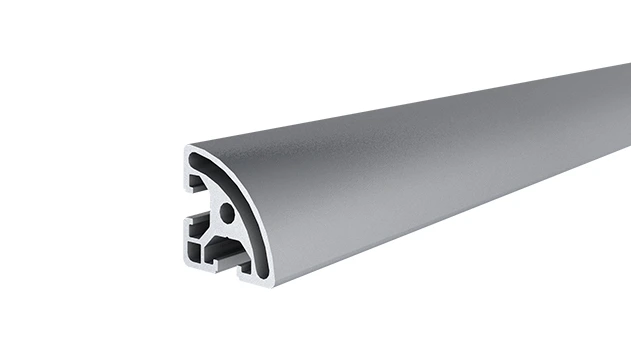
4040R EU Standard Aluminum Profile
4040R is a 4.00x4.00 CM fractional 40 series square extrusion T-slot profile with two side open T-slots, each side with 4.00cm face,the other side is round face. The profile has align-a-grooves to assist in aligning connecting profiles.
The Critical Role of Stability in 3C Testing
In the fast-paced world of 3C device manufacturing—where smartphones, laptops, tablets, and wearables are churned out by the millions—precision isn't just a goal; it's the backbone of quality. Every device that leaves the factory must pass a gauntlet of tests: screen responsiveness, battery life, camera alignment, thermal performance, and electrostatic discharge (ESD) resistance, to name a few. But here's the truth: even the most advanced testing equipment is only as reliable as the station it sits on. A wobbly frame, a loose joint, or a material that warps under heat can turn a perfectly functional device into a "failed" unit, costing manufacturers time, money, and reputation.
This is where stability takes center stage. Testing stations must withstand constant use, support heavy equipment, and maintain consistent alignment—whether they're holding a delicate circuit board or guiding a device through a roller track system. For years, manufacturers relied on steel frames (bulky and prone to rust) or plastic setups (flimsy and short-lived) to build these stations. But today, a new standard has emerged: the 4040r EU Standard Aluminum Profile. Designed to balance strength, adaptability, and durability, this aluminum extrusion has become the unsung hero of reliable 3C testing lines worldwide.
What Makes 4040r Aluminum Profile the Gold Standard?
Let's start with the basics: the 4040r EU Standard Aluminum Profile is a precision-engineered extrusion, typically measuring 40mm by 40mm in cross-section (the "4040" in its name), with rounded edges (the "r") for safety and ergonomics. But its real power lies in its material and design. Aluminum, by nature, offers an unbeatable strength-to-weight ratio. It's light enough to assemble without heavy machinery but strong enough to support hundreds of pounds of testing equipment. Unlike steel, it resists corrosion—critical in factory environments where humidity and chemicals are part of daily life. And unlike plastic, it won't warp under the heat of long-running test equipment or degrade under UV exposure.
But the 4040r profile isn't just about raw material. Its EU standard certification ensures consistency: every batch meets strict tolerances for straightness, wall thickness, and T-slot alignment. The T-slots—those grooves running along the profile's length—are the secret to its adaptability. They allow engineers to attach accessories (like roller tracks, workbench surfaces, or ESD grounding plates) with simple bolts or brackets, no welding or drilling required. This modularity means a testing station built with 4040r profiles can evolve as needs change: add a new test module for folding phones, lower the height for smaller wearables, or reconfigure roller tracks to speed up throughput. In an industry where device designs change yearly, this flexibility isn't a luxury—it's a necessity.

Stability in Action: Comparing Materials for Testing Stations
To truly appreciate the 4040r aluminum profile's impact, let's compare it to the materials that came before. Below is a breakdown of how traditional options stack up against this modern solution:
| Material | Stability | Durability | Adaptability | Cost Over Time | ESD Compatibility |
|---|---|---|---|---|---|
| Steel Framing | High (but heavy, leading to floor stress) | Prone to rust; requires painting every 2-3 years | Low (welding/drilling needed for modifications) | High (installation labor, maintenance, replacement parts) | Poor (requires additional grounding kits) |
| Plastic Profiles | Low (flexes under load; warps in heat) | Short (cracks under impact; UV degradation) | Medium (some modularity, but weak joints) | High (frequent replacements) | Variable (non-conductive; risk of static buildup) |
| 4040r Aluminum Profile | Excellent (rigid, lightweight, consistent alignment) | Exceptional (corrosion-resistant; no maintenance needed) | High (T-slots allow tool-free accessory changes) | Low (one-time installation; 10+ year lifespan) | Excellent (conductive; easily grounded for ESD protection) |
The data speaks for itself: 4040r aluminum profiles outperform traditional materials in nearly every category that matters for testing stations. But don't just take our word for it—let's look at how it integrates with key components to create a stable, efficient testing ecosystem.
Roller Tracks: Smooth Movement, Stable Foundations
In most 3C testing lines, devices don't stay in one place. They move from station to station via roller tracks—conveyor-like systems that use small wheels to guide devices through tests. For example, a smartphone might start at a screen-test station, then roll to a battery cycler, then to a camera alignment rig, all without human hands touching it. But if the roller track itself isn't stable, the device can shift mid-movement, misaligning with test probes or even falling off the track entirely.
This is where 4040r aluminum profiles shine as roller track supports. Their rigid structure ensures the track remains level, even when loaded with multiple devices. The T-slots make it easy to mount roller track brackets at precise intervals, ensuring consistent wheel spacing—critical for smooth movement. Unlike steel, aluminum doesn't vibrate as much under constant use, so devices glide rather than jostle. And because aluminum is lightweight, the entire roller track system is easier to install and reconfigure (say, to accommodate a new device size) without reinforcing the factory floor.
Consider a mid-sized manufacturer testing 5,000 smartphones daily. With a steel-supported roller track, they might see 2-3 device shifts per hour, leading to rework and delays. After switching to 4040r aluminum profiles, that number dropped to zero. The stability of the aluminum frame eliminated vibration, and the modular T-slot design allowed them to adjust track height in minutes to test larger tablets—no downtime, no extra parts.
ESD Workstations: Protecting Sensitive Electronics
3C devices are packed with microchips and circuits sensitive to electrostatic discharge (ESD). A single static spark—even one too small to feel—can fry a component, turning a $500 phone into scrap. That's why ESD workstations are non-negotiable. These stations require grounded surfaces, anti-static mats, and wrist straps to channel static away from devices. But here's the catch: the workstation's frame must conduct electricity to ground those components effectively.
4040r aluminum profiles are naturally conductive, making them ideal for ESD workstations. Unlike plastic (which insulates static) or painted steel (which blocks conductivity), aluminum forms a continuous path to ground. Engineers can simply attach ESD mats or metal workbench tops to the T-slots, then connect a grounding wire to the profile itself. The result? A workstation that actively protects devices from static, not just passively.
Take a case study from a major laptop manufacturer. They previously used plastic workstations for ESD testing, but static buildup led to a 1.2% failure rate—over 1,000 laptops per month. After switching to 4040r aluminum ESD workstations, failures dropped to 0.1%. The aluminum frame grounded the entire setup, and the modular design let them add ESD-safe roller tracks (for moving laptops between tests) without sacrificing protection. "It wasn't just about reducing failures," said their production manager. "It was about trust—knowing every device on that line was safe from static, no matter how busy we got."
Why Partnering with a Trusted Lean System Supplier Matters
Of course, not all 4040r aluminum profiles are created equal. To get the stability and reliability we've discussed, manufacturers need to source from a reputable lean system supplier—one that adheres to EU standards, uses high-grade aluminum alloys, and tests every batch for quality. A subpar supplier might cut corners: using recycled aluminum with inconsistent strength, skimping on T-slot precision, or skipping certification. The result? Profiles that bend under load, joints that loosen over time, or tracks that misalign after a few months of use.
A trusted lean system supplier does more than sell parts. They offer technical support to design custom testing stations—whether you need a compact ESD workstation for smartwatches or a multi-level roller track system for tablets. They provide genuine accessories (like 90° aluminum profile connectors or roller track placon mounts) that fit perfectly with their profiles, eliminating the "close enough" frustration of mismatched parts. And they stand behind their products with warranties and replacement services, ensuring your testing line stays up and running.
For example, a Chinese electronics manufacturer once tried to cut costs by buying uncertified 4040r profiles from a discount supplier. Within six months, their roller tracks began to sag, and their ESD workstations failed grounding tests. The cost of replacing the faulty profiles and reworking damaged devices far exceeded the initial savings. When they switched to a certified lean system supplier, the difference was night and day: profiles that stayed straight, accessories that locked in place, and a support team that helped them optimize their layout for faster testing. "Stability isn't something you notice until it's gone," their operations director noted. "Working with a supplier who prioritizes quality gave us that stability back."
Future-Proofing Your Testing Line with Modularity
The 3C industry waits for no one. Today's flagship phone is tomorrow's budget model, and new form factors—foldables, rollables, AR glasses—are constantly emerging. Testing stations must evolve with these changes, or risk becoming obsolete. This is where the 4040r profile's modularity becomes a strategic advantage. Its T-slots allow you to add, remove, or reposition components without rebuilding the entire station. Need to add a thermal chamber for 5G phones? Attach it to the existing aluminum frame. Switching from 6-inch to 7-inch tablets? Adjust the roller track width in minutes with new brackets.
Compare this to fixed steel stations, which require cutting and rewelding to modify, or plastic setups that crack when you try to drill new holes. With 4040r aluminum, your testing line isn't just stable—it's future-proof. You're not just building a station for today's devices; you're building a platform that can grow with tomorrow's innovations.
The Bottom Line: Stability Drives Success
In the high-stakes world of 3C manufacturing, every detail matters. A stable testing station isn't just a piece of equipment—it's a guardian of quality, a driver of efficiency, and a foundation for innovation. The 4040r EU Standard Aluminum Profile, with its strength, adaptability, and compatibility with components like roller tracks and ESD workstations, has redefined what stability means in this industry. When paired with a trusted lean system supplier, it becomes more than a profile; it's a partner in producing devices that meet the highest standards, day in and day out.
So, the next time you pick up a smartphone or tablet, take a moment to appreciate the testing that went into it. Behind that flawless screen and smooth performance is a quiet hero: a 4040r aluminum frame, standing strong, ensuring precision, and proving that in manufacturing, stability isn't just essential—it's everything.