- Company Articles
- Industry articles
- Industry standards
- 3C Electronics Assembly: 2040 EU Standard Aluminum Profile for Component Racks

3C Electronics Assembly: 2040 EU Standard Aluminum Profile for Component Racks
Related Product
2040 EU Standard Aluminum Profile
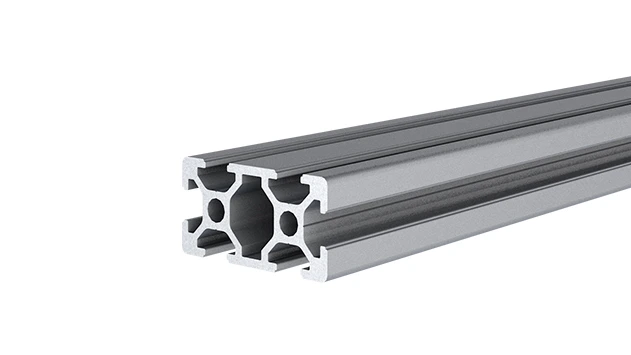
2040 is a 2.00 x 4.00CM fractional 20 series square extrusion T-slot profile with four open T-slots, two side with 2.00cm face, the other side with 4.00cm face. The profile has align-a-grooves to assist in aligning connecting profiles.
In the fast-paced world of 3C electronics assembly—where smartphones, laptops, wearables, and other tech gadgets are churned out by the millions daily—efficiency isn't just a buzzword; it's the backbone of survival. Every second saved on the production line, every square inch of floor space optimized, and every component handled with precision can mean the difference between meeting tight deadlines and falling behind. Yet, for all the innovation in the products themselves, many manufacturers still struggle with a foundational challenge: how to organize, store, and transport the tiny, delicate components that power these devices.
Walk into a typical 3C assembly plant, and you might see a hodgepodge of rigid steel racks, flimsy plastic bins, and workbenches that seem stuck in a bygone era. These setups often lead to wasted time—workers hunting for misplaced parts, bottlenecks in material flow, and frustrating delays when production lines need to reconfigure for new product models. Worse, they can compromise the integrity of sensitive components, like microchips or circuit boards, which are prone to damage from static electricity (ESD) or rough handling.
Enter the 2040 EU Standard Aluminum Profile—a humble-sounding component that's quietly revolutionizing how 3C manufacturers build their component racks, workbenches, and material flow systems. Lightweight yet surprisingly strong, modular by design, and compatible with a universe of aluminum profile accessories, this aluminum extrusion has become the unsung hero of lean, agile assembly lines. Let's dive into why it's become the go-to choice for forward-thinking 3C plants, and how it can transform your operations from chaotic to streamlined.
The 2040 EU Standard Aluminum Profile: What It Is (and Why It Matters)
First things first: What exactly is a 2040 EU Standard Aluminum Profile? At its core, it's an extruded aluminum rail with a cross-section measuring 20mm by 40mm, designed to the strict standards of the European union for industrial use. But that simple description barely scratches the surface of its utility. What makes it special is its T-slot design—longitudinal grooves running along its length that act as built-in attachment points for screws, brackets, and other aluminum profile accessories. This means you can mount, connect, or modify the profile without drilling holes or welding, turning it into a blank canvas for custom solutions.
Why does this matter for 3C electronics? Let's break it down. 3C components are tiny—think resistors smaller than a grain of rice, capacitors the size of a pencil eraser, and PCBs that flex like paper. Storing them requires racks that are precise, adjustable, and gentle. Steel racks, while strong, are heavy and hard to reconfigure. Plastic bins are lightweight but lack durability. The 2040 aluminum profile hits the sweet spot: it's 30% lighter than steel (making it easy to move and reposition), corrosion-resistant (so it won't degrade in factory environments with humidity or coolants), and strong enough to support up to 80kg per shelf when properly braced—more than enough for even dense component trays.
But the real magic is in its modularity. With aluminum profile accessories like 90° connectors, end caps, hinge brackets, and tool holders, you can build a component rack in the morning and reconfigure it into a workbench by afternoon. Need to add a shelf for a new batch of components? Slide a bracket into the T-slot, tighten a screw, and you're done. Want to tilt a shelf to reduce bending for workers? Swap out fixed brackets for adjustable ones. This flexibility is a game-changer in 3C assembly, where product cycles are measured in months, not years, and production lines need to pivot quickly.
Aluminum Profile Accessories: The Building Blocks of Customization
A profile is only as good as the accessories that bring it to life, and the 2040 EU Standard Aluminum Profile doesn't disappoint here. The market is flooded with aluminum profile accessories designed to turn basic rails into fully functional systems. Let's take a closer look at some of the most useful ones for 3C component storage:
- Connectors and Brackets: These are the glue that holds everything together. 90° angle brackets let you join profiles at right angles for vertical supports or horizontal shelves. Swivel brackets allow shelves to tilt, which is perfect for gravity-fed flow racks (more on those later). Even specialized connectors, like 45° or 135° joints, let you build angled structures to fit into tight corners—a boon for factories where space is at a premium.
- End Caps and Covers: Sharp edges are a hazard in any factory, especially when workers are handling small parts. Plastic end caps snap onto the ends of profiles, eliminating sharp corners and preventing dust or debris from collecting in the T-slots. Rubber T-slot covers do the same for unused slots, keeping them clean and safe.
- Tool Holders and Panels: Why stop at storage? Aluminum profile accessories like tool holder brackets let you mount screwdrivers, tweezers, or ESD wristband stations directly onto your component rack or workbench. Even pegboards or magnetic panels can be attached via T-slot screws, turning your rack into a centralized workstation where tools and parts are always within arm's reach.
- ESD-Compliant Add-Ons: Static electricity is the enemy of 3C components. Many aluminum profile accessories, like ESD-safe end caps or conductive brackets, are designed to dissipate static, protecting sensitive parts from damage. When paired with ESD mats on workbenches, this creates a fully grounded system that meets the strictest industry standards.
The beauty of these accessories is that they're universal. Most manufacturers design them to fit EU-standard profiles, so you're not locked into a single brand. This means you can mix and match parts from different suppliers to create a system that's tailored exactly to your needs—without breaking the bank.

From Racks to Workbenches: Real-World Applications in 3C Assembly
So, how do you actually use 2040 aluminum profiles and their accessories in a 3C plant? Let's explore three key applications where they shine: component racks, flow racks, and workbenches.
Component Racks: Organized Storage for Tiny Parts
Imagine a 3C factory producing smartwatches. Each watch requires dozens of components: batteries, sensors, display modules, and tiny screws. Storing these in generic bins scattered across steel racks is a recipe for chaos. With 2040 aluminum profiles, you can build a custom component rack where every shelf is sized to fit specific part trays—no more wasted space, no more mismatched bins. Add dividers (another handy aluminum profile accessory) to separate similar parts, and label holders to keep everything clearly marked. The result? Workers spend less time searching and more time assembling, cutting down on errors and delays.
Flow Racks: Keeping Materials Moving
Lean manufacturing relies on the principle of "just-in-time" material delivery—getting parts to the assembly line exactly when they're needed. Flow racks, which use gravity to feed components from the back (where stock is replenished) to the front (where workers pick them), are a cornerstone of this approach. 2040 aluminum profiles are ideal for building flow racks because they're lightweight enough to tilt slightly (for gravity flow) but strong enough to support rows of heavy component trays. Pair them with roller tracks (yes, another accessory!) and you've got a system where parts glide smoothly to the front, reducing manual lifting and ensuring a steady supply to the line.
Workbenches: Where Assembly Meets Precision
The assembly workbench is where the magic happens, and it needs to be as flexible as the products being built. A 2040 aluminum profile workbench can be customized with adjustable height (thanks to telescoping legs and locking brackets), integrated lighting (mounted via T-slots), and ESD mats to protect components. Add a shelf above for tools, a bin below for waste, and caster wheels (another accessory!) to move the bench wherever it's needed. When a new product model requires a different setup, just reconfigure the shelves or add a new attachment—no need to buy a whole new bench.
Lean System Integration: Reducing Waste, Boosting Productivity
At the heart of modern 3C manufacturing is the lean system—a philosophy focused on eliminating waste (time, space, materials) and continuous improvement. The 2040 aluminum profile aligns perfectly with this ethos, and here's how:
- Waste Reduction: Traditional fixed racks and workbenches often lead to "overprocessing" waste—spending time and money modifying rigid structures to fit new needs. With aluminum profiles, reconfiguration is fast and cheap, cutting down on this waste. They also reduce "motion waste" by keeping tools and parts within easy reach, so workers don't have to walk across the factory to grab what they need.
- Space Optimization: Factories pay a premium for floor space, and bulky steel racks eat into that valuable real estate. 2040 profiles are sleek and modular, allowing you to build vertical storage (tall racks) that takes up less floor space while holding more parts. This is especially critical in urban 3C plants where square footage is limited.
- Continuous Improvement: Lean isn't a one-and-done project; it's about constantly refining processes. Aluminum profiles make it easy to test new layouts—say, rearranging a flow rack to reduce picking time or adding a new shelf to a workbench to streamline a task. If it works, keep it; if not, tweak it again. This flexibility encourages experimentation and innovation on the factory floor.
One electronics manufacturer in Shenzhen, for example, reported a 22% reduction in material handling time after switching to 2040 aluminum profile component racks and flow racks. Workers no longer had to bend or stretch to reach parts, and the modular design made it easy to adjust shelf heights as new component sizes were introduced. The result? A leaner, more efficient line that could handle higher volumes without adding staff.
Case Study: How XYZ Electronics Cut Setup Time by 60% with Aluminum Profiles
XYZ Electronics, a mid-sized 3C manufacturer in Dongguan, was struggling to keep up with demand for its new line of wireless earbuds. The problem? Their old steel component racks and fixed workbenches couldn't keep pace with the frequent product changes. When a new earbud model with smaller batteries and updated sensors was introduced, the team spent three full days disassembling and rebuilding racks to fit the new part trays. Production ground to a halt, and deadlines were missed.
Frustrated, the plant manager began researching alternatives and stumbled on 2040 EU Standard Aluminum Profiles. Skeptical at first—"How can aluminum be strong enough?"—they ordered a small batch and built a prototype component rack with aluminum profile accessories: adjustable shelves, tilt brackets, and ESD-safe end caps. The difference was immediate.
When the next product change rolled around, instead of disassembling the entire rack, workers simply loosened a few screws, adjusted the shelf heights, and swapped out dividers. The whole process took just 4 hours—down from 3 days. Emboldened, XYZ replaced all their steel racks and workbenches with aluminum profile systems. Within six months, they reported a 60% reduction in setup time, a 15% drop in component damage (thanks to ESD accessories), and a 10% increase in daily production volume. "It's like night and day," the plant manager told us. "We used to dread product launches; now we look forward to them—because we know our aluminum systems can handle whatever comes next."
Comparing Materials: Why 2040 Aluminum Profile Beats Steel and Plastic
Still on the fence? Let's put the 2040 EU Standard Aluminum Profile head-to-head with two common alternatives: traditional steel and plastic. The table below breaks down key factors that matter in 3C assembly:
| Factor | 2040 Aluminum Profile | Traditional Steel | Plastic |
|---|---|---|---|
| Weight (kg/m) | 0.8–1.2 | 3.5–4.0 | 0.5–0.7 |
| Load Capacity (kg/shelf) | 50–80 | 100–150 (but overkill for small parts) | 10–20 (too weak for heavy trays) |
| Customization Ease | High (T-slots + accessories) | Low (requires welding/drilling) | Medium (limited) |
| ESD Compatibility | Yes (with ESD accessories) | Yes (but heavy and rigid) | No (prone to static buildup) |
| Lifespan (years) | 10–15 (corrosion-resistant) | 15–20 (but rusts without coating) | 3–5 (degrades in humidity/heat) |
| Total Cost of Ownership | Medium upfront, low long-term (no replacements) | High upfront, high long-term (maintenance, reconfiguration) | Low upfront, high long-term (frequent replacements) |
As the table shows, aluminum strikes the perfect balance: it's light enough to be flexible, strong enough for 3C components, and durable enough to last for years. While steel might seem stronger, most 3C parts don't require the brute force of steel—making it a waste of money and space. Plastic, meanwhile, is too flimsy and prone to static, which is a non-starter for sensitive electronics.
Conclusion: Building the Factory of the Future, One Profile at a Time
The 3C electronics industry waits for no one. New products, tighter deadlines, and ever-smaller components demand assembly systems that are agile, efficient, and adaptable. The 2040 EU Standard Aluminum Profile, paired with the right aluminum profile accessories, delivers on all three fronts. It's not just a material—it's a tool for building the factory of the future, where waste is minimized, workers are empowered, and production lines can pivot at a moment's notice.
Whether you're struggling with rigid steel racks, flimsy plastic bins, or workbenches that can't keep up, it's time to consider the switch. Start small—maybe a single component rack or a workbench—and see the difference for yourself. Chances are, you'll wonder how you ever managed without it.
In the end, the goal of 3C manufacturing is simple: build better products, faster. With 2040 aluminum profiles, you're not just organizing parts—you're building a foundation for success. And in an industry where every second counts, that's the most valuable accessory of all.