- Company Articles
- Industry articles
- Industry News
- 3C Industry Trends: Turning Angle Code 2020 and Next-Gen Lean Solutions

3C Industry Trends: Turning Angle Code 2020 and Next-Gen Lean Solutions
Related Product
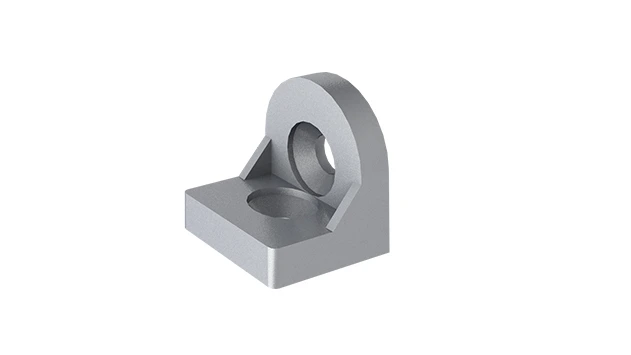
Urning Angle Code 2020
The turning angle aluminum profile connector provides a 90 degree hidden corner connection. 2020 it is means this size is used for 20 series aluminum profile.The corner code comes with set screws that allow for quick, easy connections.
Walk into any modern 3C manufacturing plant—whether it's churning out the latest smartphones, sleek laptops, or cutting-edge wearables—and you'll feel it immediately: the hum of urgency. Every second counts. Consumer demand shifts overnight, new models launch before the old ones hit store shelves, and the pressure to do more with less is relentless. In this high-stakes world, the backbone of success isn't just innovation in product design; it's innovation in how those products are made. Today, we're diving into two game-changers reshaping 3C manufacturing floors: the unassuming but mighty Turning Angle Code 2020 and the next generation of lean system solutions that are redefining efficiency, flexibility, and sustainability.
The 3C Industry's Hidden Battle: Speed vs. Stability
Let's start with the obvious: 3C products have lifespans shorter than a summer breeze. A flagship phone might be top-of-the-line today, but six months later, it's overshadowed by a model with a better camera or faster chip. For manufacturers, this means production lines can't stay static. They need to pivot—quickly—from assembling 5-inch screens to 6.7-inch ones, from 4G modules to 5G, from plastic casings to eco-friendly aluminum alloys.
But here's the catch: Pivoting used to mean chaos. Traditional manufacturing setups, built with rigid steel frames and welded joints, took weeks to reconfigure. Workers would spend days disassembling old workbenches, drilling new holes, and praying the new layout fit the next product's specs. Waste? It was everywhere—wasted time, wasted labor, and wasted materials when a "temporary" fix became permanent. And let's not forget the human cost: awkward workbenches led to fatigue, slowdowns, and even errors.
Then there's sustainability. Today's consumers don't just want a great phone—they want one made responsibly. Factories are under pressure to reduce carbon footprints, cut down on plastic waste, and use recyclable materials. Steel, while durable, is heavy (increasing energy use for transport) and often ends up in landfills when lines are scrapped. The old playbook? It was due for a rewrite.
Enter Turning Angle Code 2020: Small Part, Big Impact
If lean manufacturing is the symphony, then Turning Angle Code 2020 is the unsung conductor. At first glance, it's a simple aluminum corner code—a small, unassuming piece of metal with pre-drilled holes and a sleek finish. But don't let its size fool you. This tiny component is revolutionizing how factories build, adapt, and evolve.
Here's why it matters: Traditional steel frames rely on welding or heavy bolts to connect parts. Want to adjust the height of a workbench? You'd need a welder. Need to add a shelf to a flow rack? Grab a drill and hope you don't misalign the holes. Turning Angle Code 2020 changes that. Designed to work seamlessly with aluminum profile —lightweight, strong, and infinitely customizable—it lets workers connect aluminum tubes and panels in minutes, not days. No welding, no drilling, no guesswork. Just slide the code into the profile's T-slot, tighten a screw, and you're done.
"We used to spend an entire week reconfiguring our assembly line for a new tablet model," says Maria Gonzalez, production manager at a leading 3C manufacturer in Shenzhen. "Now, with aluminum profiles and Turning Angle Code 2020, we do it in 48 hours. The code locks the profiles together so securely, we don't worry about wobbling or misalignment—even with heavy components like battery packs. And when we need to tweak again? Just loosen the screws, adjust, and retighten. It's like building with giant Legos, but for adults."
But it's not just speed. Aluminum profile, paired with Turning Angle Code 2020, is inherently sustainable. Aluminum is 100% recyclable, and since the components are modular, they rarely end up in landfills. When a production line is retired, the profiles and codes are stripped down, cleaned, and reused elsewhere. Gonzalez's factory, for example, has cut steel waste by 60% since switching to aluminum profiles three years ago. "That's not just good for the planet—it's good for our bottom line," she adds. "We're saving tens of thousands annually on material costs alone."

Next-Gen Lean Solutions: Beyond the Assembly Line
Turning Angle Code 2020 is a star player, but it's part of a larger cast: next-gen lean solutions that are transforming every corner of the factory. Let's zoom out and explore how these tools—from reimagined workbench setups to smart flow rack systems—are creating a new kind of manufacturing ecosystem.
1. The Workbench: Where Ergonomics Meets Efficiency
For decades, workbenches were afterthoughts—sturdy, but one-size-fits-all. Today, they're the command centers of lean manufacturing. Next-gen workbenches, built with aluminum profiles and Turning Angle Code 2020, are customizable in ways old steel benches never were. Need a bench that's 80cm high for assembly line workers and 90cm for quality control inspectors? No problem. Add a shelf for tools? Screw in a few more codes and aluminum panels. Integrate ESD (electrostatic discharge) mats to protect sensitive circuit boards? The T-slots in the aluminum profiles make it easy to clip in accessories.
"Our old workbenches were like rocks—heavy, unforgiving, and impossible to adjust," says Li Wei, a senior assembler with eight years of experience. "I'm 5'4", and the bench was set for someone 6 feet tall. By the end of the day, my back ached so bad I could barely stand. Now, my bench is at my perfect height. There's a slot for my screwdriver set, a cup holder for my water, and even a small shelf for my instruction manual. I'm faster, and I don't go home sore. That's not just lean—that's human."
2. Flow Racks: Making Materials Move (Without the Muscle)
In lean manufacturing, "flow" is everything. Parts should glide from storage to assembly to packaging with minimal human intervention. Enter next-gen flow rack systems, which use gravity and smooth-rolling tracks to move components where they're needed—no lifting, no dragging, no wasted steps.
Traditional flow racks were often made of wood or steel, with fixed shelves that couldn't adapt to different part sizes. A rack built for smartphone casings might be useless for laptop hinges. Not anymore. Modern flow racks, constructed with aluminum profiles and Turning Angle Code 2020, let workers adjust shelf heights, add or remove tracks, and even tilt shelves to control the speed of part flow. Need to switch from small screws to larger battery packs? Loosen a few codes, reposition the tracks, and you're ready in 10 minutes.
"Before, we had separate racks for every part," recalls Chen Tao, a warehouse supervisor. "If a part changed size, we'd have to build a new rack from scratch. Now, we have one set of aluminum racks that we reconfigure daily. Last month, we launched a new smartwatch, and we retooled three flow racks in under an hour. The workers used to complain about carrying heavy bins across the floor—now, parts roll right to their workbenches. It's cut our material handling time by 40%."
3. Conveyors: The Silent Partners of Seamless Production
No lean system is complete without conveyors, but today's models are a far cry from the clunky, fixed belts of the past. Next-gen conveyors, often paired with aluminum profiles and modular components, are lightweight, flexible, and easy to integrate with workbenches and flow racks. Need to extend a conveyor line by 2 meters? Add a few aluminum sections and secure them with Turning Angle Code 2020. Want to switch from a straight line to a 90-degree turn? Snap on a curved aluminum track.
These conveyors also play nice with automation. Sensors can detect when a part is approaching a workbench, slowing the belt to let the assembler grab it. If a station gets backed up, the conveyor pauses automatically, preventing jams. It's lean manufacturing with a brain—and it's reducing errors by up to 25% in factories that adopt it.
| Feature | Traditional Lean Solutions | Next-Gen Lean Solutions (w/ Aluminum Profile & Turning Angle Code 2020) | Key Benefit |
|---|---|---|---|
| Reconfiguration Time | 1–2 weeks (steel welding, drilling) | 1–2 days (modular assembly) | Faster time-to-market for new products |
| Worker Ergonomics | Fixed height, minimal adjustability | Custom height, integrated tool storage | Reduced fatigue, higher productivity |
| Sustainability | Steel waste (often landfilled) | 100% recyclable aluminum, reusable components | Lower carbon footprint, reduced material costs |
| Error Reduction | Manual material handling, misaligned stations | Automated flow racks, sensor-integrated conveyors | Fewer defects, higher quality control |

The Road Ahead: Lean Solutions in the Age of Smart Manufacturing
As 3C manufacturers embrace Industry 4.0—think IoT sensors, AI-driven analytics, and collaborative robots—lean solutions are evolving too. Imagine a flow rack that "talks" to the conveyor, alerting it when stock is low. Or a workbench that adjusts its height automatically based on the worker's biometrics (via a smartwatch). These aren't sci-fi; they're the next frontier.
And at the heart of it all? Modularity. Aluminum profiles, Turning Angle Code 2020, and other lean components provide the flexibility to add smart features without rebuilding from scratch. Want to install a sensor on a flow rack? The T-slots in the aluminum profile make it easy to mount. Need to upgrade a conveyor with AI? Swap out the control module, not the entire belt.
"The future isn't about replacing humans with machines," says Dr. Zhang Mei, a manufacturing technology expert at Tsinghua University. "It's about giving humans better tools—tools that adapt to their needs, reduce waste, and let them focus on what they do best: innovate. Turning Angle Code 2020 and next-gen lean solutions are the foundation of that future."
Conclusion: Small Parts, Big Dreams
In the fast-paced world of 3C manufacturing, success hinges on the details. A small aluminum corner code, a modular workbench, a smart flow rack—these might not grab headlines like the latest smartphone, but they're the unsung heroes keeping factories competitive, sustainable, and human-centered. Turning Angle Code 2020, paired with next-gen lean systems, isn't just about making things faster. It's about making manufacturing smarter, kinder to the planet, and better for the people who power it.
So the next time you unbox a new gadget, take a moment to appreciate the journey it took to get there. Behind that sleek design is a factory floor where aluminum profiles glint under the lights, flow racks hum with efficiency, and workers stand at workbenches built just for them—all held together, in part, by a tiny but mighty component called Turning Angle Code 2020. The future of 3C manufacturing isn't just about the products we create. It's about how we create them—and that future is looking leaner, brighter, and more human than ever.