- Company Articles
- Industry articles
- Industry standards
- 40 Aluminum Roller Track Grey in Medical Equipment Manufacturing: Compliance & Safety

40 Aluminum Roller Track Grey in Medical Equipment Manufacturing: Compliance & Safety
Related Product
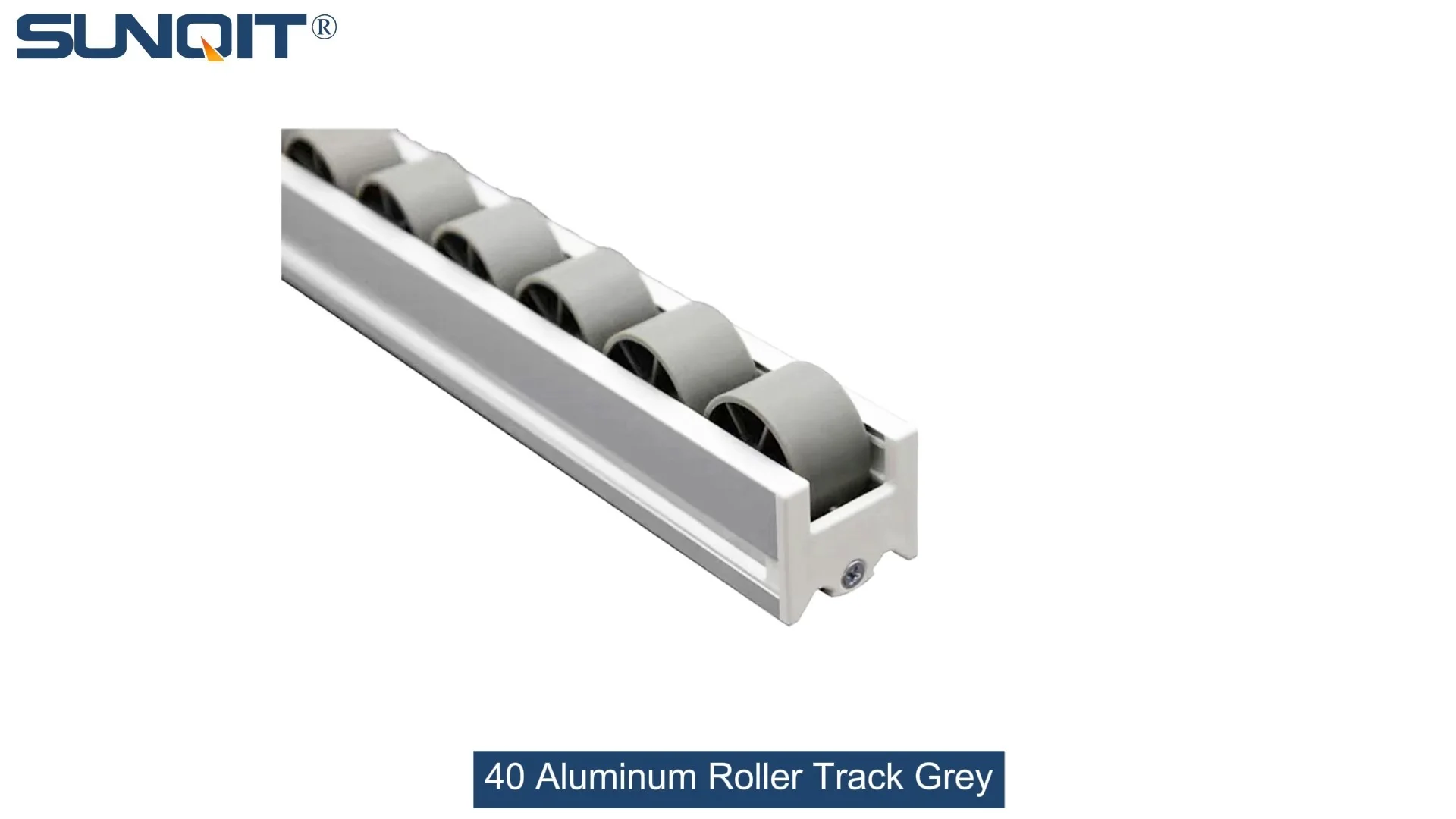
40 Aluminum Roller Track Grey
Durable and smooth-running modular roller rails. The system is fully assembled. The roller rail profile contains plastic rollers mounted on steel axles. Aluminum frame with plastic wheel make it anti corrosion,and material convey more smooth.
Why Aluminum? The Foundation of Medical-Grade Material Handling
The 40mm width of this track is no accident, either. It strikes a balance between stability and flexibility, capable of supporting heavy components like stainless steel surgical instrument trays without sagging, yet lightweight enough to integrate into modular workstations. This versatility is key in medical manufacturing, where production lines often need to adapt to new device designs or regulatory changes. And let's not overlook the "grey" in its name: the neutral tone isn't just aesthetic. It resists showing minor scratches or stains, maintaining a clean, professional appearance that aligns with the sterile ethos of medical environments. Unlike bright colors that might fade or show dirt, grey remains understated and functional—exactly what's needed in a space focused on precision, not distractions.
Compliance: Meeting the Rigors of Medical Industry Standards
ISO 13485: This international standard specifies requirements for a quality management system in medical device manufacturing. For the 40 Aluminum Roller Track Grey, compliance means its aluminum profile is free from harmful additives or coatings that could leach into materials. Unlike some plastic tracks that might off-gas chemicals when exposed to heat, aluminum is inert, ensuring no contamination of sensitive medical components as they glide along the track. Additionally, ISO 13485 mandates traceability, and reputable manufacturers of this track provide detailed material certificates, allowing facilities to document every component's origin—critical in the event of a recall or audit.
FDA's Current Good Manufacturing Practices (cGMP): The FDA's cGMP regulations emphasize "control over the manufacturing process to ensure products are safe, pure, and effective." For material handling equipment like roller tracks, this translates to designs that prevent product damage and minimize human error. The 40 Aluminum Roller Track Grey's smooth, evenly spaced rollers (typically 1.5 inches apart) ensure parts move consistently, reducing the risk of jams that could scratch delicate components or disrupt production timelines. Its rigid aluminum profile also resists warping under temperature fluctuations, a common issue in facilities with strict climate control—another cGMP requirement.
ESD Protection (Where Needed): While not all medical devices are sensitive to electrostatic discharge (ESD), many electronic components (e.g., pacemaker circuits, diagnostic sensors) are. Some variants of the 40 Aluminum Roller Track Grey can be integrated with ESD workstations, where the aluminum's conductive properties are harnessed to ground static charges, preventing sudden voltage spikes that could fry delicate electronics. This integration isn't just a safety feature—it's a compliance requirement for facilities handling ESD-sensitive devices, as outlined in ANSI/ESD S20.20, the industry standard for ESD control.

Safety: Protecting Workers and Products Alike
Then there's the physical safety of the track itself. Aluminum's malleability allows for rounded edges, eliminating sharp corners that could snag gloves, clothing, or even skin—a crucial detail in fast-paced environments where split-second movements are common. Compare this to cheaper plastic tracks, which often have rough, injection-molded edges that can fray over time, creating jagged surfaces. In a facility where workers handle sharp tools or sterile packaging, even a small cut from a track edge could lead to contamination or downtime.
For the products, the track's stability is paramount. Medical components, whether glass syringes or delicate ceramic implants, can't afford to shift or collide during transport. The 40mm width provides a stable base, while the grey track's consistent roller alignment ensures a straight, wobble-free path. This stability is especially critical in lean system setups, where materials move continuously from one workstation to the next. A misaligned roller or a warped track could derail a tray of surgical screws, leading to delays, wasted materials, or worse—compromised products that never reach patients.

Lean System Integration: Efficiency Without Compromise
Waste reduction is another lean pillar, and aluminum's durability plays a role here, too. Unlike plastic tracks that might crack or warp after a year of heavy use, the 40 Aluminum Roller Track Grey has a lifespan of 5–7 years (or longer with basic maintenance), reducing the need for frequent replacements. This longevity cuts down on waste from discarded equipment and lowers long-term costs—a win for both the environment and the bottom line. Its compatibility with aluminum profile accessories (e.g., side guides, end stops, and adjustable brackets) also means facilities can reconfigure the track as production needs change, avoiding the waste of buying entirely new systems.

Traditional vs. 40 Aluminum Roller Track Grey: A Compliance & Safety Comparison
| Feature | Traditional Steel Roller Track | 40 Aluminum Roller Track Grey |
|---|---|---|
| Material Compliance | May require additional coatings to resist corrosion; risk of coating flaking (non-compliant with cGMP if flakes contaminate products). | Inherently corrosion-resistant; no coatings needed. Meets ISO 13485 and FDA cGMP for material purity. |
| Safety for Workers | Sharp edges common; heavy weight increases strain during installation/reconfiguration. | Rounded edges; lightweight (30% lighter than steel) reduces injury risk during setup and daily use. |
| Product Protection | Rough rollers may scratch delicate components; prone to jamming if not lubricated regularly. | Smooth aluminum rollers with precision bearings; minimal friction reduces product damage and jams. |
| Lean System Adaptability | Rigid design; difficult to reconfigure without specialized tools. | Modular with aluminum profile accessories; easy to cut, extend, or repurpose for new workflows. |
| Long-Term Cost | Lower upfront cost but higher maintenance (rust treatment, lubrication) and replacement frequency. | Higher upfront cost but 50% lower maintenance; longer lifespan (5–7 years vs. 2–3 for steel). |
Real-World Applications: From Workstations to Flow Racks
Another common application is in assembly workstations, where components like catheter tubes or surgical tool handles are pieced together. Mounted along the edge of workbenches, the 40 Aluminum Roller Track Grey acts as a buffer zone, holding trays of parts within easy reach of operators. Its 40mm width is narrow enough to fit on standard workbench surfaces (typically 24–30 inches deep) without cluttering the workspace, yet wide enough to support standard-sized bins. In facilities using lean principles, this setup reduces "motion waste"—operators no longer have to stretch or bend to retrieve parts, cutting down on fatigue and errors.
Even in packaging areas, where finished devices are sealed and labeled, the track plays a role. Its stability ensures packages move evenly past labeling machines and barcode scanners, reducing misreads or misalignments that could lead to shipping errors. And because aluminum is non-magnetic, it won't interfere with metal detectors used to screen for contaminants—a critical step in ensuring no foreign objects end up in final products.
Conclusion: The Unsung Hero of Medical Manufacturing
For medical device manufacturers, choosing the right roller track isn't just about moving parts from Point A to Point B—it's about investing in a foundation that supports every aspect of quality control. The 40 Aluminum Roller Track Grey doesn't just meet these demands; it elevates them, ensuring that every device that leaves the facility is safer, more reliable, and built with the precision patients deserve. In the end, that's what medical manufacturing is all about: details that save lives. And in that mission, the 40 Aluminum Roller Track Grey is more than a tool—it's a partner.