- Company Articles
- Industry articles
- Industry standards
- 40 Roller Track Placon Mount Flat: Load Testing & Safety Standards

40 Roller Track Placon Mount Flat: Load Testing & Safety Standards
Related Product
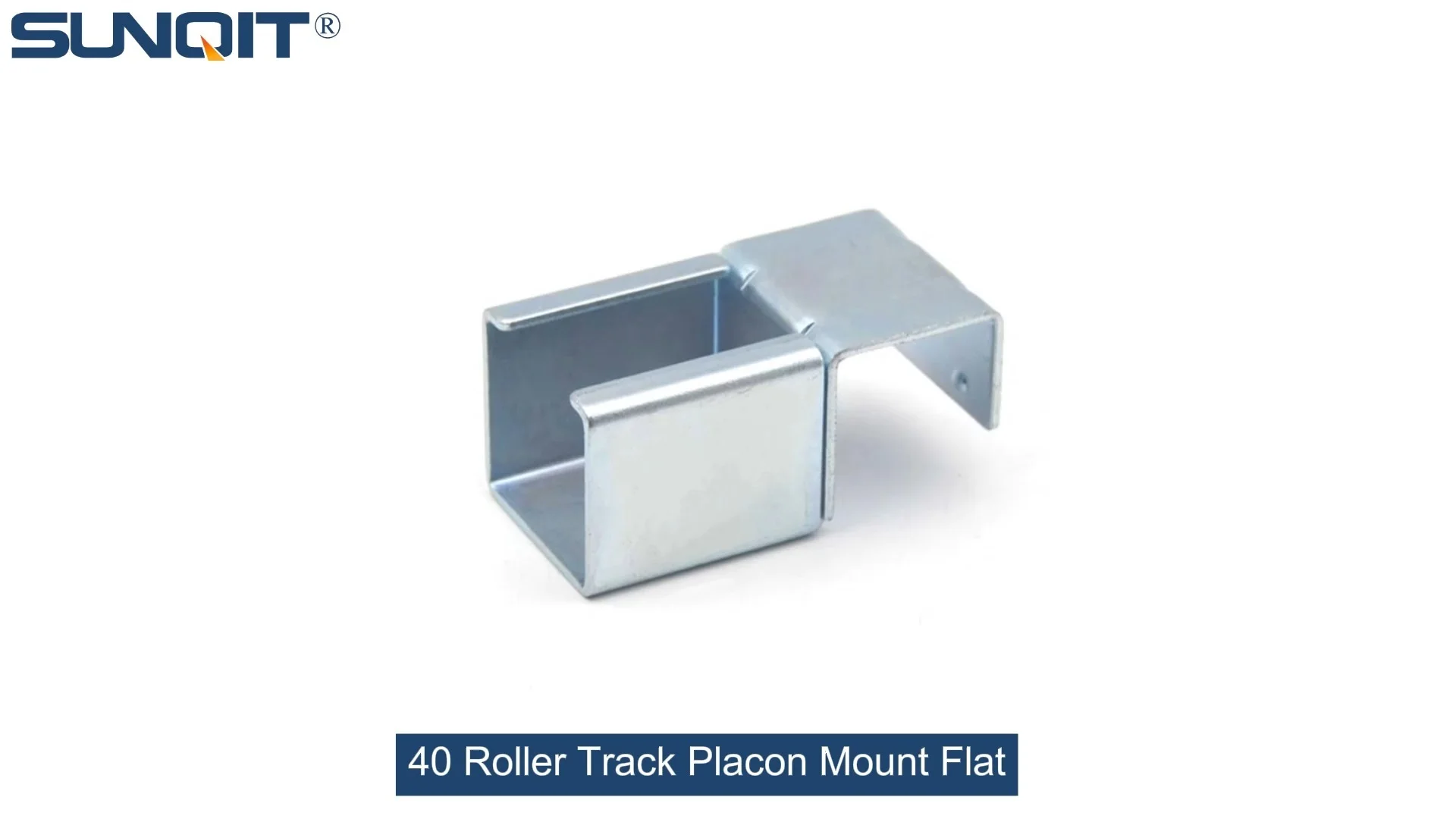
40 Roller Track Placon Mount Flat
Roller track placon mount work as a connector for roller track and pipe or aluminum profile in rack syetem, it is a necessary parts in rack system which widely used in industrial plant and logistic,warehouse storage.
In the bustling heart of modern manufacturing facilities, where every second counts and precision is non-negotiable, the smooth flow of materials can make or break a production line. Imagine a warehouse floor where workers strain to move heavy bins, or a assembly station where jams in material transport bring the entire operation to a halt. These aren't just hypothetical scenarios—they're daily challenges for plant managers and frontline teams alike. That's where the 40 Roller Track Placon Mount Flat steps in, designed to turn chaos into order, fatigue into efficiency, and uncertainty into reliability. But what makes this roller track stand out in a sea of industrial equipment? The answer lies in its rigorous load testing and uncompromising safety standards—two pillars that ensure it doesn't just work , but works safely , consistently , and sustainably for years.
Getting to Know the 40 Roller Track Placon Mount Flat
Let's start with the basics: What exactly is the 40 Roller Track Placon Mount Flat? At its core, it's a specialized component of lean pipe systems, engineered to facilitate the smooth, gravity-driven flow of materials in production and warehousing environments. But calling it "just a roller track" would be like calling a precision watch "just a timepiece"—its design is a masterclass in industrial ergonomics and engineering.
Crafted from high-grade aluminum extrusion profiles, this roller track strikes the perfect balance between strength and weight. Aluminum isn't chosen by accident here: it resists corrosion, ensuring longevity even in humid or dusty factory settings, and its lightweight nature makes installation and reconfiguration a breeze—no heavy lifting equipment required. The "Placon Mount" design is another standout feature. Unlike traditional roller tracks that rely on basic brackets, the Placon Mount system uses reinforced, pre-engineered mounting points that lock the track securely to aluminum profiles, eliminating wobble and enhancing stability during operation.
The rollers themselves are a study in detail. Each 40mm steel roller (available in yellow, black, or white wheels) is precision-machined to reduce friction, allowing even heavy bins to glide effortlessly. The "flat" configuration ensures that materials sit evenly, preventing tipping or jamming—a critical detail for delicate components like 3C assembly parts or medical devices. And because it's part of a modular lean system, the 40 Roller Track Placon Mount Flat can be easily extended, shortened, or integrated with other components like flow racks, conveyors, or workbenches, adapting to your workflow instead of forcing your workflow to adapt to it.
Why Load Testing Isn't Optional—It's Essential
Picture this: A busy automotive parts warehouse relies on roller tracks to move heavy engine components from storage to the assembly line. One day, a track that's "always worked" suddenly bends under the weight of a loaded bin, spilling parts across the floor and injuring a worker who tried to catch the falling load. An investigation later reveals the track was never load-tested for the weight of the bins it was handling. This isn't a horror story—it's a wake-up call. Load testing isn't just a box to check on a quality control list; it's the difference between a tool that empowers your team and one that endangers them.
So, why does load testing matter so much? Let's break it down into three critical areas:
- Safety First: The most obvious reason, but worth emphasizing. A roller track that fails under load can cause equipment damage, product loss, and—worst of all—employee injuries. By testing how much weight the track can handle before deformation or failure, we ensure that it never operates beyond its limits, protecting both your team and your bottom line.
- Uninterrupted Efficiency: Downtime is the enemy of productivity. A track that bends or jams due to overloading forces production lines to stop, leading to missed deadlines and frustrated teams. Load testing identifies the maximum safe load, allowing you to plan workflows with confidence, knowing the track will keep up with your peak demands.
- Long-Term Cost Savings: Investing in untested equipment might save a few dollars upfront, but the costs of repairs, replacements, and downtime add up fast. A load-tested roller track lasts longer, requires less maintenance, and avoids the hidden costs of unexpected failures. It's not just an expense—it's an investment in reliability.

The Science of Load Testing: How We Ensure Reliability
Load testing the 40 Roller Track Placon Mount Flat isn't a haphazard process. It's a systematic, data-driven procedure that leaves no room for guesswork. Here's a step-by-step look at how we put this roller track through its paces to guarantee it meets—and exceeds—industry standards.
Step 1: Sample Selection and Preparation
We start by selecting representative samples from production batches. This ensures that the track tested is identical to the ones you'll receive. Each sample is inspected for manufacturing defects—scratches, dents, or misaligned rollers—before testing begins. Only tracks that pass this initial quality check move forward.
Step 2: Static Load Testing
Static load testing measures how the track performs under a constant, stationary weight. Think of it as testing how well the track holds up when a fully loaded bin sits on it for an extended period—common in scenarios where materials wait at a workstation before processing. For the 40 Roller Track Placon Mount Flat, we subject samples to loads ranging from 50kg to 300kg (the maximum recommended capacity) in 50kg increments. Each load is applied evenly across the track's length, and we measure deflection (how much the track bends) using precision dial indicators. The goal? Deflection must be less than 2mm at maximum load—ensuring the track remains stable and materials don't slide unevenly.
Step 3: Dynamic Load Testing
Static testing is crucial, but real-world use is dynamic. Materials aren't just sitting—they're moving. Dynamic load testing simulates this by rolling weighted bins along the track at varying speeds (typically 0.5m/s to 1.5m/s, mimicking typical warehouse and production line velocities). We monitor for roller jamming, uneven wear, and track vibration. A successful test means smooth rolling without sudden stops or jerks, even when the track is inclined at standard angles (5° to 10°, common in flow rack setups).
Step 4: Long-Term Durability Testing
A track that works for a day is easy to build; one that works for years is not. Long-term durability testing pushes the 40 Roller Track Placon Mount Flat to its limits over time. We run continuous dynamic load cycles (up to 10,000 cycles) with 200kg loads, simulating months of heavy use. Afterward, we inspect rollers for wear, brackets for looseness, and the track itself for fatigue. Only tracks that show minimal wear and maintain their structural integrity pass this test.
| Test Type | Load Applied | Test Duration | Deflection Limit | Pass/Fail Criteria |
|---|---|---|---|---|
| Static Load | 50kg, 100kg, 150kg, 200kg, 250kg, 300kg | 1 hour per load | ≤2mm at 300kg | No permanent deformation; deflection within limit |
| Dynamic Load | 200kg (rolling bins) | 1,000 cycles (0.5-1.5m/s) | N/A (no jamming/ vibration) | Smooth rolling; no roller damage |
| Long-Term Durability | 200kg | 10,000 cycles | ≤3mm after 10,000 cycles | Minimal wear; structural integrity maintained |

Safety Standards: Beyond Compliance, Toward Excellence
Meeting industry standards isn't enough for us—we aim to set them. The 40 Roller Track Placon Mount Flat is designed to comply with global safety regulations, including ISO 9001 (quality management) and ANSI/ASME B56.1 (material handling equipment). But compliance is just the starting line; our internal standards often exceed these benchmarks to ensure peace of mind for our clients.
For example, while ISO standards allow for up to 3mm deflection at maximum load, we cap ours at 2mm. Why? Because in precision environments like 3C assembly or medical device production, even a millimeter of extra bend can disrupt the alignment of delicate components. Similarly, our roller wheels undergo additional ESD (Electrostatic Discharge) testing, making the track safe for use with sensitive electronics—a must for clients in the tech and medical industries.
Compliance isn't just about avoiding fines; it's about building trust. When a client in the automotive industry chooses our roller track, they're not just buying equipment—they're buying the assurance that their facility meets OSHA safety requirements, reducing liability and creating a safer workplace for their team. In regulated sectors like medical device manufacturing, where audits are frequent and standards are strict, using compliant equipment like the 40 Roller Track Placon Mount Flat can make the difference between passing an inspection and facing costly delays.

Real-World Impact: How It Performs on the Factory Floor
Numbers and tests tell part of the story, but real-world results tell the rest. Let's look at how the 40 Roller Track Placon Mount Flat has transformed operations for clients across key industries.
Case Study 1: 3C Assembly Plant in Shenzhen
A leading 3C manufacturer in Shenzhen was struggling with bottlenecks in their smartphone assembly line. Workers spent hours each day manually moving component bins from storage to workstations, leading to fatigue and slowdowns. After integrating the 40 Roller Track Placon Mount Flat into their flow racks, they saw immediate changes: bins glided smoothly from the warehouse to the assembly line, reducing transport time by 40%. The plant manager noted, "Our team used to dread the morning bin run—now it's almost automatic. The track handles the weight of our component bins (around 150kg each) without a hitch, and we haven't had a single jam in six months."
Case Study 2: Medical Device Warehouse in Shanghai
A medical device warehouse needed a solution to store and transport fragile surgical tools. Safety was non-negotiable—any damage to tools could delay surgeries and risk patient safety. The 40 Roller Track Placon Mount Flat, with its ESD-safe black wheels and stable Placon Mount design, proved ideal. "We load each bin with up to 80kg of tools, and the track keeps them steady," said the warehouse supervisor. "Even when we're rushing to restock, the rollers don't skid or tip. It's not just about efficiency—it's about trust."
Case Study 3: Automotive Parts Distribution Center in Guangzhou
An automotive parts distributor was dealing with frequent track failures in their high-volume picking area. Heavy engine parts (up to 250kg per bin) were causing traditional roller tracks to bend, leading to weekly maintenance stops. After switching to the 40 Roller Track Placon Mount Flat, maintenance requests dropped by 75%. "We tested it at 300kg just to be sure, and it barely budged," the operations director reported. "Now we run two shifts back-to-back, and the track handles everything we throw at it."
More Than a Track: Part of a Complete Lean Solution
The 40 Roller Track Placon Mount Flat doesn't exist in isolation—it's a vital piece of a larger lean puzzle. At its core, lean manufacturing is about eliminating waste, optimizing flow, and empowering teams to work smarter, not harder. This roller track embodies that philosophy in every way.
Take "reusability" and "sustainability," two cornerstones of lean solutions. Because it's modular, the track can be disassembled, reconfigured, and reused as your production needs change. Need to expand your flow rack? Add more track sections. Shift to a new product line? Repurpose the track for a different workstation. This flexibility reduces waste—no need to buy new equipment every time your workflow evolves—and aligns with eco-friendly manufacturing practices.
It also integrates seamlessly with other lean pipe system components. Pair it with aluminum workbenches for a streamlined assembly station, or connect it to conveyors for automated material transport. For clients with unique needs, it's part of our custom lean solutions, where we design entire workflows around the track's capabilities. Whether you're in 3C assembly, medical device manufacturing, or, the goal is the same: create a system that adapts to you , not the other way around.
Why Choose the 40 Roller Track Placon Mount Flat?
With so many roller tracks on the market, what makes this one the right choice? Let's distill it down to the key advantages:
- Tested Tough: Rigorous load testing ensures it handles up to 300kg safely, giving you peace of mind.
- Built to Last: Aluminum construction and precision rollers resist wear and corrosion, reducing replacement costs.
- Effortless Integration: Modular design works with existing lean pipe systems, making upgrades easy.
- Safety Focused: ESD options, stable Placon Mount, and minimal deflection protect workers and materials.
- Lean by Design: Supports continuous improvement by adapting to changing workflows, reducing waste.
More Than a Tool—A Partner in Productivity
At the end of the day, the 40 Roller Track Placon Mount Flat is more than just a piece of metal and rollers. It's a tool that transforms how teams work, turning tedious, error-prone tasks into smooth, efficient processes. It's a safeguard that protects your most valuable asset—your people—by ensuring the equipment they rely on is built to the highest safety standards. And it's a commitment to lean principles, helping you create a workplace that's not just productive, but sustainable and adaptable for the future.
So, whether you're upgrading an existing line, building a new facility, or simply looking to solve those daily material transport headaches, remember: the best industrial equipment isn't just designed to work—it's designed to earn your trust . And the 40 Roller Track Placon Mount Flat? It's earned ours, one load test, one satisfied client, and one smooth-rolling bin at a time.