- Company Articles
- Industry articles
- Industry News
- 40 Steel Roller Track Green vs. Plastic Tracks: Which Is More Sustainable?

40 Steel Roller Track Green vs. Plastic Tracks: Which Is More Sustainable?
Related Product
40 Steel Roller Track Green
The roller track can be installed with multiple accessories to create different slopes and configurations of flow racks.All steel conveyor 40 roller track accessories are engineered to perfectly fit the sliding rail.
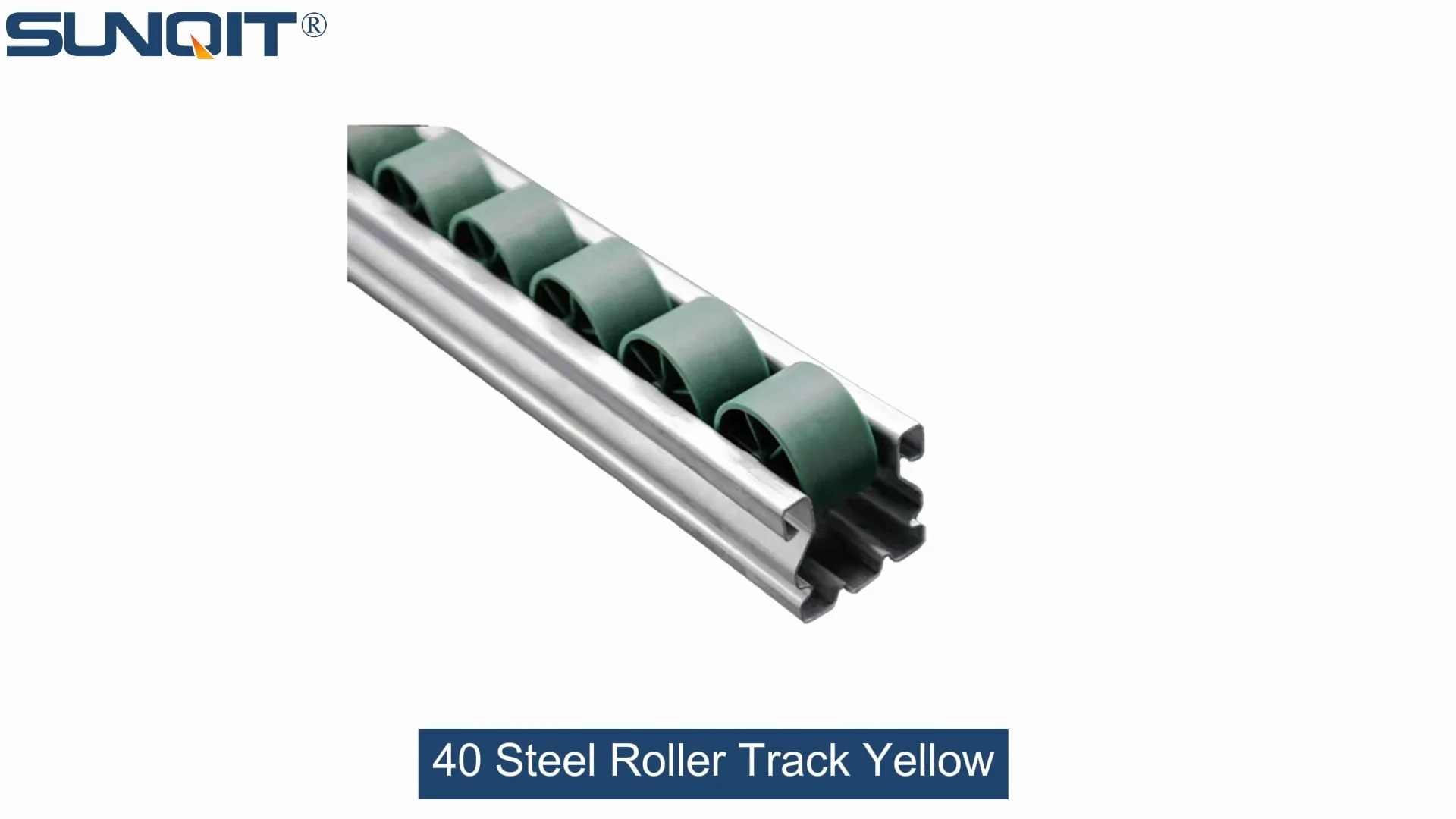
When setting up a material handling system—whether it's a flow rack for your warehouse or a conveyor line for your production floor—choosing the right roller track is more than just about cost or load capacity. It's about sustainability, a core value that aligns with the lean system principles many modern manufacturers swear by. Today, we're diving deep into two popular options: the 40 Steel Roller Track Green and plastic roller tracks (like the yellow or grey guide rails you might see in light-duty setups). Which one truly stands out when it comes to being eco-friendly and long-lasting? Let's find out.
What Are 40 Steel Roller Track Green and Plastic Tracks?
First, let's get clear on what we're comparing. The 40 Steel Roller Track Green is a heavy-duty component from our flow rack and conveyor lineup. It's designed to handle high loads, resist wear, and fit seamlessly into lean system setups. Made from galvanized steel, it's built for durability and repeated use—key traits of our custom solutions for industries like automotive and 3C assembly. On the other hand, plastic tracks (think yellow or grey plastic roller track guide rails) are lighter, cheaper upfront, and often used for smaller, less demanding applications like moving lightweight bins in consumer electronics warehouses. But how do these two stack up when it comes to sustainability?
1. Durability & Lifespan: The Foundation of Sustainability
Sustainability starts with how long a product lasts. Let's talk numbers: the 40 Steel Roller Track Green can handle up to 500 kg per meter of load, and its average lifespan is 10–15 years. I've seen these tracks in automotive assembly lines where they move engine parts day in and day out—still performing well after a decade. Plastic tracks, by contrast, max out at around 150 kg per meter and last only 2–3 years before warping or cracking under constant pressure.
A client in the 3C industry once told me they switched from plastic to steel tracks because their plastic ones kept breaking every 2 years, leading to unplanned downtime and frequent replacements. This ties directly to the lean system's focus on repeatable use and sustainable improvement. Steel tracks don't just last longer—they reduce the need for constant replacements, which cuts down on waste and saves money over time.

2. Recyclability & End-of-Life: Closing the Circular Loop
When a track reaches the end of its life, what happens to it? Steel is one of the most recyclable materials on Earth—100% recyclable, in fact. When your 40 Steel Roller Track Green is no longer needed, you can send it to a recycling plant where it's melted down and turned into new steel products without losing any quality. That's the circular economy in action, perfectly aligned with our lean solution's commitment to sustainability.
Plastic tracks tell a different story. Most are made from mixed polymers or contain additives that make them hard to recycle. Even if you try to recycle them, the process is energy-intensive and often yields low-quality material. The majority end up in landfills, where they take hundreds of years to decompose. For manufacturers looking to minimize their environmental footprint, this is a huge strike against plastic tracks.

3. Maintenance & Repair: Reducing Waste Through Modularity
Sustainability isn't just about how long something lasts—it's about how easy it is to fix. The 40 Steel Roller Track Green is designed with modularity in mind. If a roller gets stuck or worn out, you don't have to replace the entire track—just swap the roller. This is exactly the kind of small, sustainable improvement that lean system advocates love. It cuts down on waste and keeps your system running smoothly without overhauls.
Plastic tracks, however, are often one-piece or have non-separable parts. If a section of yellow plastic guide rail cracks, you usually have to replace the whole piece. A warehouse using flow rack systems with plastic tracks might replace 20% of their tracks annually, whereas a steel setup might only need 5% of rollers replaced. That's a massive difference in waste and cost over time.

4. Energy & Resource Consumption: The Long-Term View
Let's talk about the energy used to make these tracks. Steel production does require significant upfront energy—no denying that. But since steel tracks last 3–5 times longer than plastic ones, the total energy per year of use is actually lower. For example, if a steel track uses 100 units of energy to produce and lasts 10 years, that's 10 units per year. A plastic track uses 50 units but lasts only 2 years—25 units per year. Over time, steel is more energy-efficient.
Plus, steel mills are increasingly using renewable energy (solar, wind) to power operations, reducing their carbon footprint. Plastic production, on the other hand, relies heavily on fossil fuels—both as raw material and energy source. This makes plastic tracks more tied to non-renewable resources than their steel counterparts.
5. Real-World Applications: Where Each Shines
Steel tracks are ideal for heavy-duty scenarios: automotive assembly lines moving engine parts, 3C factories with conveyor systems handling bulky electronics, or flow racks in warehouse logistics. They're also a top choice for custom solutions in industries like medical equipment manufacturing, where durability and hygiene are critical.
Plastic tracks have their niche—lightweight loads like small consumer electronics parts or packaging materials. They're quieter and cheaper upfront, but they're not built for long-term, heavy use. For businesses prioritizing sustainability, steel tracks are the better choice for most applications.
Side-by-Side Sustainability Comparison
| Metric | 40 Steel Roller Track Green | Plastic Roller Tracks (Yellow/Grey) |
|---|---|---|
| Durability & Load Capacity | Handles up to 500 kg/m; resists warping/cracking | Handles up to 150 kg/m; prone to deformation under heavy loads |
| Average Lifespan | 10–15 years | 2–3 years |
| Recyclability Rate | 100% recyclable (no quality loss) | Low (mixed polymers; hard to recycle) |
| Maintenance Needs | Modular; replace individual rollers only | One-piece; full replacement needed for damage |
| End-of-Life Options | Recycle into new steel products | Landfill (most cases) or low-quality recycling |
| Ideal Applications | Heavy-duty flow racks, conveyors, automotive/3C assembly | Lightweight loads, short-term setups, packaging lines |
Cost-Benefit Analysis: Long-Term Savings for Sustainable Choices
Let's crunch the numbers. A 40 Steel Roller Track Green might cost twice as much upfront as a plastic track—say $100 vs. $50. But over 10 years:
- Steel track: $100 + $10 (maintenance) = $110 total.
- Plastic tracks: 5 replacements (every 2 years) × $50 = $250 + $25 (maintenance) = $275 total.
- Plastic tracks: 5 replacements (every 2 years) × $50 = $250 + $25 (maintenance) = $275 total.
That's a $165 difference over a decade. For businesses buying in bulk (like our wholesale clients for flow rack or conveyor systems), this adds up to massive savings. Steel tracks aren't just better for the planet—they're better for your bottom line.
Conclusion: Steel Tracks Win for Sustainable Material Handling
So, which is more sustainable? The answer is clear: the 40 Steel Roller Track Green is the better choice for most material handling systems. It lasts longer, is fully recyclable, requires less maintenance, and has a lower total environmental impact over its lifespan. Plastic tracks have their place in light, short-term applications, but for businesses that want to adopt lean system practices and prioritize sustainability, steel tracks are the way to go.
Whether you're setting up a flow rack in your warehouse, a conveyor line in your production facility, or looking for a custom solution for your industry, choosing steel tracks is a step toward a more sustainable future. Remember: sustainability isn't just about being eco-friendly—it's about making smart choices that benefit your business and the planet in the long run.