- Company Articles
- Industry articles
- Industry News
- 40 Steel Roller Track Green vs. Standard Steel: Environmental Impact Comparison

40 Steel Roller Track Green vs. Standard Steel: Environmental Impact Comparison
Related Product
40 Steel Roller Track Green
The roller track can be installed with multiple accessories to create different slopes and configurations of flow racks.All steel conveyor 40 roller track accessories are engineered to perfectly fit the sliding rail.
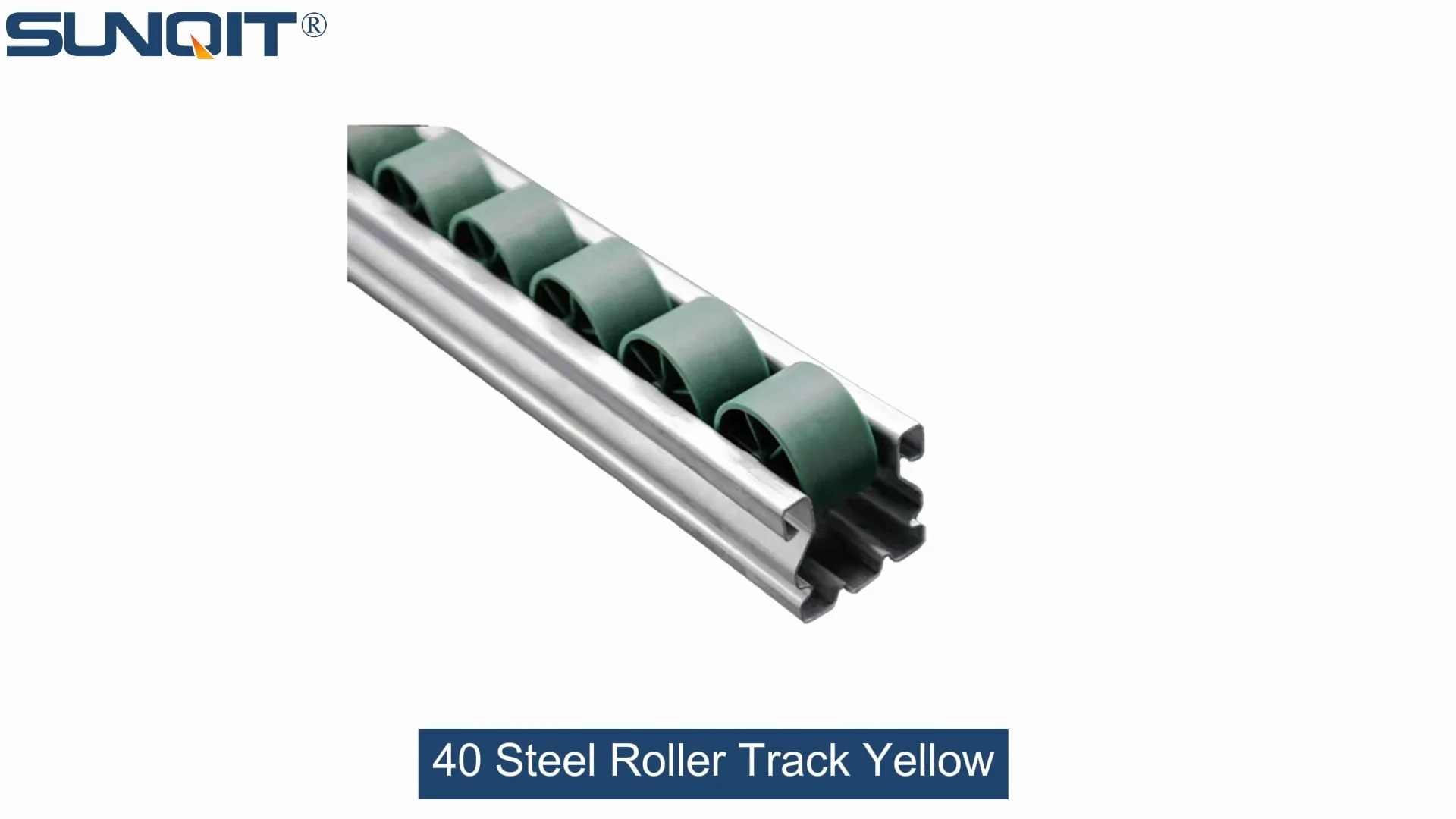
Let's talk about something that's been on every manufacturer's mind lately: how to balance efficiency with environmental responsibility. If you're in the business of building lean systems or setting up conveyor lines, you know that every component counts—not just for productivity, but for the planet too. Today, we're diving deep into a component that's often overlooked but plays a huge role in your operations: roller tracks. Specifically, we're comparing 40 Steel Roller Track Green to standard steel roller tracks, breaking down their environmental impacts side by side.
Why does this matter? Well, lean manufacturing isn't just about cutting waste in your production line—it's about sustainable improvement (a key phrase from the lean playbook). And roller tracks are everywhere: in conveyors that move parts from one station to the next, in flow racks that keep materials accessible, and in workstations that keep your team efficient. Choosing the right roller track can help you reduce your carbon footprint, comply with stricter environmental regulations, and even save money in the long run.
What Is 40 Steel Roller Track Green?
Let's start with the star of our show: the 40 Steel Roller Track Green. You might be wondering, "Green"—what does that mean here? It's not just a color (though it might be green-coated). This type of roller track is designed with sustainability at its core, from the materials it's made of to the way it's produced and used.
First, material sourcing: Most 40 Steel Roller Track Green products are made from recycled steel. We're talking about steel that's been reclaimed from old machinery, scrap metal, or even end-of-life roller tracks. The percentage of recycled content varies, but many reputable suppliers (like the ones offering lean system solutions) use up to 85% recycled steel in their green roller tracks. That's a huge win for the environment because recycling steel uses 75% less energy than producing virgin steel (source: World Steel Association).
Next, the coating: Standard steel roller tracks often use oil-based coatings that release volatile organic compounds (VOCs) into the air during application and curing. These VOCs are harmful to both workers and the environment, contributing to smog and air pollution. The green version, however, uses water-based or powder coatings that have zero or low VOC emissions. Some even use eco-friendly pigments that don't contain heavy metals like lead or chromium.
Another key feature: modularity. The 40 Steel Roller Track Green is designed to be part of a lean system, which means it's easy to disassemble, reconfigure, and reuse. For example, if you need to adjust your conveyor line to accommodate a new product, you can take apart the green roller tracks and rearrange them without having to buy new ones. This reduces waste and extends the lifespan of the components—perfect for the "reusable and sustainable improvement" lean philosophy we mentioned earlier.
Let's take an example: Suppose you run a 3C assembly line. You need a conveyor system that can handle small electronic parts. The 40 Steel Roller Track Green would be ideal here because it's lightweight, durable, and easy to modify. If your product line changes in six months, you can reconfigure the roller tracks instead of scrapping the entire conveyor—saving both money and resources.
Also, maintenance: Green roller tracks often have a more durable coating that resists rust and wear, so you don't have to replace them as often. This means less waste going to landfills and fewer resources spent on replacements.
What Is Standard Steel Roller Track?
Now, let's look at the traditional option: standard steel roller tracks. These are the ones that have been used in manufacturing for decades. While they're reliable and widely available, they fall short when it comes to environmental responsibility.
First, material sourcing: Most standard steel roller tracks are made from virgin steel. Virgin steel production involves mining iron ore, which is a resource-intensive process that destroys natural habitats and releases large amounts of CO2 into the atmosphere. According to the EPA, the steel industry accounts for about 7% of global greenhouse gas emissions—much of that comes from virgin steel production.
Next, the coating: As we mentioned earlier, standard roller tracks use oil-based coatings with high VOC emissions. These coatings not only harm the environment but also require special handling and disposal, adding to the overall environmental cost.
Modularity and reusability: Standard roller tracks are often designed as fixed components. They're welded or bolted together in a way that makes disassembly difficult. If you need to change your conveyor line, you have to cut or break the roller tracks, which means they can't be reused. This leads to a lot of waste—every time you reconfigure your line, you're throwing away perfectly good steel (or at least parts of it).
Lifespan and maintenance: Standard roller tracks are prone to rust and corrosion, especially if they're used in damp environments (like warehouses or food processing plants). This means you have to replace them more often, which increases the amount of waste and the resources needed to produce new ones.
Let's take the same 3C assembly line example: If you use standard steel roller tracks and need to reconfigure your conveyor, you'd have to remove the old tracks and buy new ones. The old tracks would end up in a landfill (since they're hard to recycle due to the coating and welded parts), and the new ones would require virgin steel production—doubling the environmental impact.

Environmental Impact Comparison
Now, let's get to the heart of the matter: comparing the environmental impact of 40 Steel Roller Track Green vs. Standard Steel Roller Track. We'll look at five key areas: material sourcing, production process, lifespan & reusability, end-of-life disposal, and overall carbon footprint.
| Aspect | 40 Steel Roller Track Green | Standard Steel Roller Track |
|---|---|---|
| Material Sourcing | Up to 85% recycled steel | 100% virgin steel |
| Production Energy Use | 75% less energy than virgin steel production | High energy consumption (virgin steel mining & processing) |
| Coating Emissions | Zero/low VOC emissions (water-based/powder coating) | High VOC emissions (oil-based coating) |
| Lifespan | 10-15 years | 5-8 years |
| Reusability | Modular design—can be reused up to5 times | Fixed design—difficult to reuse (most scrapped after one use) |
| End-of-Life Recyclability | 95% recyclable (eco-friendly coating easy to remove) | 60% recyclable (coating & welded parts hinder recycling) |
| Carbon Footprint (per100m) | 0.5 tons CO2 | 2.3 tons CO2 |
These numbers are eye-opening, aren't they? The green roller track's carbon footprint is significantly lower than the standard one. For a manufacturer that uses1000 meters of roller track per year, switching to green would save about18 tons of CO2 annually—equivalent to planting450 trees (source: EPA's greenhouse gas calculator).
But it's not just about carbon footprint. The green roller track also reduces waste, saves energy, and helps manufacturers comply with environmental regulations. For example, the EU's REACH regulation restricts the use of certain heavy metals in coatings—green roller tracks are already compliant, so manufacturers don't have to worry about fines or product recalls.
In the warehousing and logistics industry, green roller tracks are used in flow racks and conveyors. Their modular design allows warehouses to adjust their storage systems as inventory changes, reducing waste and improving efficiency. This aligns perfectly with lean solution principles of continuous improvement and waste reduction.

Cost Comparison & Long-Term Savings
One of the biggest concerns manufacturers have when switching to eco-friendly products is the cost. Is 40 Steel Roller Track Green more expensive than standard steel? Let's take a look.
Initial Cost: Yes, green roller tracks are usually10-15% more expensive than standard ones. This is because recycled steel and eco-friendly coatings cost more than virgin steel and oil-based coatings. For example, a100-meter length of green roller track might cost $1500, while a standard one costs $1300.
But wait—let's look at the long-term costs. The green roller track has a longer lifespan (10-15 years vs.5-8 years), so you don't have to replace it as often. Let's do the math:
- Green: $1500 for15 years → $100 per year.
- Standard: $1300 for7 years → $185.71 per year.
- Standard: $1300 for7 years → $185.71 per year.
That's a savings of over $85 per year per100 meters. And if you reuse the green roller track (which you can), the savings are even bigger. For example, if you reuse it3 times, the total cost over45 years would be $1500 → $33.33 per year.
Another cost factor: Maintenance. Green roller tracks require less maintenance (since they're rust-resistant and durable). Standard roller tracks need to be repainted or replaced more often, which adds to the cost.
Also, environmental compliance: If you use standard roller tracks, you might have to pay for VOC emissions permits or waste disposal fees. Green roller tracks eliminate these costs.
Let's take a real-world example: A car manufacturing plant uses500 meters of roller track in its assembly line. Switching to green would cost an extra $1000 initially (500 meters × $2 difference per meter). But over15 years, the plant would save:
- Replacement costs: Standard would need to be replaced twice (every7 years), so $1300 ×5 ×2 = $13,000. Green needs to be replaced once: $1500 ×5 = $7500. Savings: $5500.
- Maintenance costs: Let's say $200 per year for standard vs. $50 per year for green → $150 ×15 = $2250 savings.
- Compliance costs: $1000 per year for standard vs. $0 for green → $15,000 savings.
- Maintenance costs: Let's say $200 per year for standard vs. $50 per year for green → $150 ×15 = $2250 savings.
- Compliance costs: $1000 per year for standard vs. $0 for green → $15,000 savings.
Total savings over15 years: $5500 + $2250 + $15000 = $22750. That's way more than the initial $1000 extra cost.

How to Choose the Right Roller Track for Your Lean System
Now that you know the benefits of 40 Steel Roller Track Green, how do you choose the right one for your lean system? Here are some factors to consider:
1. Application Needs: What are you using the roller track for? If you need it for a conveyor system that handles heavy loads, you'll need a more durable green roller track (like the40 Steel version). If you're using it for a flow rack in a warehouse, a lighter version might be sufficient.
2. Environmental Goals: How important is sustainability to your company? If you're aiming for carbon neutrality or LEED certification, green roller tracks are a must.
3. Budget: Can you afford the initial extra cost? If yes, the long-term savings are worth it. If not, you might want to start small—switch a portion of your roller tracks to green and see the results.
4. Supplier Reputation: Choose a supplier that specializes in lean system solutions and eco-friendly products. Look for certifications like ISO14001 (environmental management) or OEKO-TEX (eco-friendly coatings).
5. Compatibility: Make sure the green roller track is compatible with your existing conveyor system or lean workstation. Most green roller tracks are designed to fit standard components, so this shouldn't be a problem.
For example, a 3C assembly company wanting to switch to green roller tracks should: Assess their current conveyor system for compatibility, calculate initial vs. long-term savings, and choose a supplier that offers green roller tracks as part of their lean solution package. This ensures the roller tracks work seamlessly with other lean components like workstations and flow racks.
Final Thoughts
As manufacturing becomes more focused on sustainability, every component choice matters. The40 Steel Roller Track Green is a small but powerful way to reduce your environmental impact while still maintaining the efficiency and performance of your lean system.
We've compared green vs. standard steel roller tracks in terms of environmental impact, cost, and long-term savings. The green version wins on all counts: lower carbon footprint, less waste, longer lifespan, and significant long-term savings.
For manufacturers in industries like3C assembly, medical devices, and warehousing logistics, green roller tracks are not just an eco-friendly choice—they're a smart business decision. They help you comply with regulations, save money, and build a better brand reputation.
Remember: Lean manufacturing is about more than just efficiency—it's about creating a system that's sustainable for both your business and the planet. The40 Steel Roller Track Green is a step in the right direction.