- Company Articles
- Industry articles
- Industry standards
- 40 Steel Roller Track White Wheel Load Testing: Ensuring Safety Standards

40 Steel Roller Track White Wheel Load Testing: Ensuring Safety Standards
Related Product
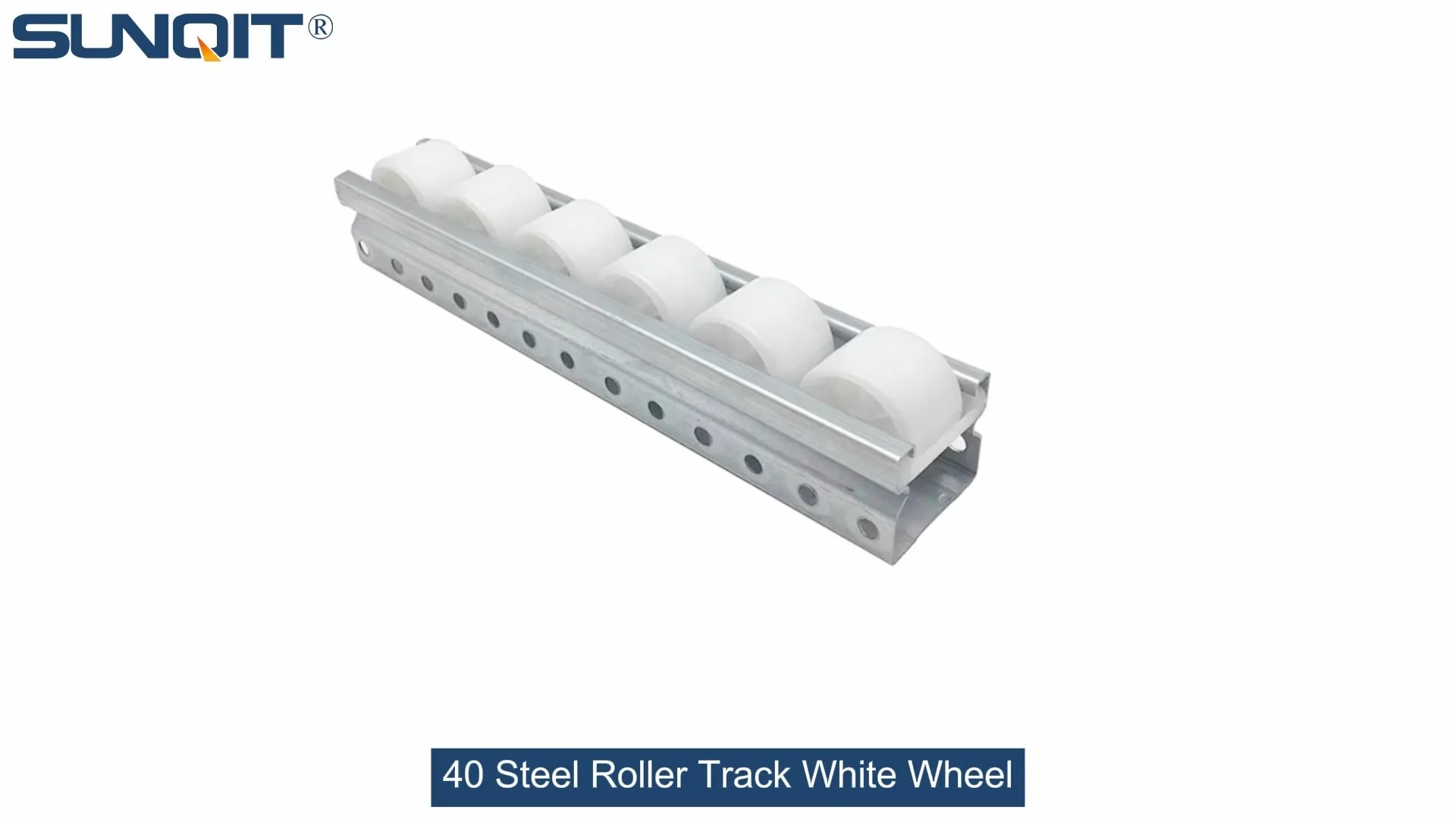
40 Steel Roller Track White Wheel
The roller track can be installed with multiple accessories to create different slopes and configurations of flow racks.All steel conveyor 40 roller track accessories are engineered to perfectly fit the sliding rail.
In the fast-paced world of manufacturing, every component plays a critical role in keeping production lines running smoothly. Roller tracks are often the unsung heroes—quietly moving parts, products, and materials from one station to another without fanfare. But when a roller track fails, the consequences can be costly: damaged goods, halted production, and even worker safety risks. That's why load testing is non-negotiable for components like the 40 Steel Roller Track White Wheel. Let's dive into why this testing matters, how it's done, and what it means for your operations.
What Is the 40 Steel Roller Track White Wheel?
The 40 Steel Roller Track White Wheel is a robust component designed for heavy-duty use in various manufacturing and logistics settings. Made from high-quality steel with durable white wheels, it's built to withstand constant use and heavy loads. You'll find it in flow racks for picking and storing parts, conveyors that move assemblies along production lines, and even as part of lean workstations where efficiency is key. Its smooth operation ensures that materials glide easily, reducing friction and wear on both the track and the items being transported.
This roller track is a popular choice because of its versatility. Whether you're setting up a new lean system in a 3C assembly plant or upgrading your warehouse's flow rack setup, the 40 Steel Roller Track White Wheel fits right in. It's compatible with many other components, like aluminum profiles used in frame structures, making it easy to integrate into existing systems or custom solutions.
Why Load Testing Is Critical
Load testing isn't just a formality—it's a way to guarantee that your roller tracks can handle the weight they're supposed to carry without failing. Here's why it's so important:
- Safety First: A roller track that collapses under load can cause products to fall, potentially injuring workers nearby. Load testing ensures that the track meets safety standards and can support its intended weight safely.
- Prevent Downtime: Unexpected failures lead to production stops. By testing the maximum load capacity, you can set safe working limits and avoid costly interruptions.
- Protect Investments: Damaged products or equipment from a failed roller track can be expensive to replace. Load testing helps you avoid these unnecessary costs.
- Compliance: Many industries have strict safety regulations. Load testing provides documentation that your components meet these standards, keeping your business in compliance.

The Load Testing Process for 40 Steel Roller Track White Wheel
Load testing for the 40 Steel Roller Track White Wheel follows a structured process to ensure accuracy and reliability. Let's walk through the key steps:
1. Preparation
Before testing begins, the roller track is inspected for any visible defects—like bent frames, worn wheels, or loose connections. It's then cleaned to remove any debris that could affect the test results. The track is mounted on a stable frame, similar to how it would be installed in a real-world setting (using aluminum profiles or other support structures).
2. Setting Up the Test Rig
A test rig is used to apply controlled loads to the roller track. This rig includes a weight system that can incrementally add pressure to the track. Sensors are attached to measure deflection (how much the track bends under load) and any changes in wheel rotation or stability.
3. Applying Loads
Loads are added gradually, starting from a low weight and increasing in increments (usually 50kg or 100kg at a time). At each increment, the track is monitored for signs of stress: bending beyond acceptable limits, wheel deformation, or loose components. The test continues until the track reaches its maximum load capacity or shows signs of failure.
4. Recording Data
Every step of the test is documented. This includes the load applied, deflection measurements, and any observations about the track's performance. The data is then analyzed to determine the safe working load (SWL)—typically 60-70% of the maximum load capacity to account for a safety factor.
| Load Applied (kg) | Deflection (mm) | Observation | Pass/Fail |
|---|---|---|---|
| 100 | 0.5 | No visible deformation; wheels rotate smoothly | Pass |
| 200 | 1.2 | Minor deflection; no wheel issues | Pass |
| 300 | 2.0 | Deflection within acceptable limits; stable | Pass |
| 400 | 3.5 | Noticeable deflection but no failure | Pass |
| 500 | 5.0 | Deflection exceeds safety threshold; wheels start to bind | Fail |
From this test, the maximum load capacity is 400kg, so the safe working load would be around 240-280kg. This ensures that even under peak conditions, the track remains safe and reliable.

Real-World Applications: How This Affects Your Operations
Let's take a look at how the 40 Steel Roller Track White Wheel and its load testing impact different industries:
3C Assembly Plants
In 3C assembly (computers, communication, consumer electronics), precision and efficiency are key. Flow racks equipped with these roller tracks are used to store small components like circuit boards and screws. Load testing ensures that the racks can hold hundreds of components without collapsing, keeping the assembly line moving. Additionally, these tracks are often part of ESD workstations to prevent static damage to sensitive electronics—so knowing they can handle the load without failing is crucial for protecting expensive parts.
Warehouse Logistics
Warehouses rely on conveyors and flow racks to move products quickly. The 40 Steel Roller Track White Wheel is a common component in these systems. Load testing ensures that conveyors can handle heavy pallets or boxes, reducing the risk of jams or breakdowns. This is especially important in busy warehouses where downtime can lead to missed shipping deadlines.
Lean Manufacturing Systems
Lean manufacturing focuses on reducing waste and improving efficiency. The 40 Steel Roller Track White Wheel fits perfectly into this philosophy because it's durable and reusable. Load testing ensures that it can be part of a lean system for years, supporting continuous improvement without the need for frequent replacements. Whether you're building a lean pipe workbench or a flexible production line, knowing your components are tested and safe gives you peace of mind.

Case Study: A 3C Assembly Plant's Success Story
A leading 3C assembly plant recently upgraded their production line with the 40 Steel Roller Track White Wheel. Before installation, they conducted load testing to ensure the tracks could handle the weight of their components. The test revealed a maximum load capacity of 450kg, so they set the safe working load at 300kg.
After installation, the plant noticed a significant improvement in their flow rack efficiency. Components moved smoothly from storage to assembly stations, reducing the time workers spent retrieving parts. Most importantly, there were no failures or safety incidents related to the roller tracks. This not only saved the plant money on potential repairs but also boosted employee confidence in the safety of their workspace.
The plant also integrated the roller tracks into their ESD workstations, where static-sensitive components are assembled. The load testing ensured that the tracks could support the weight of the workstations and components without compromising ESD protection. This helped the plant maintain compliance with industry standards and avoid costly static damage to their products.
Conclusion
Load testing the 40 Steel Roller Track White Wheel is more than just a technical step—it's an investment in safety, efficiency, and peace of mind. By ensuring that your roller tracks can handle the loads they're designed for, you protect your workers, your products, and your bottom line. Whether you're using these tracks in flow racks, conveyors, or lean workstations, load testing is a critical part of maintaining a reliable and safe operation.
Remember, when choosing components for your manufacturing or logistics systems, always prioritize those that have undergone rigorous load testing. It's a small step that can make a big difference in the long run.