- Company Articles
- Industry articles
- Industry standards
- 40 Steel Roller Track Yellow Wheel Safety Standards: What You Need to Know

40 Steel Roller Track Yellow Wheel Safety Standards: What You Need to Know
Related Product
40 Steel Roller Track Yellow Wheel
The roller track can be installed with multiple accessories to create different slopes and configurations of flow racks.All steel conveyor 40 roller track accessories are engineered to perfectly fit the sliding rail.
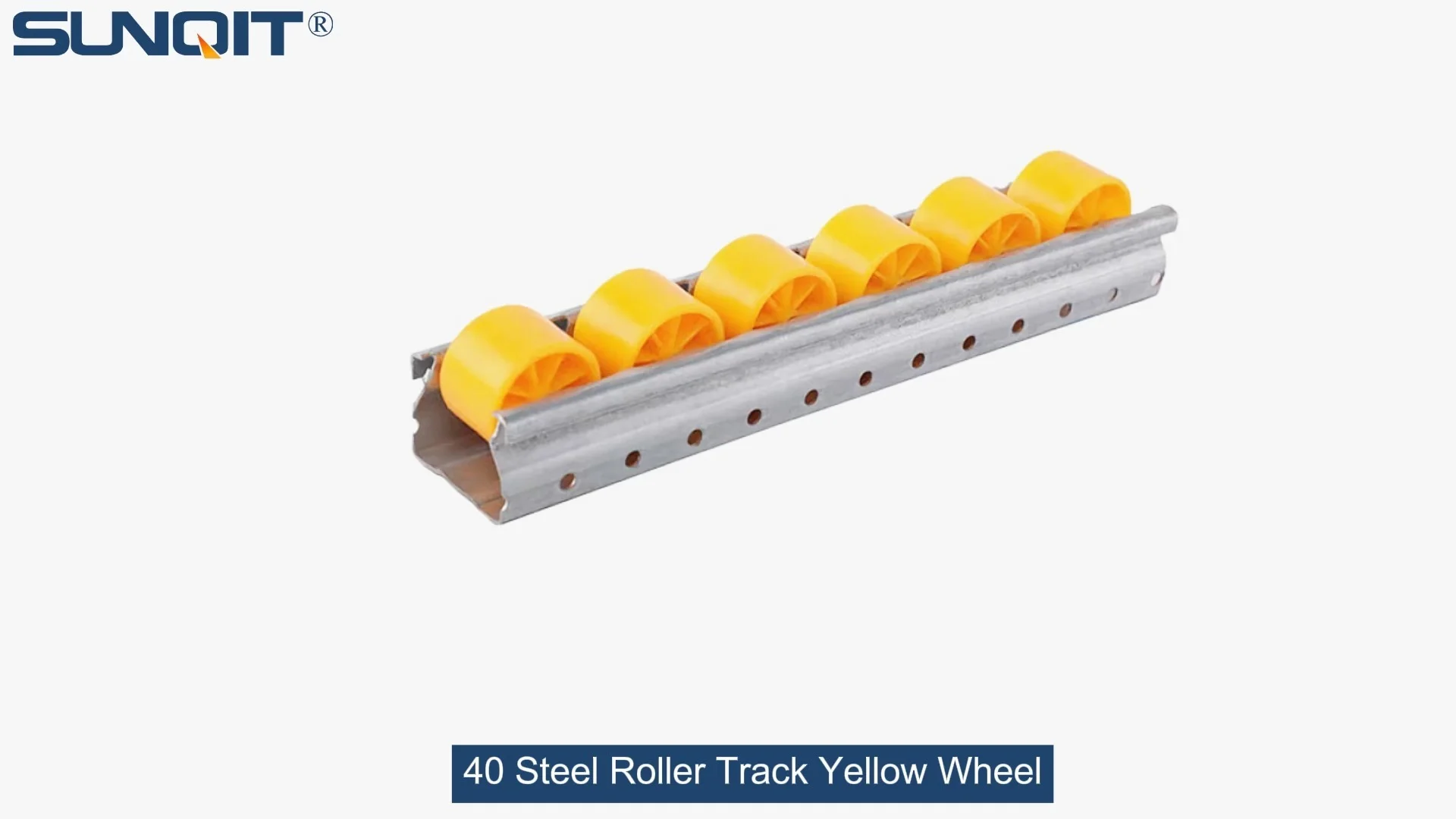
In the fast-paced world of manufacturing, where every second counts and precision is non-negotiable, the unsung heroes often lie in the details. Take the 40 steel roller track yellow wheel, for example—,, safety, and long-term operational success.Whether you're managing a 3C assembly line, a medical device workshop, or a high-volume warehouse, understanding the safety standards behind these roller tracks isn't just about compliance; it's about protecting your team, your products, and your bottom line. Let's dive into what makes these systems safe, why it matters, and how to ensure your operations measure up.
Why Safety Standards for Roller Tracks Are Non-Negotiable
Picture this: A busy electronics manufacturing plant, where small components zip along roller tracks from soldering stations to quality checks. A sudden jolt, a wheel slips, and a batch of delicate circuit boards crashes to the floor. Beyond the cost of damaged parts, there's the risk of worker injury—maybe a colleague bends to pick up the mess and strains their back, or a loose roller causes a finger pinch. These aren't just hypothetical scenarios; they're real risks in facilities where roller track safety is overlooked.
The 40 steel roller track yellow wheel, with its distinct color (a deliberate choice for high visibility in cluttered workspaces), is designed to handle the demands of heavy-duty manufacturing. But without strict safety standards, even the sturdiest track can become a liability. From material fatigue to poor installation, the smallest flaw can snowball into production delays, compliance fines, or worse. That's why organizations like OSHA, ISO, and industry-specific bodies have developed rigorous guidelines—they're not just rules on paper, but safeguards for the people and processes that keep your business running.
The Core Elements of 40 Steel Roller Track Safety Standards
Safety standards for these roller tracks aren't a one-size-fits-all checklist. They're a holistic framework covering materials, design, installation, and maintenance. Let's break down the key areas every operations manager, procurement specialist, or facility engineer should prioritize.
1. Material Integrity: The Foundation of Safety
At the heart of any safe roller track is the steel itself. The "40" in 40 steel roller track refers to its load-bearing capacity and structural, but not all steel is created equal. Safety standards mandate specific grades—typically high-strength carbon steel or stainless steel—tested for tensile strength (minimum 375 MPa, per ISO 898-1) and resistance to corrosion. Why does this matter? In humid warehouse environments or medical facilities where sanitization is critical, low-quality steel can rust, weakening the track and contaminating products.
Then there's the yellow wheel coating. That bright hue isn't just for aesthetics; it's a safety feature. Standards like ANSI Z535.1 dictate color codes for hazard communication, and yellow is universally recognized as a warning signal. The wheel material—often polyurethane or rubber—must also meet friction and wear resistance standards. A wheel that degrades quickly can cause uneven rolling, leading to product jams or sudden stops that strain the track structure.
2. Design Specifications: Engineering for Reliability
Even the best materials can fail if the design is flawed. Safety standards zero in on details like roller spacing, wheel diameter, and track rigidity. For instance, the distance between rollers must be calibrated to prevent small parts from slipping through—critical in 3C assembly, where components like microchips or connectors are tiny. A gap larger than 25mm, for example, could spell disaster for a circuit board in transit.
Load capacity is another non-negotiable. A 40 steel roller track yellow wheel system should clearly state its maximum dynamic load (weight when moving) and static load (weight at rest). Exceeding these limits—common in facilities where production ramps up and teams cut corners—leads to bent tracks, seized wheels, and catastrophic failure. Standards also require built-in safeguards, like anti-slip wheel treads for oily or wet environments (a must in automotive manufacturing) and end stops to prevent products from rolling off the track entirely.
3. Installation & Alignment: Precision in Practice
You could have the highest-quality track and wheels, but if they're installed crooked, safety goes out the window. Safety standards emphasize precise alignment—tracks must be level within 2mm per meter to ensure smooth, predictable movement. Misalignment causes uneven wear on wheels, increases noise (a fatigue risk for workers), and forces motors (in powered conveyor systems) to overwork, leading to overheating and fire hazards.
Fastening is equally critical. Tracks must be secured to sturdy frameworks—often aluminum profiles or steel beams—using bolts rated for the track's load capacity. Loose fasteners are a ticking time bomb; over time, vibration from rolling products can loosen screws, causing the track to shift or even detach. Standards like ISO 12100 (Safety of machinery) provide guidelines for securing moving parts, ensuring that installation teams don't cut corners with subpar hardware.

Maintenance: Keeping Safety on Track Long-Term
A roller track system that meets all safety standards on day one won't stay that way without proper care. Think of it like a car—skip oil changes, and you'll be stranded on the side of the road. The same logic applies here: regular maintenance is the key to preventing unexpected failures.
| Maintenance Task | Safety Standard Requirement | Frequency |
|---|---|---|
| Wheel Rotation & Wear Check | Wheels must spin freely; tread depth ≥ 80% of original thickness | Weekly (high-use areas); Monthly (low-use) |
| Lubrication of Axles | Axles must be lubricated with food-grade grease (for medical/cleanroom) or industrial-grade (general manufacturing) | Monthly |
| Track Alignment Inspection | Track must remain level within ±2mm/m; no visible bowing or warping | Quarterly |
| Fastener Tightness | All bolts/nuts must meet torque specifications (typically 25-30 Nm for steel tracks) | Bi-weekly |
| End Stop Functionality | Stops must engage fully; no cracks or deformation in impact areas | Weekly |
One often-overlooked aspect? Worker training. Even the best maintenance schedule fails if operators don't know how to spot red flags. A line worker who notices a wheel wobbling or a track making an unusual noise should feel empowered to hit pause—without fear of slowing production. Regular safety briefings, with hands-on demos of common issues, turn your team into the first line of defense against accidents.

Industry-Specific Safety Needs: One Track Doesn't Fit All
Safety standards aren't static—they adapt to the unique demands of different industries. What works for a automotive parts warehouse might not cut it in a medical device lab, and the 40 steel roller track yellow wheel must rise to each challenge.
3C Electronics & Precision Manufacturing
In 3C assembly (computers, communications, consumer electronics), where components are small and delicate, roller tracks must balance speed with precision. Safety standards here emphasize vibration control—excess shaking can damage sensitive parts like smartphone screens or camera lenses. Tracks often integrate with ESD workstations to prevent electrostatic discharge, and wheels may have conductive coatings to ground static buildup. The yellow color also aids in visual inspection, making it easier for quality control teams to spot misaligned components mid-flow.
Medical Device Production
Medical manufacturing adds another layer of complexity: hygiene. Roller tracks must be easy to clean, with smooth surfaces that resist bacterial growth. Stainless steel components (a common upgrade from standard steel) and non-porous wheel materials are mandatory, per FDA guidelines. Load capacities are often lower here—no need for heavy-duty hauling—but precision is paramount. A misaligned track could lead to contamination if parts touch the floor, risking product recalls and patient harm.
Warehousing & Logistics
In high-volume warehouses, roller tracks handle pallet-sized loads, so safety standards focus on brute strength. Tracks must withstand repeated impacts from forklifts (during loading/unloading) and maintain alignment under constant use. Here, the yellow wheels serve as a visual buffer, warning workers to keep hands clear of moving parts. Some systems even integrate sensors that stop the track if an obstruction is detected—an extra layer of protection in busy, fast-moving environments.

Choosing a Supplier: More Than Just a Price Tag
You can't build a safe roller track system without a reliable supplier. But with so many options on the market, how do you separate the partners from the cut-rate vendors? Start by asking the right questions:
- Do they provide certification documentation? Reputable suppliers will share test reports for material strength, load capacity, and compliance with ISO 9001 or industry-specific standards (e.g., IEC 61340 for ESD protection in electronics).
- Can they customize to your needs? A one-size-fits-all track might not meet your unique safety requirements. Look for suppliers who offer tailored solutions—like adjustable roller spacing for mixed-component lines or corrosion-resistant coatings for humid environments.
- What's their post-sales support? Safety doesn't end at delivery. The best suppliers offer installation guidance, maintenance training, and quick access to replacement parts (critical for minimizing downtime when a wheel or axle wears out).
- Do they prioritize transparency? Avoid suppliers who vague about specs or refuse to share manufacturing processes. A trustworthy partner will walk you through material sourcing, testing protocols, and quality control checks—no secrets.
Remember: The cheapest track upfront might cost you more in the long run. A $500 savings today could lead to $50,000 in damages tomorrow if a subpar wheel fails. Investing in a compliant, high-quality system is an investment in your team's safety and your company's reputation.
Final Thoughts: Safety as a Competitive Advantage
The 40 steel roller track yellow wheel might seem like a small part of your manufacturing ecosystem, but its safety standards reflect a larger commitment: to prioritize people over shortcuts, and reliability over quick wins. In an industry where margins are tight and competition is fierce, a reputation for safety isn't just good PR—it's a differentiator. Customers want to partner with suppliers who protect their workers; employees stay loyal to companies that value their well-being; and regulators reward facilities that go above and beyond compliance.
So, the next time you walk your production floor, take a closer look at those yellow wheels. Are they rolling smoothly? Are the tracks secure? Is your team trained to spot issues? These small observations could be the difference between a seamless shift and a costly accident. After all, in manufacturing, as in life, safety isn't just about avoiding the worst—it's about building the best.