- Company Articles
- Industry articles
- Industry standards
- 4040B EU Standard Aluminum Profile Dimensions: Width, Height & Wall Thickness Specifications

4040B EU Standard Aluminum Profile Dimensions: Width, Height & Wall Thickness Specifications
Related Product
4040B EU Standard Aluminum Profile
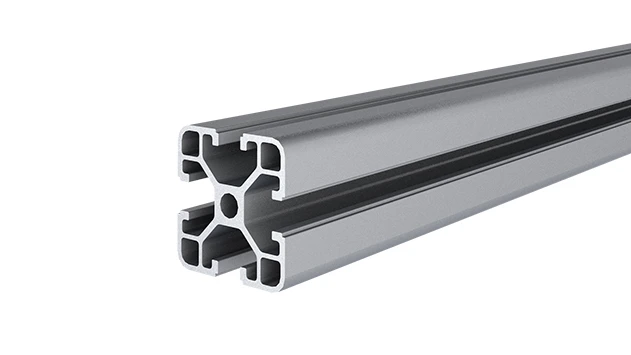
4040B is a 4.00x4.00 CM fractional 40 series square extrusion T-slot profile with four open T-slots, each side with 4.00cm face. The profile has align-a-grooves to assist in aligning connecting profiles.
If you've ever walked through a busy manufacturing floor, a well-organized warehouse, or even a small workshop, you've probably seen them—those sleek, silver structures holding up workbenches, guiding roller tracks, or forming the backbone of material racks. Chances are, many of those structures are built with aluminum profiles, and if they're designed to meet European standards, there's a good chance the 4040B EU standard aluminum profile is part of the mix. But what makes this profile so popular? Why do lean system suppliers and facility managers keep coming back to it? Let's dive into the details that matter most: its dimensions, how they impact real-world use, and why getting these specs right can make or break your workflow.
Understanding the Basics: What is the 4040B EU Standard Aluminum Profile?
Before we get into the nitty-gritty of width, height, and wall thickness, let's start with the basics. Aluminum profiles are extruded pieces of aluminum, shaped into specific cross-sections to provide strength, flexibility, and versatility. The "4040B" in its name isn't just a random code—it tells you exactly what you're dealing with. The first two numbers ("40") refer to the width, the next two ("40") to the height, and the "B" indicates a specific variation within the 40x40mm category, often differing in wall thickness, slot design, or weight from other 4040 variants like the 4040A or 4040C. And "EU standard" means it adheres to strict European manufacturing norms, ensuring consistency in quality, dimensions, and performance across suppliers.
Think of it like choosing a foundation for a house. You wouldn't build a two-story home on a weak foundation, right? Similarly, in industrial settings, the aluminum profile is the foundation of your workspace. Whether you're assembling a workbench for electronics production, a roller track for moving components, or a material rack to store inventory, the 4040B profile is often the go-to choice for its balance of strength and adaptability. But to use it effectively, you need to know its exact dimensions—and how those numbers translate to real-world functionality.
Breaking Down the Dimensions: Width, Height, and Wall Thickness
Let's start with the numbers that define the 4040B profile. At first glance, "40x40" might seem straightforward—40mm by 40mm. But anyone who's worked with aluminum profiles knows that "close enough" isn't good enough when you're attaching accessories like brackets, hinges, or roller track connectors. Precision is key, and the EU standard leaves no room for guesswork.
| Specification | Measurement | Tolerance Range (EU Standard) | Impact on Functionality |
|---|---|---|---|
| Width | 40mm | ±0.3mm | Ensures compatibility with 40mm-wide accessories (e.g., end caps, connectors). |
| Height | 40mm | ±0.3mm | Matches width for symmetrical strength; critical for vertical load-bearing (e.g., supporting a workbench). |
| Wall Thickness | 2.0mm (typical) | ±0.15mm | Balances weight and durability; thicker walls handle heavier loads without adding excess bulk. |
| Weight per Meter | ≈1.4 kg/m | ±0.05 kg/m | Affects ease of installation and structural load limits (e.g., ceiling-mounted racks). |
| Slot Width | 8mm (standard) | ±0.2mm | Accommodates T-slot nuts and bolts for secure attachment of aluminum profile accessories. |
Width: 40mm—More Than Just a Number
The 40mm width of the 4040B profile is no accident. It's wide enough to provide a stable base for attaching accessories, yet narrow enough to keep structures from becoming overly bulky. Imagine you're building a workbench: the width of the profile determines how much space you have to mount tools, shelves, or even ESD (electrostatic discharge) mats. If the width were off by even 1mm, those accessories might not fit snugly, leading to wobbly shelves or loose connections—something you can't afford when working with delicate components or heavy machinery.
EU standards enforce a tolerance of ±0.3mm for the width, meaning a "40mm" profile could measure anywhere from 39.7mm to 40.3mm. That might sound small, but in practice, it ensures that no matter which lean system supplier you buy from, the profiles will work seamlessly with each other and with standard accessories. For example, a 40mm-wide end cap from one supplier should slide perfectly into a 4040B profile from another—no gaps, no forced fitting, just a clean, secure connection.
Height: 40mm—Symmetry for Strength
The height of the 4040B profile is also 40mm, making it square in cross-section. This symmetry is a big part of its appeal. Unlike rectangular profiles, which might be stronger in one direction than the other, a square profile offers balanced strength across both axes. That means whether you're using it horizontally (like a beam supporting a roller track) or vertically (like a leg on a workbench), it can handle loads evenly without bending or warping.
Let's take a real-world example: a material rack B (3 row and 3 floor) commonly used in warehouses. Each vertical upright is often a 4040B profile. If the height were inconsistent—say, 39.5mm in one section and 40.5mm in another—the horizontal beams (also 4040B) wouldn't align properly, leading to a rack that leans or can't support the intended weight. The EU standard's ±0.3mm tolerance for height ensures that every upright and beam is the same size, creating a level, stable structure that can safely hold boxes, parts, or tools.
Wall Thickness: 2.0mm—The Sweet Spot Between Strength and Weight
If width and height define the profile's shape, wall thickness defines its "muscle." The 4040B typically has a wall thickness of 2.0mm (with a tolerance of ±0.15mm), and this is where engineering meets practicality. A thicker wall would make the profile stronger, but it would also add weight and cost. A thinner wall would save on weight and cost but compromise strength—especially for applications like heavy-duty workbenches or overhead racks.
Consider this: a 2.0mm wall thickness allows the 4040B to support up to 200kg per linear meter when used horizontally (depending on the span and mounting). That's enough to hold a fully loaded tool chest on a workbench or a stack of heavy turnover boxes on a material rack. Compare that to a thinner 1.5mm wall profile, which might only handle 150kg—suddenly, you're limited in what you can store or work with. On the flip side, a 3.0mm wall profile could handle more weight, but it would weigh nearly 50% more, making installation harder and increasing shipping costs. For most industrial and commercial uses, 2.0mm hits the sweet spot.

Material Matters: Why Aluminum? And What Alloy is Used?
Dimensions tell part of the story, but the material itself is just as important. The 4040B profile is made from aluminum, and not just any aluminum—it's typically crafted from 6063-T5 aluminum alloy. Why this alloy? 6063 is known for its excellent extrudability, which means it can be shaped into complex profiles with precise dimensions (like the T-slots that run along the length of the 4040B). The "T5" refers to the heat treatment process, which strengthens the aluminum by cooling it rapidly after extrusion, resulting in a profile that's both strong and ductile.
Aluminum's natural resistance to corrosion is another big plus. Unlike steel, which can rust if not painted or coated, aluminum forms a thin oxide layer when exposed to air, protecting it from further corrosion. This makes the 4040B ideal for use in environments with moisture, like food processing facilities, or in cleanrooms where chemicals might be present. It also means less maintenance—no need to repaint or treat the profiles regularly, saving time and money in the long run.
And let's not forget weight. Aluminum is about one-third the weight of steel, which makes handling and installing the 4040B profile a breeze. A 3-meter length of 4040B weighs around 4.2kg (1.4kg/m × 3m), which one person can easily carry. Try doing that with a steel profile of the same size, and you'd need a helper or a forklift. This light weight also reduces the load on floors and ceilings, opening up more possibilities for where you can install structures—like overhead racks in warehouses with weight-restricted floors.
Real-World Applications: How 4040B Profiles Power Your Workspace
Numbers and specs are great, but how do they translate to what you actually do on the job? Let's walk through a few common applications where the 4040B profile shines, and how its dimensions make these uses possible.
Workbenches: The Heart of the Workshop
A workbench is where the magic happens—whether you're assembling circuit boards, repairing machinery, or packing orders. The 4040B profile is a favorite for building workbenches because of its strength, flat surfaces, and compatibility with accessories. Take the "Workbench E (single deck-without caster)" often sold by lean system suppliers: its frame is typically made from 4040B profiles. The 40x40mm square shape ensures the bench is stable, while the 2.0mm wall thickness supports the weight of tools, materials, and even the person working on it.
The T-slots along the profile's length are a game-changer here. They let you attach accessories like tool holders, monitor arms, or ESD mats using T-slot nuts and bolts—no drilling required. Want to add a shelf above the bench? Just slide aluminum profile accessories like brackets into the slots and tighten. Need to reposition the shelf later? Loosen the bolts, adjust, and retighten. This flexibility is why workshops love 4040B-based workbenches—they grow and change with your needs.
Roller Tracks: Keeping Materials Moving
In manufacturing, time is money, and anything that slows down material flow costs you. That's where roller tracks come in—they let gravity (or a little push) move parts, boxes, or assemblies from one station to the next. The 4040B profile often serves as the rails for these tracks, and its dimensions are critical here. The 40mm width provides a stable base for mounting roller track placon mounts (those small brackets that hold the rollers in place). The 8mm T-slot (standard for 4040B) fits the bolts on these mounts perfectly, ensuring the rollers stay aligned and don't wobble as materials pass over them.
For example, plastic roller track guide rails (yellow or grey) are often clipped onto 4040B profiles. If the profile's width were off by even 0.5mm, the guide rails might not clip on securely, leading to jams or misaligned materials. The EU standard's tight tolerances eliminate this risk, keeping your production line moving smoothly. And because the 4040B is strong enough to span gaps between supports, you can create longer roller tracks without adding extra uprights—saving space and reducing complexity.
Material Racks: Organizing Inventory Efficiently
A messy warehouse is an inefficient warehouse. Material racks like "Material Rack B (3 row and 3 floor)" help keep things organized, and again, the 4040B profile is often the star. Each vertical column is a 4040B profile, and each horizontal shelf beam is too. The square 40x40mm shape ensures the rack stands straight, while the 2.0mm wall thickness allows each shelf to hold hundreds of kilograms of inventory—from small electronic components to heavy metal parts.
What makes these racks so versatile is how easy they are to customize. Need to adjust shelf heights to fit taller boxes? Just loosen the brackets (attached via T-slots), slide them up or down the 4040B uprights, and retighten. Adding dividers to separate different parts? Clip aluminum profile accessories like dividers into the shelf beams. The 4040B's dimensions make all this possible—no need for custom fabrication or welding. It's why lean system suppliers often call it the "building block of organization."
Choosing the Right Supplier: What to Look for in a Lean System Supplier
Now that you know why the 4040B's dimensions matter, let's talk about where to get it. Not all aluminum profiles are created equal, and even if a supplier claims to sell "4040B EU standard" profiles, you need to verify they're telling the truth. Here's what to look for:
1. Compliance with EU Standards: Ask for a certificate of compliance or test report. Reputable suppliers will have no problem providing documentation proving their profiles meet the EU's dimensional, material, and quality requirements. If a supplier hesitates or can't provide this, walk away—non-compliant profiles can lead to structural failures or incompatible accessories.
2. Consistency in Dimensions: Even if a supplier says they meet EU standards, request a sample. Measure the width, height, and wall thickness yourself (or have a quality control team do it). A good supplier's profiles will be within the ±0.3mm tolerance for width/height and ±0.15mm for wall thickness. Inconsistent dimensions are a red flag—they mean poor manufacturing control.
3. Range of Accessories: A great lean system supplier doesn't just sell profiles—they offer the full ecosystem of aluminum profile accessories. Look for suppliers that stock end caps (to cover sharp edges), brackets, hinges, and roller track components. This saves you time and ensures all parts work together seamlessly.
4. Customization Options: Sometimes, you need a profile cut to a specific length, or a custom bracket for a unique application. The best suppliers offer cutting, drilling, or even custom extrusion services to meet your needs. This is especially important for small businesses or specialized industries where off-the-shelf solutions might not work.
Installation Tips: Getting the Most Out of Your 4040B Profiles
Even with the best profile and supplier, poor installation can ruin your project. Here are a few tips to ensure your 4040B-based structures are safe, stable, and long-lasting:
Use the Right Tools: T-slot nuts and bolts require hex keys (Allen wrenches) for tightening. Invest in a good set with both metric sizes (common for EU standard profiles). Avoid over-tightening—aluminum is strong, but it can strip if you crank the bolts too hard.
Level First, Then Secure: When building a structure like a workbench or rack, start by assembling the frame loosely, then use a level to ensure it's straight and square before fully tightening all bolts. This prevents warping and ensures the structure sits flat on the floor.
Support Long Spans: While the 4040B is strong, it will sag if spanned too far without support. As a rule of thumb, for horizontal spans (like roller tracks or shelf beams), add a support every 1.2–1.5 meters. This keeps the profile straight and prevents stress on the wall thickness.
Protect the Surface: Aluminum can scratch easily, and scratches can lead to corrosion over time. Use end caps to cover cut ends (they also prevent sharp edges!), and consider plastic pipe sleeves if the profile will be in contact with rough materials.
Maintenance: Keeping Your Profiles in Top Shape
Aluminum profiles are low-maintenance, but a little care goes a long way. Here's how to keep your 4040B structures looking and performing their best:
Clean Regularly: Wipe down profiles with a damp cloth to remove dust, grease, or debris. For stubborn grime, use a mild detergent (avoid harsh chemicals, which can damage the aluminum's oxide layer).
Check Connections: Over time, bolts can loosen from vibration (common in manufacturing settings). Every few months, walk around your structures and tighten any loose T-slot bolts or roller track connectors. This prevents wobbling and extends the life of your accessories.
Inspect for Damage: Look for dents, cracks, or bent sections—especially after heavy use or impacts. A small dent might not seem like a big deal, but it can weaken the profile or prevent accessories from fitting properly. replace damaged sections promptly.
Why the 4040B Stands Out Among Other Profiles
With so many aluminum profiles on the market—like the 3030, 2020, or even other 4040 variants—why choose the 4040B? It all comes down to versatility. The 3030 (30x30mm) is smaller and lighter, great for lightweight applications but not strong enough for heavy workbenches. The 2020 (20x20mm) is even smaller, better for tiny structures like display shelves. Other 4040 variants, like the 4040A, might have a thinner wall (1.5mm) or different slot design, making them better for light-duty use but less reliable for heavy loads.
The 4040B, with its 40x40mm dimensions and 2.0mm wall thickness, hits that perfect middle ground. It's strong enough for heavy-duty workbenches and racks, yet light enough for easy installation. It's compatible with a vast range of accessories, from roller tracks to hinges to casters (those wheels that make workbenches mobile). And because it's an EU standard, you know you're getting a consistent, high-quality product no matter which supplier you choose.
Final Thoughts: The 4040B Profile—More Than Just Metal
At the end of the day, the 4040B EU standard aluminum profile is more than just a piece of metal. It's a tool for building better workspaces—spaces that are organized, efficient, and adaptable. Its dimensions—40mm width, 40mm height, 2.0mm wall thickness—are the result of decades of engineering and real-world testing, designed to balance strength, weight, and versatility. Whether you're a small workshop owner setting up your first workbench or a large manufacturer optimizing a production line, getting these specs right ensures your structures are safe, reliable, and ready to grow with your business.
So the next time you're planning a workspace upgrade, remember: the foundation matters. Choose a lean system supplier that prioritizes EU standards, check those dimensions, and invest in quality 4040B profiles. Your team, your workflow, and your bottom line will thank you.